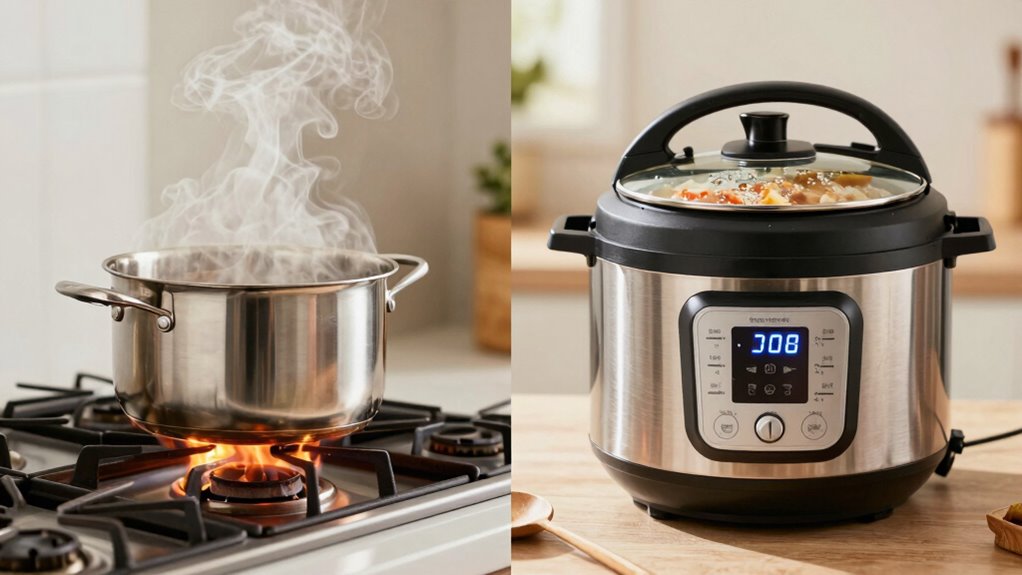

Switching between stovetop and electric pressure cookers changes your cooking results by affecting time, texture, and flavor. Stovetop models heat quickly and offer more precise control, often producing softer or more varied textures faster. Electric versions provide steady, consistent pressure but may take longer to reach pressure. These differences can influence flavor development and how ingredients turn out. To get the most out of each, understanding these variations will help improve your cooking experience.
Key Takeaways
- Stovetop cookers heat faster and produce more intense, variable heat, affecting texture and flavor development.
- Electric models offer consistent pressure and temperature, resulting in more uniform and controlled cooking outcomes.
- Cooking times are generally shorter on stovetops due to quicker pressure build-up; electric cookers may take longer initially.
- Texture can vary: stovetop results are more variable and softer, while electric cookers yield more consistent results.
- Flavor preservation may differ, with stovetop models potentially better at retaining flavors through rapid pressure adjustments.
What Are the Main Differences Between Stovetop and Electric Pressure Cookers?
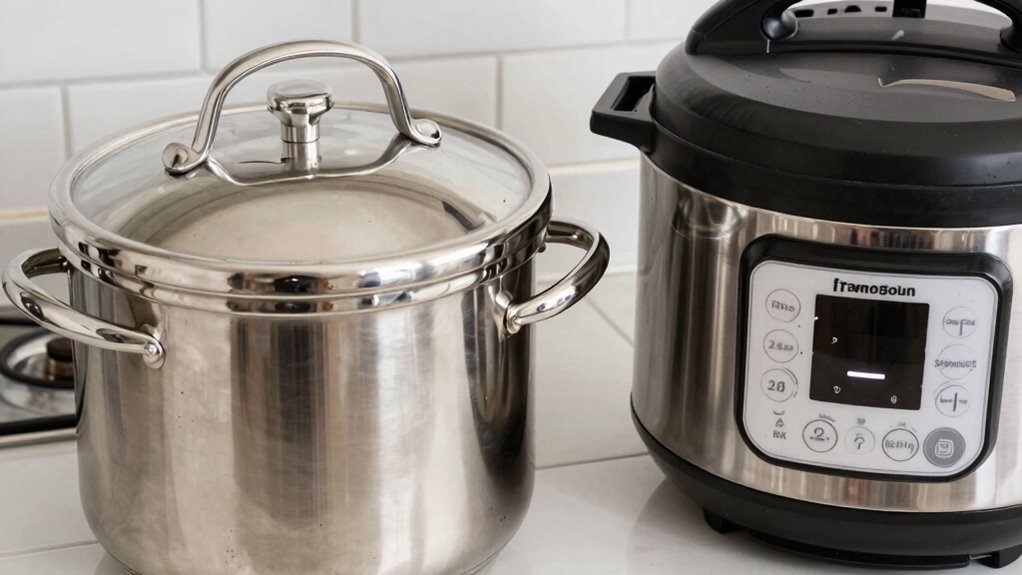
While both stovetop and electric pressure cookers aim to speed up meal prep, they operate quite differently. Stovetop models require manual operation—you control the heat and manage the pressure release yourself. This gives you more hands-on involvement, but also demands attention and experience. Electric pressure cookers, on the other hand, are more automated, with preset buttons and digital controls that simplify the process. They are generally more portable because they don’t need a dedicated stove; you can move them easily around the kitchen or even take them on trips. Stovetop models tend to be bulkier and less portable, often staying fixed in place. Your choice depends on whether you prefer hands-on control or convenience with device portability. Additionally, pressure regulation in electric models helps maintain consistent cooking conditions, reducing the need for constant monitoring. Moreover, advancements in safety features have made electric models more user-friendly and safer for everyday use. For those who value quick cleanup, electric models often feature non-stick interiors, making post-cooking cleaning easier.
How Do These Differences Impact Cooking Times and Food Texture?
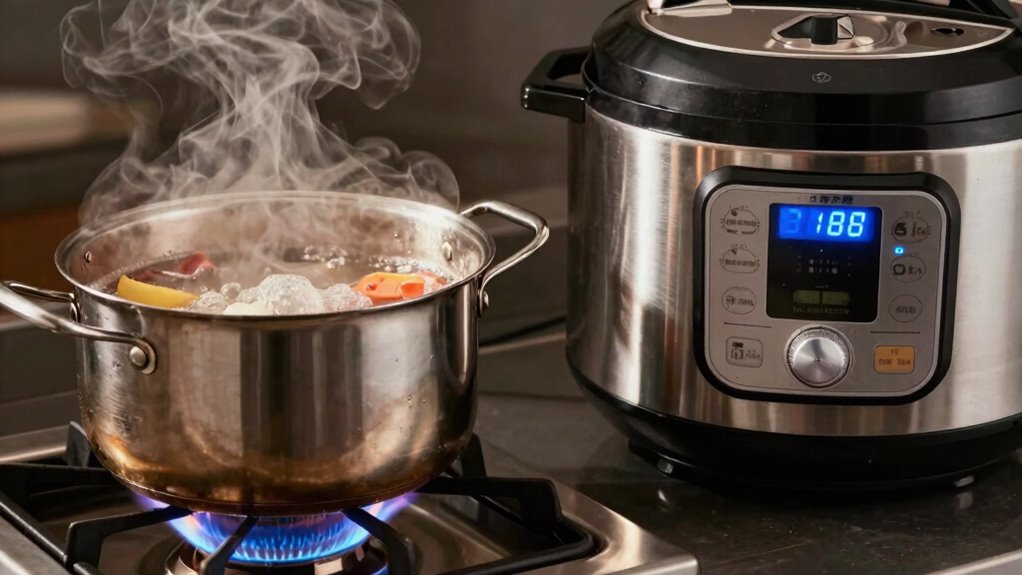
The differences in operation between stovetop and electric pressure cookers considerably affect cooking times and food textures. In stovetop models, pressure build up happens quickly because you control heat directly, leading to faster cooking. Electric pressure cookers, however, rely on consistent heat distribution from their heating elements, which can result in slightly longer times to reach ideal pressure. Once pressure is achieved, both types maintain it efficiently, but the initial pressure build up influences overall cooking speed. Additionally, heat distribution impacts food texture; stovetops often produce more intense, even heat, resulting in softer textures, while electric models may provide more controlled, uniform results. These differences mean you might experience varied cooking durations and textures depending on the pressure cooker you use. Understanding pressure build-up is essential for optimizing cooking times and achieving desired food textures. Furthermore, pressure regulation mechanisms differ between models, affecting how precisely you can control cooking conditions to suit specific recipes. Variations in heat control also influence how consistently ingredients cook throughout the process, and the presence of smart features in modern models can help fine-tune these parameters for better results. Additionally, user experience can vary based on how intuitive the cooker’s controls are, impacting overall cooking efficiency.
What Flavor and Texture Changes Can You Expect When Switching Pressure Cookers?
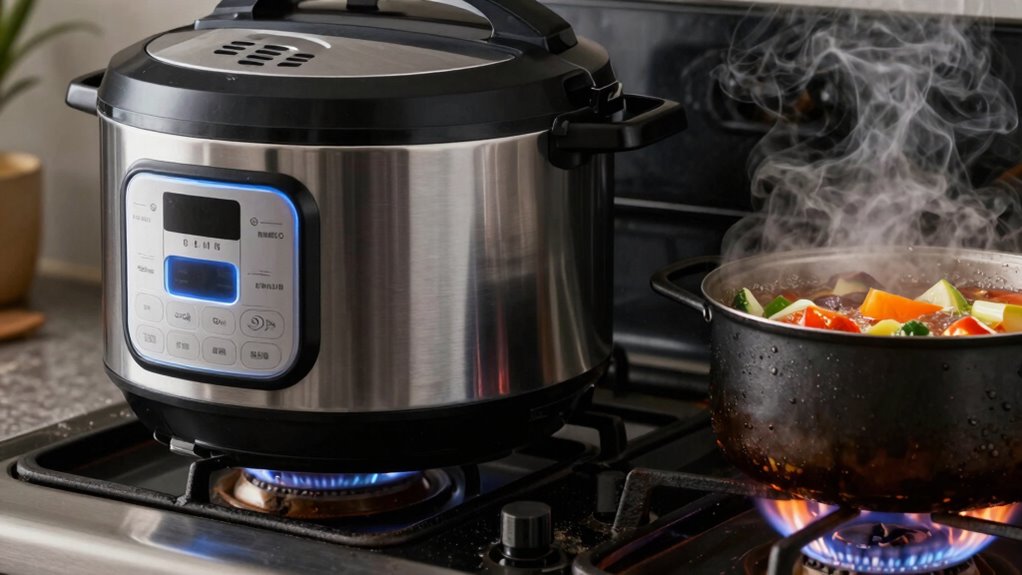
Switching between stovetop and electric pressure cookers can noticeably change the flavor and texture of your dishes. You might find that flavor retention varies, with stovetop models often preserving more delicate flavors due to quicker pressure adjustments. Additionally, the responsiveness of pressure changes plays a significant role in how flavors develop during cooking. The pressure regulation in electric models tends to be more gradual, which can influence the depth of flavor achieved. Texture consistency can also differ; stovetop cookers may produce more varied results depending on heat control, while electric models tend to be more uniform. Cooking techniques and their execution are also affected by the type of pressure cooker used, impacting overall dish quality. For example, the heat transfer efficiency differs between models, influencing how quickly ingredients reach desired doneness. The following table outlines key differences:
| Aspect | Stovetop Pressure Cooker | Electric Pressure Cooker | Effect on Results |
|---|---|---|---|
| Flavor Retention | Better with quick pressure changes | Slightly reduced | More subtle flavors may fade |
| Texture Consistency | Less uniform, depends on control | More consistent | Reliable tenderness and firmness |
| Cooking Control | Manual adjustments needed | Automated settings | Less variability in outcomes |
| Heat Distribution | Rapid, uneven if not monitored | Even, steady | Consistent textures |
| Ease of Use | Requires attention and skill | User-friendly, preset modes | Less chance of over/undercooking |
| Responsiveness | Quick pressure adjustments | Slower, more gradual pressure changes | Impacting how flavors develop during cooking |
How Can You Adjust Your Recipes When Moving From Stovetop to Electric or Vice Versa?
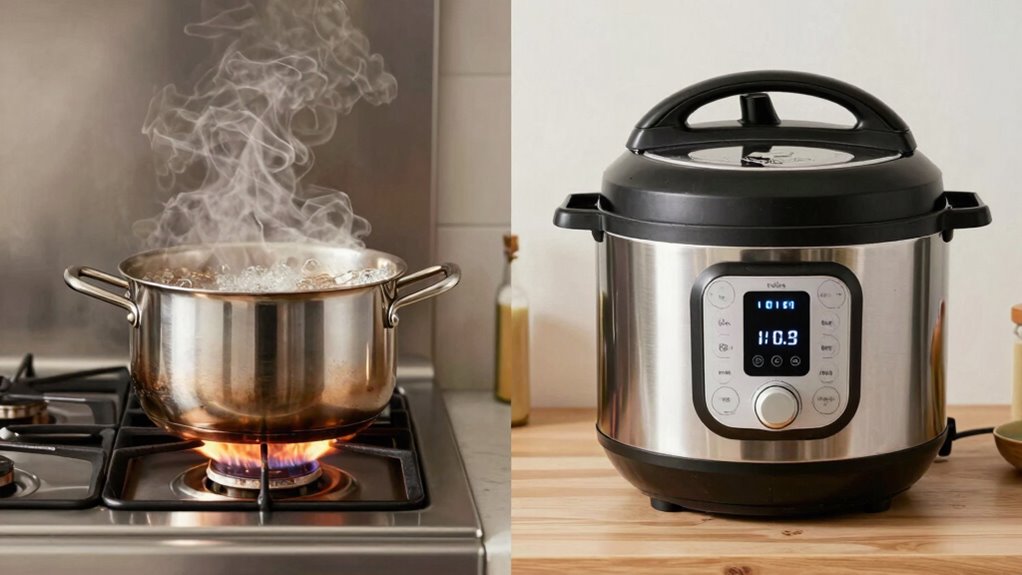
When moving your recipes between stovetop and electric pressure cookers, you’ll need to make some adjustments to guarantee consistent results. Recipe adaptation involves modifying cooking times and liquid ratios since each appliance cooks differently. For example, electric models often cook more efficiently, so reduce the cooking time slightly compared to stovetop instructions. Ingredient adjustments are also essential; you might need to add a bit more liquid in electric pressure cookers to prevent burning or sticking, as they tend to retain heat better. Additionally, understanding the navigation and mapping features of smart cooking appliances can help optimize your cooking process and prevent common issues, especially given the market trends and insights that influence appliance design and functionality. Familiarity with pressure cooking techniques can also aid in achieving reliable results across different devices, and experimenting with cooking times can help you fine-tune your recipes for perfect results every time. Staying informed about safety features and how they vary between models can also contribute to a safer and more successful cooking experience.
Which Pressure Cooker Is Right for Your Cooking Style and Kitchen Needs?

Choosing the right pressure cooker depends on your cooking style and kitchen needs, as each type offers unique advantages. If you prefer quick, hands-off cooking, an electric pressure cooker provides convenience with preset functions and digital controls. On the other hand, stovetop models excel in high heat and pressure control, ideal for traditional recipes. When selecting, consider pressure cooker safety features, such as secure locking lids and pressure release mechanisms, to ensure safe operation. Maintenance tips include regularly inspecting seals and valves for wear and keeping your cooker clean to prevent buildup. Your choice should align with your comfort level, recipe preferences, and kitchen space. Additionally, trusted businesses and services near you can offer expert advice and quality products to help you make the best decision. Understanding pressure cooker safety features, like automatic shut-off and safety locks, is essential for safe everyday use. Being aware of pressure control mechanisms can also help you better operate your cooker for consistent results. Moreover, understanding the material quality of your pressure cooker can influence its durability and performance over time. Proper knowledge of pressure release methods can enhance your safety and cooking efficiency.
Frequently Asked Questions
Do Pressure Cookers Require Different Cleaning Methods?
Yes, pressure cookers require different cleaning techniques. You should follow specific maintenance routines, such as removing and cleaning the sealing ring and vent, to guarantee safety and proper function. Avoid using abrasive cleaners or immersing the lid in water unless specified. Regularly wipe down the exterior and check for residue buildup. Proper cleaning techniques help maintain your pressure cooker’s performance and extend its lifespan.
How Does Altitude Affect Pressure Cooking Results?
Altitude affects your pressure cooking results because of pressure variations caused by lower air pressure at higher elevations. You need to make altitude adjustments by increasing cooking times and adjusting the pressure settings to guarantee food cooks thoroughly. Be mindful that the boiling point of water drops with altitude, so compensating with longer cooking times helps achieve the same tender, well-cooked results you expect at lower elevations.
Can I Use the Same Recipes for Both Types?
Imagine your recipe as a dance, and your pressure cooker as the partner. You can often use the same recipes for both stovetop and electric models, but anticipate some choreography adjustments. Recipe adaptability varies; electric models usually cook faster, so you’ll need to modify cooking time variations. Keep an eye on how ingredients respond, and be ready to fine-tune your steps to ensure perfect results every time.
Are Electric Pressure Cookers More Energy-Efficient?
Yes, electric pressure cookers are generally more energy-efficient than stovetops because they consume less energy during operation. By using insulated designs and faster cooking times, they reduce overall energy consumption and have a smaller environmental impact. You’ll find that electric models often save you money on electricity bills while also being better for the environment, making them a smart choice for eco-conscious cooking.
What Safety Features Differ Between Stovetop and Electric Models?
Did you know electric pressure cookers have over 50 safety mechanisms? You benefit from features like automatic pressure release, locking lids, and user alerts that prevent accidents. Stovetop models rely more on manual control, so you must oversee closely. Electric models actively manage safety with sensors and alarms, giving you peace of mind. These safety mechanisms ensure you can cook confidently, knowing the appliance helps prevent common hazards.
Conclusion
Choosing between stovetop and electric pressure cookers ultimately depends on your cooking style. While stovetops offer control and tradition, electric models provide convenience and consistency. Each method brings subtle differences in flavor and texture, shaping your dishes uniquely. By understanding these contrasts, you can adapt your recipes confidently. Whether you seek hands-on precision or effortless ease, your perfect pressure cooker blends tradition with innovation—each shaping your culinary experience in its own distinct way.