Hummus texture is shaped by chickpea skins, heat, and emulsification techniques. Leaving skins in creates a rustic, slightly grainy, and more flavorful hummus, while removing them results in a silky, ultra-creamy spread. Properly warming ingredients softens chickpeas and skins, promoting smoother blending and better emulsion. Mastering these factors helps you control consistency—whether chunky or smooth—and avoid common issues. If you want to understand how each element influences texture, keep exploring the details behind hummus science.
Listen free for 30 days with Audible
Thousands of audiobooks and originals — cancel anytime.
As an affiliate, we earn on qualifying purchases.
Key Takeaways
- Removing chickpea skins results in creamier, silkier hummus by reducing grit and enhancing emulsion stability.
- Heating ingredients softens chickpeas and skins, improving blending, emulsification, and overall smoothness.
- Proper emulsion techniques, like slow oil addition, strengthen stability and prevent separation in hummus.
- Skins contribute to texture, flavor, and visual appeal; leaving them creates rustic, coarser hummus.
- Maintaining consistent temperature during blending ensures uniform emulsification and desired creamy or chunky texture.
As an affiliate, we earn on qualifying purchases.
What Affects the Texture of Hummus?

What exactly determines the smoothness or chunkiness of hummus? Your choice of ingredients and preparation methods play a vital role. Using well-cooked, blended chickpeas results in a creamier texture, while less processed beans can create more chunkiness. The addition of tahini, lemon juice, and oil influences emulsion, affecting smoothness. Cultural variations also shape texture; Middle Eastern recipes often favor ultra-smooth hummus, while Mediterranean versions may be chunkier. Beyond texture, these variations impact nutritional benefits—richer, blended hummus offers better nutrient absorption. The balance of ingredients, cooking techniques, and regional traditions all contribute to the final consistency. So, your preferences, cultural influences, and health goals all work together to determine whether your hummus is silky or hearty.
As an affiliate, we earn on qualifying purchases.
How Chickpea Skins Influence Creaminess

Chickpea skins play a key role in shaping hummus’s creaminess by affecting its texture and mouthfeel. They also influence how well the hummus emulsifies and maintains stability over time. Understanding these effects helps you create a smoother, more cohesive dip every time. Additionally, the presence of skins can impact the overall color accuracy of the hummus, affecting how vibrant and appealing the final product appears. Properly managing the skins can also help optimize the lifecycle and performance metrics of the hummus, ensuring a fresh and consistent quality with each batch. Incorporating natural processing techniques can further enhance the desired texture and stability of your hummus. Recognizing the impact of chickpea skins on emulsion stability is crucial for refining your recipe and achieving optimal results.
Skin’s Impact on Texture
The presence of skins on chickpeas substantially influences the texture of hummus, particularly its creaminess. The skin’s contribution adds a slight grittiness, creating a contrast that affects mouthfeel. This textural influence can make hummus less smooth and more textured, depending on how many skins remain. To visualize, consider this table:
| Chickpea Texture | Resulting Hummus Texture |
|---|---|
| Smooth skin removal | Ultra-creamy, velvety |
| Partial skin presence | Slight graininess |
| Thick skin layer | More coarse, less silky |
| Whole skins intact | Chunky, less smooth |
Additionally, understanding how food texture modification occurs can help optimize hummus for different preferences. Incorporating techniques such as emulsion stability can further refine the desired creaminess and texture. Recognizing the role of ingredient quality can also significantly impact the final product’s consistency and appeal. Being aware of skin removal methods can assist in achieving the ideal hummus texture for various tastes. Moreover, cooking techniques can influence how easily skins are removed and how the chickpeas break down during blending, affecting overall texture.
Emulsification and Stability
When chickpea skins remain on, they play a significant role in how well hummus emulsifies and maintains its creamy texture. The skins help improve emulsion stability by acting as natural stabilizers, reducing the risk of oil separation over time. Their fibrous structure creates a more cohesive mixture, allowing the oil and water components to blend better. This results in a smoother, more uniform consistency and prevents the hummus from becoming greasy or separated. Additionally, the skins contribute to flavor enhancement, adding earthy notes that complement the overall taste. By supporting a stable emulsion, chickpea skins help you achieve a richer, creamier hummus that resists separation, maintains its texture longer, and delivers improved flavor with every bite. Incorporating connected equipment like immersion blenders can further optimize the emulsion process for consistent results.
As an affiliate, we earn on qualifying purchases.
Why Temperature Matters When Blending Hummus

Temperature plays a crucial role in achieving the perfect hummus texture because it directly affects how smoothly the ingredients blend together. When your ingredients are too cold, they tend to resist blending, resulting in a coarse or grainy texture. Conversely, warm ingredients facilitate better temperature effects, making the chickpeas, tahini, and oil combine more seamlessly. Proper blending techniques involve adjusting the temperature at each stage, ensuring the mixture remains warm enough to emulsify thoroughly. If you notice your hummus isn’t coming together smoothly, try gently warming the ingredients or the blending bowl. Maintaining a Consistent temperature is essential for creating a stable emulsion and achieving that ideal creamy consistency. Additionally, understanding the effects of heat on emulsions can help troubleshoot common texture issues. Ignoring temperature considerations can lead to uneven textures and unsuccessful emulsification. Being mindful of temperature control throughout the process can make all the difference in your hummus’s final quality. Recognizing how heat impacts emulsions can help you fine-tune your technique for the best results.
Electric food processor for hummus
As an affiliate, we earn on qualifying purchases.
As an affiliate, we earn on qualifying purchases.
How Emulsions Make Hummus Silky and Smooth

Emulsions are the secret behind hummus’s irresistibly silky and smooth texture. They mix oil and water-based ingredients into a cohesive, creamy consistency, preventing separation and creating that luscious mouthfeel. When you blend tahini, lemon juice, and olive oil, you’re forming a stable emulsion that gives hummus its signature smoothness. This process also enhances flavor pairing, allowing the rich, nutty notes of tahini to meld seamlessly with tangy citrus and savory spices. For serving suggestions, consider drizzling extra olive oil or garnishing with herbs and paprika—these additions further emphasize the emulsion’s smooth texture and deepen the flavor profile. Mastering emulsions helps you achieve a velvety hummus that’s perfect for dipping, spreading, or elevating your plate.
Tips for Blending Hummus for Perfect Creaminess

Achieving perfect creaminess in hummus starts with the right blending technique. Begin by gradually adding liquid—cold water, lemon juice, or olive oil—while blending to create a smooth, emulsified texture. Use high-speed blenders or food processors and scrape down sides frequently to guarantee even blending. For flavor pairing, consider adding complementary ingredients like roasted garlic or cumin during blending to enhance depth. Presentation techniques also influence perception; serve hummus in a shallow dish, smoothing the surface with a spatula for a clean look. Drizzle with high-quality olive oil, sprinkle paprika or herbs, and arrange toppings thoughtfully. These tips help you blend hummus to a velvety consistency, elevating both its flavor and visual appeal.
Adjusting Hummus Texture to Suit Your Taste
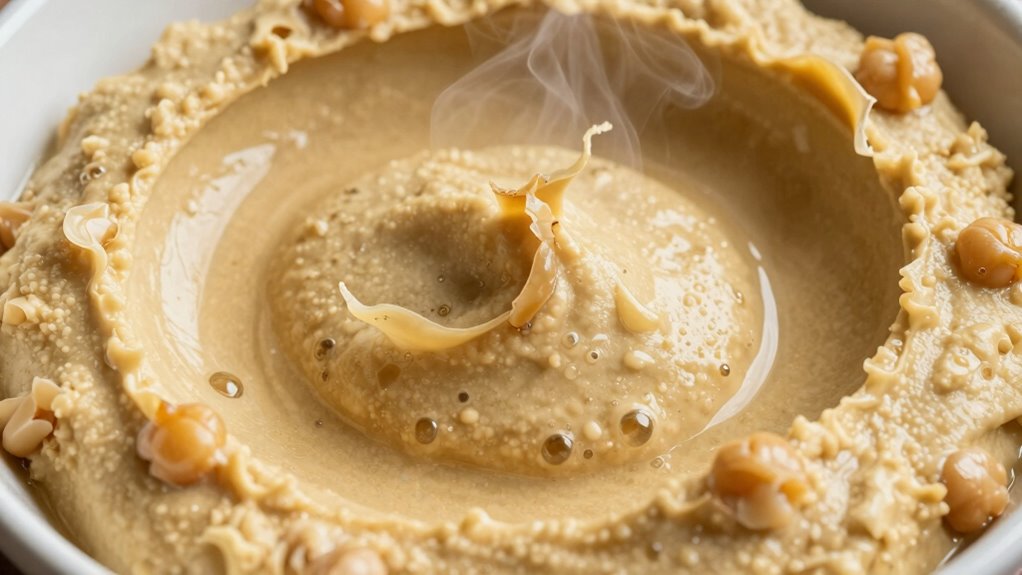
Once you’ve perfected the blending process for a smooth hummus, you can fine-tune its texture to match your personal preferences. To make it creamier or chunkier, adjust the liquid content: add more water or olive oil for smoothness, or less for thickness. Incorporate flavor variations like roasted garlic or spicy harissa, which can also influence texture by adding moisture or body. Serving suggestions rely on texture; a thicker hummus works well as a dip, while a thinner version is ideal for drizzling or spreading. Consider these factors when customizing your hummus: electric power generation with bike generators. Additionally, understanding the emulsification process can help you achieve a more stable and desirable texture. Adjusting the texture to suit your taste ensures a satisfying and personalized experience, much like choosing energy-efficient European cloud servers for sustainable solutions. Exploring sustainable energy sources can further enhance your kitchen practices by reducing environmental impact.
Troubleshooting Common Hummus Texture Problems

If your hummus isn’t achieving the desired texture, pinpointing the specific problem can help you make quick adjustments. If it’s too thick or pasty, the issue might be with poor olive oil emulsification; try slowly drizzling oil while blending to improve smoothness. Conversely, if it’s too runny, you may need to add more chickpeas or tahini to thicken it. Sometimes, lemon juice acidity can cause hummus to become watery or separate if added too aggressively. To avoid this, add lemon juice gradually, tasting as you go. If the texture is uneven or gritty, consider peeling some chickpeas or blending longer to ensure a silky consistency. Ensuring proper emulsification techniques can significantly enhance texture. Additionally, understanding the role of chickpea skins in texture can help you decide whether to peel your chickpeas for a smoother hummus. For beginners, experimenting with clinging to traditional methods and adjusting based on your desired outcome can be very helpful. Paying attention to heat management during blending can also prevent over-softening or separation, leading to a better final texture. Proper temperature control during blending is essential to prevent clumping or separation, especially when using warm ingredients. Making these small adjustments can considerably improve your hummus’s texture.
From Rustic to Ultra-Smooth: Variations in Hummus Texture
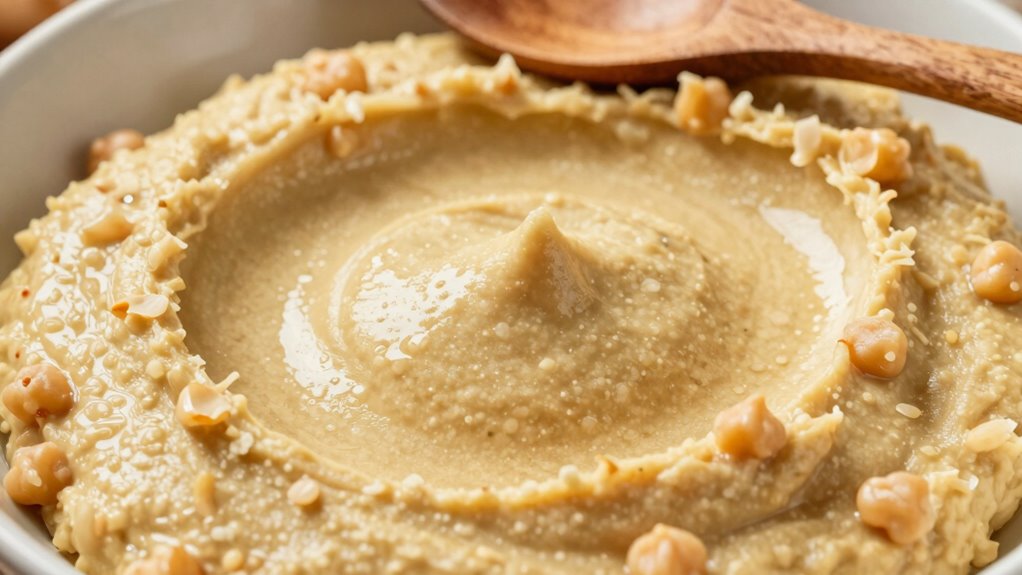
The texture of your hummus depends heavily on whether you include or remove chickpea skins, affecting smoothness and rustic appeal. Heating your ingredients can also change the final consistency, making it creamier or chunkier. Understanding how these factors influence texture helps you craft hummus exactly to your preference.
Chickpea Skin Impact
Chickpea skins play a crucial role in determining hummus texture, influencing whether it turns out rustic or ultra-smooth. Removing skins results in a creamier, silkier hummus, ideal for those seeking a smooth consistency. Conversely, leaving skins intact adds a slightly coarse texture, giving your hummus a rustic appeal. Beyond texture, chickpea skins also contribute to flavor enhancement, adding subtle earthiness and depth to the dish. If you prefer a refined, velvety hummus, peeling the skins is your best bet. However, if you value a more hearty, traditional flavor with a bit of bite, keeping the skins preserves that rustic character. Your choice directly impacts the final product, shaping the overall sensory experience and aligning with your desired hummus style.
Heating and Texture
Heating plays a pivotal role in shaping hummus texture, allowing you to shift from a rustic, coarse spread to an ultra-smooth, velvety dip. As heat is applied, it promotes texture evolution by breaking down chickpea fibers and softening skins, which enhances the sensory appeal. Warmer ingredients release natural oils and facilitate emulsification, creating a creamier consistency. Controlling heat levels helps you achieve the desired texture—gentle warming for a chunkier, rustic feel or higher heat for smoothness. Proper heating guarantees even softening, reducing grit and improving mouthfeel. Ultimately, the way you manage heat directly influences the hummus’s visual appeal and tactile quality, enabling you to tailor the texture to suit your preference, from hearty to silky.
How to Keep Your Homemade Hummus Consistent

Maintaining consistent texture in homemade hummus requires careful attention to your ingredients and process. Start by measuring ingredients precisely to ensure uniformity. Use high-quality chickpeas and consistent cooking methods to achieve a smooth base. Incorporate flavor pairing ideas, like garlic or lemon, at the right stages to enhance flavor without affecting texture. When blending, pause occasionally to scrape down the sides and check for smoothness. Presentation techniques, such as smoothing the surface or adding a drizzle of olive oil, can also help replicate the desired consistency visually. Keep notes on your method and ingredient ratios to reproduce the same texture each time. By controlling these factors, you’ll create a reliably silky, creamy hummus that meets your standards every batch.
Frequently Asked Questions
How Does Soaking Chickpeas Affect Hummus Texture?
Soaking chickpeas improves hummus texture by softening them, making blending easier. If you remove chickpea skins after soaking, your hummus will be smoother and creamier, as skins can cause a grainy feel. The soaking duration matters; longer soak times often loosen skins, facilitating removal. By controlling soaking time and skin removal, you can achieve a perfectly silky hummus consistency that’s easy to spread and enjoy.
Can Adding Oil Improve Hummus Creaminess?
Adding oil can definitely improve hummus creaminess by enhancing emulsion stability. When you incorporate oil, it helps create a smooth, cohesive texture, making the hummus richer and more spreadable. To maximize this effect, slowly drizzle the oil while blending, ensuring it emulsifies properly with the chickpeas and tahini. This technique results in a creamier, more luxurious hummus that holds together well.
Does Blending Time Influence Hummus Smoothness?
Think of making hummus like sculpting: the longer you blend, the smoother your masterpiece becomes. You should experiment with blending speed and utensil choice—slow blending with a high-quality blender or food processor yields the creamiest texture. Over-blending can turn hummus too runny, but just enough time and proper tools will give you that velvety finish. So, pay attention and blend until your hummus feels just right.
What Role Do Lemon Juice and Acidity Play in Texture?
Lemon juice and acidity play a vital role in hummus texture by providing acidic stabilization, which helps thicken the mixture and prevent separation. It also enhances flavor, adding brightness and depth. When you add lemon juice, you improve the overall consistency, making it smoother and more cohesive. So, using the right amount of acidity guarantees your hummus is not only tasty but also has a desirable, stable texture.
How Does Storage Impact Hummus Consistency Over Time?
Imagine your hummus sitting in the fridge, a gentle layer of liquid forming on top—storage effects cause texture degradation over time. As it sits, it may become thicker, grainier, or separated, losing that smooth, creamy consistency you love. The longer you store it, the more its texture changes, making it less appealing. To maintain its quality, consume it within a few days and keep it covered tightly.
Conclusion
So, next time you’re blending hummus, remember it’s all about skins, heat, and emulsions—simple, right? Ironically, the tiniest tweak can turn your creamy dream into a rustic masterpiece or a silky smooth delight. Just like life, hummus keeps you guessing—sometimes the perfect texture comes from embracing the chaos. So, enjoy the process, and don’t be surprised if your “perfect” hummus has a mind of its own. After all, imperfection is part of the flavor.
Flea & tick season Picks
flea and tick prevention
As an affiliate, we earn on qualifying purchases.