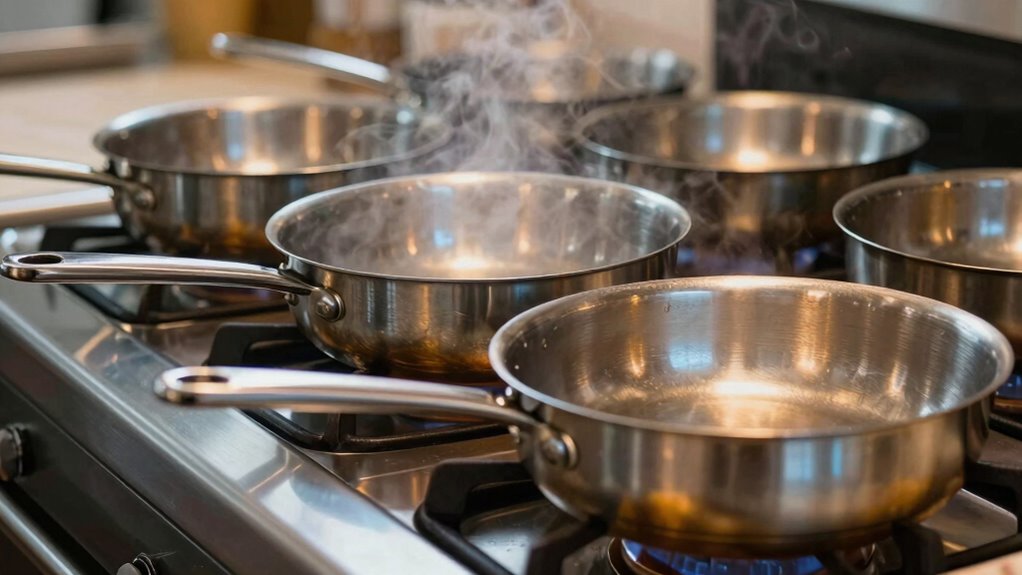

The reason pans feel so different during cooking is due to how each material transfers heat. Aluminum heats quickly and spreads heat evenly, so the pan feels responsive and smooth. Copper has superior flexibility, providing precise control. Cast iron retains heat longer, making it feel heavier and more consistent once hot. Knowing how these materials transfer heat can help you cook better. If you keep exploring, you’ll understand how to choose the right pan for your cooking style.
Listen free for 30 days with Audible
Thousands of audiobooks and originals — cancel anytime.
As an affiliate, we earn on qualifying purchases.
Key Takeaways
- Different materials have varying thermal conductivities, affecting how quickly and evenly heat is transferred to food.
- Pans with high thermal conductivity, like copper and aluminum, feel hotter and respond faster to temperature changes.
- Thick pans, such as cast iron, retain heat longer, providing a different cooking sensation and heat distribution.
- Uneven heat transfer causes some pans to feel hotter in certain areas, influencing how they respond during cooking.
- Material and thickness determine heat retention and transfer, making pans feel and behave differently during use.
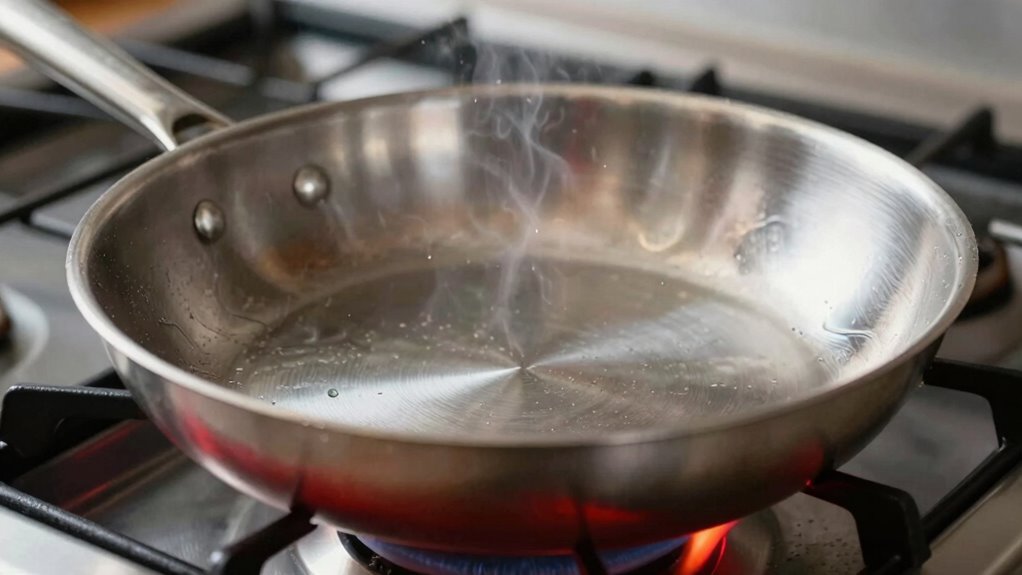
Heat transfer is crucial because it determines how evenly your food cooks. When heat spreads uniformly across the pan’s surface, you get even cooking, preventing burnt edges or undercooked centers. Pans made from materials with better heat distribution properties provide more control over cooking and minimize the chances of food sticking or burning. For example, aluminum pans excel in heat distribution, spreading heat quickly and evenly, which makes them popular among chefs. Copper pans also excel because their thermal conductivity surpasses most other metals, allowing precise temperature control. On the other hand, a thick cast iron skillet takes longer to heat but retains that heat well once it’s hot. While it may not distribute heat as evenly initially, the retained heat helps cook food thoroughly once the temperature stabilizes. Understanding thermal conductivity helps you select the right cookware for your needs. Your cooking experience is directly influenced by these properties. If your pan heats unevenly, you might notice some parts of your dish are overcooked while others are undercooked. This uneven heat transfer can be frustrating and can ruin a carefully prepared meal. Choosing the right pan means understanding how thermal conductivity and heat distribution work together. A pan with high thermal conductivity will heat up quickly and distribute that heat evenly, giving you more control. Conversely, a pan with poor heat distribution requires more attention and movement to prevent hotspots. Additionally, being aware of heat retention can help you choose cookware that maintains consistent temperatures during cooking. Recognizing how different materials manage heat effectively can significantly enhance your culinary results. Moreover, selecting cookware with appropriate heat transfer qualities can help reduce cooking time and improve energy efficiency. Understanding heat transfer mechanisms is also essential for troubleshooting cooking issues and selecting the best cookware for specific recipes.
As an affiliate, we earn on qualifying purchases.
Frequently Asked Questions
How Does Pan Material Affect Heat Transfer Efficiency?
Your pan’s material composition directly impacts heat transfer efficiency through its thermal conductivity. Materials like copper and aluminum have high thermal conductivities, meaning they heat up quickly and distribute heat evenly. Conversely, stainless steel has lower thermal conductivity, so it heats more slowly and unevenly. Choosing a pan with a material suited to your cooking needs guarantees better heat transfer, prevents hot spots, and improves cooking results.
Why Do Some Pans Heat Unevenly Despite Good Heat Conduction?
Think of your pan like a race car that hits bumps on the track. Despite good heat conduction, uneven heating occurs due to thermal expansion and material fatigue. Repeated heating causes parts of the pan to expand unevenly, creating hot spots. Over time, material fatigue weakens areas, disrupting heat flow. These factors make some pans heat unevenly, even if they’re made with good heat-conducting materials.
What Role Does Pan Thickness Play in Heat Distribution?
Pan thickness plays a vital role in heat distribution because a thicker cooking surface can absorb and distribute heat more evenly, reducing hot spots. Thicker pans also undergo less thermal expansion, maintaining their shape and ensuring consistent contact with heat sources. This stability allows heat to spread more uniformly across the surface, making your cooking more predictable and preventing uneven cooking.
How Does Cookware Design Influence Heat Transfer?
Your cookware design greatly influences heat transfer, impacting cooking safety and energy efficiency. For example, pans with flat, thick bases distribute heat evenly, reducing hot spots that can cause burns or uneven cooking. Materials like copper or aluminum conduct heat quickly, saving energy and preventing overheating. Properly designed cookware minimizes energy waste, keeps your cooking safe, and guarantees food cooks uniformly, making your kitchen more efficient and safer.
Can Heat Transfer Properties Change Over a Pan’s Lifespan?
Think of your pan as a aging storybook; as it ages, its heat transfer properties can change. Pan aging and surface degradation can create rough spots or uneven surfaces, affecting how heat spreads. Over time, these changes may reduce efficiency, making your cooking less consistent. So, yes, the heat transfer properties do evolve, and recognizing surface degradation helps you decide when it’s time for a new, more reliable pan.
As an affiliate, we earn on qualifying purchases.
Conclusion
So, next time you pick up a pan, remember it’s like holding a tiny heat maestro. Its material and design dance together, orchestrating a symphony of warmth that transforms ingredients into magic. When you feel that comforting weight or quick heat, you’re experiencing a silent performance of heat transfer in action. Embrace it, and cook with the confidence that your pan’s inner world is working tirelessly to bring your culinary dreams to life.
As an affiliate, we earn on qualifying purchases.
non-stick heat distribution cookware
As an affiliate, we earn on qualifying purchases.
As an affiliate, we earn on qualifying purchases.
Fall Picks
fall essentials
As an affiliate, we earn on qualifying purchases.