
When bread goes stale, it’s caused by biochemical reactions like starch retrogradation, which crystallizes starch molecules and pushes moisture away, making the bread dry and firm. Enzymatic activity and residual fermentation also contribute by breaking down starches and proteins over time. These processes occur gradually, influenced by temperature and humidity, subtly changing the bread’s texture and flavor. Understanding these reactions reveals why storage methods matter—keep exploring to uncover more surprising details.

Get kitchen staples and gadgets delivered free — and shop member deals
- Fast, free delivery on millions of items
- Access to Prime Big Deal Days deals on October 6–7
- Prime Video, Amazon Music and more included
Key Takeaways
- Residual fermentation and enzymatic activity after baking contribute to biochemical changes that affect bread’s texture over time.
- Retrogradation, the crystallization of starch molecules, causes bread to become dry and firm.
- Enzymes break down starches and proteins post-baking, accelerating staling and altering internal moisture distribution.
- Storage conditions, like temperature and humidity, influence the rate of biochemical reactions and retrogradation.
- Even in airtight storage, ongoing biochemical processes gradually turn fresh bread into stale, firmer, and less moist.
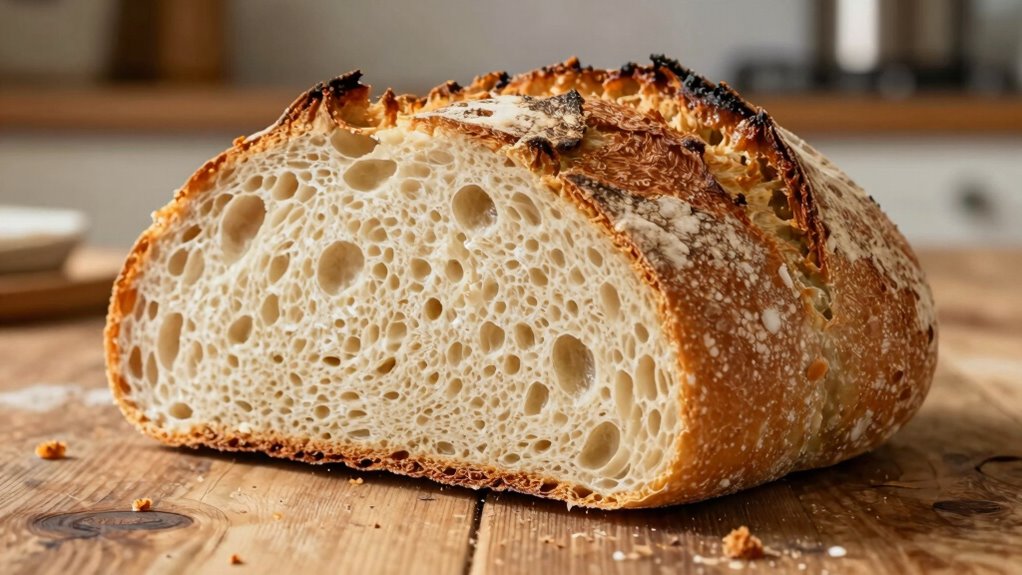
Have you ever wondered why bread becomes hard and loses its freshness even before you finish the loaf? The answer lies in the complex science happening behind the scenes, particularly through fermentation processes and enzymatic activity. When bread is baked, yeast ferments the sugars in the dough, producing carbon dioxide that makes the bread rise and gives it that soft, airy texture. But once the bread cools and you start to store it, fermentation processes fundamentally come to a halt, yet the enzymatic activity continues to influence its texture and freshness.
Enzymatic activity involves natural enzymes present in the flour and those introduced during baking. These enzymes, like amylases, break down starches into simpler sugars. When bread is fresh, these enzymes help maintain a tender crumb by balancing moisture and structural integrity. Over time, however, enzymatic activity continues even after baking, gradually breaking down the starches and proteins in the bread. This ongoing process alters the bread’s internal structure, resulting in a denser, tougher texture—what we recognize as staling. Interestingly, enzymatic activity can also be influenced by storage conditions, which can either slow down or accelerate these changes.
Enzymes like amylases keep breaking down starches, gradually changing bread’s texture as it stales over time.
Fermentation processes also play a role in how quickly bread goes stale. During fermentation, yeast consumes sugars, producing alcohol and carbon dioxide. While these processes are mainly active during dough preparation, residual fermentation can occur slowly after baking, especially if the bread is stored at warmer temperatures. This residual activity can cause subtle changes in the bread’s internal moisture distribution, helping it lose its initial softness. Additionally, because fermentation involves yeast fermentation, it influences the biochemical reactions that contribute to staling. Interestingly, some fermentation byproducts can even impact the flavor and aroma of the bread as it ages. Moreover, the type of yeast and fermentation duration can also affect the rate at which these changes occur.
The transformation into staleness is primarily driven by a process called retrogradation, where the gelatinized starch molecules realign and crystallize over time. This crystallization causes the bread’s water to migrate away from the starch and gluten network, leading to dryness and firmness. Enzymatic activity accelerates this process by breaking down some of the starches into simpler sugars, which then retrograde more quickly. The result is a bread that feels harder and less appealing, even though the original ingredients haven’t changed. This natural process is affected by factors such as humidity and temperature, which can influence the rate of staling.
Understanding these processes gives you insight into why bread doesn’t stay fresh forever. Despite efforts to keep it soft—like storing it in airtight containers or reheating—these natural biochemical reactions continue beneath the surface. So, next time you notice your bread going stale, you’ll know it’s not just about moisture loss but also about ongoing enzymatic activity and fermentation processes that subtly alter its structure over time. Recognizing the role of these biochemical reactions can also inspire better storage techniques to slow down staling.
bread storage container airtight
As an affiliate, we earn on qualifying purchases.
As an affiliate, we earn on qualifying purchases.
Frequently Asked Questions
How Does Humidity Affect Bread Staling?
Humidity affects bread staling by influencing moisture migration, where high humidity keeps bread moist longer, delaying staling, while low humidity causes moisture to escape, speeding up the process. Additionally, increased humidity can promote microbial activity, leading to mold growth. You’ll notice bread stales faster in dry environments because moisture leaves the bread quickly, but in humid conditions, it stays softer, although there’s a risk of mold.
Can Bread Staling Be Reversed?
Yes, bread staling can be reversed to some extent. When you reheat bread, the heat helps restore flavor preservation and softens the texture, making it taste fresher. To maximize this, wrap the bread in foil or use a microwave with a damp paper towel. Keep in mind, though, that repeated reheating can cause further texture alteration, so enjoy it promptly for the best flavor and ideal texture.
What Types of Bread Stale the Fastest?
You’ll notice that soft, airy breads like baguettes or sandwich loaves stale the fastest, almost like they’re racing against time! Their delicate crumb and thin crust lose freshness quickly, transforming into rock-hard shells. The crust texture changes dramatically, becoming tough and chewy. When it comes to bread freshness, these types quickly turn stale, reminding you to savor every bite before they lose their soft, fluffy magic.
Does Freezing Bread Prevent Staling?
Freezing bread does prevent staling by slowing down the starch retrogradation process, but it doesn’t stop flavor degradation or mold development entirely. When you freeze bread, it stays fresh longer, but if you leave it too long or don’t store it properly, mold can still grow once thawed. To keep bread tasting good and safe, freeze it quickly and consume it within a few months.
How Does Bread Storage Method Influence Staling?
Think of bread like a sponge soaking up its surroundings. If you store it in airtight bread packaging or sturdy storage containers, you slow down staling by limiting moisture loss and exposure to air. Using these methods keeps the bread fresh longer, while leaving it in open air or improper packaging speeds up staling. Proper storage is your best shield against stale bread, maintaining its softness and flavor.
As an affiliate, we earn on qualifying purchases.
Conclusion
Now that you know why bread stales—due to starch molecules recrystallizing—you can take steps to keep it fresher longer. Imagine baking a loaf on a Sunday and storing it properly; by Monday, it’s still soft and tasty. Or, if you notice your bread hardening faster, try wrapping it tightly or freezing slices. Understanding this science helps you enjoy your bread more, saving money and reducing waste—so next time, you’re in control of that stale surprise.
bread staling prevention products
As an affiliate, we earn on qualifying purchases.
As an affiliate, we earn on qualifying purchases.
As an affiliate, we earn on qualifying purchases.
NFL season / tailgating Picks
team gear
As an affiliate, we earn on qualifying purchases.