Cast iron seasoning isn’t just oil; it’s a chemical process where heat transforms oil molecules into a durable, non-stick layer bonded to the metal. When you heat the skillet, the oil undergoes polymerization, creating a tough, rust-resistant barrier that improves with use. Choosing the right oils and proper techniques are key to building a strong seasoning. To learn how chemistry shapes this process and get expert tips, explore further.

Get kitchen staples and gadgets delivered free with Prime
- Fast, free delivery on millions of items
- Prime Video, Amazon Music and more included
- Member-only deals all year
Key Takeaways
- Seasoning involves chemical polymerization of oils on cast iron, creating a durable, non-stick layer, not just a simple oil coating.
- Heat activates chemical reactions that bond oil molecules to the metal, forming a protective, carbon-rich film.
- The process transforms oils into cross-linked polymers, making the seasoning resistant to rust and sticking.
- Proper oil selection and heating techniques influence the chemical bonding, affecting seasoning durability.
- Maintaining seasoning requires understanding these chemical reactions, not merely applying oil, for long-lasting results.
As an affiliate, we earn on qualifying purchases.
What Is Cast Iron Seasoning and Why Does It Matter?
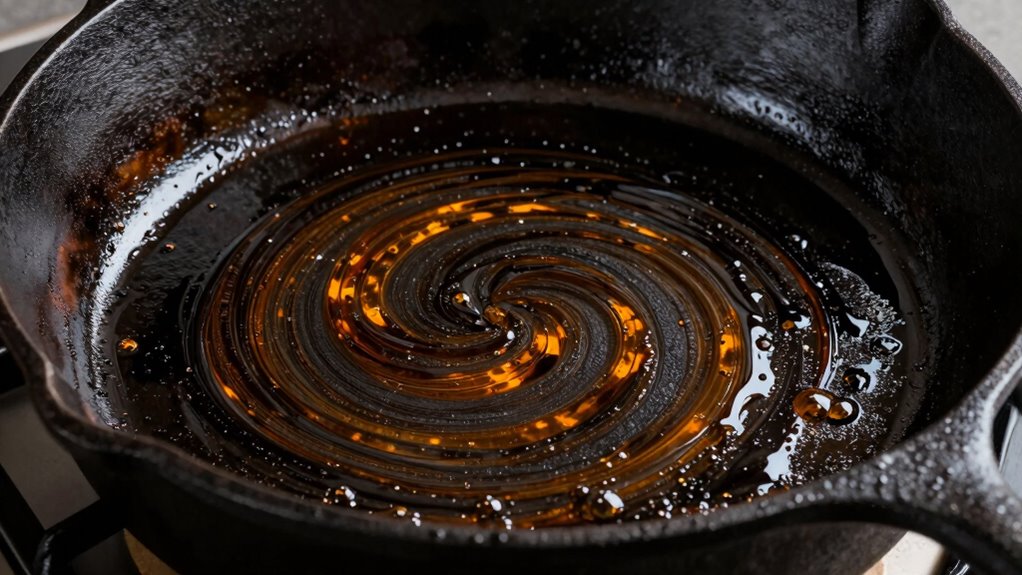
Cast iron seasoning is the process of building up a protective, non-stick coating on your skillet through repeated application of oil or fat. This coating forms via metal bonding, where the oil chemically reacts with the iron surface during heating, creating a durable layer. Proper seasoning enhances seasoning longevity, meaning your skillet stays non-stick longer and resists rust. When you maintain your cast iron correctly, the seasoning develops a smooth, resilient surface that improves with each use. It’s not just about preventing sticking; it’s about creating a protective barrier that preserves the skillet’s condition over time. Understanding this process helps you care for your cast iron properly, ensuring it remains functional and non-stick with continued use, making your cooking experience more enjoyable and efficient. Knowing how to care for your cast iron can also help you prevent rust and maintain a healthy, pest-free kitchen environment. Recognizing the chemistry behind seasoning can empower you to troubleshoot issues and optimize your skillet’s performance. Additionally, knowing the chemical reactions involved in seasoning allows for better control over the process to achieve optimal results. A deeper understanding of metal bonding can further assist in mastering the seasoning process for long-lasting performance. Exploring the role of temperature in the seasoning process can also significantly improve the durability of your skillet’s coating.
best oils for cast iron seasoning
As an affiliate, we earn on qualifying purchases.
As an affiliate, we earn on qualifying purchases.
How Oil Turns Into a Non-Stick Coating Through Chemistry?
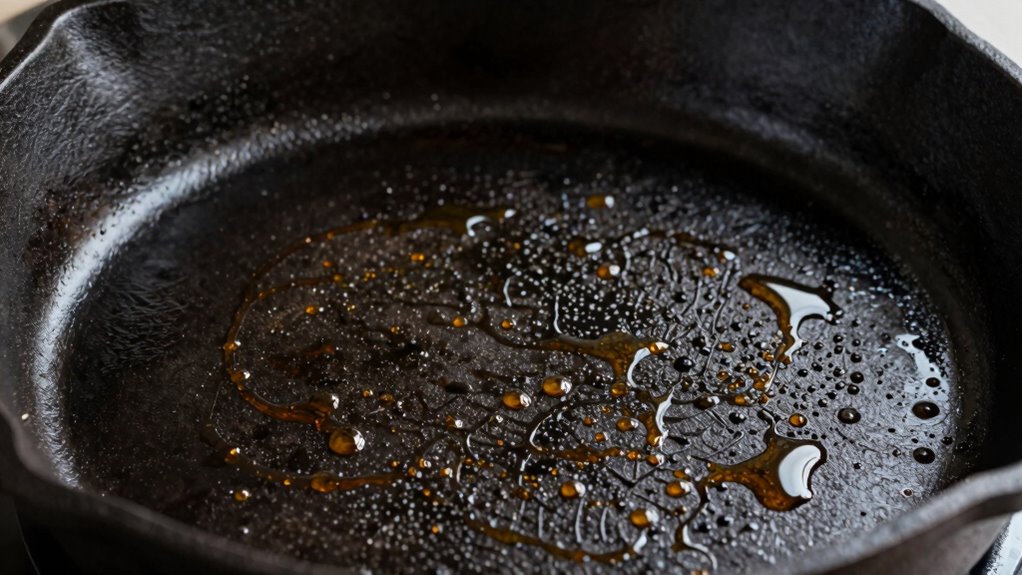
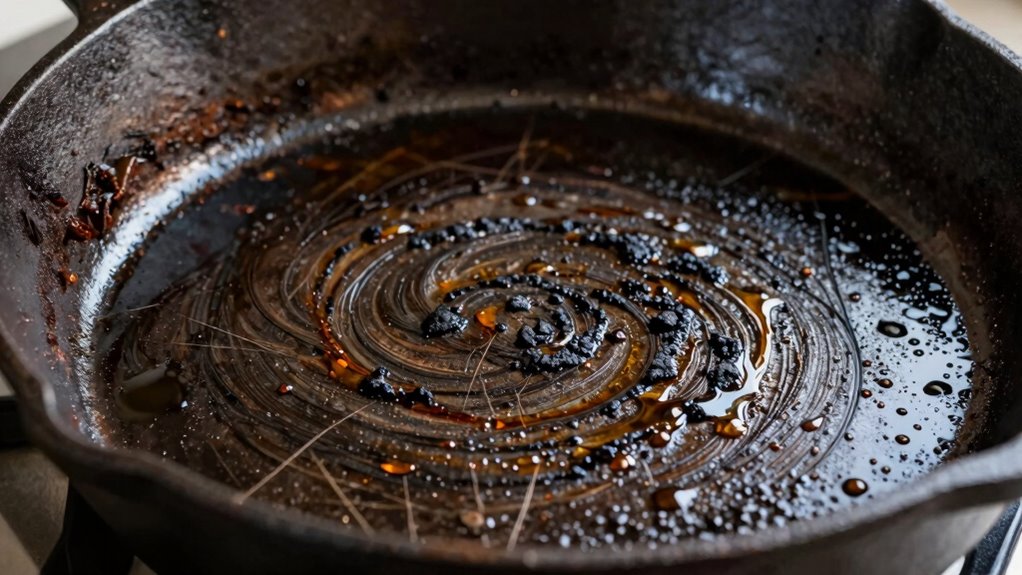
When you apply oil to your cast iron skillet and heat it, a fascinating chemical process begins. This is where food science and chemistry come together. The heat causes the oil’s molecules to break down and react with the metal surface, initiating a series of chemical reactions. These reactions lead to the formation of a thin, durable layer of polymerized oil—known as seasoning—that bonds tightly to the cast iron. This non-stick coating isn’t just a simple film; it’s a complex, carbon-rich layer created through the process of polymerization. Polymerization As you continue to heat and season your skillet, these chemical reactions build up, enhancing the surface’s non-stick properties and rust resistance. This transformation is the core reason why seasoned cast iron becomes so effective and long-lasting. Additionally, choosing the right type of oil—preferably one with high smoke points—can optimize this chemical process for better durability.
As an affiliate, we earn on qualifying purchases.
Which Oils Are Best for Seasoning Cast Iron?
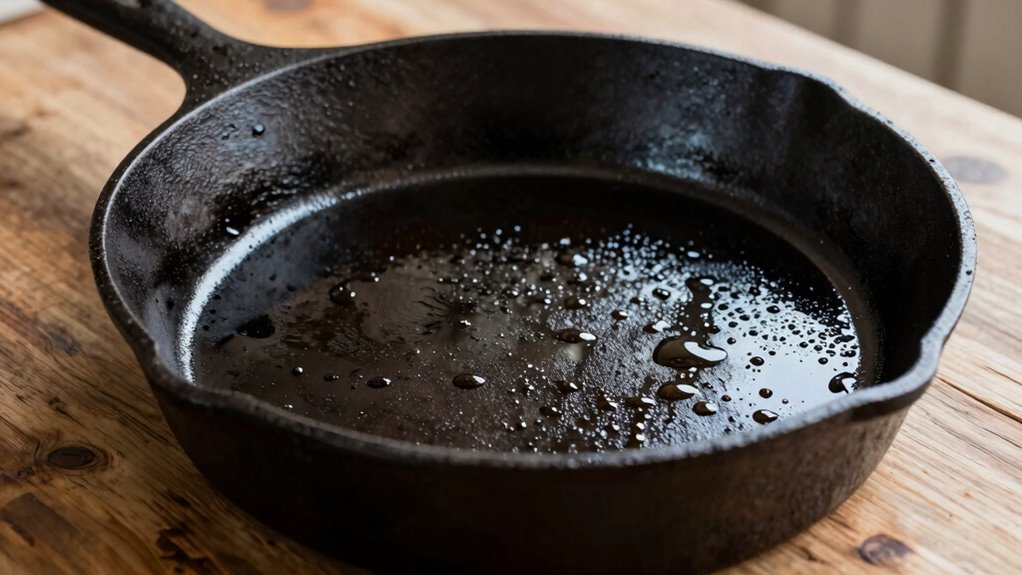
Have you ever wondered which oils produce the best seasoning for your cast iron skillet? The key is selecting oils with high smoke points, as they create durable seasoning layers without breaking down prematurely. Oils like flaxseed, grapeseed, and soybean are popular choices because they polymerize effectively at higher temperatures. When choosing, consider the oil’s smoke point and how well it forms a strong, even coating.
| Oil Type | Smoke Point | Best for Seasoning? |
|---|---|---|
| Flaxseed | 225°C (437°F) | Yes, builds thick layers |
| Grapeseed | 216°C (421°F) | Yes, for durable seasoning |
| Olive Oil | 191°C (375°F) | No, prone to breakdown |
Opt for oils with higher smoke points to develop a resilient, long-lasting seasoning.
As an affiliate, we earn on qualifying purchases.
How Heat and Polymerization Build a Durable Coating?
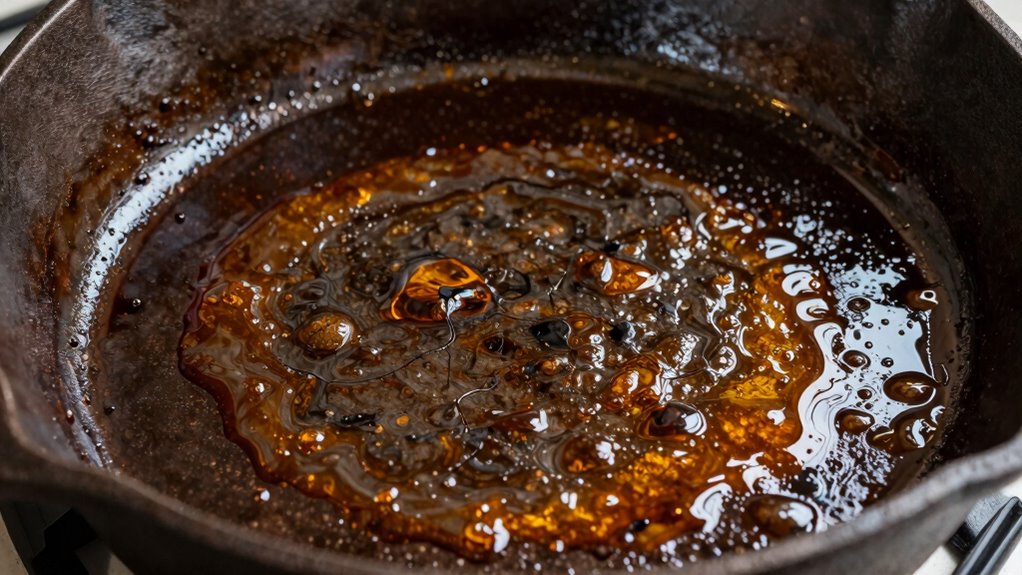
Heat triggers the polymerization process in the oil, transforming it from a liquid into a solid, durable layer on your skillet’s surface. As heat transfers from the stove to the oil, it energizes the molecules, allowing chemical bonds to form between carbon chains. This bonding creates a cross-linked network that bonds tightly to the cast iron, forming a protective coating. The temperature must be high enough to break down the oil’s molecules, enabling them to link together through chemical bonds. The result is a hard, resilient surface that improves with each seasoning layer. Proper heat transfer is vital—if the heat isn’t even or sufficient, the polymerization process won’t fully develop, leading to a weaker, less durable seasoning. Understanding polymerization is essential to achieving optimal seasoning results. Additionally, consistent temperature control ensures that the chemical reactions occur evenly, preventing weak spots in the coating. Achieving ideal conditions requires monitoring both heat and oil application techniques to maximize the formation of a durable, non-stick surface. Properly managing heat distribution also helps in preventing hot spots that could cause uneven seasoning. Maintaining proper cooking environment conditions can further enhance the seasoning process and longevity of your skillet.
Common Mistakes That Ruin Your Seasoning: And How to Fix Them?
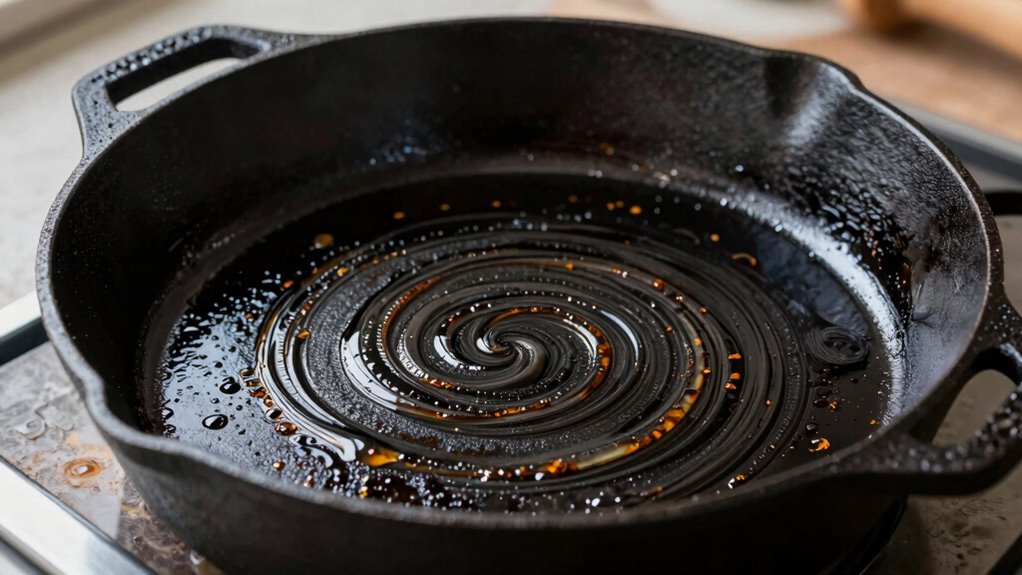
Improper cleaning habits and using the wrong oils can quickly ruin your cast iron’s seasoning. If you don’t clean your pan properly or use oils that don’t polymerize well, your coating may become sticky or develop rust. Proper seasoning process is crucial for long-lasting protection and non-stick performance. For instance, understanding the chemical reactions involved in seasoning can help you achieve a more durable coating. Additionally, incorporating water management techniques, like drying your pan thoroughly after cleaning, can prevent rust formation. Paying attention to oil selection and application techniques can significantly improve your seasoning results. Using the right vetted products can make a noticeable difference in the seasoning process. Luckily, you can fix these issues by adjusting your cleaning routine and choosing the right oils for seasoning.
Improper Cleaning Habits
Many people unknowingly damage their cast iron seasoning by using harsh cleaning methods or neglecting proper care. Improper cleaning habits can strip away that delicate layer of polymerized oil, ruining your seasoning. Here are common mistakes to avoid:
- Using abrasive cleaning tools like steel wool or metal scrubbers that scratch the surface.
- Overusing soap, which can break down the seasoning. A little soap occasionally is okay, but frequent use isn’t necessary.
- Soaking your skillet in water for too long, leading to rust and loss of seasoning.
Instead, opt for gentle scrubbing with a soft brush or sponge, minimal soap, and quick drying. Proper cleaning preserves your seasoning and keeps your pan in top shape.
Using Wrong Oils
Have you ever wondered why your cast iron skillet doesn’t develop a durable, non-stick surface? Using the wrong oils can be the culprit. Oils with low smoke points, like unrefined flaxseed or vegetable oil, tend to burn before forming proper seasoning layers. This creates sticky, uneven coatings that can ruin your skillet’s surface over time. Instead, choose oils with higher smoke points, such as grapeseed or canola oil, to ensure they polymerize correctly during seasoning. Properly selected oils promote even, durable seasoning layers that resist sticking and rust. Avoid cheap or low-smoke-point oils, and always heat your skillet gradually to prevent burning. By using the right oils, you give your seasoning the best chance to build a strong, long-lasting non-stick surface.
Tips for Maintaining and Improving Your Cast Iron Seasoning
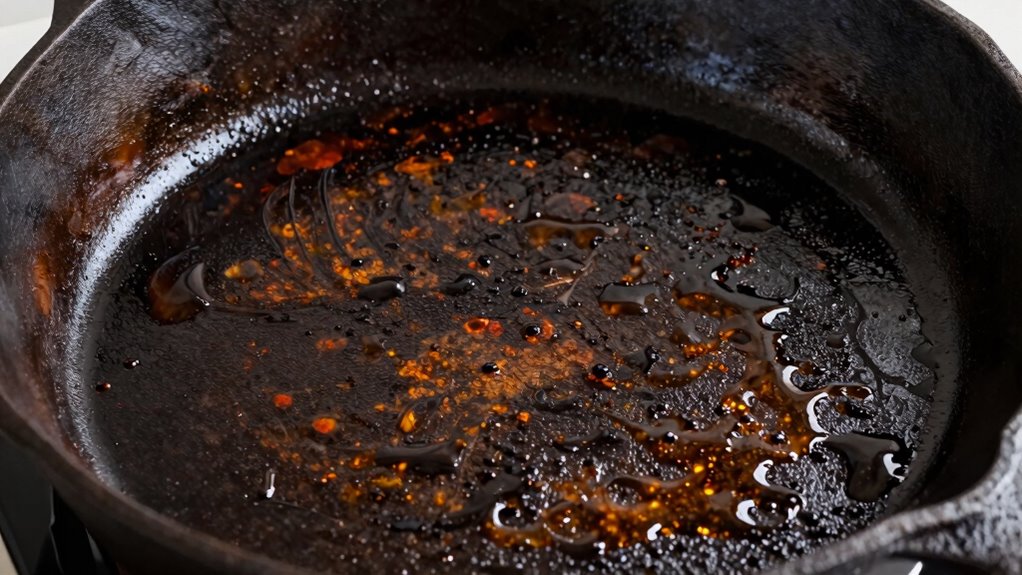
To keep your cast iron skillet in top condition, regular maintenance and thoughtful improvements to its seasoning are essential. Proper care enhances seasoning longevity and ensures your skillet performs well over time. Here are some tips:
- Consistently apply a thin, even layer of oil after each use. This improves oil application techniques and builds a stronger seasoning layer.
- Avoid harsh soaps and abrasive scrubbers, which can strip seasoning. Instead, use hot water and a brush for cleaning.
- Regularly bake the skillet at high heat with a light oil coating to reinforce the seasoning and fill in any weak spots.
These simple practices help maintain a durable, well-seasoned skillet that improves with use.
Frequently Asked Questions
Can Seasoning Be Applied to New Cast Iron Cookware?
Yes, you can apply seasoning to new cast iron cookware. The seasoning process helps build a natural non-stick surface and prevents rust. For new cast iron, wash it thoroughly, dry it completely, then apply a thin layer of oil. Bake it in the oven at around 450°F for an hour. Repeat this process a few times to develop a durable, well-seasoned surface that improves your cooking experience.
How Long Does a Seasoned Cast Iron Pan Last?
A well-maintained seasoned cast iron pan can last decades, often a lifetime, if you keep adding seasoning layers regularly. The key is oil penetration, which builds up a durable surface over time. As you cook and re-season, those layers bond better, protecting the pan from rust and sticking. With proper care, your cast iron can serve you for generations, making it a long-lasting kitchen investment.
Is It Necessary to Re-Season Cast Iron Regularly?
Think of your cast iron like a garden that needs tending. You don’t have to re-season it every day, but regular seasoning maintenance keeps it in top shape. Typically, you should re-season when the surface starts looking dull or rusty. This re-seasoning frequency is like watering your plants—keeping the protective layer healthy prevents rust and guarantees your pan stays non-stick and durable for years.
Can I Use Soap to Clean My Seasoned Cast Iron?
Yes, you can use dish soap to clean your seasoned cast iron, but do so sparingly. Soap can remove some of the seasoning, leading to potential seasoning removal if overused. To maintain your cast iron’s non-stick surface, use soap occasionally and follow up with thorough drying and light oiling. This way, you keep your skillet clean without compromising its seasoned surface.
Does the Type of Oil Affect the Seasoning’s Durability?
Think of your cast iron like a canvas—certain oils make the masterpiece last longer. Yes, the type of oil affects seasoning stability; oils with higher smoke points and balanced composition create a durable, resilient coating. For best results, choose oils like flaxseed or vegetable oil. Their composition forms a strong polymerized layer, ensuring your seasoning withstands the test of time and use.
Conclusion
Remember, your cast iron’s true beauty lies in the silent artistry of chemistry. With patience and mindful care, you’ll nurture a seasoned surface that dances gracefully between non-stick and resilience. Every subtle layer you build is like a quiet whisper of mastery, turning simple oils into a lasting legacy. Embrace the journey, and soon you’ll find that your skillet’s understated elegance speaks volumes—an enduring affirmation to the delicate dance of science and tradition.
NFL season / tailgating Picks
team gear
As an affiliate, we earn on qualifying purchases.