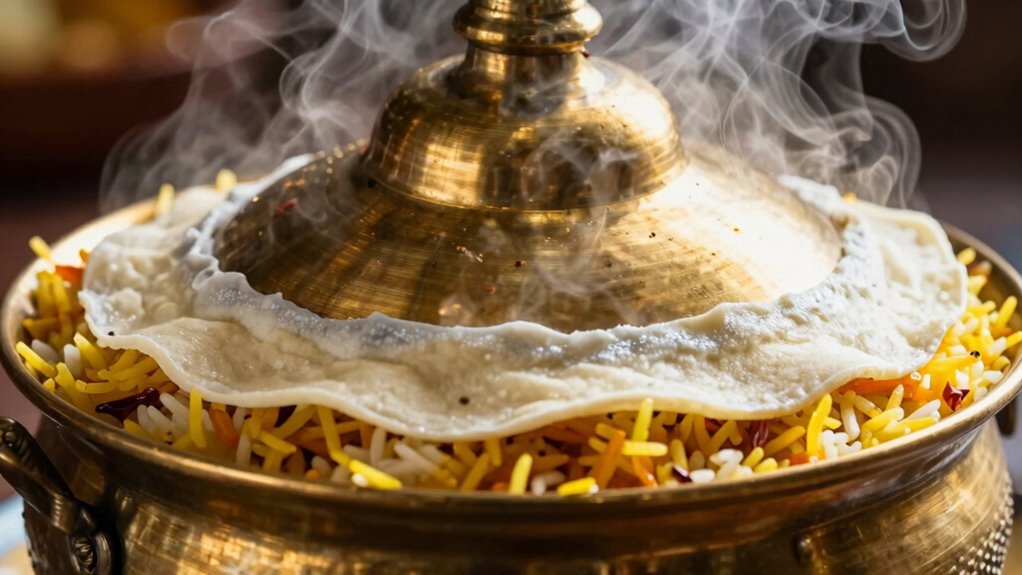

When you cook biryani using dum, you seal the pot to trap steam inside. This steam creates pressure that tenderizes meat and makes rice fluffy. The seal prevents flavors, aromas, and moisture from escaping, ensuring a rich, flavorful dish. To achieve this, you typically use dough or foil to close the edges tightly. Keep in mind that proper sealing and control of heat are key—continue exploring for tips on perfecting your dum technique.
Open a free Amazon Business account
Business pricing, bulk buying and tax-exempt orders.
As an affiliate, we earn on qualifying purchases.
Key Takeaways
- The dum seal traps heat, moisture, and volatile oils inside the cooking vessel, preserving flavors and aromas.
- Proper sealing materials like dough or foil prevent steam from escaping, ensuring consistent pressure.
- The trapped steam creates pressure that tenderizes meat and absorbs moisture into rice for fluffy texture.
- Maintaining medium heat during cooking sustains pressure and prevents seal leaks or failure.
- Ensuring edges are clean, dry, and firmly sealed before cooking is essential for effective steam retention.
As an affiliate, we earn on qualifying purchases.
What Is Dum Cooking and Why Is It Essential for Biryani?
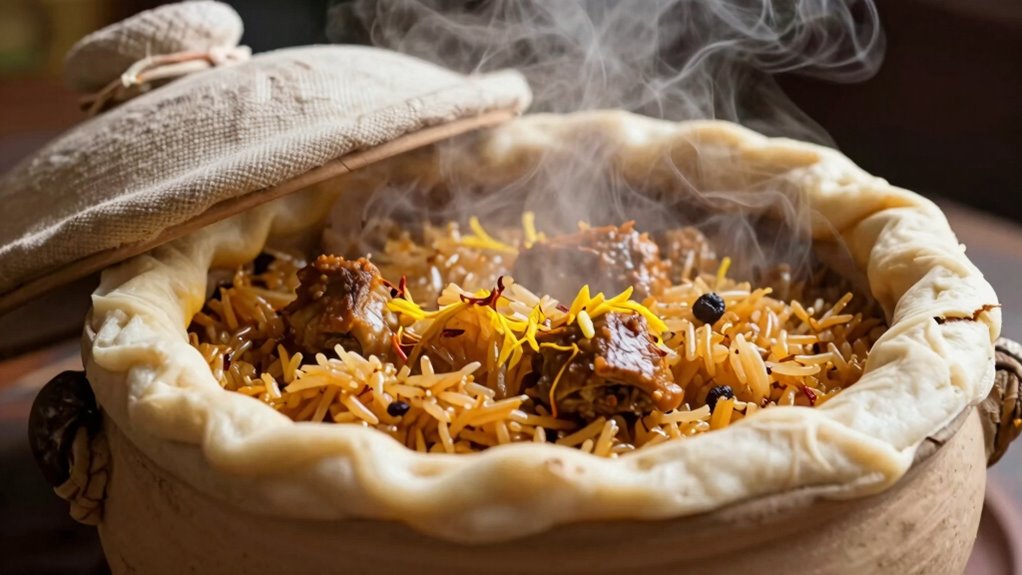
Dum cooking is a traditional method of slow, flavorful steaming that’s vital for making authentic biryani. This technique involves carefully layered ingredients cooked together in a sealed pot, allowing heat to circulate gently. This slow, controlled heat method is essential because it preserves the dish’s delicate flavors and aromas, which can be lost with high-heat cooking. By using slow, controlled heat, dum cooking guarantees the rice and meat absorb each other’s flavors fully, creating a harmonious blend. It’s a precise cooking technique that maintains moisture and prevents overcooking. This slow process intensifies the taste, guaranteeing each bite is rich and aromatic. Proper sealing and contingency plans during dum cooking are also crucial to ensure no steam escapes, preserving the moisture and flavor. Additionally, the sealing technique used during the process plays a vital role in maintaining the internal steam and aroma. Understanding the importance of temperature regulation in dum cooking is essential for achieving perfect biryani every time. Moreover, mastering steam retention techniques can greatly enhance the final dish’s flavor profile.
As an affiliate, we earn on qualifying purchases.
How Does the Dum Seal Lock in Flavors and Aromas?
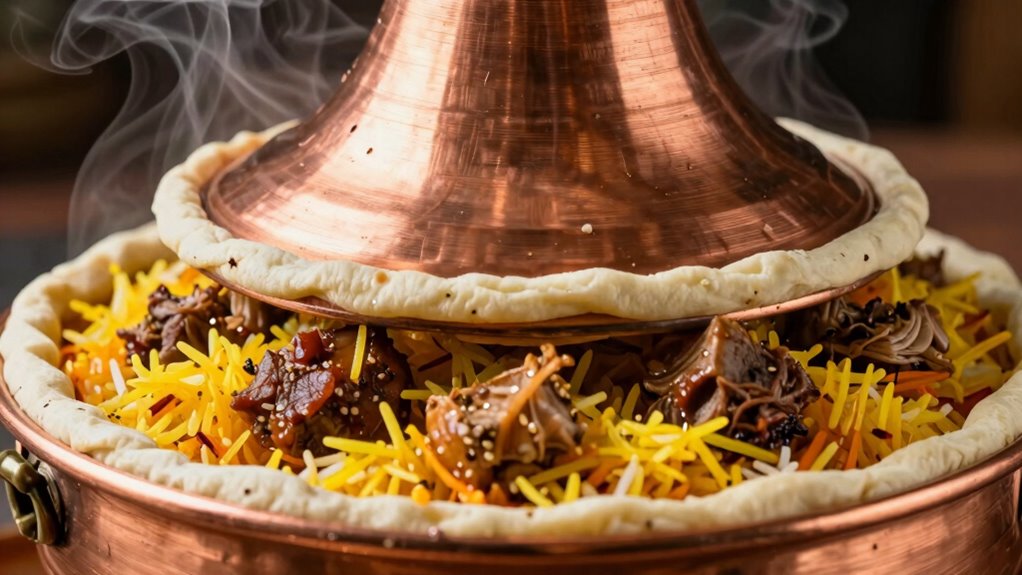
The sealed lid plays a crucial role in trapping heat, moisture, and volatile compounds inside the cooking vessel, which helps lock in the flavors and aromas of the ingredients. When you seal the dum, steam creates pressure that prevents the escape of essential oils and aromatic vapors. This process enhances flavor retention and aroma preservation by:
Sealing the lid traps heat and aroma, ensuring tender, flavorful, and aromatic dishes.
- Creating a closed environment that minimizes aroma loss
- Ensuring even distribution of steam for consistent flavor infusion
- Locking in moisture, which keeps ingredients tender and flavorful
- Allowing the ingredients’ natural juices to meld, intensifying taste and fragrance
This sealing process also contributes to energy efficiency by maintaining consistent cooking temperatures, reducing overall energy consumption. The pressure buildup inside the vessel further helps in breaking down tougher ingredients, resulting in a more tender and flavorful dish. Additionally, the steam retention process plays a vital role in maintaining the dish’s moistness and rich taste profile. Proper sealing technique ensures that all these benefits are maximized, leading to a better overall flavor and texture, as well as improved cooking efficiency.
steam sealing cookware for biryani
As an affiliate, we earn on qualifying purchases.
As an affiliate, we earn on qualifying purchases.
How the Dum Seal Tenderizes Meat and Fluffs Rice
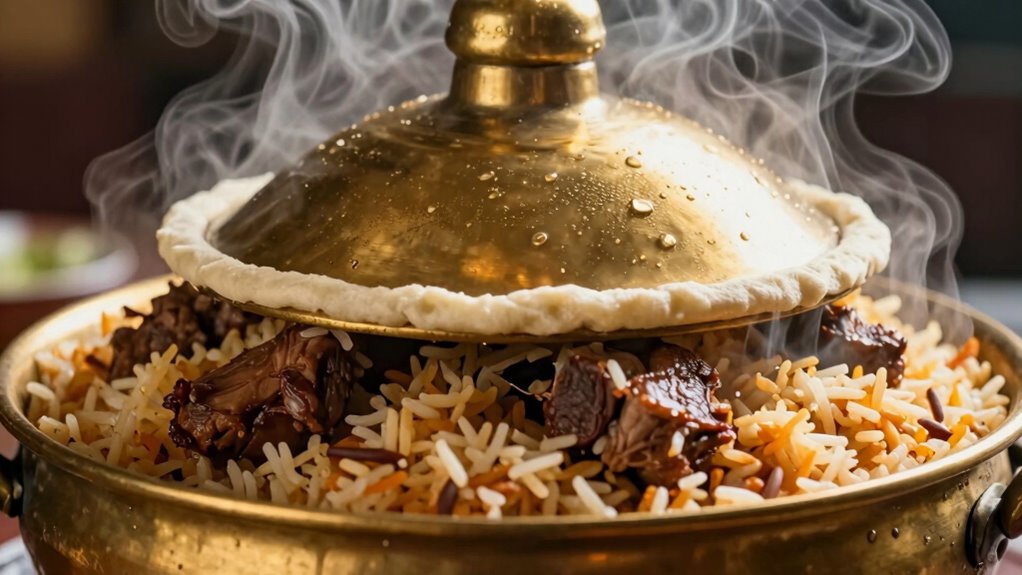
When you seal the lid tightly during cooking, the pressure and steam build-up work together to tenderize meat and fluff rice. This seal technique traps steam inside, creating high steam pressure that penetrates the meat fibers, breaking down tough connective tissues and making them tender. Simultaneously, the steam surrounds the rice grains, causing them to absorb moisture and expand, resulting in fluffy, separate grains. The pressure ensures even heat distribution, speeding up cooking and enhancing texture. Without a proper seal, steam escapes, reducing pressure and compromising tenderness and fluffiness. By maintaining the right steam pressure through a secure dum seal, you guarantee your biryani turns out perfectly tender and light, with rice that’s beautifully fluffy and flavorful. Additionally, steam pressure plays a role in ensuring even heat distribution, which can improve the overall texture and appearance of your dish.
As an affiliate, we earn on qualifying purchases.
How to Create a Perfect Dum Seal for Biryani
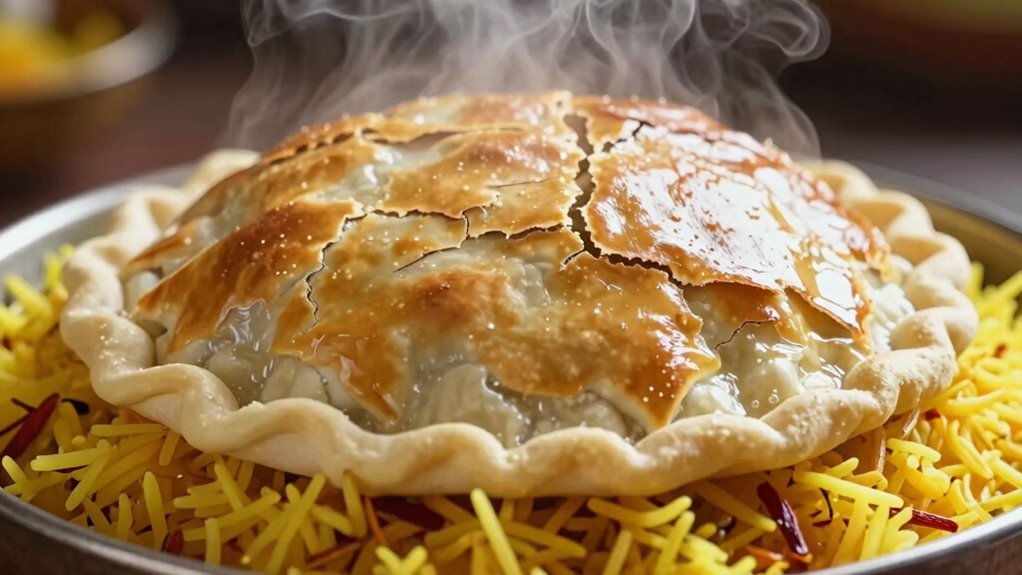
Creating a perfect dum seal is key to locking in the steam that tenderizes the meat and fluffs the rice. To achieve this, focus on choosing the right seal materials and sealing techniques. First, select materials like dough, aluminum foil, or a tight-fitting lid that can withstand heat. Second, ensure your container’s edges are clean and dry before sealing. Third, apply a layer of dough or foil around the edges to create an airtight barrier. Fourth, press firmly to eliminate any gaps, guaranteeing a secure seal. These sealing techniques prevent steam from escaping, maintaining the right pressure inside. Proper sealing also involves understanding how different heat distribution impacts steam retention during cooking. Additionally, employing consistent feedback techniques can help monitor and improve sealing methods over time. Understanding how steam buildup affects the cooking process can further refine your sealing strategy. Using proper sealing techniques ensures that no steam escapes, which is crucial for achieving the perfect dum. By carefully selecting seal materials and sealing methods, you guarantee a perfectly sealed dum, resulting in tender, flavorful biryani. Incorporating knowledge of water retention can also enhance the sealing process to better trap steam.
Common Mistakes That Break the Dum Seal and How to Fix Them
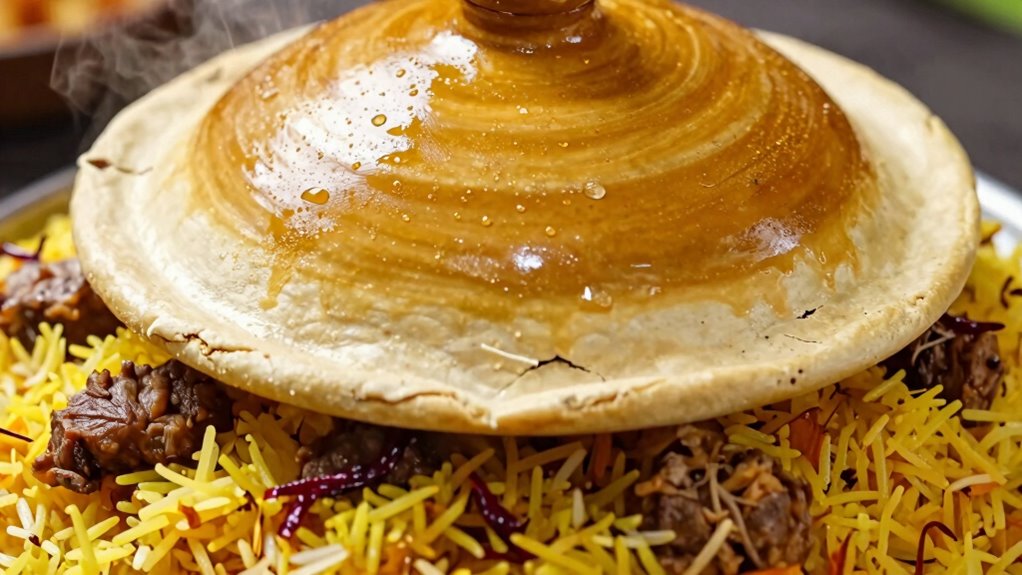
One common mistake that breaks the dum seal is using materials that aren’t heat-resistant or fail to form an airtight barrier. Poor seal integrity allows steam to escape, disrupting pressure control inside the vessel. When the seal isn’t tight, steam leaks out, preventing the buildup of necessary pressure for proper dum cooking. To fix this, ensure you use a sturdy, heatproof material like dough or aluminum foil that creates a complete seal. Double-check that the edges are pressed firmly against the vessel’s rim. If you notice steam escaping, reseal immediately. Maintaining strong seal integrity is essential for pressure control, which ensures the flavors meld properly and the rice cooks evenly. Proper sealing techniques help prevent common mistakes that compromise your biryani’s texture and taste. Additionally, using appropriate sealing materials ensures that the dum process is effective and the flavors are locked in properly. Using the right sealing techniques also minimizes the risk of accidental steam leakage during cooking. Remember, seal integrity is crucial for achieving the perfect dum biryani every time.
Different Styles of Dum Biryani and How Techniques Vary

Different styles of dum biryani showcase how cooking techniques and regional ingredients influence flavor and texture. You’ll notice that each style reflects its regional flavor profiles and ingredient variations. For example, Hyderabadi biryani uses fragrant basmati rice, saffron, and marinated meats, cooked with a layered technique. In contrast, Kolkata biryani incorporates potatoes and subtle spices, emphasizing Mughlai influence. Here are key differences:
Different styles of dum biryani reflect regional ingredients and cooking techniques shaping unique flavors and textures.
- Cooking Method: Some use layered dum cooking, others cook ingredients together. Layered cooking involves carefully stacking rice and meat in a sealed pot to trap steam, ensuring even cooking.
- Spice Level: Varies from mild to spicy depending on regional preferences.
- Ingredient Focus: Some emphasize meat, others highlight vegetables or rice.
- Flavor Additions: Use of regional herbs, nuts, and dried fruits varies.
Understanding these distinctions helps you appreciate how regional flavor profiles and ingredient variations shape each style. Additionally, the dum cooking process relies on trapping steam to cook ingredients evenly and preserve their flavors.
Troubleshooting Dum Sealing Problems for Perfect Biryani
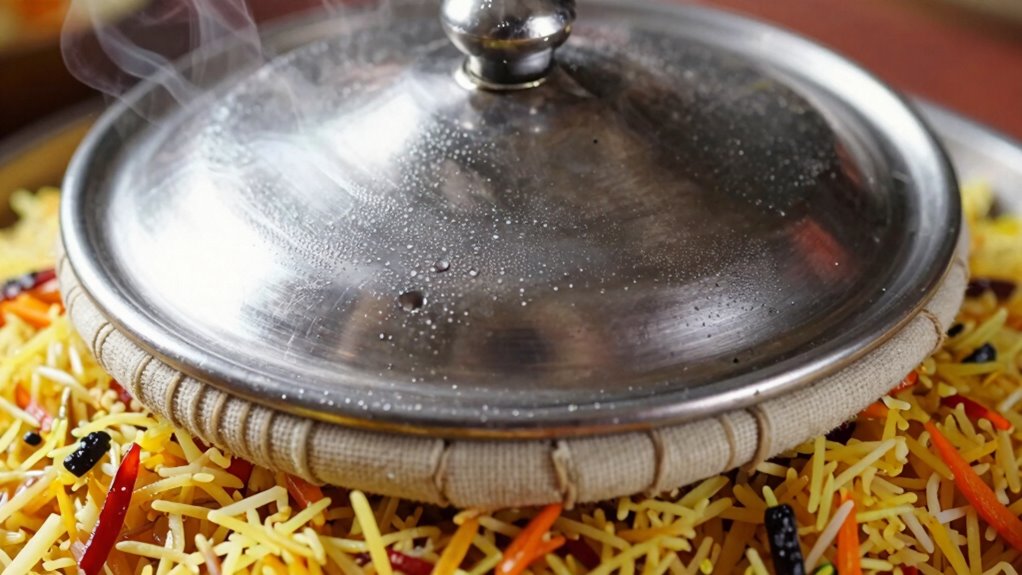
Troubleshooting dum sealing issues is essential to achieve perfectly cooked biryani, as an imperfect seal can lead to steam escaping and uneven cooking. To fix seal imperfections, start by checking for gaps or leaks around the lid. Using a damp cloth around the edges can help create a tighter seal. If steam still escapes, consider re-sealing with a thicker layer of dough or aluminum foil. Ensure your heat is moderate; high heat can cause the seal to weaken. Here’s a quick guide:
| Issue | Solution | Tip |
|---|---|---|
| Gaps around lid | Use damp cloth to seal | Wrap cloth securely around edges |
| Steam leaks | Add dough or foil to reinforce | Cover with a damp cloth for extra seal |
| Seal cracks | Repair with extra dough | Ensure even application |
| Low pressure inside pot | Adjust heat and seal tighter | Maintain medium heat |
| Persistent leaks | Reseal with fresh dough or foil | Test seal before cooking |
Frequently Asked Questions
Can I Use a Regular Lid Instead of a Dum Seal for Biryani?
You can use a regular lid instead of a dum seal for biryani, but it’s not ideal. Traditional lids with sealing techniques create a tight fit, trapping steam to cook the rice evenly. Modern lids might not seal as well, risking moisture loss or uneven cooking. For best results, use a proper dum seal, or mimic its effect by sealing with dough or foil for a better, authentic flavor and texture.
How Long Should the Dum Cooking Process Last for Optimal Flavor?
For ideal flavor development, you should keep the dum cooking process for about 20 to 30 minutes on low heat. This cooking duration allows the spices and rice to meld beautifully, enhancing the aroma and taste. Be sure to avoid overcooking, as it can make the rice mushy. Keep the lid tight to trap the steam, ensuring even cooking and maximum flavor infusion throughout the biryani.
Is It Necessary to Pre-Cook Ingredients Before Sealing Them in Dum?
A stitch in time saves nine, so yes, you should pre-cook ingredients before sealing them in dum. Pre-cooking guarantees even cooking, prevents raw bites, and enhances flavors. Proper sealing techniques trap steam, cooking everything evenly without overdoing it. If you skip pre-cooking, ingredients may remain underdone or release excess moisture, compromising the dish’s taste. So, always pre-cook and seal carefully for a perfect, flavorful biryani.
What Materials Are Best for Creating an Effective Dum Seal?
You should use a dough seal or a tight-fitting metal lid for an effective dum. A dough seal, made from wheat flour and water, creates a tight barrier that traps steam and flavors. Alternatively, a sturdy metal lid with a proper fit can also work well. Make certain the seal is secure to prevent steam from escaping, which ensures your biryani cooks evenly and stays flavorful.
How Can I Tell if the Dum Seal Has Been Properly Maintained During Cooking?
Think of your dum seal as a loyal guardian. You’ll know it’s properly maintained if no steam escapes when you gently lift the damp cloth covering the pot. If you see steam seeping out or hear a hissing sound, it’s a sign the seal isn’t tight enough. A perfect seal keeps the aroma locked in and guarantees your biryani cooks evenly without losing its essence.
Conclusion
Mastering the dum seal is key to perfect biryani—over 70% of home cooks find that sealing tightly results in richer flavors and fluffier rice. When you guarantee a proper seal, you lock in all that aromatic goodness, making every bite unforgettable. So, take your time, fix any leaks, and embrace the art of dum cooking. With practice, you’ll consistently create biryanis that impress family and friends alike.
Fall Picks
fall essentials
As an affiliate, we earn on qualifying purchases.