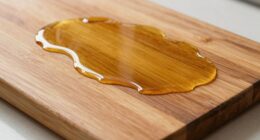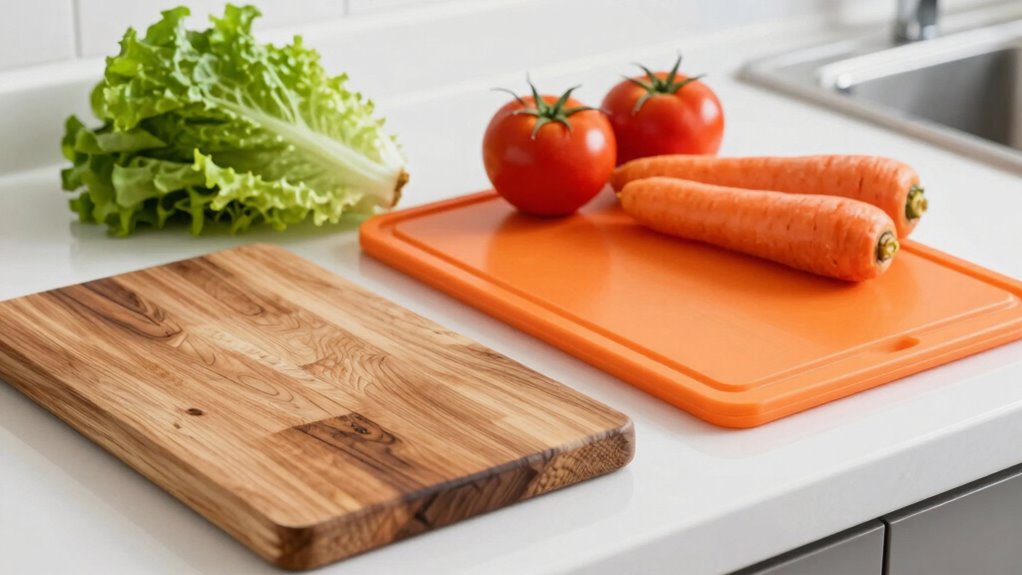

Many believe plastic boards are more hygienic because they’re easier to clean, but both wood and plastic can be safe with proper care. Plastic tends to develop deep cuts that trap bacteria, while wood’s porous surface can hide microbes inside pores, though they tend to die off over time. Regular cleaning, sanitizing, and avoiding damage are key to keeping either material safe. Want to discover proven cleaning tips and debunk more myths? Continue exploring.
Key Takeaways
- Both wood and plastic cutting boards require thorough cleaning and sanitation to prevent bacterial buildup, regardless of material myths.
- Plastic boards are easier to disinfect due to their non-porous surface but develop deep cuts that can harbor bacteria over time.
- Wooden boards are naturally antibacterial and self-healing, but need proper maintenance to prevent deep grooves that trap bacteria.
- Using separate cutting boards for raw meats and produce reduces cross-contamination risks for both materials.
- Proper hygiene practices are more important than material choice; both wood and plastic can be safe when correctly maintained.

Keechee Bamboo Cutting Board, Durable Wood Cutting Boards for Kitchen with Deep Juice Grooves & Built-in Handles, Ideal Charcuterie & Chopping for Meat, Vegetables and Fruits Ideal Kitchen Gifts
BAMBOO CUTTING BOARD of 3 – Keechee bamboo cutting boards for kitchen include 3 practical sizes: 15×10 in,…
As an affiliate, we earn on qualifying purchases.
As an affiliate, we earn on qualifying purchases.
How Do Wooden and Plastic Cutting Boards Differ?
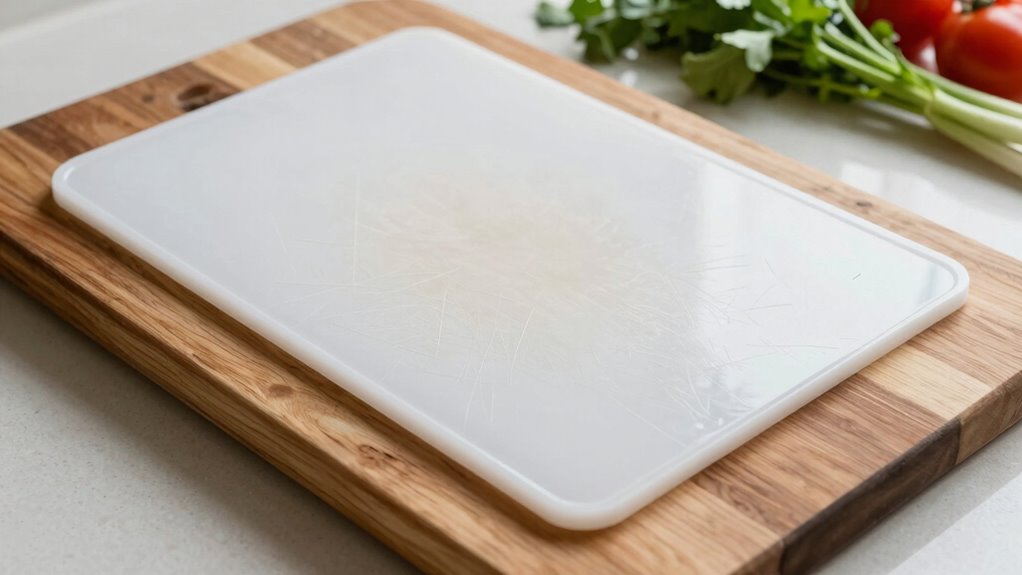
Wooden and plastic cutting boards differ mainly in material composition, which affects their durability, maintenance, and how they handle bacteria. Your wooden cutting board offers excellent wood durability, meaning it withstands repeated use without warping or cracking easily. It’s sturdy and can last for years with proper care. Plastic cutting boards, on the other hand, are known for their plastic flexibility. They bend and flex more, making them less prone to cracking but potentially more prone to deep cuts. This flexibility allows plastic boards to absorb impacts and resist breaking, but they may develop grooves that trap bacteria over time. While both materials have their pros and cons, understanding these differences helps you choose the right board for your kitchen needs. Additionally, choosing a hygienic cutting surface depends on how well you maintain and clean each type to prevent bacterial buildup. Proper cleaning techniques can help mitigate the bacteria retention issues associated with plastic boards. Regularly sanitizing your cutting board can significantly reduce the risk of bacterial contamination, regardless of the material. Implementing proper cleaning techniques and using appropriate cleaning tools, such as brushes and sanitizers, further enhances hygiene.
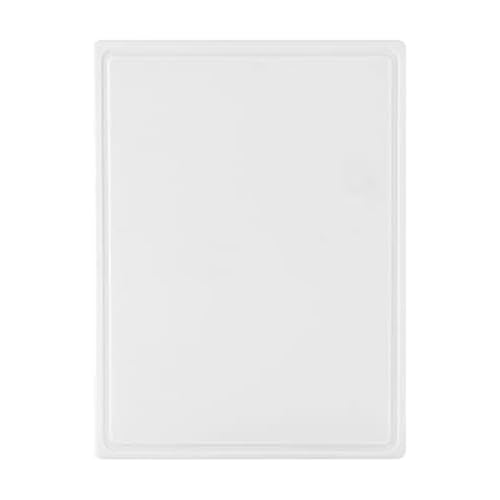
FARBERWARE Extra-Large Plastic Cutting Board, 15×20 Inch Dishwasher-Safe Chopping Board with Juice Groove, Non-Slip Surface, Durable, White
MULTIPURPOSE CUTTING BOARD: Measuring 14-inches by 20-inches this cutting board is the ideal choice for slicing large turkeys…
As an affiliate, we earn on qualifying purchases.
As an affiliate, we earn on qualifying purchases.
Is One Material More Hygienic Than the Other?
You might wonder which material keeps bacteria at bay better. Wooden boards can absorb some bacteria but tend to resist surface damage that traps germs, while plastic boards can develop deep cuts where bacteria hide. Proper cleaning is key for both, so understanding their differences helps you choose the most hygienic option. Additionally, regular safe installation practices and proper maintenance can ensure your cutting surface remains as hygienic as possible. To maximize hygiene, it’s important to consider cleaning methods and tools that are effective for each material type. Recognizing the porosity differences between wood and plastic can further guide your cleaning routines for optimal sanitation, especially considering how surface porosity impacts bacterial retention. Moreover, implementing proper sanitation techniques can significantly reduce the risk of cross-contamination between raw meats and other foods.
Bacterial Absorption Differences
When comparing bacterial absorption, it’s important to recognize that wood and plastic cutting boards differ markedly in how they harbor bacteria. Wood’s porous nature means bacteria can settle into its tiny pores, making it possible for some microbes to hide beneath the surface. However, these bacteria often die off over time or during cleaning. In contrast, plastic boards are smooth, which initially seems better for hygiene, but their surface can develop cuts and grooves over time. These scratches create tiny crevices where bacteria can become trapped, making them harder to eliminate. So, while plastic appears more hygienic due to its smoothness, its damage-prone surface may harbor bacteria longer than wood’s porous structure, which can naturally shed bacteria through surface wear. Additionally, material durability plays a key role in maintaining surface integrity and hygiene over time. Proper cleaning techniques and surface maintenance are essential to ensure either material remains safe for food preparation. Regular surface inspection can help identify wear and tear early, preventing bacterial buildup.
Surface Damage and Bacteria
Surface damage substantially influences how bacteria can survive on cutting boards, and this effect varies between wood and plastic. Surface scratches create tiny crevices that can trap food particles and moisture, promoting bacterial buildup. Plastic boards often develop deep cuts more quickly, providing a rough surface that harbors bacteria. In contrast, wood tends to develop fewer surface scratches over time, as its fibers close gaps and resist deep gouges. This difference means bacteria may survive longer on plastic due to more significant surface damage. However, the key point is that any surface damage increases the risk of bacteria hiding and multiplying. Regularly inspecting your boards for scratches and damage helps you understand their hygiene status and whether they need replacement or more thorough cleaning. surface damage substantially impacts bacterial survival, making proper maintenance essential.
Proper Cleaning Practices
Proper cleaning practices are essential for maintaining hygiene on both wood and plastic cutting boards. To guarantee food safety, you should wash your boards thoroughly after each use, using hot water and soap. For tougher stains or bacteria, disinfect with a solution of diluted bleach or vinegar. Regularly inspect your boards for deep cuts or grooves where bacteria can hide and consider replacing damaged ones. Avoid cross-contamination by dedicating separate boards for raw meats and vegetables. Efficient cleaning methods involve scrubbing with a brush, rinsing well, and drying completely to prevent bacterial growth. Both wood and plastic can be kept hygienic when proper cleaning practices are followed, but consistency is key to minimizing food safety risks.
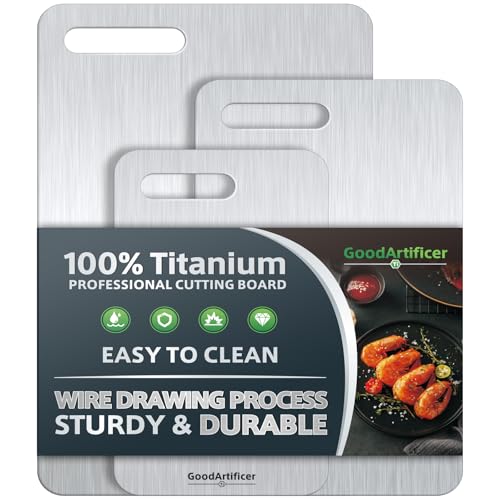
Titanium Cutting Boards Set of 3, 100% Pure Titanium Kitchen Cutting Board, Double-Sided Non-Toxic Cutting Board, Ideal for Slicing and Dicing Meats, Features Handle, Dishwasher Safe
【Titanium Cutting Board Set of 3】: Includes three cutting boards of different sizes: 16 inches long x 10…
As an affiliate, we earn on qualifying purchases.
As an affiliate, we earn on qualifying purchases.
Can Bacteria Grow More on Wooden or Plastic Boards?
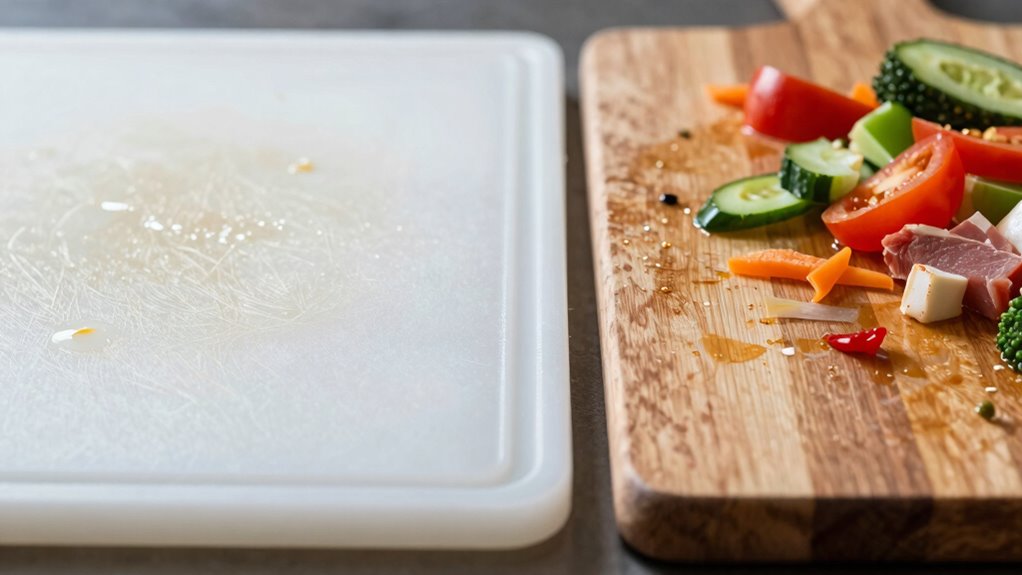
Bacteria can grow on both wooden and plastic cutting boards, but the extent often depends on how well you maintain each surface. Plastic boards tend to develop cuts that harbor bacteria, increasing bacterial transfer over time. Wooden boards, however, are more resistant due to their material durability, which can naturally inhibit bacterial growth. Proper cleaning can reduce bacteria on both surfaces, but microscopic scratches in plastic make it harder to eliminate pathogens completely. Additionally, air purifier effectiveness can help improve overall indoor air quality, supporting healthier kitchen environments. Regular maintenance and proper sanitation are essential to prevent bacterial buildup on either type of board, especially considering the material properties that influence bacterial retention. Maintaining a clean environment and understanding hygiene myths surrounding these surfaces can further enhance food safety.

DEBETOOL Cutting Board Oil Wax Applicator and Scrub Brush Set- Natural Bamboo with Sisal Fiber and Sponge for Food Grade Mineral Oil Board,Wooden Worktops,Utensil Care
⬤COMPLETE CARE KIT: Tired of dull cutting boards? Our scrub brush and oil applicator set is perfect for…
As an affiliate, we earn on qualifying purchases.
As an affiliate, we earn on qualifying purchases.
Are Plastic or Wooden Boards Easier to Sanitize?
When it comes to sanitizing cutting boards, plastic boards generally make the process easier because they can withstand higher temperatures and more aggressive cleaning agents without damage. This resilience enhances food safety by allowing thorough cleaning without concern for warping or cracking. Plastic boards’ material durability means you can scrub, bleach, or run them through the dishwasher confidently, removing bacteria effectively. Wooden boards, on the other hand, are more porous and can absorb moisture and bacteria, making sanitization more challenging. While wooden boards may require more careful cleaning and regular oiling to maintain their surface, plastic boards offer a more straightforward, hygienic option for quick, deep sanitation. Proper cleaning techniques and maintenance routines further enhance the sanitary benefits of plastic boards. Additionally, filter maintenance is vital in ensuring that air purification devices continue to support a healthy environment, just as maintaining clean cutting surfaces promotes food safety. Overall, plastic boards tend to be easier to sanitize, supporting better food safety practices. Porous surface can harbor bacteria if not properly maintained, which is why choosing the right material is crucial for hygiene and safety. Additionally, material porosity impacts the ability to eliminate germs thoroughly, making plastic a preferable choice for those prioritizing sanitation.
Do Certain Foods Increase Cross-Contamination Risks?
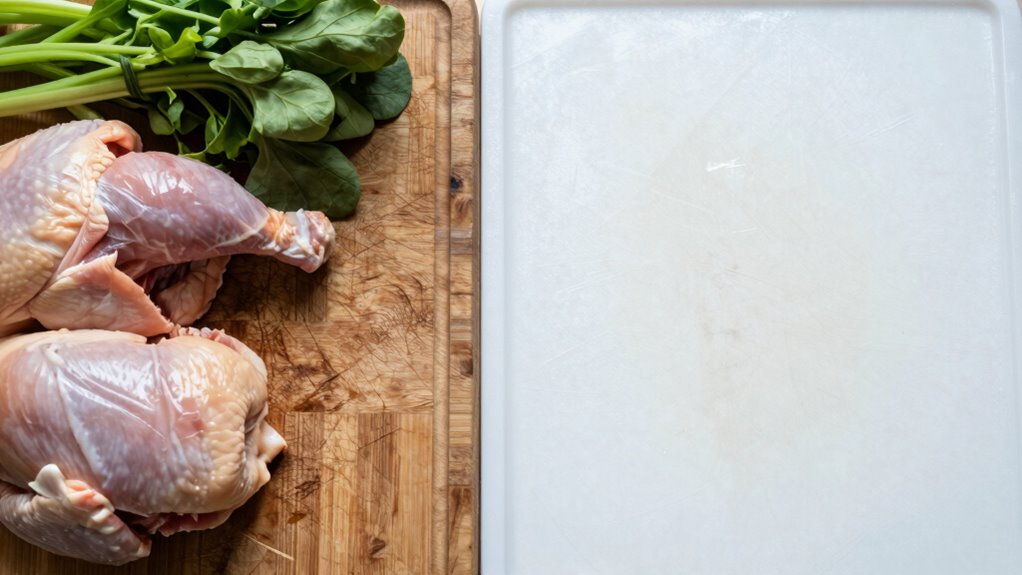
Certain foods can markedly increase cross-contamination risks when you’re preparing meals. Raw meat and poultry, for example, can transfer bacteria to other foods if not handled carefully. Even fruits and vegetables can pose risks if surfaces aren’t properly cleaned after contact. Implementing proper hygiene practices can significantly reduce these risks during food preparation.
Raw Meat Concerns
Using a cutting board for raw meat can considerably increase the risk of cross-contamination if you’re not careful. To minimize this, consider how cutting board materials influence safety. Plastic boards are often easier to sanitize thoroughly, reducing bacteria buildup, especially when using proper seasoning techniques. Wood boards, while durable, may harbor bacteria in deep grooves if not properly maintained. Be mindful of these factors:
- Always designate separate boards for raw meat and other foods
- Clean cutting boards immediately after use with hot, soapy water
- Sanitize with vinegar or diluted bleach solutions regularly
- Replace plastic boards once deep cuts appear, or sand wooden boards to remove bacteria traps
Choosing the right material and following hygiene practices can notably lower cross-contamination risks during meat preparation.
Poultry and Cross-Contamination
Handling poultry requires extra caution because it’s more prone to spreading bacteria compared to other foods. Poultry can harbor harmful pathogens like Salmonella and Campylobacter, making food safety a top priority. When you cut or prepare poultry, bacteria can transfer easily onto your cutting board’s surface, especially if you don’t clean it thoroughly afterward. Plastic boards are often easier to sanitize because they can withstand more aggressive cleaning agents and high-temperature washes, reducing pathogen transfer risks. Wood boards, however, tend to absorb liquids and bacteria deeper into their fibers, which can make complete sterilization more difficult. To prevent cross-contamination, always use separate cutting boards for poultry and other foods, and sanitize your surfaces properly to minimize the risk of spreading bacteria.
Fruit and Vegetable Risks
Fruits and vegetables can pose cross-contamination risks if they carry bacteria or dirt from the farm or store. To guarantee vegetable safety and prevent fruit contamination, take these steps:
- Wash produce thoroughly under running water before cutting or eating.
- Use separate cutting boards for produce and raw meats to avoid cross-contact.
- Scrub firm produce like melons and potatoes with a brush.
- Store fruits and vegetables separately from raw animal products to reduce contamination risks.
Certain produce, especially those with rough or uneven surfaces, can trap bacteria more easily. Handling produce carefully and practicing proper hygiene with your cutting board can notably lower the chances of cross-contamination, keeping your food safe and healthy.
What Science Says About Bacterial Growth on Different Materials

Scientists have studied how different materials influence bacterial growth on cutting boards, revealing that surface properties play a significant role. Bacterial colonization varies depending on the material’s porosity, which affects how bacteria embed and persist. Plastic boards tend to be smoother but can develop deep cuts that harbor bacteria, making cleaning more challenging. Wood, on the other hand, is porous, allowing some bacteria to settle into tiny crevices; however, studies show that these bacteria often die off more quickly due to the natural antimicrobial properties of wood. Overall, material porosity impacts how bacteria survive and multiply. While bacteria can grow on both surfaces, proper cleaning and maintenance are essential to minimize risks, regardless of whether you choose wood or plastic.
How to Properly Clean and Maintain Your Cutting Board
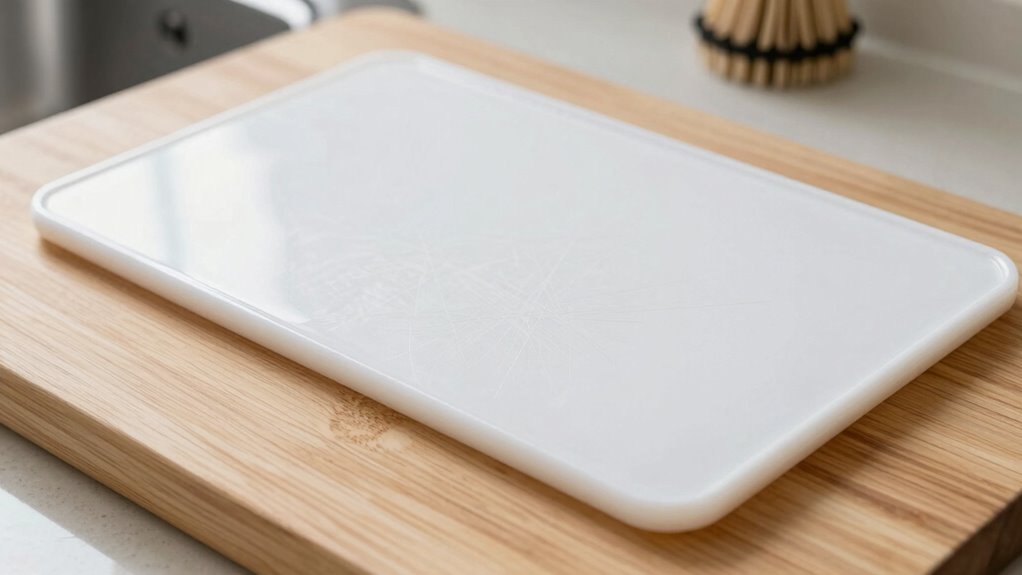
To keep your cutting board safe and in good shape, you need to clean it properly after each use. Using the right disinfectants and maintenance techniques helps prevent bacteria buildup and extends its lifespan. Proper storage also plays a key role in keeping your board in top condition for years to come.
Proper Cleaning Techniques
Proper cleaning is vital to keep your cutting board safe and in good condition. To do this effectively, follow these food prep techniques to prevent cross-contamination and maintain hygiene:
- Wash your board with hot, soapy water immediately after use.
- Use a scrub brush or sponge to reach all surfaces and edges.
- Rinse thoroughly to remove any soap residue.
- Dry with a clean towel or air dry completely before storing.
This routine helps eliminate bacteria and keeps your board in top shape. Remember, knife safety is essential when handling sharp tools—always cut away from your body and handle knives carefully. Regular cleaning not only prolongs your board’s life but also ensures safe food prep practices, reducing the risk of foodborne illnesses.
Disinfecting Recommendations
Disinfecting your cutting board is essential to eliminate bacteria that may survive regular cleaning. To do this effectively, choose a disinfectant suitable for your board’s material. For wood, a diluted bleach solution or white vinegar works well, but avoid soaking to protect its material sustainability. Plastic boards tolerate stronger disinfectants and can withstand scrubbing with commercial sanitizers. After disinfecting, rinse thoroughly with hot water to remove residue. Remember, maintaining a clean, hygienic surface helps keep your kitchen aesthetics appealing and safe. Proper disinfecting techniques also extend the life of your board, whether wood or plastic, supporting sustainable choices by reducing the need for frequent replacements. Regular disinfection is a simple, crucial step in your kitchen hygiene routine.
Maintenance and Storage
Regularly cleaning and carefully maintaining your cutting board is key to prolonging its life and ensuring safety in your kitchen. Proper maintenance involves more than just washing; it includes knife maintenance and storage safety. To keep your board in top shape, consider these tips:
- Wash with hot, soapy water after each use, then air dry thoroughly.
- For wood boards, occasionally sand rough spots to prevent bacteria buildup.
- Store boards upright or in a way that promotes airflow, avoiding stacking.
- Keep separate boards for raw meats and produce to prevent cross-contamination.
Debunking Common Myths About Cutting Board Hygiene
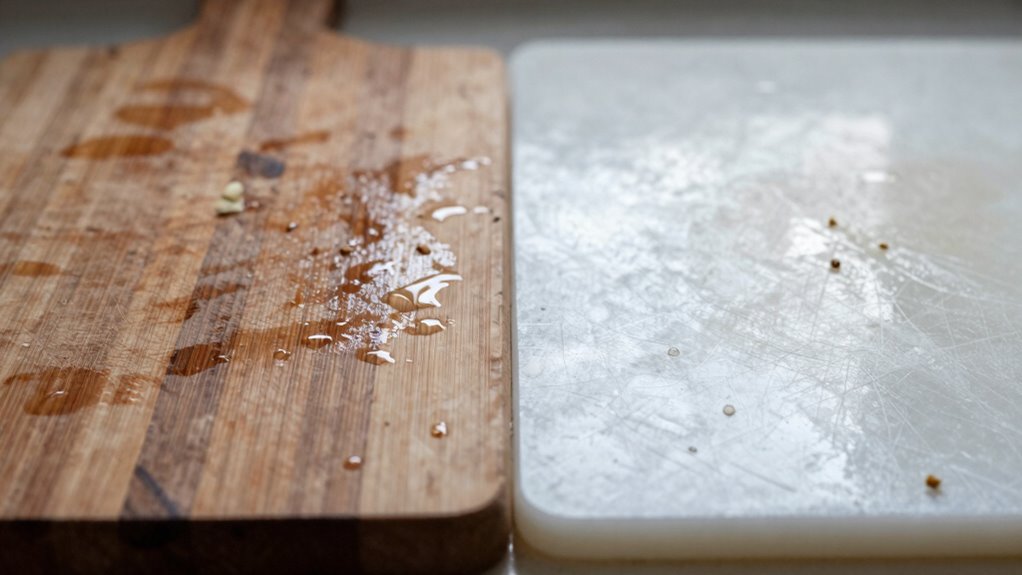
Many common beliefs about cutting board hygiene simply aren’t backed by scientific evidence. For example, some think plastic boards are inherently more sanitary than wood, but studies show that both materials can harbor bacteria if not properly cleaned. The myth that plastic boards are safer because they’re easier to sanitize ignores the fact that counterfeit products or poorly manufactured boards can have micro-cracks, making thorough cleaning difficult. Material durability plays a role here: high-quality wood or plastic boards resist damage and bacteria buildup better than cheap, low-quality options. Additionally, bacteria don’t distinguish between the two materials; proper cleaning and maintenance are key. Relying on myths can lead to unnecessary fears or poor choices, so focus on effective hygiene practices rather than misconceptions.
Which Material Is Safer and Better for Your Kitchen?
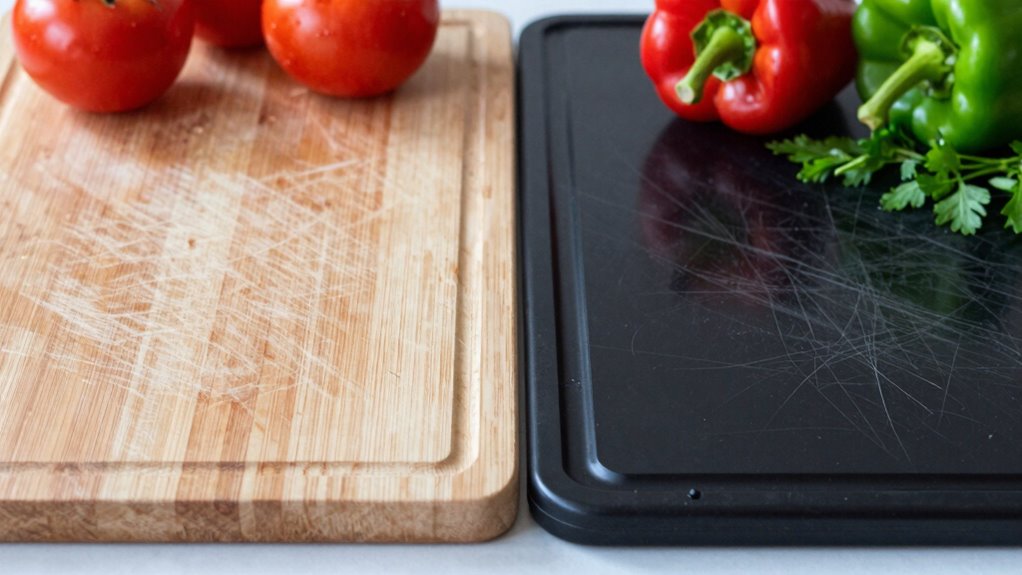
Choosing between wood and plastic cutting boards depends on your priorities for safety and durability. When evaluating cutting board materials, consider how each affects kitchen safety and longevity. Plastic boards are often easier to sanitize, especially in dishwasher cycles, reducing bacteria risk. Wood boards, however, naturally resist deep cuts, which can trap bacteria if not properly maintained.
- Plastic boards are lightweight and inexpensive.
- Wood boards are sturdy and tend to self-heal minor cuts.
- Plastic can warp or stain over time but is dishwasher safe.
- Wood needs hand washing and regular oiling for longevity.
Ultimately, the safer and better choice depends on your cleaning habits and how you use your kitchen tools. Both materials can be safe if properly maintained.
Tips to Keep Your Cutting Boards Safe and Hygienic
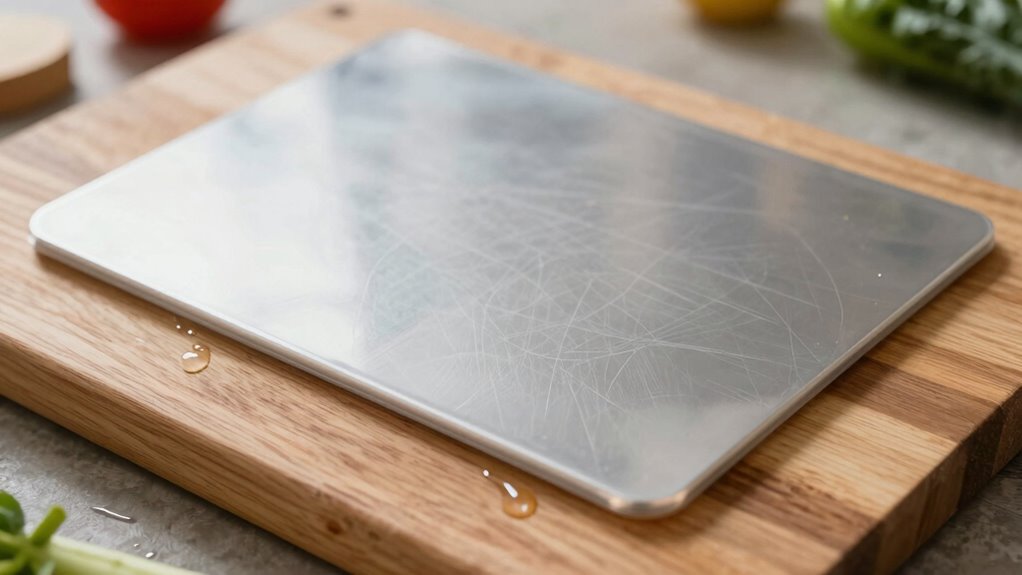
To keep your cutting boards safe and hygienic, proper cleaning and maintenance are essential. Always wash your boards thoroughly after each use with hot, soapy water, and consider sanitizing them regularly with a diluted bleach solution or vinegar. Avoid cross-contamination by using separate boards for raw meat, vegetables, and cooked foods. Keep your cutting boards dry and store them upright in a well-ventilated area to prevent mold and bacteria growth. For cutting board safety, inspect your boards for deep cuts or grooves where bacteria can hide, and replace them if needed. Follow hygiene best practices by avoiding abrasive scrubbers that can damage the surface and compromise cleanliness. Regular care guarantees your cutting boards remain safe and promote a healthier kitchen environment.
Frequently Asked Questions
Can Wooden Cutting Boards Develop Deep Cuts That Harbor Bacteria?
Yes, wooden cutting boards can develop deep cuts that harbor bacteria. When you use a knife repeatedly, these cuts become tiny crevices where bacteria can hide and multiply, making it harder to clean thoroughly. To prevent bacterial harboring, regularly inspect your wooden board, sand down deep cuts, and guarantee proper cleaning and drying. Proper maintenance helps keep your wooden board safe and hygienic for food preparation.
How Do Cutting Board Materials Affect Knife Longevity?
Oh, the eternal saga of knife edges versus material durability—your favorite culinary drama. When you cut on wood, expect gentle treatment for your blades, thanks to its forgiving surface. Plastic, with its harder nature, may sharpen your knives faster but wears down their edges more quickly. So, your choice of cutting board material directly influences your knife’s longevity; choose wisely to keep those blades sharp and your kitchen stylish.
Are Antimicrobial-Treated Cutting Boards More Effective?
Antimicrobial-treated cutting boards can be more effective because antimicrobial coatings actively inhibit bacterial growth, reducing the risk of contamination. They create a surface that’s resistant to bacterial resistance, meaning germs are less likely to survive and spread. However, it’s essential to clean these boards properly, as antimicrobial properties aren’t foolproof. When used correctly, antimicrobial-treated boards offer an extra layer of protection, making your kitchen safer and more hygienic.
What Are the Environmental Impacts of Wooden Vs Plastic Boards?
You might find it surprising, but wooden cutting boards often have a lower environmental impact than plastic ones. When sourced from sustainable forestry, wood renews itself naturally and biodegrades easily. Conversely, plastic boards contribute to pollution, especially if not recycled properly. While plastic recycling helps, it’s still a challenge to manage waste effectively. Choosing sustainably harvested wood supports eco-friendly practices, reducing your carbon footprint and promoting a healthier planet.
Do Color-Coded Boards Reduce Cross-Contamination Risks?
Yes, color coding can help reduce cross-contamination risks. By assigning specific colors to different food types, you prevent accidental use of the same board for raw meat, vegetables, or cooked food. This simple contamination prevention method keeps your kitchen safer, ensuring that bacteria or other pathogens don’t transfer between foods. Implementing a color-coded system encourages good hygiene habits and helps you maintain a more sanitary food prep environment.
Conclusion
Choosing between wood and plastic cutting boards isn’t just about preference—it’s about hygiene. For example, if you accidentally cut raw chicken on a plastic board with deep scratches, bacteria can hide there. On the other hand, a well-maintained wooden board can resist bacteria better but needs proper cleaning. Ultimately, regular sanitation and proper care are key to keeping your kitchen safe, no matter which material you choose.