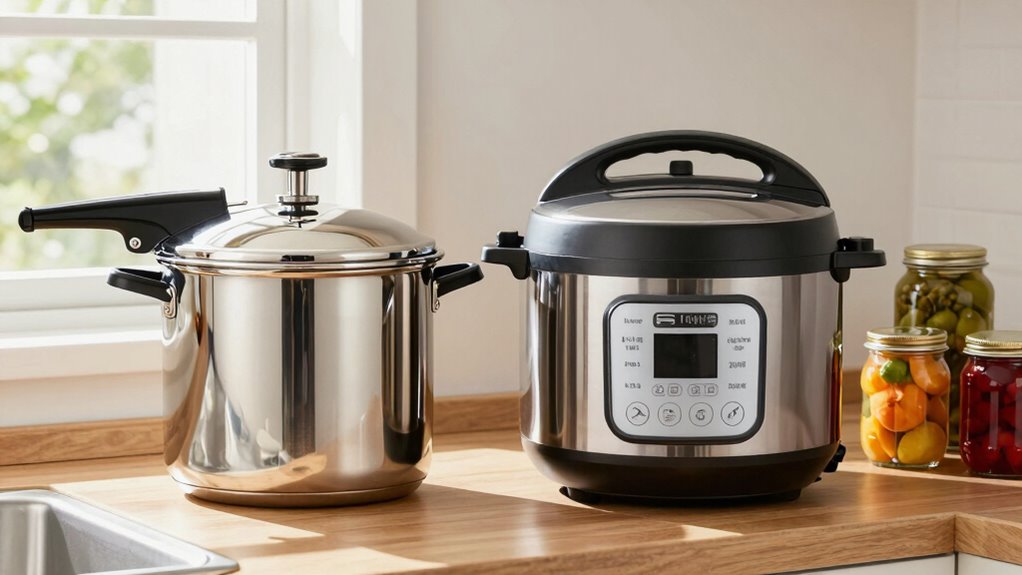

It’s important not to mix up pressure-canning and pressure-cooking, as they serve different purposes and require distinct equipment and safety procedures. Pressure-canning involves processing jars at specific pressures and temperatures to safely preserve foods long-term, while pressure-cooking is for quick meal preparation. Using the wrong method or equipment can lead to unsafe foods or accidents. Keep in mind the key safety tips to make sure your food stays safe—more details await if you continue exploring.

Get kitchen staples and gadgets delivered free — and shop member deals
- Fast, free delivery on millions of items
- Access to Prime Big Deal Days deals on October 6–7
- Prime Video, Amazon Music and more included
Key Takeaways
- Pressure-canning requires precise processing times and proper sealing to ensure long-term food safety, unlike pressure-cooking.
- Use only tested recipes and correct pressure levels for pressure-canning to prevent bacterial growth and spoilage.
- Pressure-canning involves sterilizing jars at specific temperatures, whereas pressure-cooking is designed for rapid cooking, not preservation.
- Always maintain and monitor pressure gauges accurately during pressure-canning to avoid under- or over-processing.
- Do not use pressure-canning techniques for quick meals; their safety relies on strict adherence to proper procedures and equipment.
pressure canner with pressure gauge
As an affiliate, we earn on qualifying purchases.
As an affiliate, we earn on qualifying purchases.
What’s the Difference Between Pressure-Canning and Pressure-Cooking?
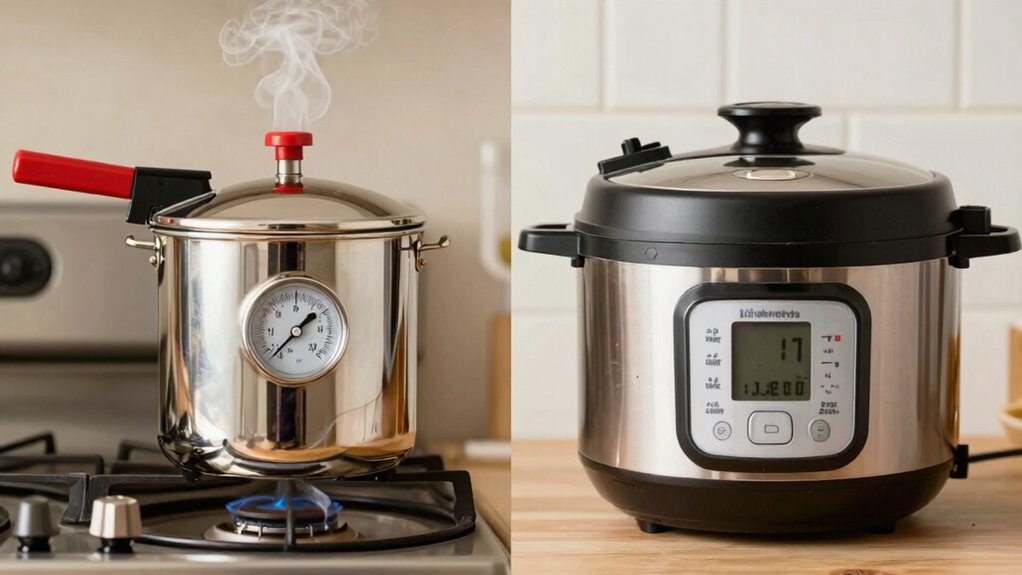
Although pressure-canning and pressure-cooking both involve using a sealed vessel and high pressure, they serve different purposes and require different techniques. Pressure-canning uses canning jars and precise pressure gauges to preserve foods safely for storage. It involves processing jars filled with food at a specific temperature and pressure to eliminate bacteria and spores. Pressure gauges help you monitor and maintain the correct pressure levels throughout the process, ensuring safety. Proper pressure regulation is essential for safe and effective use of both methods. On the other hand, pressure-cooking is designed to cook food quickly using a sealed pot, often with a built-in pressure regulator. While both methods involve pressure, pressure-canning focuses on preservation and safety through sterilization, whereas pressure-cooking emphasizes rapid cooking. Understanding these process differences and the importance of correct temperature control keeps your food safe and your equipment functioning correctly. Additionally, proper technique is vital to prevent accidents and ensure optimal results in both methods.
digital food thermometer for canning
As an affiliate, we earn on qualifying purchases.
As an affiliate, we earn on qualifying purchases.
Why Using the Right Equipment and Procedures Is Critical for Food Safety
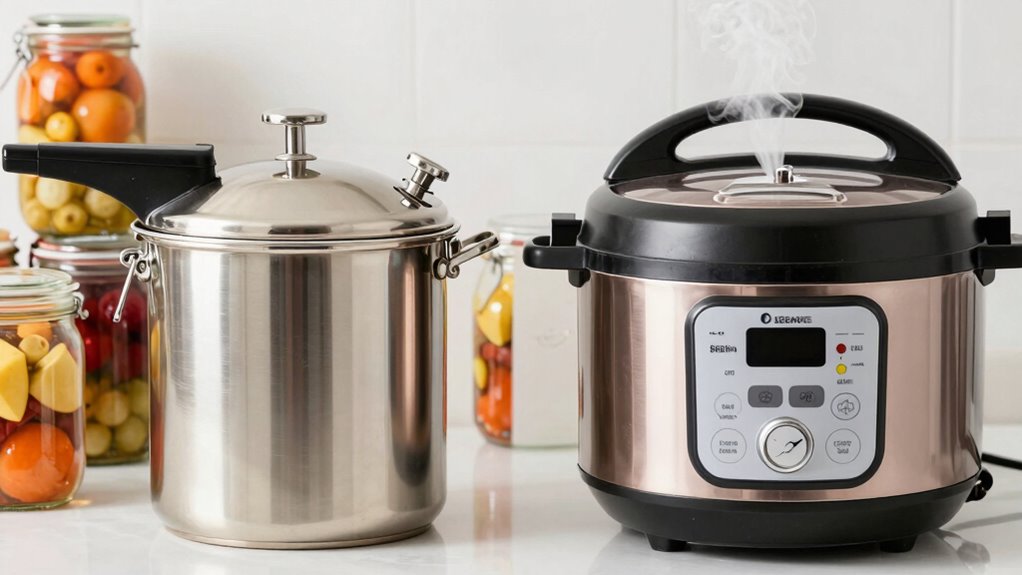
Using the right equipment and procedures is essential because improper techniques can compromise food safety and lead to dangerous bacterial growth. When you follow proper procedures, you ensure effective food preservation and maintain kitchen safety. Using the wrong tools or neglecting safety guidelines can result in under-processed foods that may harbor bacteria like Clostridium botulinum. To visualize this, consider the table below:
| Equipment Type | Proper Use | Risk of Improper Use |
|---|---|---|
| Pressure Canner | Follow manufacturer instructions | Under-processing, bacterial growth |
| Pressure Cooker | Use correct pressure and time | Inadequate heat, unsafe foods |
| Thermometer | Monitor pressure and temperature | Undetected underprocessing |
Using accurate equipment and procedures ensures your food is safely preserved, protecting your family and promoting kitchen safety.
As an affiliate, we earn on qualifying purchases.
Common Mistakes That Confuse Pressure-Canning With Pressure-Cooking

Many people mistakenly assume that pressure-canning and pressure-cooking are interchangeable because both involve a sealed vessel and high pressure. However, they serve different purposes and require distinct techniques. One common mistake is neglecting proper jar sealing during pressure-canning, which can lead to spoilage or unsafe food. Unlike pressure-cooking, where the focus is on cooking food thoroughly, pressure-canning relies on maintaining a specific pressure to properly preserve jars. Using the pressure gauge correctly is critical; misreading it can cause under- or over-pressurization, risking contamination or explosion. Confusing the two processes often results in unsafe storage or compromised food safety. Always remember, pressure-canning demands precise jar sealing and accurate pressure gauge readings for safe, long-term preservation. Additionally, understanding the proper equipment and procedures is essential to prevent accidents and ensure food safety. Proper pressure regulation during the process is vital to avoid dangerous situations and ensure successful preservation. Moreover, familiarizing yourself with canning safety guidelines can significantly reduce the risk of foodborne illnesses and accidents. It’s also important to recognize that air purification techniques are unrelated but often misunderstood as interchangeable with pressure canning processes. Incorporating quality control measures can further enhance the safety and effectiveness of your canning practices.
As an affiliate, we earn on qualifying purchases.
Pressure-Canning Safety Tips for Home Food Preservation

Ensuring safety during home pressure-canning begins with proper preparation and adherence to established guidelines. To stay safe, focus on these key tips:
- Always check your pressure cooker’s gauge and follow manufacturer instructions for pressure release.
- Use tested recipes with the correct acidity and processing times.
- Ensure jars are properly sealed and that the jar rims are clean before sealing.
- After processing, allow the pressure to naturally release and verify jar sealing before storing.
- Regularly inspect your pressure-canning equipment to ensure all components are in good working condition and to prevent malfunctions.
Proper pressure release prevents accidents, and secure jar sealing ensures preserved foods are safe from spoilage. Never skip steps or rush the process, as improper sealing or pressure mishandling can lead to food safety issues. Remember, safety is the top priority in home food preservation.
Pressure-Cooking Best Practices for Everyday Meals
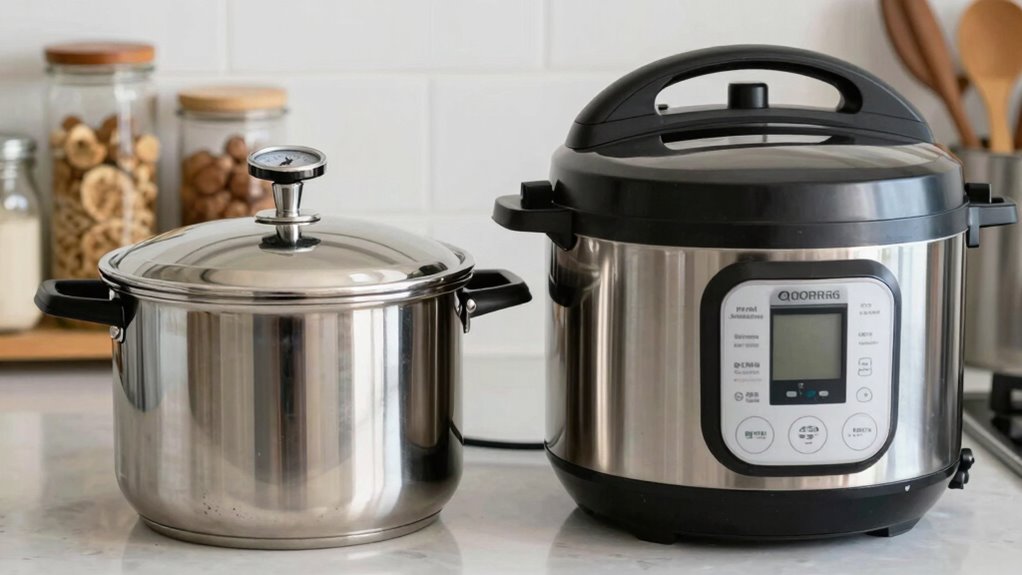
While safety considerations in pressure canning focus on preventing spoilage and accidents during preservation, applying proper pressure-cooking techniques guarantees your everyday meals come out perfectly every time. To guarantee pressure-cooker safety, always follow the manufacturer’s instructions, check the gasket regularly, and never overfill the cooker. Use the correct amount of liquid to generate enough steam, and don’t force the lid open after cooking—wait until pressure drops naturally. Incorporate smart meal prep techniques like chopping ingredients uniformly and timing your cook cycles accurately. Adjust heat levels as needed to maintain a steady pressure, and avoid rushing the process. These best practices help prevent accidents and ensure consistent, delicious results, making pressure cooking a safe and reliable method for quick, nutritious meals.
Frequently Asked Questions
Can I Use My Pressure Cooker for Canning Safely?
You shouldn’t use your pressure cooker for canning unless it’s specifically designed as canning equipment. Pressure cooker safety is vital, and regular cookers don’t reach the precise temperatures or maintain consistent pressure needed for safe canning. Using a proper pressure canner ensures your jars seal correctly and prevents foodborne illnesses. Always follow manufacturer instructions and use equipment made for canning to keep your food safe.
What Signs Indicate a Pressure Canner Is Not Functioning Properly?
If your pressure canner isn’t functioning properly, watch for signs like inconsistent pressure readings or difficulty maintaining pressure. You should also notice if the pressure release isn’t working as it should or if the gasket shows signs of wear, such as cracks or deformation. These issues can compromise safety, so it’s essential to inspect your canner regularly and replace worn gaskets or fix pressure release problems before continuing to use it.
Are There Specific Foods That Shouldn’T Be Pressure Canned?
Did you know some foods can pose safety risks if pressure canned? You shouldn’t pressure can low-acid foods like potatoes, beans, or poultry without proper processing, as improper preservation methods can lead to botulism. Acidic foods like fruit jams or pickles are safer to can because their acidity prevents bacteria growth. Always follow tested recipes and guidelines to make certain of food safety and effective preservation.
How Do I Adjust Pressure Settings for Altitude When Canning?
When canning at high altitudes, you need to modify your pressure settings according to altitude adjustment guidelines. Typically, increase the pressure by 5 pounds per 1,000 feet above sea level. Check your pressure regulations for your specific elevation, and always follow your pressure canner’s instructions. This ensures your preserved foods stay safe by reaching the proper temperature, preventing bacteria growth, and maintaining quality.
Is It Safe to Modify Recipes for Pressure-Cooking or Canning?
You shouldn’t modify recipes for pressure-canning or pressure-cooking without proper guidance. Pressure adjustments are vital for safety, especially at higher altitudes, and proper recipe modifications help guarantee your food is safely processed. Always follow tested recipes and manufacturer instructions when adjusting pressure settings, as improper modifications can lead to unsafe food preservation or undercooked meals. When in doubt, consult a reliable guide or expert before making changes.
Conclusion
Remember, mixing up pressure-canning and pressure-cooking is like confusing fire with lightning — both powerful, but meant for very different jobs. Using the right equipment and procedures makes certain your food safe and your kitchen running smoothly. Stay vigilant and follow safety tips for each method. With careful attention, you’ll keep your pantry stocked and your meals delicious without risking a culinary storm. Safety first guarantees your food’s both tasty and trustworthy.
NFL season / tailgating Picks
team gear
As an affiliate, we earn on qualifying purchases.