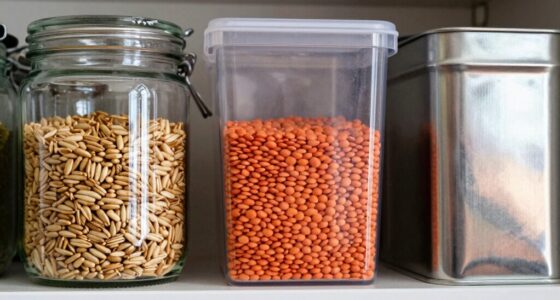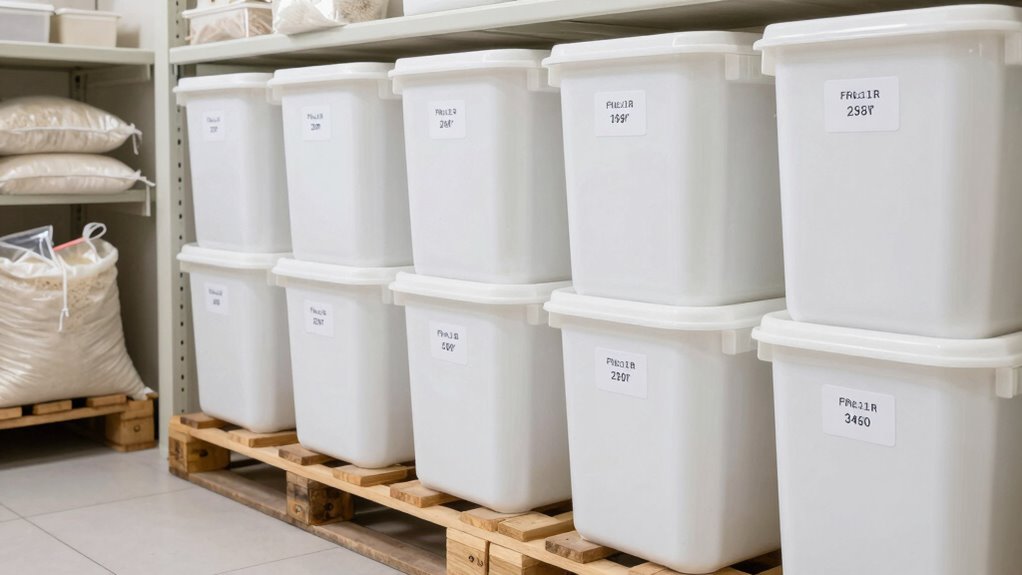

To prevent rancidity and bugs in bulk rice and flour, choose airtight, food-grade containers like glass or BPA-free plastic, and keep grains in a cool, dark, dry place. Regularly inspect for pests, mold, or odors, and maintain proper humidity (around 60%) and temperature (50-70°F). Use natural pest repellents like neem leaves or diatomaceous earth, and rotate your stock to keep grains fresh. Continuing further will show you detailed steps to optimize your storage practices.
Key Takeaways
- Use airtight, food-grade containers to keep rice and flour dry, prevent pests, and block exposure to heat and moisture.
- Store in a cool (50-70°F), dark, and well-ventilated area to slow rancidity and inhibit bug activity.
- Regularly inspect stored grains for signs of pests, mold, or rancid smell, and rotate stock to maintain freshness.
- Incorporate natural pest repellents like neem leaves or diatomaceous earth inside containers for pest control.
- Maintain optimal humidity (~60%) and moisture levels below 13% to prevent mold growth and spoilage in bulk storage.

Shazo 2 PC (11L | 372 oz) Flour Sugar Storage Containers with Easy Carry Handle – Plastic Extra Large Food Storage Containers with Lids for Rice Cereal, BPA Free & Airtight Kitchen Pantry Organization
𝐄𝐱𝐭𝐫𝐚 𝐋𝐚𝐫𝐠𝐞 𝐂𝐚𝐩𝐚𝐜𝐢𝐭𝐲 𝐟𝐨𝐫 𝐁𝐮𝐥𝐤 𝐒𝐭𝐨𝐫𝐚𝐠𝐞: Shazo 2-piece set (11L | 372 fl oz each, 11.2"L x 5.2"W…
As an affiliate, we earn on qualifying purchases.
As an affiliate, we earn on qualifying purchases.
Why Rancidity and Bugs Can Ruin Your Bulk Grain Storage
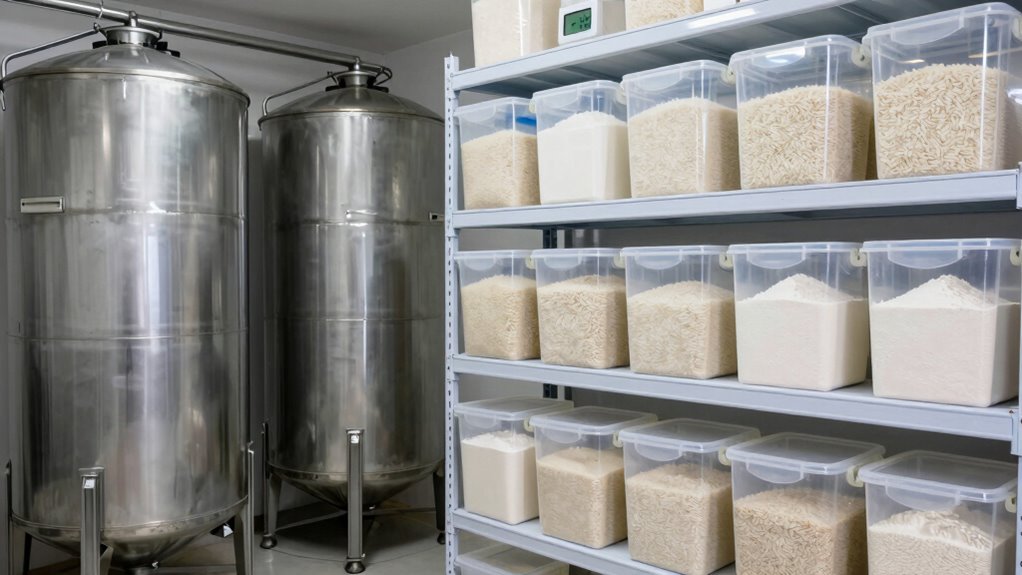
Rancidity and bugs are two major threats that can quickly ruin your bulk grain storage. Rancidity occurs when fats in the rice or flour break down, causing unpleasant odors and taste, leading to grain spoilage. Pest infestation, especially from bugs like weevils and beetles, can infest your stored grains, multiplying rapidly and contaminating large quantities. Once pests invade, they damage the grain’s integrity, making it unsafe to consume. Rancidity can develop if grains are exposed to heat, moisture, or prolonged storage, accelerating spoilage. Both threats not only reduce the quality and nutritional value of your grains but also pose health risks. Preventing these issues requires vigilance and proper storage practices to keep your bulk grains safe and fresh.

DampRid Refillable Moisture Absorber, 11 oz., 6-Pack – Fresh Scent Moisture Absorbers, 10% More Absorbing Power*, Eliminates Musty Odors for Fresher, Cleaner Air
DON'T JUST COVER UP ODORS, ELIMINATE THEM: DampRid 11-ounce Refillable Fresh Scent Moisture Absorbers attract and trap excess…
As an affiliate, we earn on qualifying purchases.
As an affiliate, we earn on qualifying purchases.
How to Pick the Right Containers for Rice and Flour
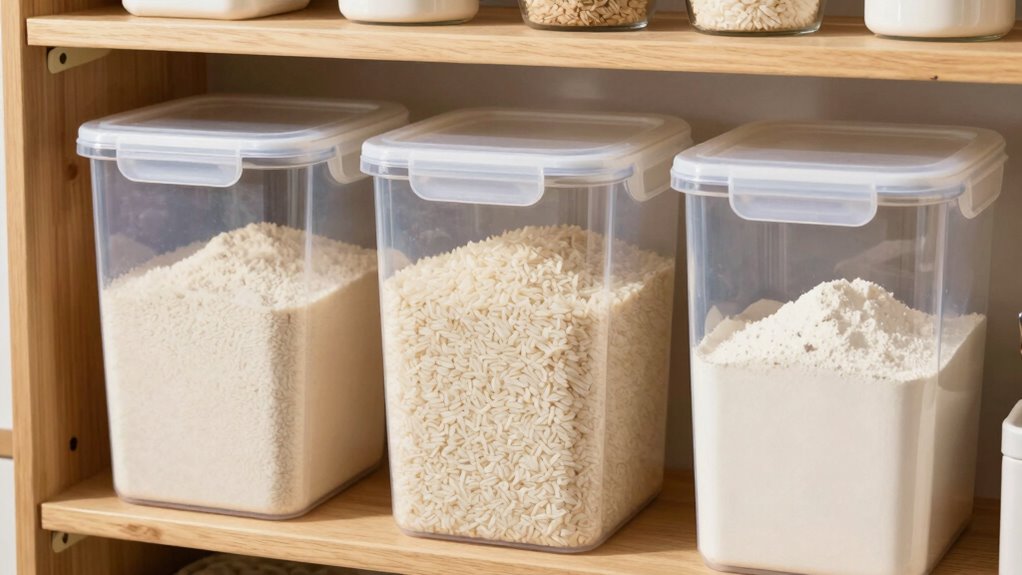
Choosing the right containers for your rice and flour is essential to preserving their freshness and preventing pests. Look for airtight containers to keep moisture, air, and bugs out. These containers help maintain the quality of your grains and prevent spoilage. Make sure they’re made from food grade materials, which are safe and won’t transfer odors or chemicals to your food. Clear containers allow you to easily see the contents and monitor for any signs of pests or spoilage. Opt for durable, BPA-free plastics or glass, which won’t crack or degrade over time. Properly sealed, airtight containers create a reliable barrier against pests and humidity, ensuring your rice and flour stay fresh longer. Vetted storage solutions are also important to ensure your grains remain safe and uncontaminated over time. Additionally, regularly inspecting your containers helps to detect any early signs of spoilage or pest intrusion, reinforcing the importance of proper storage practices in maintaining food quality. Using containers with moisture control features can further enhance preservation by reducing humidity buildup that fosters mold or pests. Incorporating humidity control devices can be particularly effective in environments with high moisture levels, providing an extra layer of protection for your stored grains. Selecting appropriate storage options can significantly extend the shelf life of your grains and prevent spoilage.

Mighty Mint Gallon (128 oz) Insect and Pest Repellent Peppermint Oil – Natural Spray for Spiders, Ants, and More
PET-FRIENDLY & FAMILY-SAFE FORMULA – Mighty Mint is a top pick for pet parents looking for a natural,…
As an affiliate, we earn on qualifying purchases.
As an affiliate, we earn on qualifying purchases.
Preparing and Packing Grains for Long-Term Storage
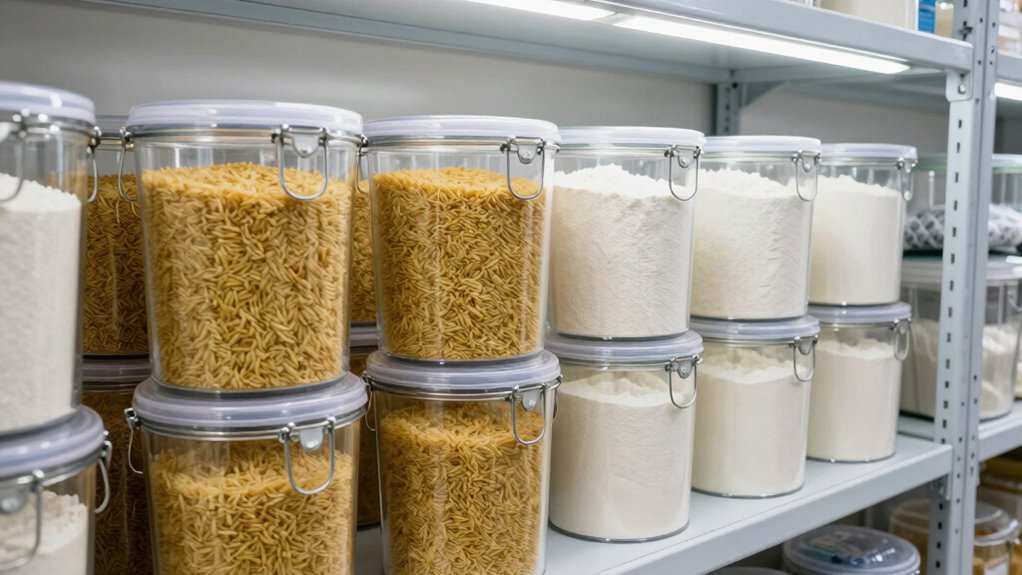
To guarantee your grains stay fresh for the long haul, start by choosing high-quality, clean grains free of debris. Proper cleaning removes any contaminants that could cause spoilage, while effective packaging protects against moisture and pests. Additionally, selecting appropriate storage equipment and adhering to safety guidelines can significantly enhance the longevity of your grains. Utilizing airtight containers helps prevent moisture ingress and pest intrusion, which are common issues in long-term storage. Ensuring proper temperature and humidity control in your storage environment is also crucial for maintaining grain quality over time. Using pest-resistant packaging can further safeguard your grains from insects and rodents, ensuring they remain safe and edible for extended periods. Implementing proper ventilation in your storage area can help reduce humidity buildup and prevent mold growth. By following these steps, you’ll set a strong foundation for successful long-term storage.
Selecting Quality Grains
Ensuring your grains remain fresh and safe for long-term storage starts with selecting high-quality rice and flour. Focus on grain quality by choosing grains that are clean, free from cracks, and have minimal broken pieces, which helps prevent spoilage and pests. Your sourcing strategies matter; buy from reputable suppliers who verify their products’ freshness and quality. Inspect grains for any signs of mold, discoloration, or insect activity before purchasing. Properly stored, high-quality grains resist rancidity and bugs better over time. Remember, starting with the best grains sets a solid foundation for long-term storage success. By paying attention to grain quality and sourcing strategies, you reduce the risk of spoilage, ensuring your stored rice and flour stay fresh, safe, and ready when you need them.
Proper Cleaning Techniques
Proper cleaning is essential to prepare your grains for long-term storage and prevent spoilage. Using effective cleaning methods removes dust, debris, and potential contaminants, ensuring ideal sanitation practices. Start by spreading grains on a clean surface and removing any foreign objects. Rinse gently if necessary, then dry thoroughly to prevent mold growth. Visualize the process with this imagery:
| Step | Action | Result |
|---|---|---|
| 1 | Inspect and sort | Remove dirt and stones |
| 2 | Remove debris | Cleaner grains |
| 3 | Rinse (if needed) | Better sanitation |
| 4 | Dry completely | Prevent mold |
| 5 | Final inspection | Ready for packing |
Adopting proper sanitation practices through these cleaning methods helps preserve the grains’ quality for long-term storage. Additionally, ensuring that storage containers are airtight minimizes exposure to moisture and pests. Using appropriate cleaning techniques can further enhance the preservation process and reduce the risk of rancidity and bugs. Proper grain storage conditions, such as maintaining a cool, dark environment, can also significantly prolong grain freshness.
Effective Packaging Methods
Effective packaging is crucial for maintaining the quality of grains during long-term storage. To prevent rancidity and bugs, use airtight containers that seal out moisture and pests. Glass, plastic, or metal containers with tight-fitting lids work well. For extra protection, consider vacuum sealing grains before placing them in containers. Vacuum sealing removes air, slowing oxidation and bug activity, and extends shelf life. Confirm grains are completely dry and clean before packaging. Label containers with the date of storage to monitor freshness. Store packages in a cool, dark, and dry place, avoiding temperature fluctuations. Proper packaging combined with good storage conditions helps preserve flavor, texture, and nutritional value, keeping your grains safe and edible for months or even years.

Diatomaceous Earth Food Grade & Peppermint Powder for Crawling Insect and Pest Control – 1 lb
Natural and Effective Formula – Crafted from 100% pure diatomaceous earth and peppermint oil, ensuring safe and effective…
As an affiliate, we earn on qualifying purchases.
As an affiliate, we earn on qualifying purchases.
Controlling Temperature and Humidity to Keep Grains Fresh
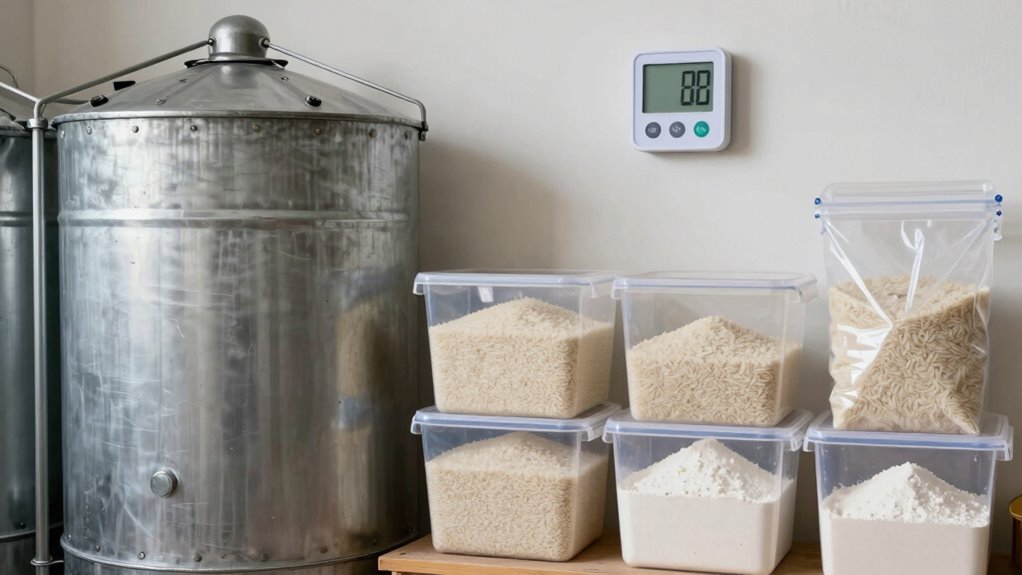
To keep your grains fresh, you need to maintain ideal storage conditions by controlling temperature and humidity. Regularly monitor environmental factors to prevent spoilage and pest growth. Staying vigilant ensures your rice and flour stay safe and fresh longer. Additionally, using air purifiers can help reduce airborne contaminants that might accelerate deterioration or attract pests air quality management. Proper filtration of the storage environment can further protect your grains from pests and mold. Maintaining a stable environment is essential for preventing the development of rancidity and insect infestations. Incorporating environmental controls such as dehumidifiers and temperature regulators can significantly enhance your storage conditions and prolong grain freshness. Integrating smart home automation can help you monitor and adjust these factors remotely, ensuring optimal storage conditions at all times.
Optimal Storage Conditions
Controlling temperature and humidity is essential for keeping bulk rice and flour fresh. Proper conditions prevent mold, rancidity, and pests. Here are key tips:
- Keep the storage area cool, ideally between 50-70°F, to reduce grain moisture and slow spoilage. Maintaining a stable temperature also helps prevent grain deterioration caused by fluctuations. Implementing proper storage conditions is vital for preserving grain quality over time. Consistent temperature management also minimizes the risk of humidity-related spoilage, which can compromise the grains.
- Use airtight containers and ensure their seals are tight to prevent moisture ingress and pest entry.
- Maintain low humidity levels, around 60%, to keep grains dry and inhibit mold growth. Proper storage conditions are crucial for long-term preservation.
- Regularly check container sealing and grain moisture levels to catch problems early.
- Incorporate proper ventilation to help regulate moisture and airflow, further preserving grain quality.
Monitoring Environmental Factors
Have you ever wondered how small changes in temperature or humidity can impact your stored grains? Even slight fluctuations can lead to mold, rancidity, or pest infestations. To prevent this, focus on humidity control and temperature management. Keep storage areas cool and dry, ideally between 50-60°F with humidity below 60%. Use dehumidifiers or ventilation if needed. Regularly monitor conditions with a hygrometer and thermometer. Here’s a quick guide:
| Environmental Factor | Recommended Range |
|---|---|
| Temperature | 50-60°F |
| Humidity | Below 60% |
| Monitoring Frequency | Weekly |
| Storage Location | Cool, dry, well-ventilated |
| Pest Prevention | Check for pests regularly |
Consistent monitoring helps maintain suitable storage conditions, keeping grains fresh and safe.
Natural Remedies and Safe Pesticides for Grain Pest Control
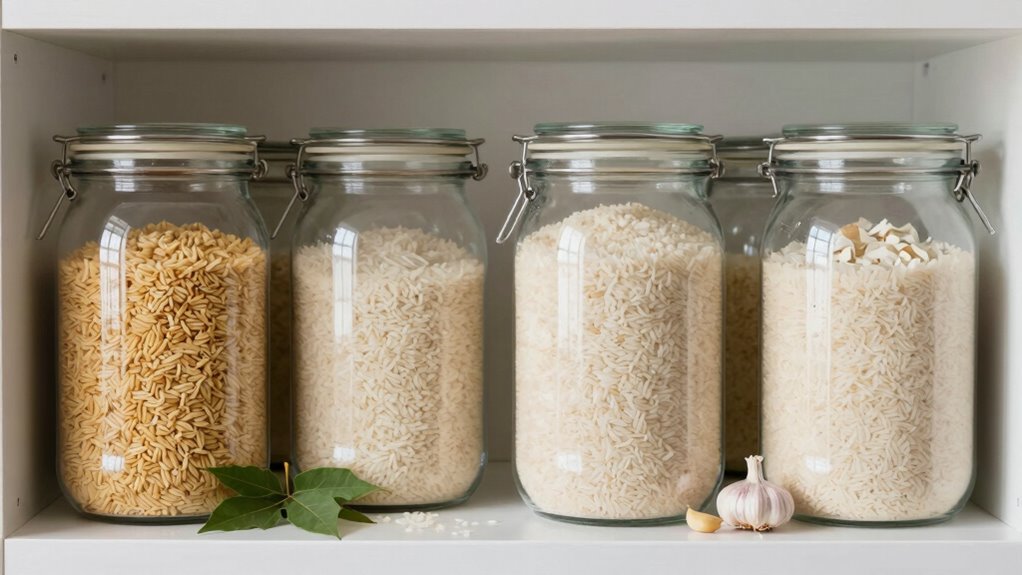
When it comes to protecting your bulk rice and flour, natural remedies and safe pesticides offer effective alternatives to harsh chemicals. You can use herbal repellents like neem leaves or lavender sachets to deter pests naturally. Incorporating natural preservatives such as vinegar or essential oils can also help prevent spoilage and bugs. Here are four effective methods:
- Place herbal repellents around storage areas to keep pests at bay.
- Use diatomaceous earth inside containers to eliminate insects without chemicals.
- Apply natural preservatives like garlic or citrus extracts to extend shelf life.
- Regularly inspect and refresh herbal sachets to maintain pest resistance.
These strategies keep your grains safe, reduce chemical exposure, and promote a healthy storage environment.
Inspect and Rotate Your Grain Storage Regularly
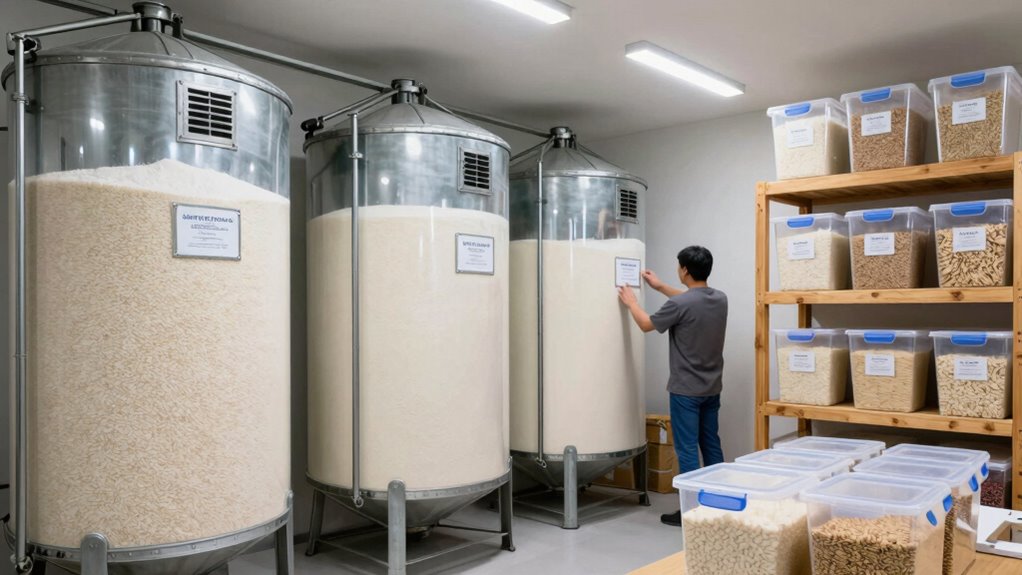
Regular inspection and rotation of your grain storage are essential steps to prevent spoilage and pest infestations. Conduct regular grain inspections to check for signs of mold, moisture, or pests. Look closely at stored rice and flour, ensuring there are no unusual odors or discoloration. Storage rotation involves moving older grains to the front and replacing them with fresh stock at the back, which helps prevent stale or spoiled grains from lingering. By rotating your stock, you reduce the risk of bugs settling in and minimize the chance of rancidity. Consistent monitoring allows you to catch problems early and take prompt action. Implementing a routine for inspection and rotation keeps your bulk storage clean, safe, and extends the shelf life of your grains.
Troubleshooting Storage Problems: Bugs, Rancidity, and More
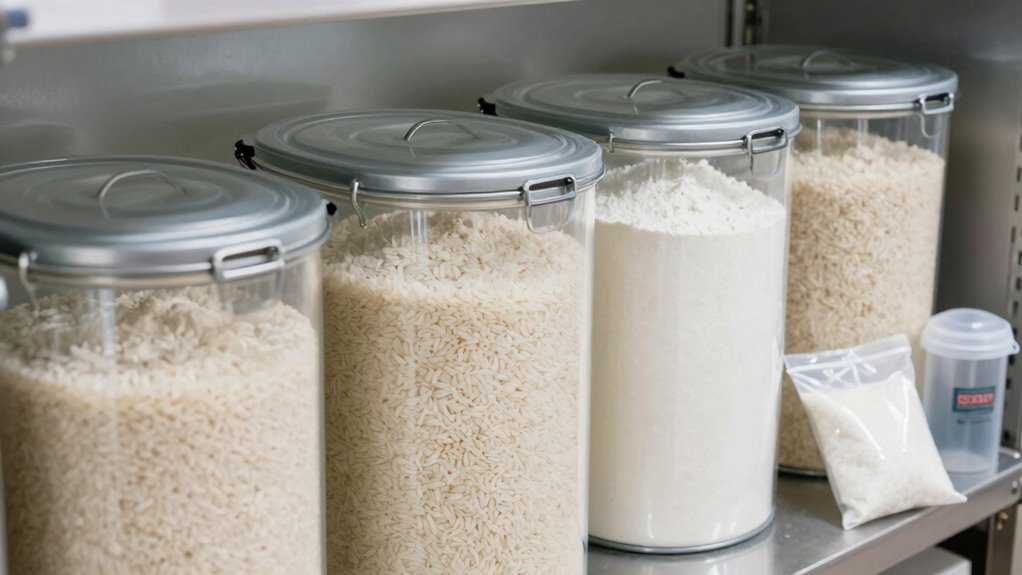
Even with careful inspection and rotation, storage problems like bugs and rancidity can still arise. To troubleshoot effectively, focus on these key areas:
- Check grain moisture levels—high moisture promotes mold and bugs. Keep moisture below 13%.
- Ensure proper container sealing—airtight containers prevent bugs from entering and moisture from escaping.
- Inspect regularly—look for signs of bugs, mold, or rancid smell, and address issues immediately.
- Maintain proper storage conditions—cool, dark, and dry environments slow down rancidity and bug activity.
Frequently Asked Questions
How Long Can Rice and Flour Be Stored Without Spoilage?
You can typically store rice and flour for about 6 months to a year if you follow proper storage conditions. Keep them in airtight containers in a cool, dark, and dry place to maximize shelf life. Regularly check for signs of spoilage or bugs. Proper storage prevents rancidity and pests, ensuring your supplies stay fresh and safe for consumption during this period.
Are There Specific Brands of Containers Best for Long-Term Storage?
Yes, you should choose airtight containers for long-term storage of rice and flour. Look for BPA-free options to guarantee food safety and avoid chemicals leaching into your food. Brands like OXO, Rubbermaid, and Kilner offer durable, airtight containers specifically designed for food storage. These containers help prevent bugs, moisture, and rancidity, keeping your grains fresh and safe for extended periods.
Can Homemade Natural Remedies Effectively Prevent Grain Pests?
Homemade natural pest control can be effective if you use proven methods like neem leaves, diatomaceous earth, or essential oils such as peppermint or cedarwood. These homemade preservative methods create inhospitable environments for pests without chemicals. Regularly inspecting and sealing your storage containers also helps prevent infestations. While natural remedies work well, combining them with good storage practices guarantees your grains stay pest-free and fresh longer.
What Are Signs of Contamination or Spoilage in Stored Grains?
You’ll notice signs of contamination or spoilage in stored grains through visible grain mold, which appears as fuzzy or discolored patches, and insect infestation, like tiny holes or live bugs. A musty odor also indicates mold growth. If grains feel clumpy, have an off smell, or show these signs, it’s best to discard them to prevent health risks and further spoilage. Regular inspection helps catch issues early.
How Does Storage Duration Affect the Nutritional Quality of Rice and Flour?
You should know that storage duration impacts the nutritional quality of rice and flour through nutritional degradation over time. As you store these grains longer, their vitamins and minerals can diminish, reducing their nutritional value. To maximize storage longevity, keep your rice and flour in airtight containers in cool, dark places. This helps slow down nutrient loss and preserves their quality, ensuring you get the most nutritional benefit from your stored grains.
Conclusion
By following these simple steps, you can safeguard your bulk rice and flour from rancidity and bugs. Think of your storage as a fortress—strong, vigilant, and prepared. Regular checks, proper containers, and natural remedies keep your grains fresh and pest-free. Remember, a little prevention goes a long way—because when it comes to your food, peace of mind is priceless. Keep your storage airtight and your worries at bay, and enjoy the grains you’ve worked so hard to preserve.