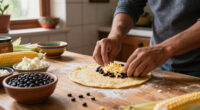
To build a safer, smarter home storage system for batch cooking, choose high-quality, airtight containers made from glass or BPA-free plastic that are clear for easy identification. Organize foods by category and rotate older items to reduce waste, while labeling everything with dates. Use proper freezing techniques, like vacuum sealing and maintaining the right freezer temperature, to prevent spoilage. Following these tips helps keep your food fresh and safe—keep exploring for more practical strategies.

Get kitchen staples and gadgets delivered free — and shop member deals
- Fast, free delivery on millions of items
- Access to Prime Big Deal Days deals on October 6–7
- Prime Video, Amazon Music and more included
Key Takeaways
- Use high-quality, airtight containers to prevent spoilage and contamination during storage.
- Categorize and organize foods by type for quick access and efficient inventory management.
- Label all items with dates and contents to track freshness and ensure proper rotation.
- Implement proper freezing techniques, including portioning and maintaining correct freezer temperatures.
- Regularly review and clean storage areas to discard expired items and maintain a safe, clutter-free system.
Batch cooking can save you time and money, but managing your stored food safely and efficiently is vital to prevent waste and guarantee freshness. To do this effectively, you need a well-organized home storage system that emphasizes food preservation and container organization. Proper food preservation techniques ensure your meals stay safe and tasty, while smart container organization helps you keep track of what you have, avoid spoilage, and streamline your cooking process. Using food preservation techniques properly can significantly extend the quality and safety of your stored meals. Additionally, implementing food safety guidelines can help you avoid common pitfalls like cross-contamination and improper storage practices.
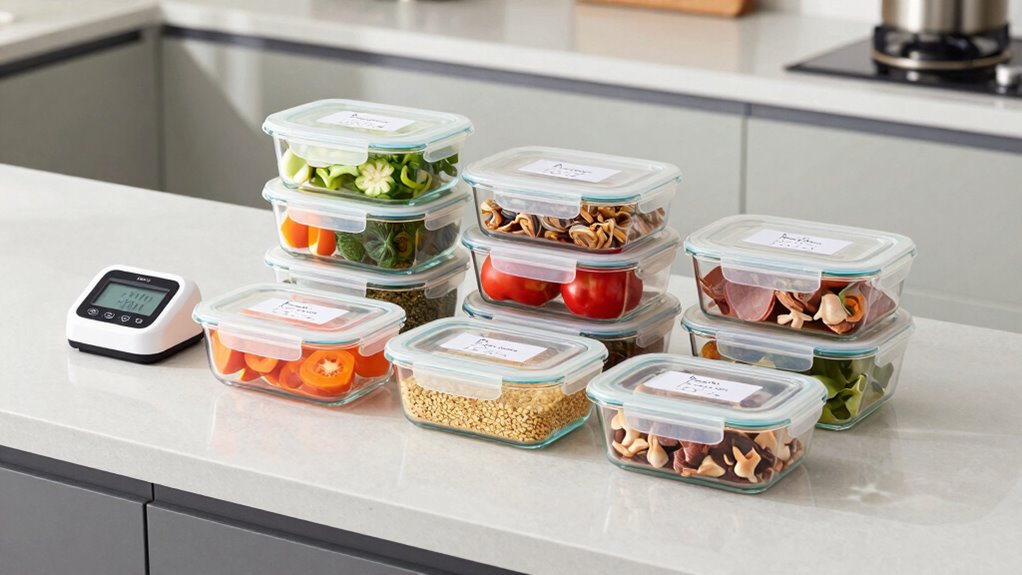
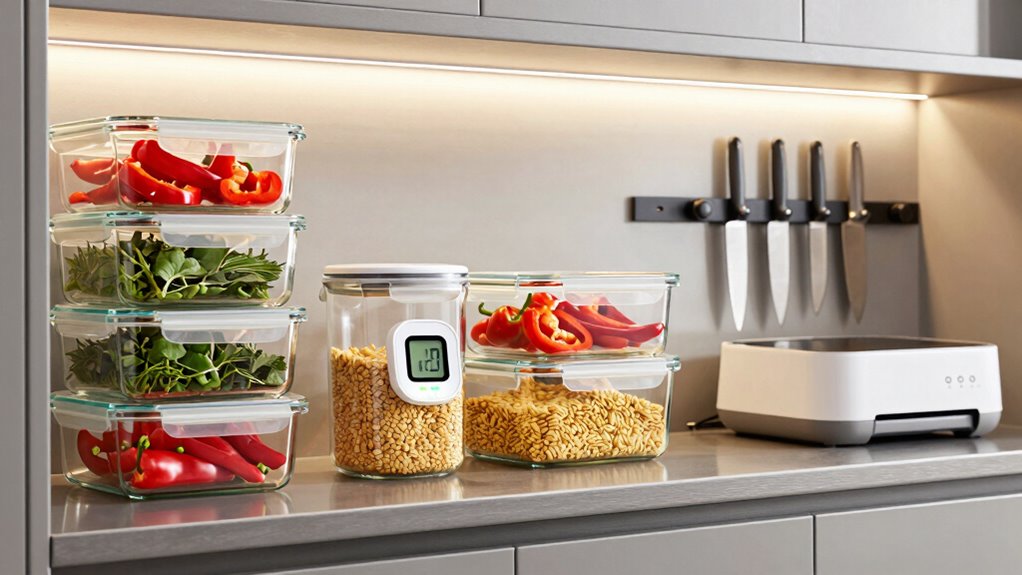
Start by choosing the right containers. Invest in high-quality, airtight storage options made from glass or BPA-free plastic. These containers help extend the shelf life of your food by preventing air and moisture from getting in, which are primary factors in spoilage. Clear containers are particularly useful because they allow you to see what’s inside without opening them, saving you time and energy when you’re searching for ingredients or leftovers. Label each container with the date of preparation and contents, so you always know what’s in your fridge or freezer and when it needs to be used or discarded.
Choose airtight, clear containers made from glass or BPA-free plastic to keep food fresh and easily identify contents.
Organizing your containers is just as important as selecting the right ones. Use a system that categorizes foods by type and storage duration. For example, keep cooked grains, proteins, and vegetables in designated sections or bins. Stack containers neatly to maximize space and avoid clutter. Consider using drawer organizers or shelf risers to make accessing your stored foods easier. When you have a designated spot for each type of food, you reduce the risk of forgetting about leftovers and ensure you consume items while they’re still fresh. Regularly reviewing your storage setup and cleaning out expired items also helps maintain a safe and efficient system.
Food preservation is also vital for maintaining quality and safety. Freeze foods in portions that suit your meal plans to prevent thawing more than you need. Use vacuum sealers if possible to remove excess air, which can cause freezer burn and degrade food faster. Ensure your freezer is set to the correct temperature—around 0°F (-18°C)—to keep everything frozen and safe for longer periods. Additionally, familiarize yourself with shelf life guidelines for different foods, and rotate older items to the front of your storage areas to use them before they spoil. Properly storing leftovers and prepared foods not only keeps them safe but also helps reduce unnecessary waste and saves money.
airtight glass food storage containers
As an affiliate, we earn on qualifying purchases.
As an affiliate, we earn on qualifying purchases.
Frequently Asked Questions
What Are the Best Materials for Safe Food Storage Containers?
You should choose food storage containers made from durable materials like glass or BPA-free plastic, which resist staining and odors. These materials are safe and long-lasting, ensuring your food stays fresh. Always opt for containers with clear, labeled tags to easily identify contents and expiration dates. Proper labeling and durable materials help prevent cross-contamination, spoilage, and make meal prep safer and more efficient in your batch cooking system.
How Do I Prevent Cross-Contamination in Batch-Cooked Meals?
To prevent cross-contamination, you must act swiftly and precisely. Start by properly labeling each container to avoid confusion, then guarantee temperature control—keep raw and cooked foods separate at all times. Use different utensils for each, and never mix them. Vigilance is key; a small mistake can compromise your entire batch. Stay alert, follow these steps, and safeguard your meals from contamination every time.
Can Smart Home Devices Improve Food Safety Monitoring?
Yes, smart home devices can improve food safety monitoring. You can use smart sensors to track food freshness and detect spoilage early, preventing potential health risks. These devices send real-time alerts when temperatures fluctuate or food nears expiration. By integrating smart sensors into your storage system, you guarantee that your batch-cooked meals stay safe, fresh, and ready to enjoy, making your kitchen smarter and safer.
How Long Can I Store Cooked Meals Safely?
You can safely store cooked meals for up to four days in the fridge. Did you know that proper meal portioning helps prevent bacterial growth? To maximize safety, label your containers with storage duration and consume meals within this window. Make sure your refrigerator stays at 40°F (4°C) or below. By following these simple steps, you keep your meals fresh and reduce the risk of foodborne illnesses.
What Are Common Mistakes to Avoid With Home Food Storage Systems?
You should avoid common mistakes like neglecting proper labeling accuracy and inconsistent temperature control. Always label your stored meals with date and contents to prevent confusion and spoilage. Keep your fridge or freezer at the right temperature—around 40°F for the fridge and 0°F for the freezer—to prevent bacterial growth. Regularly check these temperatures and guarantee your storage containers are airtight to maintain freshness and safety.
BPA-free plastic food storage containers
As an affiliate, we earn on qualifying purchases.
As an affiliate, we earn on qualifying purchases.
Conclusion
By blending better bins, bold boundaries, and brilliant organization, you build a safer, smarter storage system that streamlines your batch cooking and saves your sanity. Stay vigilant with vigilant labeling, and keep everything clean and clear to prevent pests and spoilage. With consistent care and clever customization, your kitchen becomes a haven of harmony and hassle-free hunger hacks. Embrace these essentials, enhance efficiency, and enjoy every effortless eat with ease!
vacuum food sealers for freezing
As an affiliate, we earn on qualifying purchases.
As an affiliate, we earn on qualifying purchases.
clear stackable food storage bins
As an affiliate, we earn on qualifying purchases.
As an affiliate, we earn on qualifying purchases.
NFL season / tailgating Picks
team gear
As an affiliate, we earn on qualifying purchases.