When working with millet flours like ragi, jowar, and bajra, you’ll notice they lack gluten, so the dough isn’t elastic or stretchy. Ragi absorbs a lot of water, making it sticky if you’re not careful. Jowar can be crumbly and coarse, requiring gentle handling, while bajra tends to be dense and crumbly, needing binding agents. Understanding these behaviors helps you prepare better millet doughs—keep going to discover how to master them effectively.
Key Takeaways
- Millet flours like ragi, jowar, and bajra lack gluten, resulting in crumbly, less elastic dough.
- Ragi absorbs water highly, often leading to sticky, soft dough if not carefully adjusted.
- Bajra’s coarse texture makes dough sticky and requires thorough kneading and warm water for better hydration.
- Jowar creates coarser, crumbly dough with less elasticity, needing gentle handling and possible binding agents.
- Proper techniques, including fresh flour, gradual water addition, resting, and binding agents, improve dough workability for all millet types.
millet dough binding agents
As an affiliate, we earn on qualifying purchases.
As an affiliate, we earn on qualifying purchases.
Why Does Millet Dough Behave Differently?
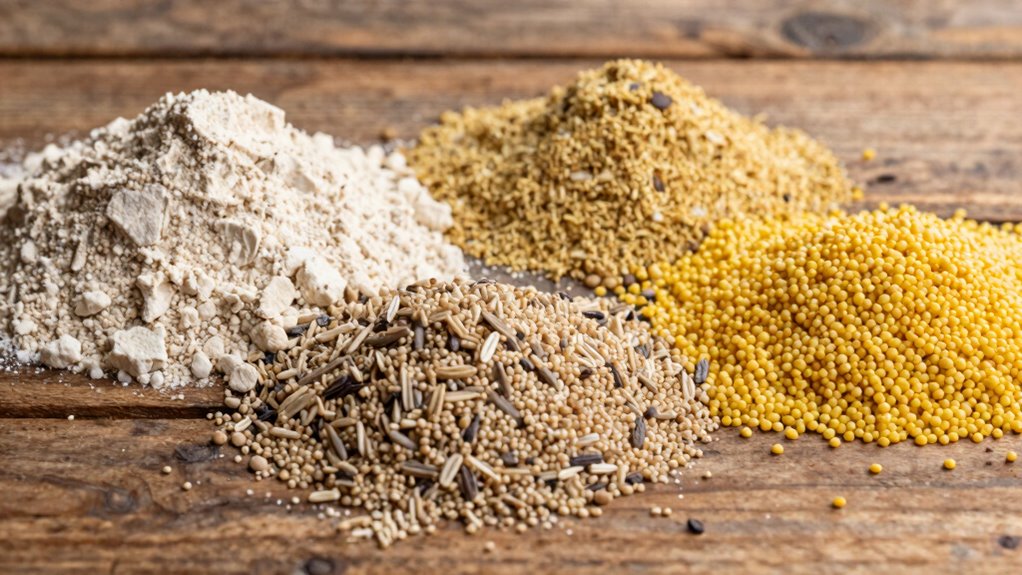
Millet dough behaves differently from wheat because it lacks gluten, the protein responsible for elasticity and stretchiness. This absence affects how millet dough holds together and feels when kneaded. Despite its lack of gluten, millet offers impressive nutritional benefits, including high fiber, essential minerals, and antioxidants, making it a healthy choice. The millet gluten content is minimal or nonexistent, so it doesn’t develop the same structure as wheat-based dough. As a result, millet dough tends to be more crumbly and less elastic. You’ll find that it doesn’t stretch easily, so handling requires different techniques. Understanding this fundamental difference helps you adapt your recipes, ensuring better results when working with millet-based doughs.
gluten-free millet flour for baking
As an affiliate, we earn on qualifying purchases.
As an affiliate, we earn on qualifying purchases.
Common Problems When Making Millet-Based Doughs
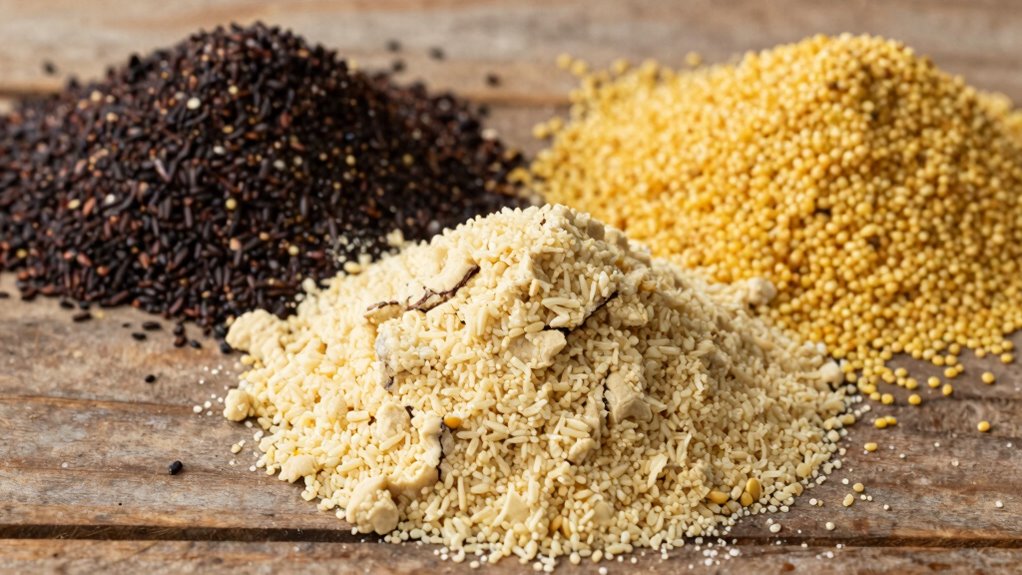
Because millet lacks gluten, doughs made from it often turn out crumbly or fall apart during handling. One common problem is poor binding, which can be worsened if millet isn’t stored properly; excess moisture or poor storage can lead to spoilage or uneven fermentation. Millet fermentation can also cause dough inconsistencies—if it ferments too long, the texture may become sticky or sour, affecting workability. To avoid these issues, verify millet is stored in a cool, dry place and used within its shelf life. When preparing millet dough, consider adding binding agents like xanthan gum or combining millet with other flours. Proper fermentation control and storage help maintain dough consistency and prevent common problems like crumbling or uneven fermentation. Additionally, understanding the role of fermentation in millet dough can help optimize texture and flavor. Ensuring proper storage conditions is crucial for maintaining millet quality and preventing spoilage that could compromise dough quality.
millet flour water absorption bowl
As an affiliate, we earn on qualifying purchases.
As an affiliate, we earn on qualifying purchases.
How Ragi Flour Absorbs Water and Affects Dough Consistency
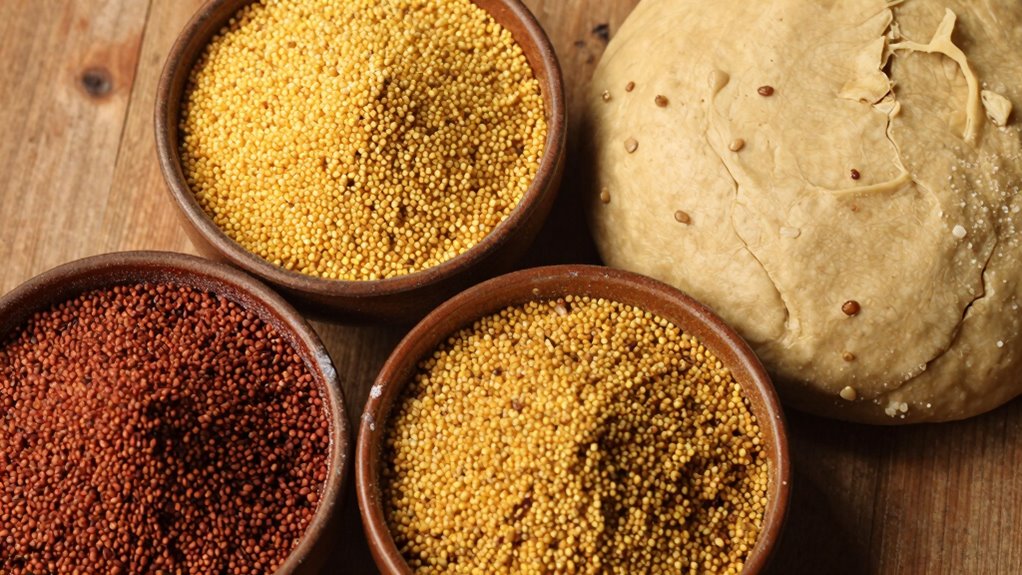
Ragi flour is highly absorbent, which substantially impacts dough consistency. Its ability to soak up water depends on millet nutrition, as ragi is rich in calcium, fiber, and essential nutrients that influence its water absorption properties. When you add water to ragi flour, it quickly forms a sticky, dense dough, requiring careful adjustments to achieve the desired texture. Proper millet cultivation practices also affect the flour’s quality, influencing how much water it absorbs. Because of its high water retention capacity, ragi dough tends to be softer and more pliable but can become sticky if overhydrated. Additionally, the nutritional composition of millet influences its water absorption rate, affecting how the dough behaves during mixing. Recognizing these water absorption properties of millet is essential for achieving the right dough texture and consistency. Understanding the fiber content can further help in predicting how the dough will develop during kneading, ensuring better control over the final product. Moreover, the grain structure impacts how quickly the millet flour absorbs water and forms the desired dough.
millet dough kneading tools
As an affiliate, we earn on qualifying purchases.
As an affiliate, we earn on qualifying purchases.
How Jowar Flour Impacts Dough Texture and Handling
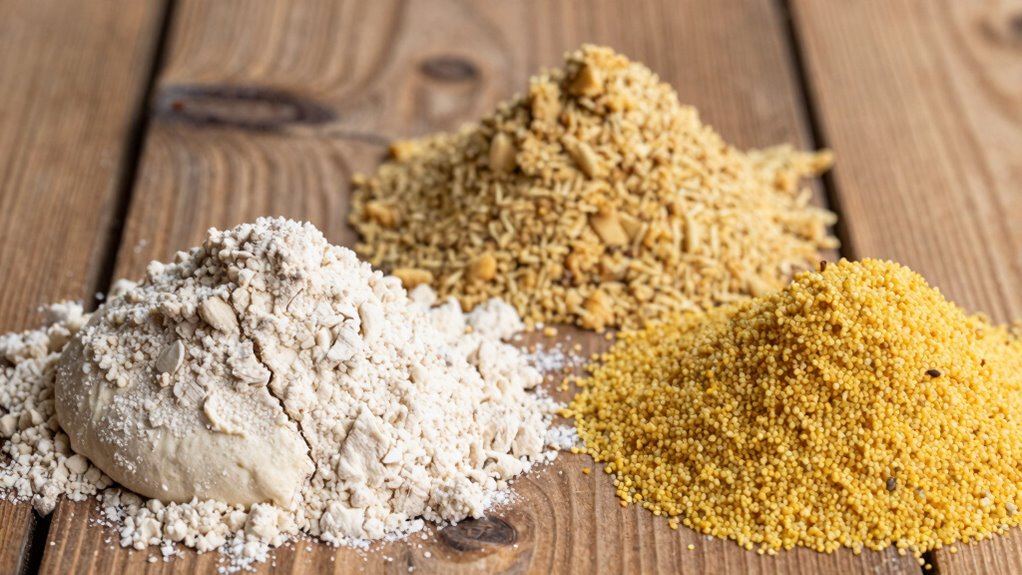
When you incorporate jowar flour into your dough, you’ll notice it creates a different texture that can be more crumbly or dry. Handling and kneading might require some adjustments, like adding extra water or using gentle techniques. Understanding these effects helps you achieve better results with jowar-based doughs. Employing visual and auditory cues can also aid in mastering the handling process.
Texture Changes and Effects
Jowar flour substantially alters the texture and handling properties of dough, making it distinct from traditional wheat-based mixes. It often results in a coarser, less elastic dough, which can influence fermentation effects and flavor profiles. You might notice a denser crumb and uneven rise, as jowar’s lack of gluten impacts structure. The dough becomes more fragile, requiring gentle handling. Additionally, the absence of gluten affects dough elasticity, making it more challenging to work with for certain recipes. Understanding gluten-free baking techniques can help achieve better results when working with millet flours. Moreover, experimenting with binding agents such as xanthan gum or chia seeds can improve dough cohesion and handling, especially considering the gluten content in traditional flours. Incorporating proper hydration methods can also significantly improve the dough’s workability and final texture.
Handling and Kneading Tips
Because jowar flour creates a coarser, less elastic dough, handling and kneading require extra care. You should knead gently to avoid tearing and guarantee even hydration, which helps improve fermentation effects. Resting the dough allows the flour’s natural flavors to develop, enhancing flavor. Avoid overworking it, as this can make the dough tougher and harder to handle. When kneading, consider adding a bit of moisture or binding agents to improve elasticity. Proper handling also promotes better fermentation, resulting in lighter, more aerated bread. Be patient during fermentation to maximize flavor enhancement. Additionally, understanding the properties of different millet flours can help you adapt your technique for optimal results, ensuring the millet’s unique qualities shine through in your final product. Exploring the nutritional benefits of millets can also motivate more mindful handling practices to preserve their healthful properties, especially since millet’s natural characteristics influence how they behave in dough.
Bajra Dough: Characteristics and Best Handling Tips
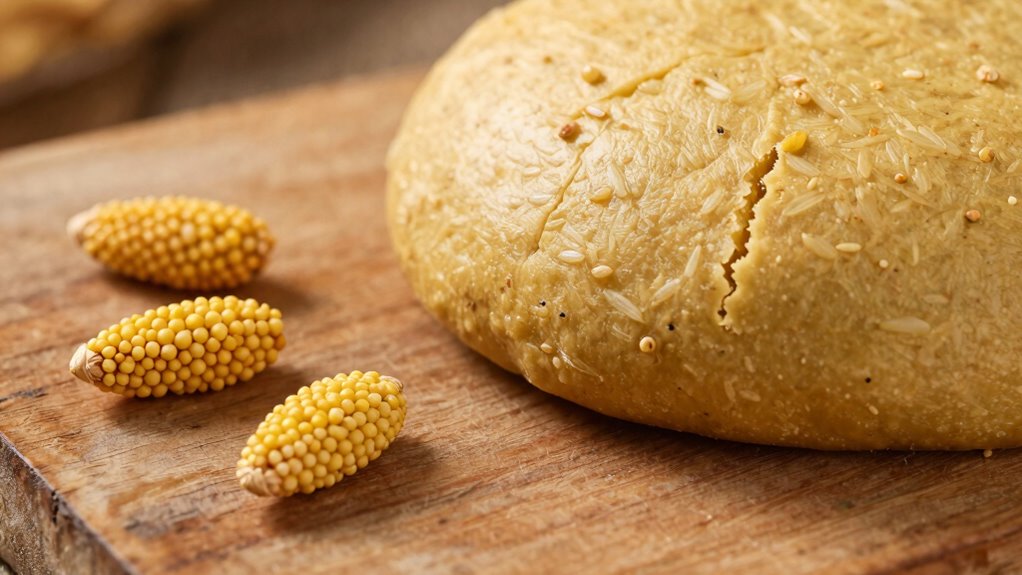
Bajra dough has unique characteristics that require careful handling to achieve the best results. Bajra’s high millet nutritional benefits, such as rich fiber and minerals, make it a healthy choice, but its coarse texture can make dough sticky and difficult to work with. To improve handling, use warm water and knead thoroughly, ensuring even hydration. Proper millet cultivation techniques, like selecting the right soil and timing, influence the millet’s quality and dough consistency. Keep in mind that bajra lacks gluten, so it doesn’t develop elasticity like wheat. This means you should avoid over-kneading and incorporate ingredients like sesame or jaggery to enhance binding and flavor. Understanding the cultivation methods can help optimize the quality of the raw ingredients used in your dough. Additionally, millet processing techniques impact the texture and pliability of the final product. Using appropriate processing methods can significantly improve dough pliability and handling ease. Exploring proper storage practices can also help maintain the freshness and quality of millet, ensuring consistent results. With patience and attention, you’ll create pliable, nutritious bajra dough perfect for traditional dishes.
Water Absorption Rates in Millets and Their Effect on Dough

Understanding how millets absorb water is essential for achieving the right dough consistency. Different millet varieties, like jowar and bajra, have unique water absorption rates that impact dough texture. Millet nutrition plays a role here; their high fiber and protein content influence how much water they can retain. When millets are cultivated, factors such as soil quality and climate affect their water-holding capacity, which in turn affects their absorption rates. If you add too little water, the dough may turn out crumbly and dry. Too much, and it becomes sticky and difficult to handle. Knowing these absorption rates helps you adjust water quantities precisely, ensuring a smooth, workable dough that preserves the nutritional benefits of millets and enhances your cooking process.
Can Millet Flours Develop Gluten-Like Structure? Why It Matters
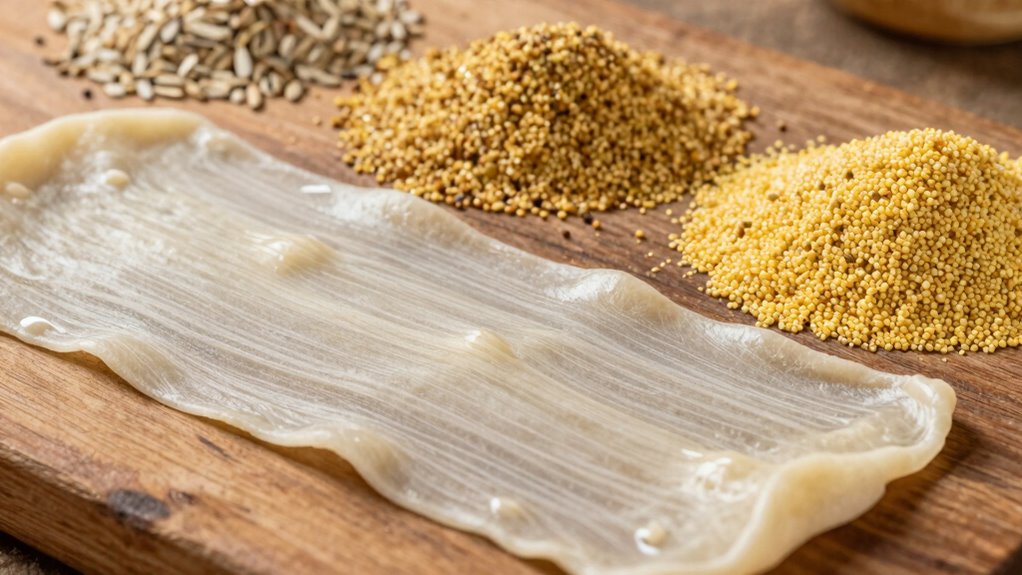
Millet flours lack gluten, so you might wonder if they can form a similar structure. Their unique composition influences how they bind and create texture in baked goods. Understanding this impact is key to improving baking quality with millet-based flours. Connected equipment and apps can help optimize recipes and techniques for better results. Recognizing free floating properties in these flours can aid in developing suitable substitutes for gluten in recipes.
Composition of Millet Flours
Because millet flours lack the gluten proteins found in wheat, they cannot develop the same elastic, stretchy structures necessary for traditional breadmaking. Their composition mainly includes carbohydrates, fiber, and a good amount of protein, but no gluten. Understanding the nutritional profile helps you see their health benefits, like high fiber and mineral content. Different millet varieties, such as jowar, bajra, and ragi, have unique compositions influencing baking. Here’s what you should know:
- Macronutrients: Rich in complex carbs and moderate protein levels.
- Micronutrients: Packed with iron, calcium, and magnesium.
- Dietary Fiber: High fiber aids digestion and satiety.
- Variability: Each millet type offers a distinct nutritional profile affecting dough behavior.
Knowing this helps you choose the right millet for specific culinary needs.
Binding and Texture Formation
Since millet flours lack gluten proteins, they can’t form the elastic networks that give traditional bread dough its structure. This means you won’t get the same stretchiness or chewy texture as wheat-based products. Instead, millet nutrition provides essential minerals and fiber, but its binding relies on alternative methods like adding gums, eggs, or starches. To visualize how millet behaves in dough:
| Millet Dough Components | Role in Texture Formation |
|---|---|
| Millet flour | Provides nutrients, lacks gluten |
| Water | Hydrates starches and proteins |
| Binders (gums, eggs) | Improve cohesion and elasticity |
| Heat | Sets the structure during baking |
| Additional starches | Enhance firmness and stability |
In millet cultivation, understanding these properties helps optimize the dough’s texture, despite the absence of gluten.
Impact on Baking Quality
While millet flours lack gluten proteins, researchers are exploring ways to mimic gluten’s elastic network to improve baking quality. This is vital because millet nutrition is highly valued, and better baking qualities can boost millet cultivation. Here are four key points:
- Adding hydrocolloids or natural binders can enhance dough elasticity, compensating for the absence of gluten.
- Combining millet flours with small amounts of wheat or other gluten sources improves texture and volume.
- Fermentation techniques develop structure, improving crumb and overall baking quality.
- Innovations in food processing aim to create gluten-like networks, making millet-based baked goods more appealing.
These advancements could make millet a versatile choice, strengthening millet nutrition’s role in sustainable agriculture and diverse diets.
Tips to Knead Millet Doughs for Better Results
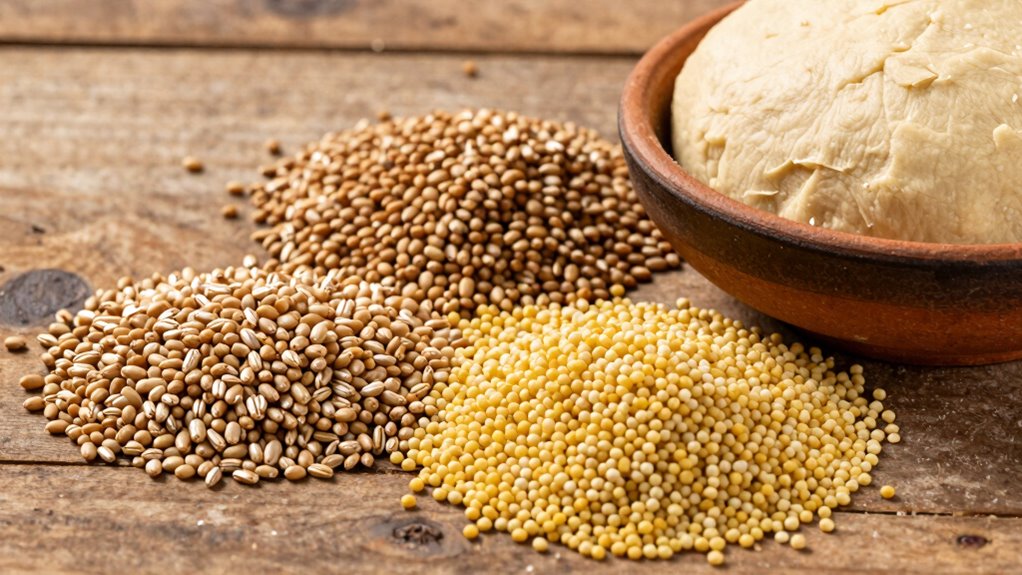
Kneading millet dough properly is essential to achieve the right texture and consistency. To enhance fermentation effects and flavor variations, start with fresh, well-washed millet flour. Use warm water gradually, mixing thoroughly to evenly hydrate the flour. Knead the dough until it becomes smooth and elastic, which helps develop gluten-like properties even in gluten-free millets. Rest the dough covered for 15-30 minutes to allow fermentation effects to take hold, boosting flavor complexity. Avoid overworking the dough, as this can make it dense. If you notice uneven fermentation, knead gently to redistribute moisture and enzymes. Proper kneading and resting reveal the natural flavors of millets while improving dough pliability, ensuring better results in your final dish.
Troubleshooting Millet Dough Issues: What to Do When Things Go Wrong
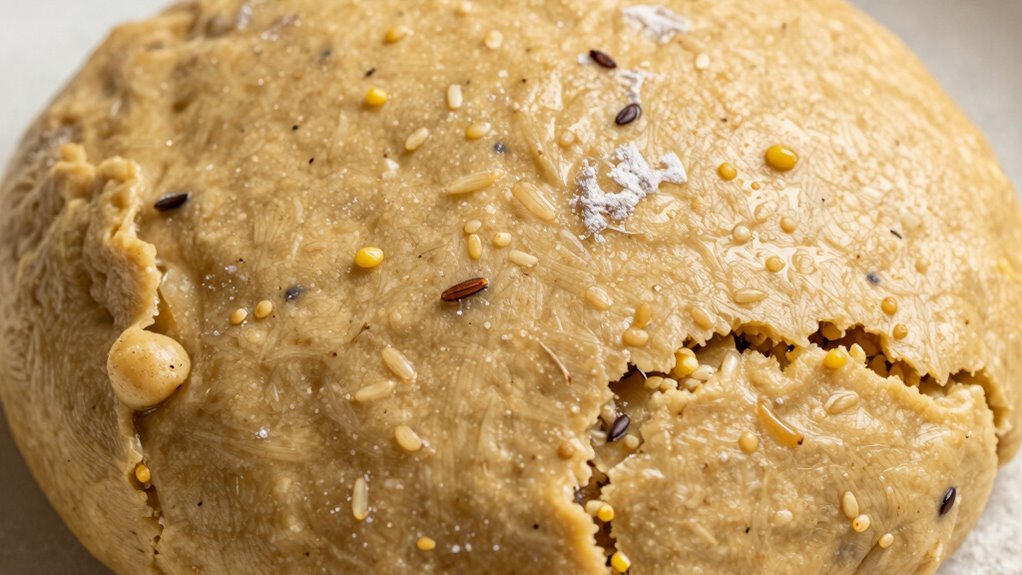
If your millet dough turns out sticky, don’t panic—adding a little more millet flour can help firm it up. When your mixture is crumbly, try sprinkling in small amounts of water gradually until it holds together better. Knowing these quick fixes will keep your millet dough on track, even when things don’t go as planned.
Sticky Dough Solutions
When millet dough turns sticky, it can be frustrating, but solutions are often straightforward. Sticky dough often results from fermentation effects or excess moisture. To fix this, try these tips:
- Add more dry millet flour gradually to absorb excess moisture and firm up the dough.
- Reduce liquid ingredients in your recipe or use ingredient substitutions like dried millet flakes instead of wet ingredients.
- Allow the dough to rest for 10-15 minutes, giving fermentation effects time to stabilize and moisture to evenly distribute.
- Adjust fermentation time in future batches, as over-fermentation can increase stickiness. Proper timing helps control moisture and improves dough consistency.
Crumbly Millet Mixture
A crumbly millet mixture often indicates that the dough lacks sufficient moisture or binding agents, causing it to fall apart easily. This issue can be influenced by fermentation effects, which may alter the dough’s texture and reduce its cohesiveness. To fix this, add small amounts of water or oil gradually until the mixture binds together better. Keep in mind that fermentation can also impact flavor variations, sometimes making the dough drier or more crumbly if not properly managed. Ensuring proper hydration and controlling fermentation timing helps improve dough consistency. If the mixture remains crumbly, knead it gently to distribute moisture evenly. Proper adjustments will help you achieve a more pliable dough, making it easier to shape and cook without falling apart.
Final Tips for Shaping and Cooking Millet-Based Breads and Snacks

To achieve perfectly shaped millet-based breads and snacks, focus on handling the dough gently but confidently. Proper shaping ensures even cooking and attractive presentation. When preparing, consider fermentation techniques to develop flavor and improve texture. This step also boosts flavor enhancement, making your snacks more delicious.
Here are some final tips:
- Use light, quick motions when shaping to prevent cracking.
- Rest the dough briefly after shaping to relax gluten and improve elasticity.
- Preheat your pan or oven thoroughly for consistent cooking.
- Keep moisture levels in check—too dry or sticky dough affects the final shape and texture.
Frequently Asked Questions
Can Millet Dough Be Flavored or Seasoned Effectively?
Yes, you can flavor millet dough effectively by using seasoning techniques like adding herbs, spices, or even a pinch of salt during mixing. These methods enhance the dough’s natural flavor and create a more vibrant taste profile. For better flavor enhancement, try incorporating garlic, cumin, or coriander. Adjust seasonings to suit your preference, and don’t be afraid to experiment with different herbs for unique, delicious results.
How Does Altitude Affect Millet Dough Preparation?
Imagine altitude impact like climbing a mountain—higher elevations mean thinner air, which affects your millet dough’s elasticity. At high altitudes, lower air pressure can make dough tougher and less pliable, requiring adjustments like adding more water or kneading longer. You’ll find that altitude influences how easily your millet dough stretches and holds together, so adapting your technique guarantees a soft, elastic consistency despite the altitude challenge.
Are There Specific Storage Methods for Millet Flours?
You should store millet flours in airtight containers in a cool, dry place to maintain freshness. Use storage tips like keeping them away from sunlight and moisture, which can spoil the flour faster. Proper storage extends the shelf life, preventing rancidity and insect infestation. For longer preservation, consider refrigeration or freezing. Always check for off smells or mold before use, ensuring your millet flour stays fresh and safe.
What Are the Best Tools for Kneading Millet Dough?
Imagine you’re a pioneer in the kitchen, using your hands or a sturdy mixer to knead millet dough. The best tools for this task are a heavy-duty dough scraper or a wooden spoon, which help develop millet dough elasticity and promote fermentation. These tools allow you to work efficiently, ensuring even mixing and better fermentation, resulting in softer, more pliable millet dough. Avoid using flimsy utensils—they won’t give you the desired texture.
How Does Aging Millet Dough Influence Its Texture?
When you age millet dough, fermentation effects come into play, making the dough more elastic and easier to handle. It also enhances gluten development, resulting in a softer, chewier texture. As the dough rests, enzymes break down starches, improving flavor and digestibility. However, over-aging can cause the dough to become too sticky or lose its structure, so keep an eye on the timing to achieve the perfect texture.
Conclusion
Mastering millet doughs means more than just mixing; it’s about patience, practice, and persistence. When you understand their unique behaviors, you’ll overcome obstacles and optimize outcomes. Embrace the challenges, experiment with techniques, and enjoy the journey of crafting wholesome, hearty breads. Remember, with mindful mastery and motivated mindset, your millet masterpieces will become more manageable, memorable, and mouthwatering. So, stay steady, stay skilled, and savor the success of splendid millet snacks!