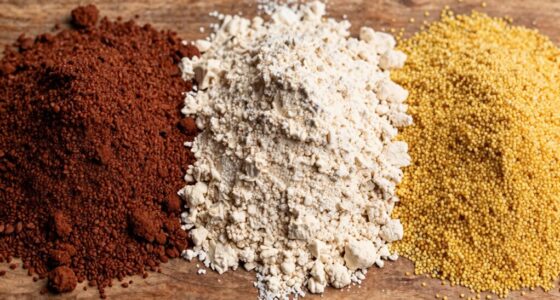
When you see labels like “natural,” “whole,” or “organic,” it’s important to know they often don’t mean what you might think. “Natural” has no strict rules, and “whole” just means minimally processed, but isn’t regulated. “Organic” is regulated but can still have loopholes. Harmful marketing tactics can make products seem healthier or more ethical than they are. To make smarter choices, understanding these terms helps you see beyond the hype and find truly nutritious options—keep exploring to learn more.
Key Takeaways
- “Natural” labels lack regulation and can be used broadly, regardless of processing or ingredients.
- “Whole” foods imply minimal processing but have no universal standard or certification.
- “Organic” is regulated, ensuring certain standards, but may still have loopholes and limitations.
- Certifications like “certified organic” provide more reliable assurance of farming and processing practices.
- Understanding these terms helps consumers make informed choices beyond marketing claims.

NOW Foods Supplements, Psyllium Husk Powder, Certified Organic, Non-GMO Project Verified, Soluble Fiber, 12-Ounce
- Excellent Source of Fiber: Supports heart health with soluble fiber
- Easy to Use: Mix 1 tablespoon into water or juice
- High Soluble Fiber Content: Provides 6 grams per serving
As an affiliate, we earn on qualifying purchases.
As an affiliate, we earn on qualifying purchases.
What Do ‘Natural,’ ‘Whole,’ and ‘Organic’ Really Mean?

When you see labels like “natural,” “whole,” or “organic,” it’s important to understand that these terms often lack strict definitions and can be misleading. Labeling regulations vary widely, and many marketing terminology claims aren’t backed by specific standards. “Natural,” for instance, isn’t regulated in many regions, so companies can use it regardless of processing methods or ingredient sources. Similarly, “whole” typically suggests minimal processing, but there’s no universal standard, leaving room for interpretation. “Organic” has clearer rules under certain regulations, but even then, marketing tactics can exaggerate benefits. Recognizing that these labels are primarily marketing terminology helps you make more informed choices and avoid being misled by vague or overstated claims. Additionally, scientific skepticism reminds us to critically evaluate such labels rather than accept them at face value. Being aware of regulatory standards can further help differentiate genuine claims from marketing hype. Awareness of labeling regulations can also assist consumers in identifying authentic organic or natural products amidst marketing claims.

Decoding Food Labels: A Science-Based Guide to Healthy Eating (Includes 55 Clean Recipes)
As an affiliate, we earn on qualifying purchases.
As an affiliate, we earn on qualifying purchases.
What Do the Laws Say About Food Labels?

Have you ever wondered what laws govern the labels on your food packaging? Federal agencies set clear regulatory standards to guarantee labeling accuracy, protecting consumers like you. These laws specify what terms can be used and how products must be labeled. For example: 1. The USDA and FDA oversee organic and general food labels. 2. They enforce strict guidelines on terms like “natural” and “whole,” requiring truthful representations. 3. Companies must provide truthful, non-misleading labels that match the product’s actual contents. Additionally, regulatory compliance ensures that manufacturers adhere to these standards and maintain consumer trust. These regulations aim to prevent false advertising and ensure transparency. By adhering to these standards, manufacturers help you make informed decisions about what you’re eating, with clarity and confidence. Food labeling laws play a crucial role in maintaining honesty and integrity in the food industry, supported by government oversight to uphold these standards. Moreover, clear labeling standards can help consumers identify truthful product claims, reducing confusion and promoting healthier choices.

Make Your Own: 120+ Minimally Processed, Oil-Free, Wheat-Free, Sugar-Free, Plant-based Recipes
As an affiliate, we earn on qualifying purchases.
As an affiliate, we earn on qualifying purchases.
Marketing Words That Can Confuse You

While food labeling laws set strict standards for accuracy, many products still use marketing words that can mislead or confuse you. These marketing jargon terms are crafted to make products seem healthier or better than they really are, leading to label deception. Words like “superfood,” “all-natural,” or “farm-fresh” sound appealing but often lack clear definitions or standards. Companies exploit these vague terms to attract buyers without actually offering significant nutritional benefits. You might assume that “gluten-free” or “non-GMO” guarantees quality, but these claims don’t always tell the full story. Recognizing these marketing tricks helps you make smarter choices, instead of falling for words that evoke trust but lack meaningful meaning. Being aware of label deception helps you read between the lines and focus on what truly matters. For example, understanding label standards can help you distinguish between genuine health benefits and marketing hype. Additionally, knowing how piercings are cared for and healed can inform personal decisions about body modifications, and understanding these terms can prevent unnecessary health risks. Knowing how electric dirt bikes are priced and their performance capabilities can also inform smarter purchasing decisions, especially when evaluating the true value behind a product.

100% Organic Natural Product Labels, 1.25 Inch Round Adhesive Stickers for Food Package, Box, Bags, 500 Count
- High-Quality Material: Durable 1.25-inch round stickers
- Multi-Purpose Labels: Suitable for food, boxes, and bags
- Large Quantity Pack: Includes 500 stickers for bulk use
As an affiliate, we earn on qualifying purchases.
As an affiliate, we earn on qualifying purchases.
Comparing Natural, Whole, and Organic Foods

Ever wonder what truly sets natural, whole, and organic foods apart? These labels influence consumer perception and are often misunderstood. To compare:
- Natural foods suggest minimal processing but lack strict label accuracy, so standards vary.
- Whole foods refer to unprocessed items, emphasizing their natural state rather than certification.
- Organic foods are certified to meet specific farming standards, ensuring no synthetic pesticides or GMOs.
While natural and whole foods rely heavily on consumer perception, organic labels provide more certainty through regulation. Understanding these differences helps you make better choices and avoid confusion. By knowing what each label signifies, you can better evaluate products and avoid being misled by marketing claims that blur the lines between these categories.
Understanding the Limitations of Organic Labels

Organic labels aim to guarantee certain standards, but they aren’t foolproof. Regulatory loopholes can allow some producers to exploit the system, giving misleading impressions about their products. For example, some farms labeled organic may still use questionable practices or synthetic inputs that aren’t fully banned, creating gray areas. Additionally, label misinterpretations happen when consumers assume “organic” means completely natural or pesticide-free, which isn’t always true. The USDA Organic label ensures specific guidelines are met, but it doesn’t guarantee the absence of all synthetic substances or guarantee ethical practices. As a result, you might be paying a premium for a label that doesn’t fully reflect the quality or purity of the food. Being aware of these limitations helps you make more informed choices.
How to Spot Truly Healthy and Ethical Food Choices
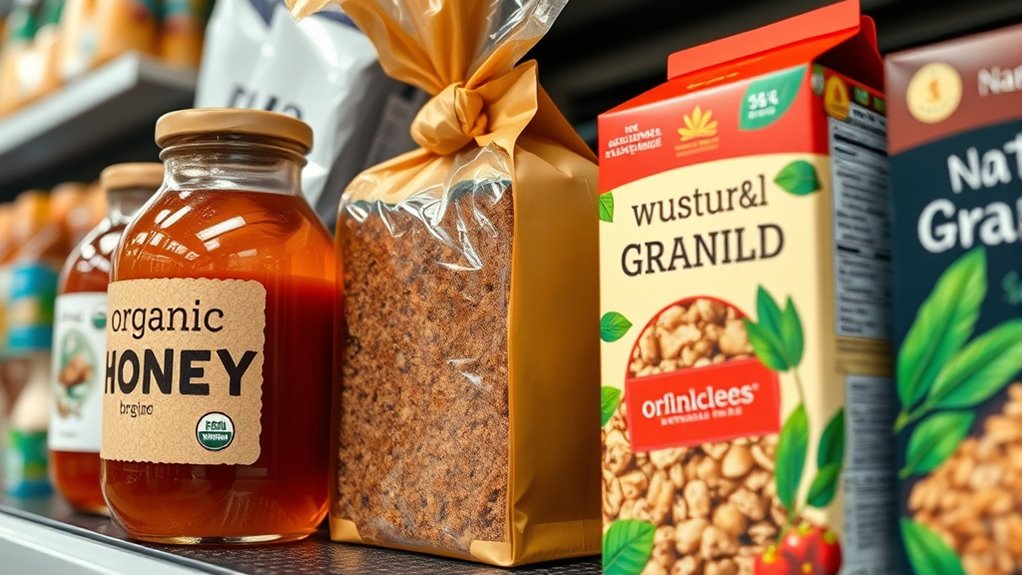
How can you truly identify food that’s both healthy and ethically produced? Focus on these key indicators:
- Look for labels or certifications that emphasize sustainable farming practices, ensuring the land is preserved and resources are responsibly used.
- Check for evidence of ethical sourcing, meaning fair treatment of workers and animals involved in production.
- Research brands’ transparency about their supply chain, so you can verify their commitment to ethical standards and environmental impact.
- Pay attention to community involvement initiatives that demonstrate a brand’s dedication to supporting local farmers and ethical labor practices.
Beyond Labels: Key Factors for Choosing Nutritious and Ethical Foods

While labels and certifications provide useful guidance, making truly nutritious and ethical food choices requires looking beyond them. Focus on ethical sourcing, ensuring the food comes from producers who prioritize fair labor practices and animal welfare. Investigate the supply chain to see if companies support local communities and avoid exploitative practices. Additionally, consider the sustainability practices behind the food, such as water conservation, soil health, and reduced carbon footprint. Opt for foods produced with environmentally friendly methods that minimize waste and preserve resources. You can also pay attention to smart kitchen tools that help monitor and reduce food waste, making your choices more sustainable. Incorporating transparency in food labeling can further help consumers make informed decisions aligned with their values. Emphasizing ethical supply chains ensures that your food choices support fair trade and humane treatment of workers and animals. Being aware of certification standards can also guide you toward more reliable and trustworthy labels. Moreover, researching sustainable agriculture practices can deepen your understanding of how food production impacts the environment and local communities. By paying attention to these factors, you can make more informed decisions that align with your values, supporting not only your health but also a more sustainable and just food system.
How Food Labels Influence Your Health and the Environment

Have you ever wondered how food labels shape your health and impact the environment? They can influence your choices in ways that promote sustainability and reduce waste. Here’s how:
- Labels like “organic” support sustainable farming, encouraging practices that protect soil and water quality.
- Certifications such as “fair trade” often promote environmentally friendly methods and ethical labor, benefiting communities.
- Clear labeling of food waste reduction efforts, like packaging designed to minimize spoilage, helps you avoid unnecessary waste.
Tips for Reading Food Labels and Making Smarter Choices

Reading food labels carefully is essential for making smarter choices that support your health and the environment. Focus on ingredient transparency by checking the ingredient list for recognizable, whole foods and avoiding overly processed items. Don’t just trust packaging claims; read beyond the front label to verify what’s inside. Look for added sugars, preservatives, and artificial ingredients that may not align with your wellness goals. Pay attention to serving sizes and nutritional info to understand what you’re actually consuming. Additionally, seek out certified organic labels to ensure the product meets strict standards for farming and processing. By scrutinizing labels, you can identify truly nutritious options and avoid misleading marketing. Making informed decisions starts with understanding what’s in your food and questioning packaging claims, empowering you to select products that genuinely benefit your health and reflect your values.
Questions to Ask When Shopping for Better Nutrition

When shopping for better nutrition, asking the right questions can help you make more informed choices and avoid labeling myths. Start by questioning the claims on packaging—does “natural” or “whole” truly mean what it says? To navigate these labels, consider these key consumer questions:
Ask if labels like “natural” or “whole” truly reflect the product’s true nature.
- Is this product backed by transparent ingredient lists and certifications?
- Are the health benefits claimed supported by credible evidence?
- How does this item fit into my overall nutritional goals?
Frequently Asked Questions
Are ‘Natural’ Products Always Free From Artificial Ingredients?
No, natural products aren’t always free from artificial ingredients. The term “natural” on labels can be misleading because it doesn’t guarantee label accuracy or that artificial ingredients aren’t included. Always read the ingredient list carefully, as some products labeled “natural” may still contain artificial additives. To make informed choices, don’t rely solely on the label—double-check the ingredients to verify you’re avoiding artificial ingredients entirely.
Can Organic Foods Be Genetically Modified?
Organic foods generally can’t be genetically modified, as organic certification standards prohibit GMOs. However, there are exceptions where non-GMO seeds are used, but some traits might still be introduced through traditional breeding. When you see organic labels, rest assured they meet strict guidelines that exclude genetic modification, ensuring your food is free from GMOs. Always check for certification labels to verify organic status and avoid genetically modified products.
Do Organic Labels Guarantee Better Nutritional Value?
Organic labels don’t guarantee better nutritional value, but they often mean fewer pesticide residues and better soil health. When you choose organic, you reduce your exposure to synthetic chemicals, which can impact overall health. While nutrient levels can vary, organic farming practices tend to promote healthier soil, potentially enhancing nutrient content. So, if you care about pesticide residues and supporting sustainable agriculture, organic options are often a better choice.
How Do Food Labels Vary Internationally?
International food labels vary widely because import labels depend on different countries’ standards. You’ll find that what’s considered organic or natural in one country might not meet another’s criteria. You should check for adherence to international standards like Codex Alimentarius, but always verify local regulations. This variation can impact your understanding of product quality and safety, so always read labels carefully and consider country-specific labeling laws before making choices.
Are There Hidden Costs Associated With Organic Foods?
You might think organic foods are worry-free, but beware of hidden costs that could blow your budget. The cost implications include certification fees that can skyrocket, making organic options seem outrageously expensive. These fees cover rigorous processes to guarantee authenticity, but they also add a hefty layer of expense that isn’t always obvious. So, while you get quality, you also pay a premium hidden beneath the surface of those glossy labels.
Conclusion
Understanding food labels helps you make smarter choices, but don’t rely on words alone. While organic and natural claims can suggest healthier options, they don’t guarantee better nutrition or ethical practices. Think of labels as a starting point, not the whole story. Dig deeper—read ingredients, consider processing levels, and prioritize whole foods. By questioning labels and staying informed, you can truly choose foods that nourish your body and support a sustainable environment.