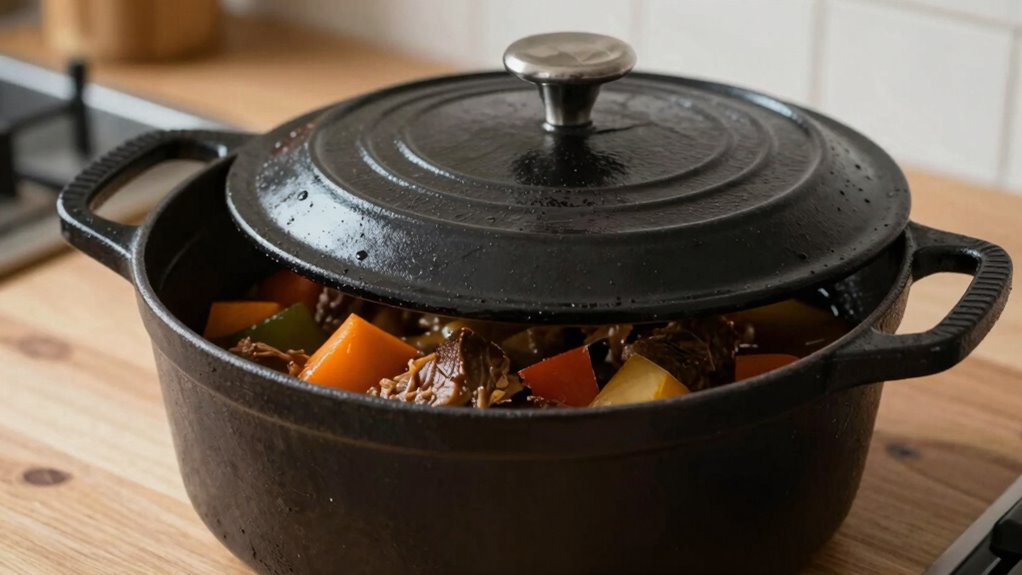

A Dutch oven outperforms a regular pot with its superior heat retention, even heat distribution, and versatility. Made of durable cast iron, it slowly heats food and keeps it warm longer, preventing hot spots. Its tight-fitting lid traps moisture, making it perfect for braising, baking, and slow-cooking. Whether on a stovetop or in the oven, a Dutch oven’s design guarantees consistent results. To discover how to maximize its benefits, explore more about its unique features.

Get kitchen staples and gadgets delivered free — and shop member deals
- Fast, free delivery on millions of items
- Access to Prime Big Deal Days deals on October 6–7
- Prime Video, Amazon Music and more included
Key Takeaways
- Dutch ovens are made of durable cast iron, ensuring long-lasting use without warping or cracking.
- They provide superior heat retention and even distribution for consistent cooking and better crust formation.
- Their tight-fitting lids trap moisture, making them ideal for slow-cooking, braising, and baking.
- Versatile for stovetop, oven, or open flame, replacing multiple cookware types in various recipes.
- Their excellent heat retention reduces energy use and supports a wide range of cooking techniques.
As an affiliate, we earn on qualifying purchases.
What Is a Dutch Oven and How Is It Different From Regular Pots
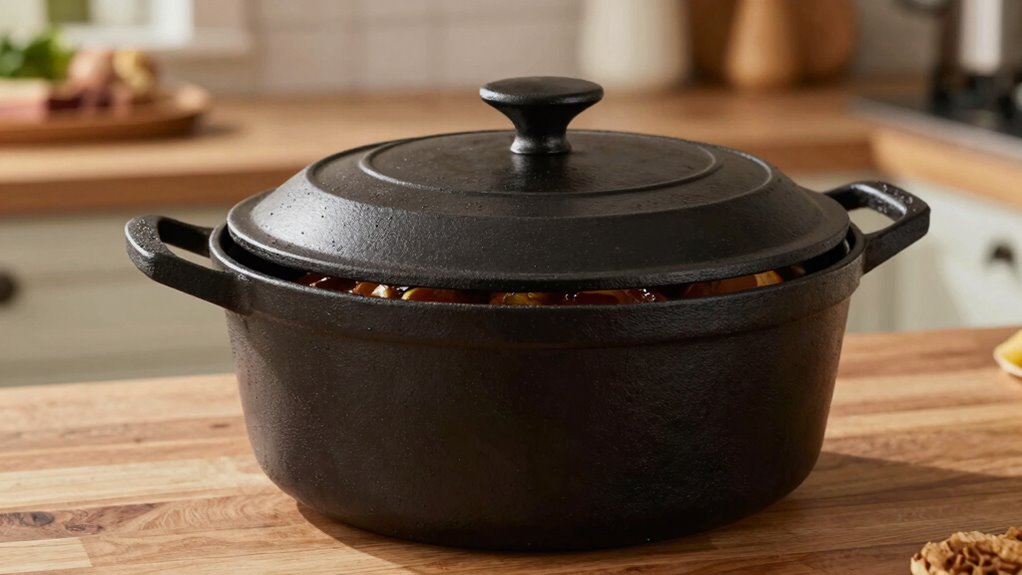
What exactly makes a Dutch oven stand out from regular pots? It’s primarily its cast iron durability, which guarantees it lasts for years, even with frequent use. This material distributes heat evenly and withstands high temperatures, making it ideal for slow-cooking, roasting, and baking. Another key feature is its lid design. The heavy, tight-fitting lid traps moisture inside, promoting self-basting and tender results. Unlike typical pots, Dutch ovens are often enameled or seasoned, preventing rust and making cleanup easier. Their robustness and unique lid design make them versatile for a wide range of recipes. Additionally, their heat retention capabilities ensure consistent cooking results, whether simmering stews or baking bread. The heat distribution properties of cast iron further enhance their ability to provide even cooking. These qualities distinguish a Dutch oven from standard cookware, providing durability and functionality that lasts a lifetime. Furthermore, the cooking versatility of Dutch ovens allows them to be used on the stovetop, in the oven, or over an open flame, making them an indispensable tool in many kitchens. They also offer energy efficiency due to their ability to retain heat longer, reducing the need for constant stove or oven use. Moreover, the versatility in cooking styles makes them a staple in many kitchens, capable of replacing several other types of cookware.
As an affiliate, we earn on qualifying purchases.
How Dutch Ovens Retain and Distribute Heat Better
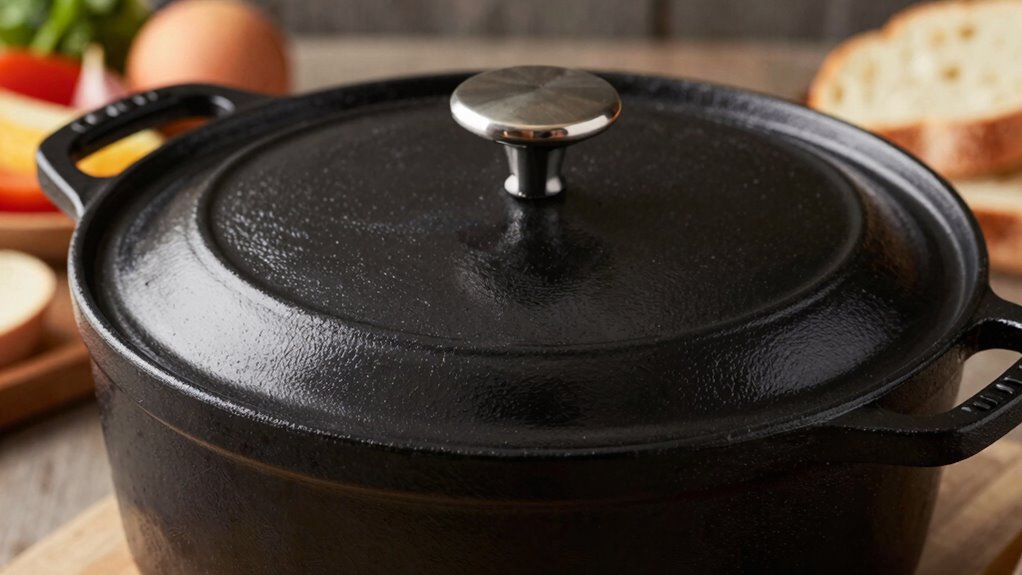
Dutch ovens are known for their superior heat retention, which keeps your food warm longer and cooks evenly. Their thick material helps distribute heat consistently across the entire surface, reducing hot spots. This even heat distribution ensures your dishes are cooked thoroughly and with less fuss. Additionally, their ability to maintain consistent temperature makes them ideal for slow-cooking and braising. Thanks to their heat retention properties, Dutch ovens can often be used over open flames or coals, broadening their versatility in various cooking environments. Furthermore, their durable construction aligns with the professional services emphasis on creating innovative, high-quality spaces that meet diverse needs.
Superior Heat Retention
Have you ever noticed how dishes cooked in a Dutch oven come out evenly tender and perfectly cooked? That’s because of its superior heat retention. The thick walls and heavy lid create a sealed environment, trapping heat efficiently. Over time, as you season your Dutch oven, it develops a seasoned finish that enhances its heat-holding ability. The lid design plays an essential role, locking in moisture and maintaining a consistent temperature inside. This means you can cook at lower heats for longer periods without worrying about uneven results. Your Dutch oven stays hot longer, reducing the need for constant attention. Whether you’re braising, roasting, or baking, its excellent heat retention ensures your dishes are cooked thoroughly and evenly, delivering reliable, delicious results every time. heat retention is a key advantage that makes Dutch ovens stand out from regular pots. Additionally, the seasoning process helps improve the non-stick surface and overall heat distribution of the cookware. Proper seasoning also creates a natural barrier that enhances heat conduction, further improving cooking performance. Regular use and maintenance can further strengthen its ability to retain heat over time.
Even Cooking Distribution
Because of its thick walls and heavy lid, a Dutch oven distributes heat more evenly than thinner cookware. The seasoned surface helps conduct heat uniformly, ensuring consistent cooking without hot spots. Its thick material retains heat and spreads it steadily across the entire cooking area. The lid design plays a vital role, trapping heat and moisture inside, which promotes even cooking and prevents temperature fluctuations. This heat retention is essential for slow-cooked dishes and braises, enhancing flavor development. This combination allows heat to circulate gently, reducing the risk of burning or uneven browning. When you use a Dutch oven, you’ll notice your dishes cook uniformly, whether simmering stews or baking bread. The even distribution of heat makes your cooking more predictable and efficient, giving you better control and better results every time. Proper heat management ensures consistent results and enhances the durability of your Dutch oven over time. Additionally, the thermal properties of cast iron material contribute to its superior heat distribution capabilities.
Thick Material Advantages
The thick material of a Dutch oven is key to its superior heat retention and distribution. Its durability ensures the pot withstands frequent use without warping or cracking, maintaining consistent performance over time. The dense construction enhances heat conduction, allowing the Dutch oven to absorb and spread heat evenly across its interior. This even heat distribution minimizes hot spots, so your food cooks uniformly. The material’s ability to hold heat longer means you can simmer stews or braise meats at low temperatures without constant attention. Additionally, the robust build helps retain moisture inside, keeping dishes tender and flavorful. Overall, the thick material’s durability combined with excellent heat conduction makes Dutch ovens ideal for slow-cooking, roasting, and baking, outperforming thinner, less sturdy pots.
best Dutch oven for slow cooking
As an affiliate, we earn on qualifying purchases.
As an affiliate, we earn on qualifying purchases.
Using a Dutch Oven for Slow Cooking and Braising
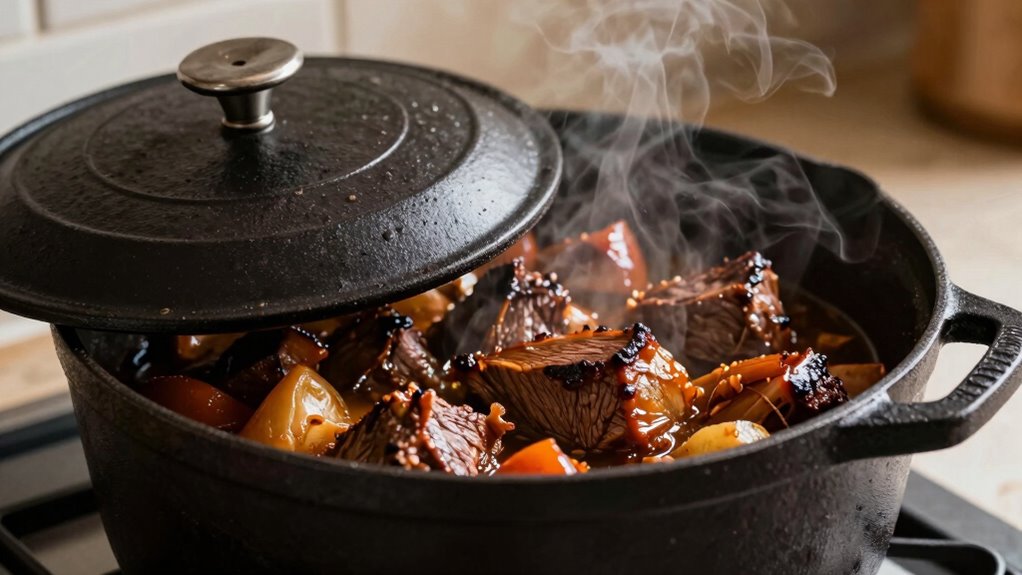
Using a Dutch oven for slow cooking and braising is a straightforward way to develop rich, tender flavors in your dishes. To start, ensure your Dutch oven is properly seasoned; this enhances its non-stick surface and prevents rust, making your cooking more effective. When braising, a good lid fit is essential to trap moisture and heat, allowing the meat and vegetables to become tender and flavorful. You’ll want to preheat the Dutch oven, then add ingredients and liquids, covering tightly to maintain consistent temperature and moisture. Slow cooking in a Dutch oven also benefits from the even heat distribution, which helps break down tougher cuts of meat. Overall, a well-seasoned Dutch oven with a proper lid fit makes slow cooking and braising simple and efficient.
As an affiliate, we earn on qualifying purchases.
Baking Bread and Casseroles in Your Dutch Oven
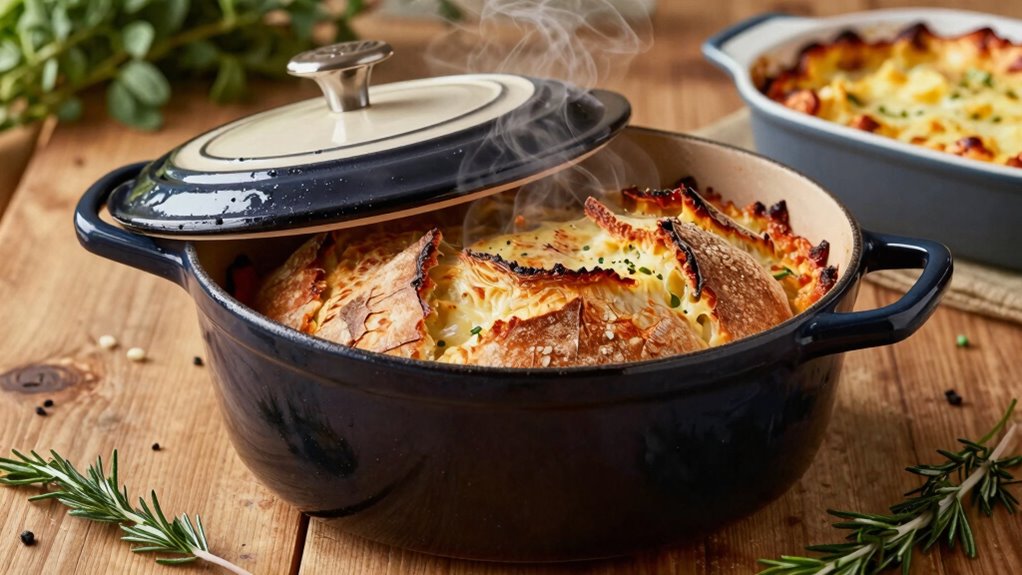
Your Dutch oven provides even heat distribution, ensuring your bread and casseroles cook uniformly. This consistency helps achieve a beautifully risen loaf with a crisp crust or a perfectly hot casserole. By using the Dutch oven, you’ll notice a superior crust formation that enhances every baked dish. Additionally, the heat retention properties of a Dutch oven keep your food warm longer and improve overall cooking performance. Knowing how to properly care for and maintain your Dutch oven can extend its lifespan and ensure optimal results every time you cook. Proper seasoning of your Dutch oven also plays a crucial role in preventing sticking and enhancing flavor development. Incorporating modern cooking techniques can further elevate your baking and casseroles with your Dutch oven. Understanding the material benefits of different Dutch oven constructions can help you choose the best one for your cooking style.
Even Heat Distribution
Because Dutch ovens are made from thick, dense materials, they excel at distributing heat evenly across their interior surface. This even heat distribution ensures your bread and casseroles cook uniformly, preventing hot spots that can burn or undercook food. The cast iron durability of these pots helps maintain consistent temperatures over long cooking periods. If you have an enameled surface, proper care is key to preserving its heat-conducting qualities and preventing damage. Avoid sudden temperature changes and use gentle cleaning methods to keep the enamel intact. This reliable heat conduction makes Dutch ovens ideal for slow braising, roasting, and baking, giving you consistent results every time. Their ability to evenly distribute heat is one of the reasons they outperform regular pots for many cooking tasks. Additionally, heat retention allows Dutch ovens to sustain high temperatures longer, enhancing their versatility in various recipes. The thermal mass of Dutch ovens also helps in maintaining steady cooking conditions, which is especially beneficial for delicate baking processes.
Superior Crust Formation
A Dutch oven’s ability to develop a superior crust is one of its most prized features when baking bread and casseroles. The key lies in its excellent heat retention and the lid design, which traps steam and moisture. This creates a moist environment that promotes crust formation. Proper seasoning techniques enhance the non-stick surface, ensuring even heat transfer and preventing sticking. When baking, preheating the Dutch oven with the lid on allows the heat to build evenly, helping achieve that golden, crispy crust. To maximize crust quality:
- Use well-seasoned cookware to guarantee consistent results
- Guarantee the lid fits tightly to trap steam effectively
- Maintain proper oven temperature for ideal browning
These factors work together to produce a crust that’s both crunchy and flavorful, elevating your baked goods beyond what a regular pot can achieve.
Enamel-Coated vs. Traditional Cast Iron Dutch Ovens: Which Is Better?

Choosing between enamel-coated and traditional cast iron Dutch ovens depends on your cooking needs and preferences. An enamel finish offers a smooth, colorful surface that resists rust and doesn’t require seasoning, making it easier to clean. This is ideal if you want minimal maintenance and a versatile, attractive piece. Traditional cast iron, on the other hand, relies on a seasoned surface that develops a natural non-stick layer over time, enhancing durability and flavor. While it may take more effort to clean, it can withstand higher temperatures and is often more affordable. Your choice hinges on whether you prioritize ease of cleaning and low maintenance or durability and traditional seasoning benefits. Both options excel in heat retention and even cooking, so select what aligns best with your cooking style.
How to Use Your Dutch Oven at High Temperatures and Over Open Flame

Both enamel-coated and traditional cast iron Dutch ovens can handle high temperatures, but using them over open flames or intense heat requires some precautions. When outdoor cooking with camping gear, always lift the lid carefully to prevent burns from escaping steam. Use heat-resistant gloves, and avoid sudden temperature changes to prevent cracking or warping. To maximize safety and performance, consider these tips:
- Use a stable, level surface to prevent tipping
- Position coals or flames evenly for consistent heat
- Keep a fire extinguisher nearby for emergencies
The Versatility of Dutch Ovens for Different Cooking Techniques

Dutch ovens are incredibly versatile kitchen tools that excel at a wide range of cooking techniques. Whether you’re braising, roasting, baking, or simmering, their even heat distribution and durable construction make them ideal. The seasoned finish on the cast iron enhances non-stick properties and flavor, while the lid design traps moisture for tender results. This adaptability allows you to use your Dutch oven for everything from hearty stews to artisan bread. To visualize its versatility, consider the following table:
| Technique | Temperature Range | Benefits |
|---|---|---|
| Braising | Low to medium | Moist, tender meats |
| Roasting | Medium to high | Even browning, crispy crusts |
| Baking | Medium | Perfect bread and casseroles |
| Simmering | Low | Deep flavors, rich sauces |
This flexibility makes your Dutch oven a true all-in-one cooking tool.
Maintaining and Caring for Your Dutch Oven for Longevity
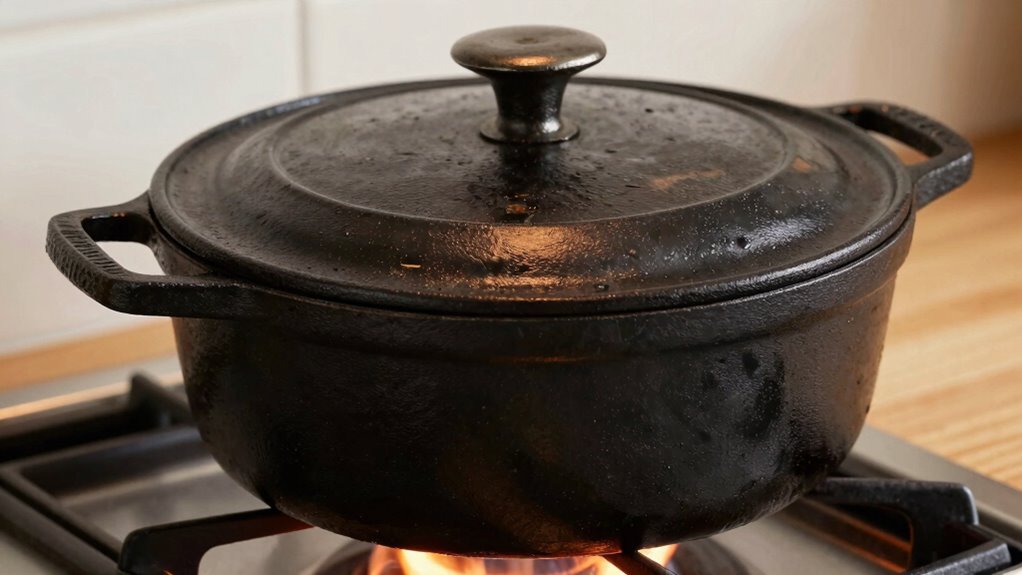
To guarantee your Dutch oven lasts for years, proper maintenance and care are essential. Regularly applying seasoning techniques helps build a natural non-stick surface and prevents rust. When cleaning, avoid soap; instead, use warm water and a gentle scrub to preserve the seasoning. After cleaning, dry it thoroughly to prevent moisture buildup. To keep your Dutch oven in top shape, remember these key points:
- Reapply a thin layer of oil after cleaning to maintain seasoning
- Store in a dry place to prevent rust
- Use gentle cleaning methods to avoid damaging the surface
Following these steps ensures your Dutch oven stays durable and functional, making it a reliable tool in your kitchen for years to come.
Top Recipes to Make With Your Dutch Oven
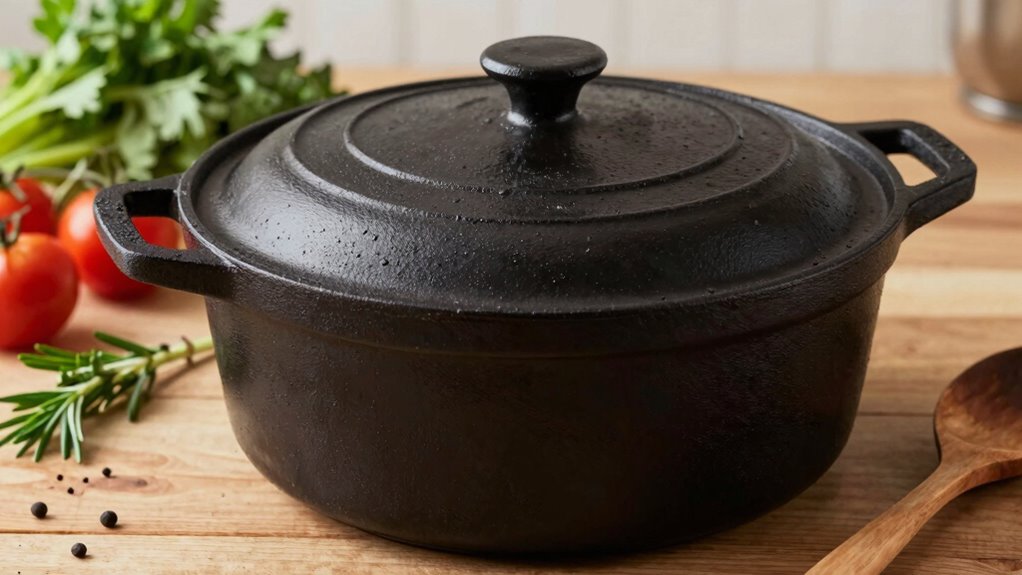
A Dutch oven is a versatile tool that can elevate your cooking with a wide range of delicious recipes. From hearty stews and braised meats to artisan bread, it excels at developing deep flavors. With the right Dutch oven accessories, such as heat-resistant lids and silicone mitts, you can enhance your cooking experience. Understanding Dutch oven history reveals its long-standing reputation for durability and heat retention, making it perfect for slow-cooking and roasting. Classic recipes like beef stew, chicken pot pie, and baked bread are easy to master in a Dutch oven. Its ability to go from stovetop to oven simplifies meal preparation. Whether you’re making one-pot meals or baking bread, your Dutch oven opens up endless culinary possibilities.
Tips for Choosing and Caring for Your Dutch Oven

Choosing the right Dutch oven involves considering material, size, and lid type to suit your cooking needs. Look for a seasoned finish, which develops a natural non-stick surface over time, making cleanup easier and flavor better. Pay attention to lid design; a tight-fitting lid traps moisture, enhancing braising and stewing. To keep your Dutch oven in top shape:
- Regularly apply a thin layer of oil to maintain the seasoned finish and prevent rust.
- Use gentle cleaning methods—avoid soap and abrasives—to preserve the seasoning.
- Store with the lid slightly ajar or with a paper towel to prevent moisture buildup.
These tips ensure your Dutch oven remains durable and effective, allowing you to enjoy its superior heat retention and versatility for years to come.
Frequently Asked Questions
Can a Dutch Oven Be Used on Induction Cooktops?
Yes, a Dutch oven can be used on induction cooktops if it’s induction-compatible. Look for a cast iron or certain enameled Dutch ovens that have a magnetic base. These materials guarantee good induction compatibility and excellent heat distribution. Using the right Dutch oven on your induction stove lets you enjoy even cooking, whether you’re simmering stews or baking bread, making it a versatile kitchen tool.
How Do I Prevent Rust on a Traditional Cast Iron Dutch Oven?
Imagine your cast iron Dutch oven as a seasoned guardian of flavors. To prevent rust, regularly apply a thin layer of oil after cleaning and dry it thoroughly. Use proper seasoning techniques—baking it in the oven to build a protective coating—and store it in a dry, ventilated space. These steps keep your Dutch oven rust-free, ensuring it remains a reliable, durable vessel for flavorful meals.
Is It Safe to Put a Dutch Oven in the Dishwasher?
Putting your Dutch oven in the dishwasher isn’t recommended for dishwasher safety and cleaning tips. The harsh detergents and high heat can strip away the seasoning and cause rust. Instead, wash it by hand with warm water and a gentle brush. Dry it thoroughly afterward and apply a light coat of oil to keep it in top shape. This approach preserves your Dutch oven’s quality and longevity.
How Do I Choose the Right Size Dutch Oven for My Needs?
To choose the right size Dutch oven, consider your cooking needs and household size. A 5-6 quart Dutch oven suits most families for stews, roasts, and bread, offering ample capacity without taking up too much space. If you often cook for many, go for an 8-quart or larger. Keep in mind Dutch oven capacity when selecting suitable cookware sizes, ensuring it fits your recipes and storage space comfortably.
Can I Use a Dutch Oven for Deep Frying?
Think of your Dutch oven as a versatile workhorse. Yes, you can use it for deep frying because it handles hot oil and maintains steady temperature control, essential for crispy results. Keep an eye on oil absorption, and don’t overcrowd the pot, which can cause temperature dips. Its thick walls help regulate heat, making it a reliable choice for frying just about anything, from chicken to doughnuts.
Conclusion
With a Dutch oven in your kitchen, you hold a versatile vessel that transforms simple ingredients into hearty, flavorful dishes. Imagine the gentle simmering of stew, the crackle of bread crust, and the warmth that fills your home. By caring for it well, you’ll enjoy its magic for years to come. Embrace this timeless tool, and let it turn everyday cooking into comforting, memorable moments around your table.
NFL season / tailgating Picks
team gear
As an affiliate, we earn on qualifying purchases.