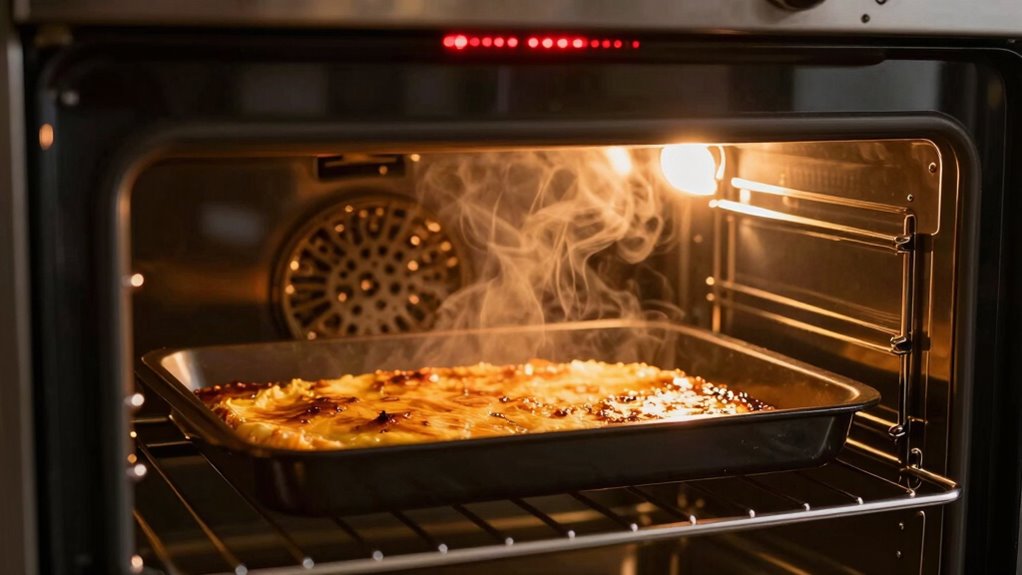
Broiling uses intense, direct heat from above to quickly sear and brown food, ideal for small cuts and finishing dishes. Baking provides gentle, even heat from all sides at moderate temperatures, perfect for casseroles and baked goods. Roasting surrounds food with high heat to develop rich flavors and caramelization, great for larger meats and vegetables. Understanding how each method transfers heat helps you achieve ideal texture and flavor—if you want to master these techniques, keep exploring the details ahead.

Get kitchen staples and gadgets delivered free with Prime
- Fast, free delivery on millions of items
- Prime Video, Amazon Music and more included
- Member-only deals all year
Key Takeaways
- Broiling uses intense, direct heat from above at high temperatures for quick searing and browning.
- Baking involves moderate, evenly distributed heat from all sides for gentle cooking and moisture retention.
- Roasting employs high, surrounding heat to develop rich flavors and caramelization, often at higher temperatures than baking.
- Proper food placement and utensil choice optimize heat transfer and achieve desired textures in each method.
- Adjusting temperature and time controls final results, preventing overcooking or undercooking, depending on the setting.
As an affiliate, we earn on qualifying purchases.
What Are the Main Differences Between Broiling, Baking, and Roasting?
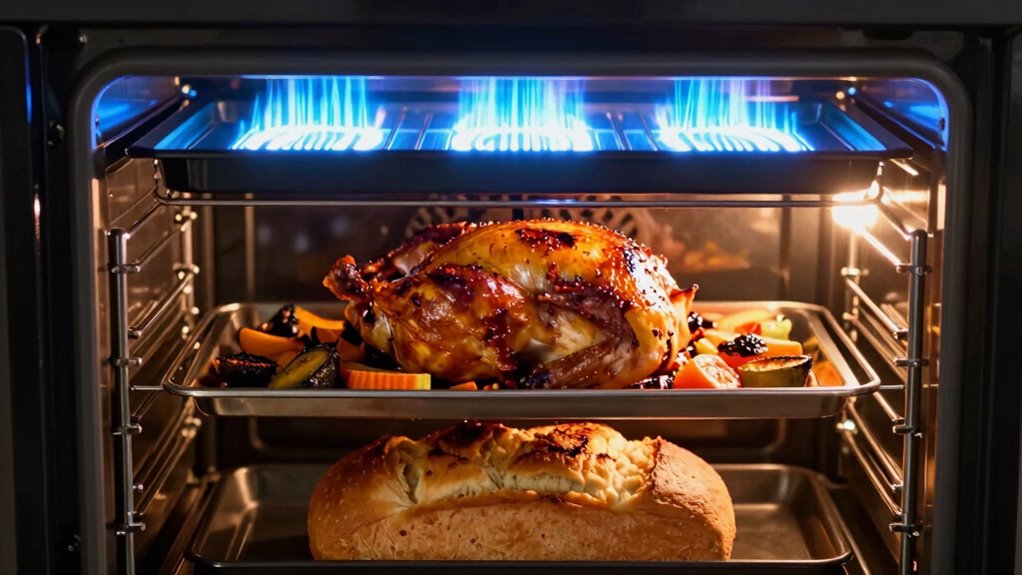
While broiling, baking, and roasting all use dry heat to cook food, each method differs mainly in temperature, positioning, and purpose. Broiling uses high heat from above, ideal for quick cooking or browning, but requires careful attention to oven safety to prevent burning. Baking involves moderate temperatures with food placed in the center, suitable for breads, casseroles, and desserts. Roasting uses higher temperatures than baking but still surrounds the food, perfect for vegetables and meats. Proper oven temperature control ensures that each method reaches the desired results without overcooking or undercooking. Regular cleaning tips help maintain an oven’s efficiency and safety, especially since different methods can cause grease and food buildup. Understanding these differences guarantees you select the right setting for your dish and keep your oven safe and clean. This knowledge improves cooking results and prolongs your appliance’s lifespan. Proper oven maintenance also enhances the effectiveness of each cooking method by ensuring consistent heat distribution. Additionally, selecting the appropriate setting can help prevent oven damage caused by incorrect use or buildup. Recognizing the distinct heat applications of each method allows you to optimize cooking times and outcomes. Being aware of oven safety precautions helps prevent accidents and ensures safe cooking experiences.
As an affiliate, we earn on qualifying purchases.
When Should You Use Broil, Bake, or Roast for Your Dishes?
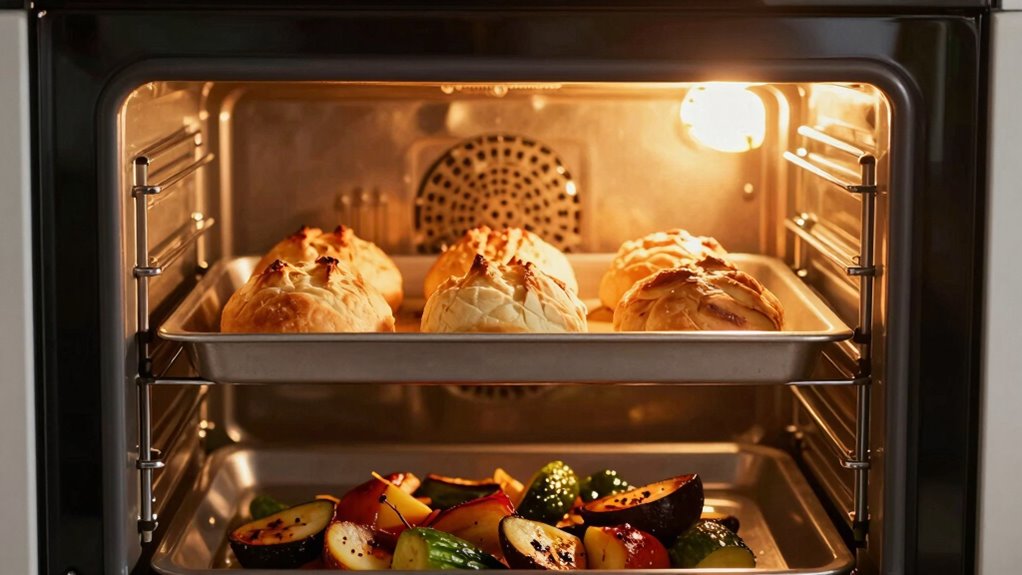
Choosing the right cooking method depends on your dish and desired outcome. Use broiling for quick searing or finishing dishes with a crispy top. Baking suits casseroles, bread, and delicate baked goods, providing even heat for thorough cooking. Roasting works best for meats and vegetables, enhancing flavor through caramelization. Always observe oven safety and ensure your ingredients are prepped correctly before cooking. Here’s a quick comparison:
| Method | Best For | Key Tip |
|---|---|---|
| Broil | Finishing dishes, browning | Watch closely to prevent burning |
| Bake | Baked goods, casseroles, gentle cooking | Use appropriate rack placement |
| Roast | Meats, vegetables, hearty dishes | Preheat oven and season ingredients |
Choosing wisely guarantees delicious results and safe oven use.
As an affiliate, we earn on qualifying purchases.
How Do Heat Sources and Placement Differ in Broiling, Baking, and Roasting?
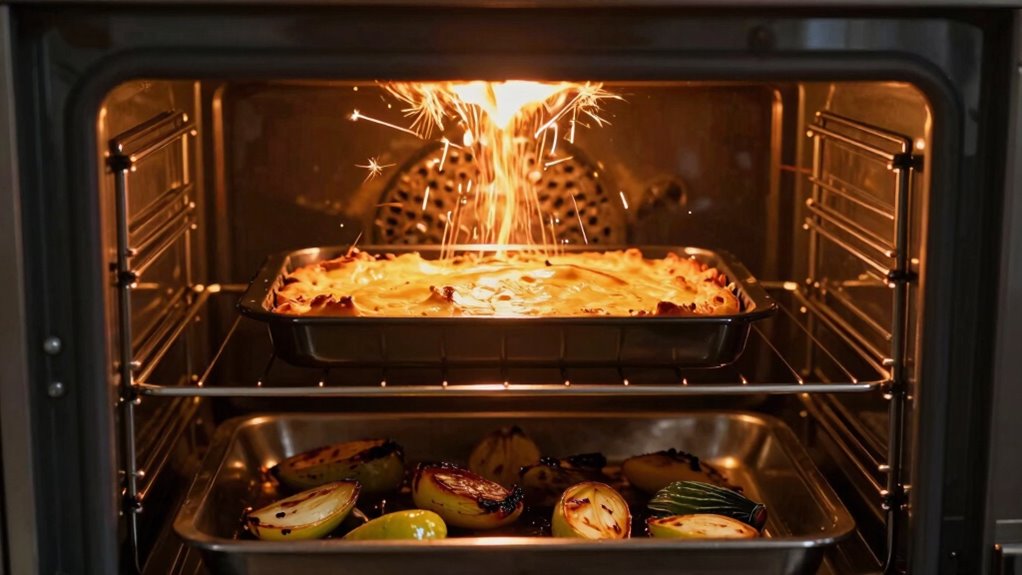
In broiling, the heat source is positioned directly above your food, providing intense, focused heat. Baking and roasting typically place the heat source around the sides, allowing more even distribution. Understanding how heat intensity and placement differ helps you choose the right method for your dish. Diverse heat sources play a crucial role in achieving optimal cooking results across these methods.
Heat Source Positioning
The placement of heat sources varies considerably among broiling, baking, and roasting, directly affecting how your food cooks. In broiling, the heat source is typically located directly above the food, often close to the oven insulation, which allows for intense, direct heat. This setup is ideal for quick searing or browning. Baking generally involves heat coming from the bottom or evenly from all sides, with the heat source positioned beneath or around a well-insulated oven cavity. Roasting places the heat source either above or around the food, depending on the oven design, often using a combination of top and bottom heating elements. The choice of cooking vessel also impacts heat distribution, ensuring proper heat transfer regardless of the setting.
Heat Intensity and Distribution
Heat intensity and distribution vary markedly among broiling, baking, and roasting because each method uses different heat sources and placements to achieve distinct cooking effects. In broiling, the high-intensity heat comes from the top heating element, often close to the food, resulting in quick, direct heat. Baking employs evenly distributed, moderate heat from both the top and bottom elements, with good oven insulation to maintain consistent temperature. Roasting combines high heat from the heating element design with the oven’s insulation to produce even heat circulation around larger cuts of food.
- Broiling uses focused, intense heat from the top element.
- Baking relies on even heat distribution through oven walls.
- Roasting benefits from convection currents for uniform cooking.
- Oven insulation helps maintain consistent heat in baking and roasting.
As an affiliate, we earn on qualifying purchases.
What Are the Temperature and Cooking Time Differences?
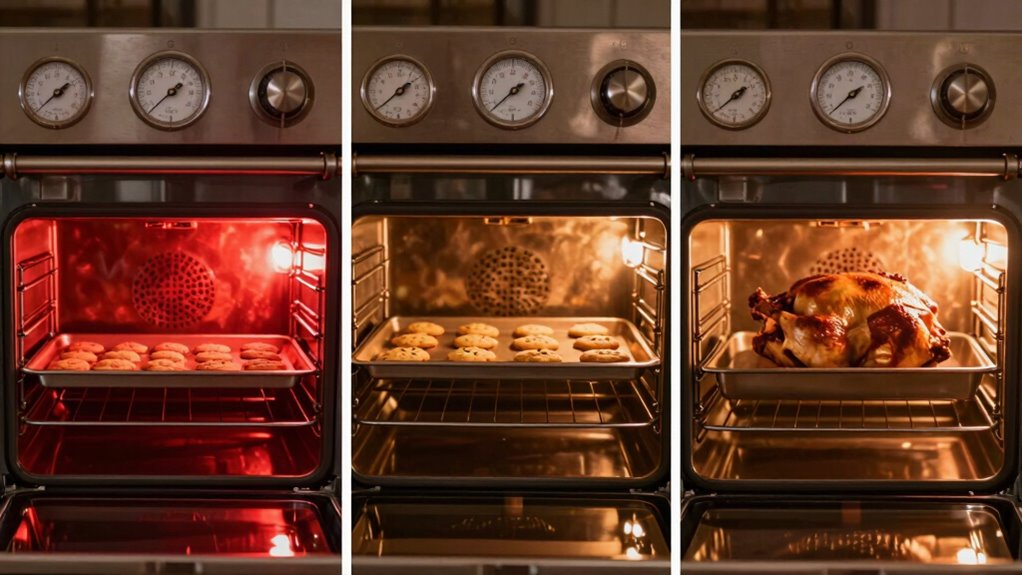
You’ll notice that broiling typically uses high temperatures around 500°F for shorter times, while baking and roasting operate at lower ranges between 300°F and 425°F. The cooking durations also vary, with broiling finishing quickly and baking or roasting taking longer depending on the dish. Understanding these differences helps you choose the right method to get perfect results. Proper piercing care and hygiene can also influence the overall quality of your cooking, much like maintaining cleanliness is vital for healing piercings.
Typical Temperature Ranges
Understanding the typical temperature ranges for broiling, baking, and roasting helps you choose the right method for your dish. Broiling usually occurs at high temperatures, around 500°F to 550°F, focusing heat from above. Baking typically takes place between 325°F and 375°F, providing even heat for cakes and bread. Roasting falls between 375°F and 450°F, ideal for vegetables and meats. Knowing these ranges guarantees oven safety and helps you select appropriate cookware considerations, like ovenproof dishes and proper ventilation.
- Broiling requires a close oven rack position to prevent burning.
- Baking needs even heat distribution for consistency.
- Roasting benefits from preheated, sturdy cookware.
- Temperature control is vital to prevent overcooking or undercooking.
Duration Differences
While all three methods—broiling, baking, and roasting—use different temperature ranges, their cooking times can vary considerably even at similar temperatures. Broiling typically involves high heat for a short period, often just a few minutes, which results in quick cooking that enhances crispness and flavor profiles. Baking and roasting generally operate at moderate temperatures, but roasting tends to require longer cooking times to develop richer flavors and tender textures. You’ll find that cooking techniques impact how long your food needs to stay in the oven, affecting the final taste and texture. Shorter broiling sessions produce a different flavor profile compared to the extended heat exposure of baking and roasting, which allows flavors to deepen and ingredients to caramelize.
Cooking Time Variations
Cooking times for broiling, baking, and roasting vary considerably due to their distinct temperature ranges and heat application. Broiling typically requires short, high-temperature bursts, making it ideal for quick, crispy results. Baking involves moderate heat for longer periods, offering convenience comparison for evenly cooking dishes like bread or casseroles. Roasting uses higher temperatures but generally takes longer than broiling, perfect for tenderizing meats and vegetables with added culinary versatility. Additionally, understanding the heat distribution in each method can help you achieve better control over the final texture and flavor of your dishes.
- Broiling saves time but demands close attention to prevent burning.
- Baking offers steady, predictable cooking times for consistent results.
- Roasting balances heat and duration for flavorful, evenly cooked dishes.
- Adjusting temperature and time enhances the final texture and flavor, depending on your needs.
Which Foods Are Best Suited for Broiling, Baking, and Roasting?
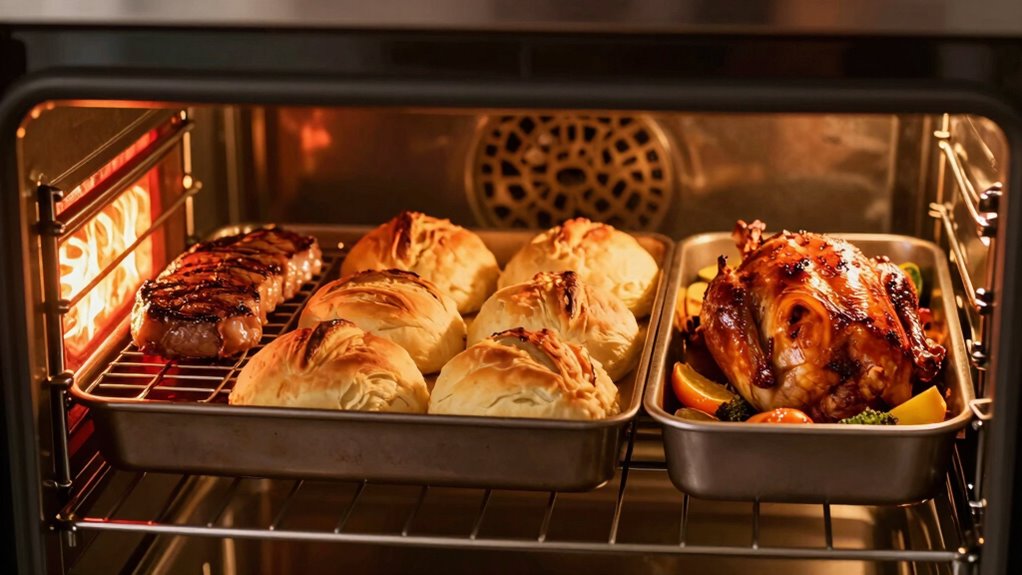
Have you ever wondered which foods are best suited for broiling, baking, and roasting? Broiling works well for tender cuts of meat, seafood, and thin vegetables, providing quick, high-heat cooking that crisps the outside. Baking is ideal for dishes like casseroles, bread, and baked desserts, offering even heat distribution for consistent results. Roasting suits hearty vegetables, poultry, and larger cuts of meat, enhancing flavors through caramelization. Understanding the culinary history reveals that these methods developed to maximize flavor and texture. From a health benefits perspective, baking and roasting often require less fat, preserving nutrients better. Additionally, cultural beliefs and scientific skepticism surrounding cooking techniques influence how these methods are perceived and utilized. Choosing the right method depends on the food’s composition and your desired outcome, ensuring you get the most flavor, texture, and nutritional value from each dish.
How Do Texture and Flavor Outcomes Vary by Method?
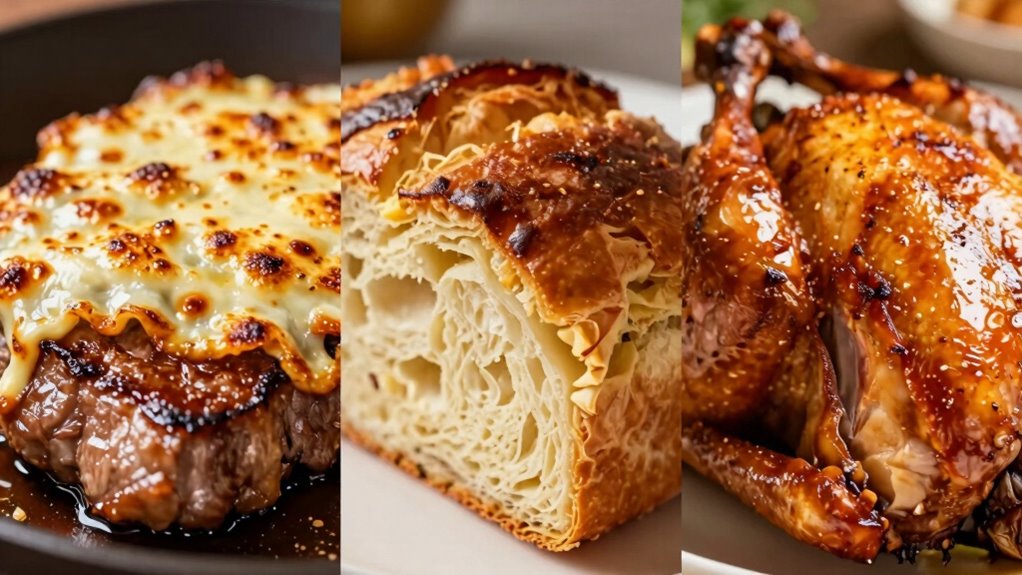
The way you cook a food influences both its texture and flavor. Broiling tends to create a crispy exterior, while baking offers a softer, more uniform result. Roasting enhances natural flavors through caramelization, giving your dishes a richer taste. Incorporating natural flavors through roasting can also support healthier cooking practices by reducing the need for added fats. Additionally, the cooking method you choose can affect nutrient retention and overall healthfulness of your meals. For example, heat transfer during roasting often preserves more vitamins compared to other methods. Understanding how different thermal processes impact food can help you select the best method for your desired outcome.
Texture Variations
Different methods of preparing food considerably influence its texture and flavor outcomes. When you choose to broil, bake, or roast, you alter how the food develops its surface and interior. Broiling creates rapid heat, leading to crisp exterior textures through caramelization techniques, but can dry out the surface if not monitored. Baking offers gentle, even heat, helping retain moisture and produce tender textures, especially in baked goods. Roasting, with its dry heat, promotes caramelization and a more concentrated flavor, resulting in a richer crust and softer interior.
- Broiling encourages a crispy texture with a caramelized surface
- Baking maintains moisture, yielding tender, moist results
- Roasting enhances caramelization for a flavorful, textured crust
- Cooking time and temperature directly affect moisture retention and textural contrast
Flavor Development
Choosing between broiling, baking, and roasting not only affects the texture of your food but also markedly influences its flavor development. Broiling’s high heat caramelizes surfaces quickly, intensifying savory notes and creating richer flavors through browning. Baking offers gentle heat that develops subtle flavors, making it ideal for evenly cooked dishes with delicate tastes. Roasting combines dry heat with longer cooking times, allowing flavors to deepen as natural sugars caramelize and juices concentrate. Seasoning techniques play an essential role; for instance, applying herbs or marinades beforehand enhances flavor absorption, especially when roasting. Presentation tips, like a well-browned crust or a glistening glaze, can elevate the visual appeal and flavor perception. Additionally, understanding the Gold IRA Markets can help investors diversify their portfolios with precious metals, much like choosing the right cooking method can enhance culinary results. Moreover, controlling temperature and timing is crucial for optimizing flavor development and achieving the desired texture. Ultimately, your chosen method shapes both the depth and complexity of your dish’s flavor profile.
What Common Mistakes Should You Avoid When Using Oven Settings?
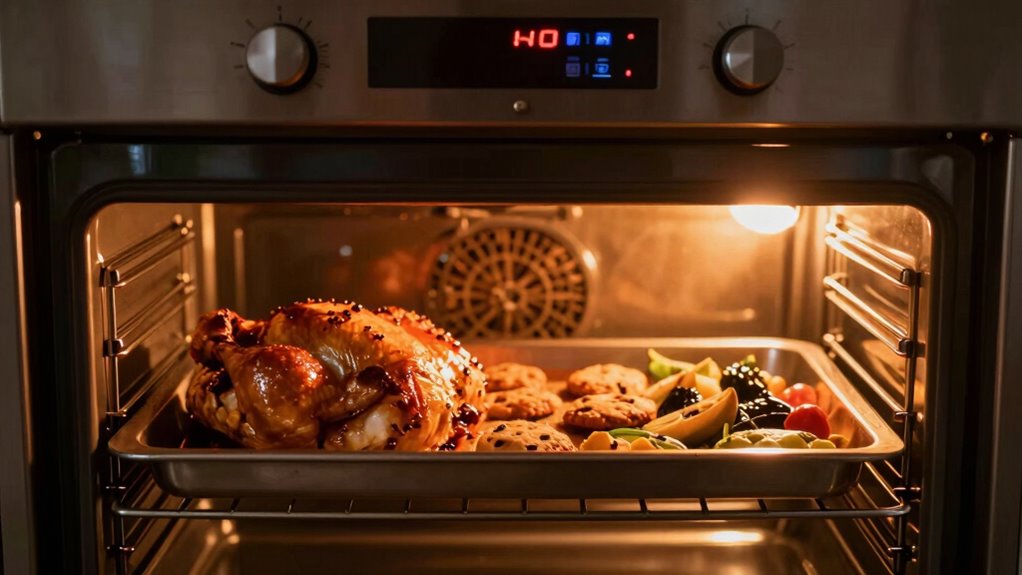
Many people make the mistake of not preheating the oven properly, which can lead to uneven cooking and poor results. Always verify your oven reaches the desired temperature before placing food inside. Failing to do so can impact texture and flavor development. Additionally, neglecting oven safety—like leaving oven doors open or overheating—can cause accidents. Regular cleaning tips, such as wiping spills and removing grease, help maintain oven efficiency and prevent smoke or fire hazards. Misusing oven settings, like using the broil setting for baking, can also ruin dishes. Remember to choose the correct setting for your recipe. Also, avoid opening the oven door too often, which causes temperature fluctuations and extends cooking time. Proper use and maintenance are key for safe, effective cooking. Understanding oven temperature stability and how it affects cooking results can help you achieve better dishes every time.
How Can You Convert Recipes Between Broiling, Baking, and Roasting?

Converting recipes between broiling, baking, and roasting requires understanding how each method affects cooking times and temperatures. When switching, adjust the temperature settings accordingly and monitor cooking times closely to prevent overcooking or undercooking. For example, if a recipe calls for baking at 350°F, you might need to broil at a higher temperature for a shorter period, especially for browning. Always prioritize cooking safety by avoiding cross-contamination when ingredient substitutions are necessary. Here’s a quick comparison:
| Method | Typical Temperature | Best For |
|---|---|---|
| Broiling | 500°F or higher | Quick, high-heat finishing |
| Baking | 325-375°F | Even cooking, gentle heat |
| Roasting | 375-450°F | Browning, tender meat |
| Substitution | Adjust time/temperature | Maintain quality and safety |
| Safety | Use oven mitts & proper racks | Prevent accidents |
This approach guarantees safe, effective recipe conversions.
How Do You Prepare and Position Food for Each Method?
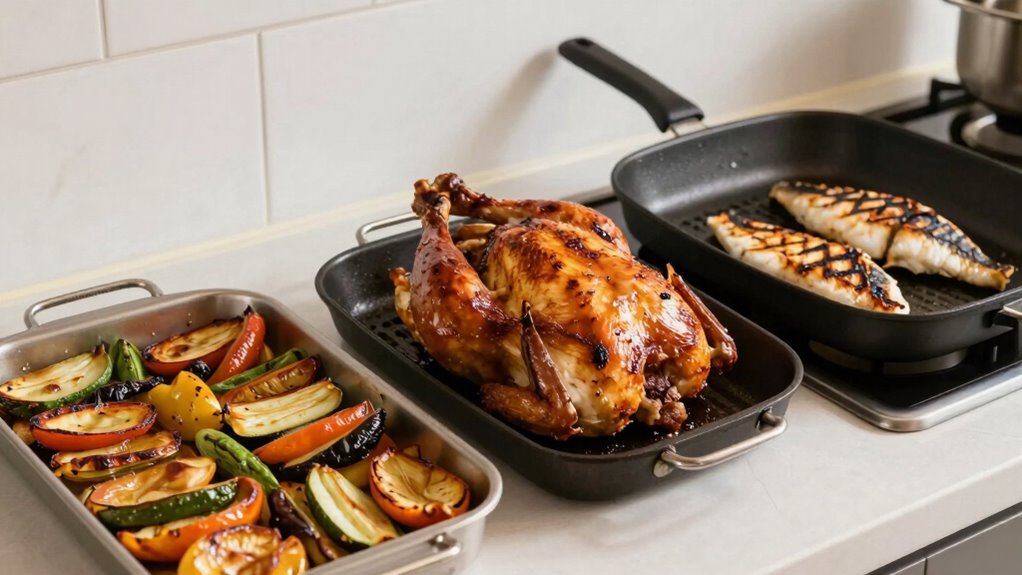
To effectively prepare and position food for broiling, baking, and roasting, you need to understand how each method interacts with your oven’s heat source. Proper food presentation and utensil selection are key. For broiling, place food on a broiler pan or a wire rack close to the heat source to achieve a crispy exterior. When baking, use a shallow or deep baking dish that supports even heat distribution and enhances presentation. For roasting, opt for a sturdy roasting pan that allows air circulation around the food, promoting even cooking. Consider the size and shape of your utensils to ensure proper heat transfer and easy handling. Additionally, understanding the thermal properties of different cooking methods can help optimize your results. Using the appropriate utensil materials can also improve heat transfer efficiency and durability. Selecting the right cooking vessel based on the method can further improve heat conduction and prevent sticking. Proper positioning of food relative to the heat source can influence cooking speed and texture, especially when considering the oven’s heat distribution system. Recognizing how heat transfer occurs in each method allows for better control over the final outcome. Thoughtful positioning helps optimize each method’s effects and ensures your food cooks evenly and looks appealing.
Which Cooking Method Is More Energy-Efficient and Time-Saving?
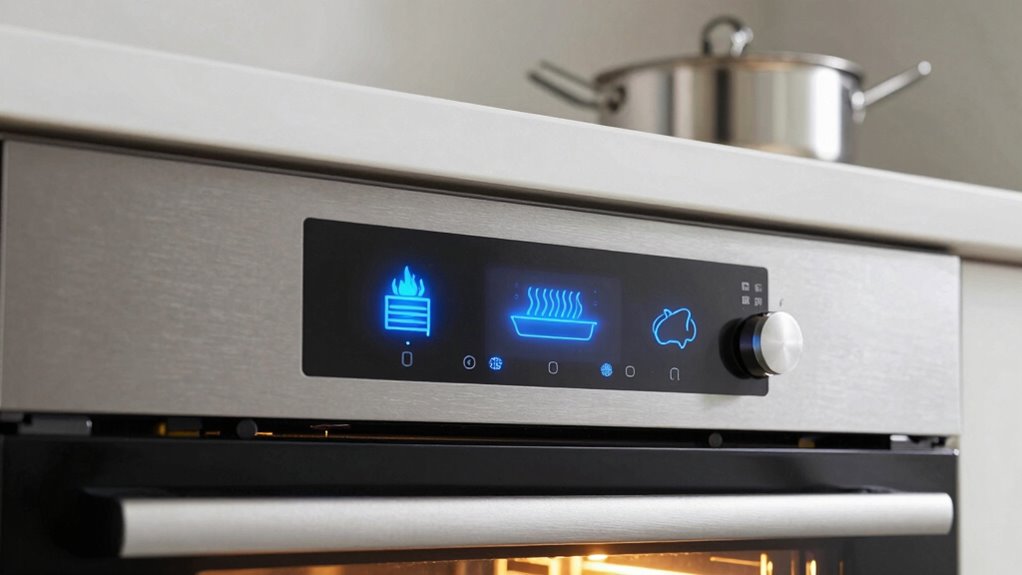
When comparing the energy efficiency and time savings of broiling, baking, and roasting, broiling often stands out as the quickest and most energy-efficient method. Because broiling uses direct high heat from above, it heats food rapidly, reducing overall cooking time and energy consumption. Baking and roasting, on the other hand, involve longer periods at moderate temperatures, which can consume more energy over time. If you’re looking to save energy and get dinner on the table fast, broiling is your best choice for smaller or thin cuts of food. Additionally, connected appliances can optimize energy use during these cooking methods. However, for larger dishes or even cooking, baking and roasting may be more practical. Proper cooking technique can further enhance energy efficiency and ensure food is cooked evenly. Ultimately, your choice depends on your specific goal for energy use and cooking speed.
Frequently Asked Questions
Can I Substitute One Method for Another in Recipes?
Yes, you can substitute one method for another in recipes, but keep in mind ingredient substitution may affect flavor impact. For example, baking can often replace roasting but might change the texture or taste slightly. Broiling can mimic grilling quickly, but it may not give the same depth of flavor. Adjust cooking times accordingly, and be prepared for subtle differences in flavor and texture when switching methods.
How Does Oven Type Affect Broil, Bake, or Roast Results?
Your oven type, including its material and size, influences your broil, bake, or roast results. A metal oven heats quickly and evenly, giving you consistent cooking, while the size affects heat distribution—larger ovens often require longer cook times. For broiling, a well-insulated oven maintains high heat, perfect for searing. When baking or roasting, your oven’s material and size help guarantee even heat, so your dishes cook perfectly without hot spots.
Are There Safety Tips Specific to Each Cooking Method?
You should always prioritize food safety and equipment safety when broiling, baking, or roasting. Keep a close eye on the oven to prevent overheating or fires, and use oven mitts to handle hot cookware safely. make certain your kitchen is well-ventilated to avoid smoke buildup. Regularly clean your oven to prevent grease fires, and never leave it unattended while in use. These precautions keep you safe and ensure your food cooks properly.
What Accessories or Tools Are Recommended for Each Method?
Think of your oven as a stage where accessories set the scene. For all methods, a reliable cooking thermometer helps you hit the perfect doneness. Use oven rack placement to control heat, placing food closer for broiling, middle for baking, and lower for roasting. A sturdy baking sheet, roasting pan, or broiler pan is essential—each designed to handle specific heat and airflow, transforming your cooking into a performance.
How Do I Adjust Cooking Times for Different Oven Models?
To adjust cooking times for different oven models, first check your oven’s calibration and temperature accuracy. Use an oven thermometer to verify if your oven reaches and maintains the set temperature. If it runs hot or cold, adjust the oven’s calibration settings accordingly. Keep in mind that inconsistent temperature accuracy can affect cooking times, so monitor your dishes and make small timing adjustments based on your oven’s performance for ideal results.
Conclusion
Understanding the differences between broiling, baking, and roasting helps you cook smarter and avoid culinary blunders. Whether you’re summoning the flames of a dragon or just aiming for perfect doneness, choosing the right method makes all the difference. Remember, even in a world full of magic, patience and proper technique remain your greatest allies. So, embrace these techniques—you’ll be a kitchen wizard in no time, no time-travel required.
NFL season / tailgating Picks
team gear
As an affiliate, we earn on qualifying purchases.