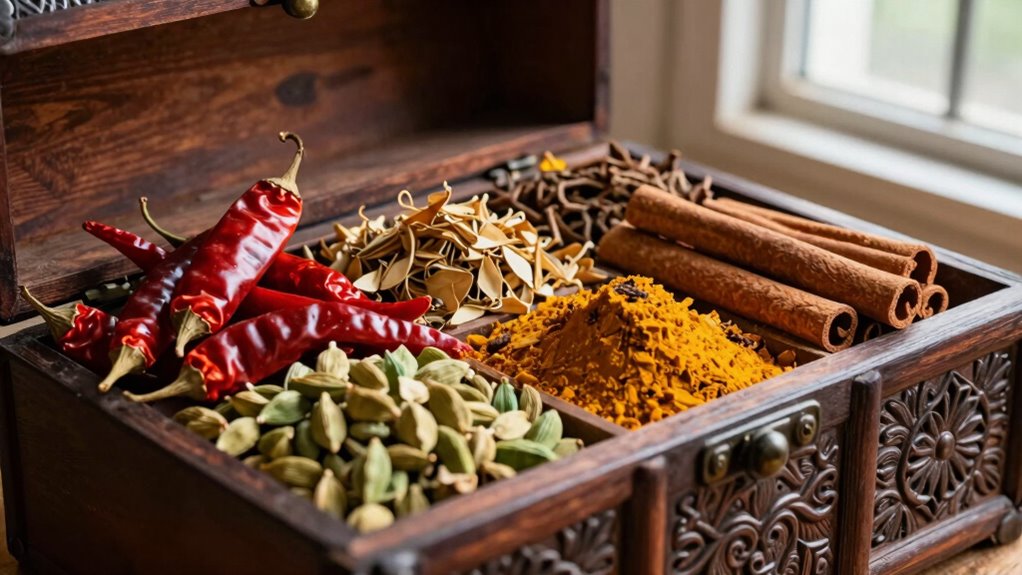

The spice trade has shaped what you eat today by connecting distant cultures and fueling exploration. It introduced flavors like cumin, turmeric, and cinnamon into everyday dishes worldwide. These trade routes fostered cultural exchange, influencing cooking techniques and fusion cuisines. Spices became symbols of wealth and power, shaping economies and culinary traditions across continents. If you want to discover how these ancient routes continue to influence your plate, keep exploring this flavorful history.

Get kitchen staples and gadgets delivered free — and shop member deals
- Fast, free delivery on millions of items
- Access to Prime Big Deal Days deals on October 6–7
- Prime Video, Amazon Music and more included
Key Takeaways
- The ancient spice trade established global routes that introduced diverse flavors to different cuisines.
- Spices like cumin and turmeric connect modern dishes to historical trade and cultural exchanges.
- Trade routes influenced culinary techniques, dish types, and presentation styles across cultures.
- The pursuit of spices fueled exploration, economic growth, and the development of vibrant trading cities.
- Today’s diverse flavor profiles and fusion cuisines are direct results of centuries of spice exchange and globalization.
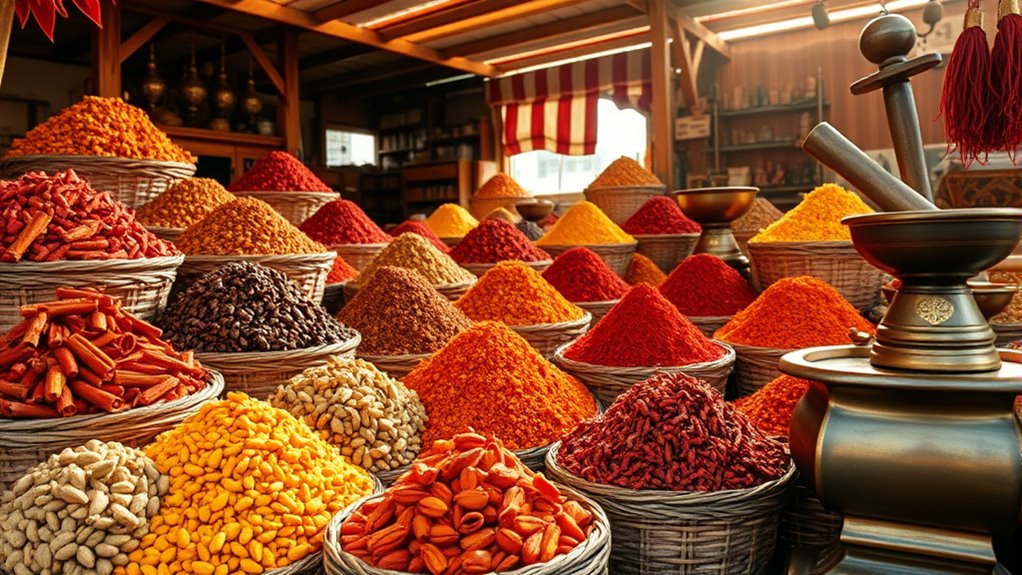
The spice trade has shaped global cuisine for centuries, influencing everything from ancient rituals to modern dishes. It’s fascinating to realize how the journey of spices across continents has transformed the way you experience flavor today. Historically, these spices traveled along intricate routes—think of the famous Silk Road and maritime pathways connecting Asia, Africa, and Europe. These routes weren’t just trade corridors; they were cultural bridges, spreading not only spices but also ideas, techniques, and culinary traditions. As spices like pepper, cinnamon, and cloves moved through these routes, they became prized commodities, sparking conflicts, exploration, and even the rise of powerful trading cities. You can still see this legacy today, as many of your favorite dishes incorporate spices that once traveled vast distances, a direct result of these historical pathways.
Looking at modern cuisine, it’s clear how the influence of these routes persists. Spices are now readily available worldwide, thanks to centuries of trade and globalization. They’ve become fundamental ingredients in countless recipes, from Italian pesto to Indian curries. You might not realize it, but your palate is often shaped by this history. Every time you sprinkle cumin on a dish or add a dash of turmeric, you’re participating in a culinary tradition that spans continents and centuries. This global exchange has made many spices accessible, affordable, and essential in creating the diverse flavors you enjoy today. The interconnected nature of modern cuisine reflects those ancient routes, making it easier for you to experiment with flavors from different cultures without leaving your kitchen.
Furthermore, the influence of the spice trade extends beyond just ingredients. It’s affected cooking techniques, presentation styles, and even dietary habits. For instance, the popularity of curries, stews, or aromatic rice dishes can be traced back to trade routes that brought spices into everyday cooking. As modern chefs incorporate these flavors, they often pay homage to those historical routes that made such diversity possible. The spice trade has also encouraged fusion cuisines, blending elements from different regions into innovative dishes. When you enjoy a dish infused with exotic spices, you’re experiencing a culinary heritage rooted in centuries of exploration and exchange. In essence, the history of the spice trade is woven into the fabric of your daily meals, reminding you that what you eat is often a reflection of centuries-old journeys across the world.
As an affiliate, we earn on qualifying purchases.
Frequently Asked Questions
How Did Spices Influence Ancient Medicinal Practices?
Spices influenced your ancient medicinal practices through their medicinal properties and historical uses. People believed spices like cinnamon, turmeric, and ginger could treat ailments, boost immunity, and improve overall health. They were used in remedies and rituals, shaping early medicine. Their valued properties led to trade and spreading of knowledge, impacting health practices across civilizations. So, you can see how spices weren’t just flavorings but essential components of health and healing traditions.
What Are the Environmental Impacts of Spice Cultivation Today?
You might not realize it, but spice cultivation today can harm the environment through deforestation and pesticide use. To reduce this impact, sustainable farming practices are crucial, promoting soil health and biodiversity. By choosing ethically sourced spices, you support farmers who minimize chemical use and protect ecosystems. Your choices can help lessen environmental damage, encouraging the spice industry to adopt more eco-friendly methods and ensure these valuable resources are preserved for future generations.
How Do Modern Trade Policies Affect Spice Prices Globally?
Imagine a tug-of-war over spices, with trade tariffs and import quotas pulling prices in different directions. These policies act like invisible hands, raising costs when tariffs increase or when quotas limit supplies. You might notice spice prices fluctuate as governments tighten or loosen restrictions, making your favorite seasonings more or less affordable. Ultimately, modern trade policies directly shape what you pay, turning spice markets into a lively dance of economic negotiations.
Are There Any Health Risks Associated With Consuming Certain Spices?
Yes, consuming certain spices can pose health risks. You might experience spice allergies, which cause symptoms like itching or swelling. Additionally, there’s a risk of toxic spice contamination if spices are improperly stored or processed, leading to food poisoning. To stay safe, buy from reputable sources, check for any allergy warnings, and always inspect spices before use to avoid potential health issues.
How Do Regional Spice Preferences Shape Local Cuisines?
Regional spice preferences shape your local cuisines by creating distinct flavor profiles that define your culinary identity. You notice how certain spices are staples in your area, influencing traditional dishes and cooking techniques. These preferences are shaped by climate, history, and trade routes, which influence the availability of spices. As a result, your regional flavor profiles make your cuisine unique, reflecting your culture’s history and environment.
As an affiliate, we earn on qualifying purchases.
Conclusion
As you savor your favorite dishes, remember the vibrant journey of the spice trade that brought these flavors to your table. It’s a story woven with adventure, commerce, and cultural exchange—like a secret recipe shared across centuries. Without these ancient routes, your meals might lack the boldness and diversity you enjoy today. So, next time you spice up your life, think of the global tapestry that made it possible—proof that even in flavor, history leaves its mark.
As an affiliate, we earn on qualifying purchases.
As an affiliate, we earn on qualifying purchases.
Fall Picks
fall essentials
As an affiliate, we earn on qualifying purchases.