
The single knife skill that instantly makes you cook faster is mastering the rock chop technique. This involves holding the knife with a proper grip and using a smooth, rocking motion that keeps the tip in contact with the cutting board. It allows you to cut vegetables quickly, safely, and with uniform pieces. Focus on perfecting this skill, and you’ll notice your prep time shrink. Keep going, and you’ll discover even more tips to boost your efficiency.

Get kitchen staples and gadgets delivered free — and shop member deals
- Fast, free delivery on millions of items
- Access to Prime Big Deal Days deals on October 6–7
- Prime Video, Amazon Music and more included
Key Takeaways
- Master the rock chop technique to increase cutting speed while maintaining precision.
- Keep your knives sharp to reduce resistance and cut effortlessly.
- Use a proper grip and controlled rocking motion for consistent, rapid slicing.
- Organize your workspace to minimize movement and streamline your prep process.
- Practice regularly to develop muscle memory, boosting both speed and safety instantly.
As an affiliate, we earn on qualifying purchases.
Why Proper Knife Technique Can Help You Chop Faster
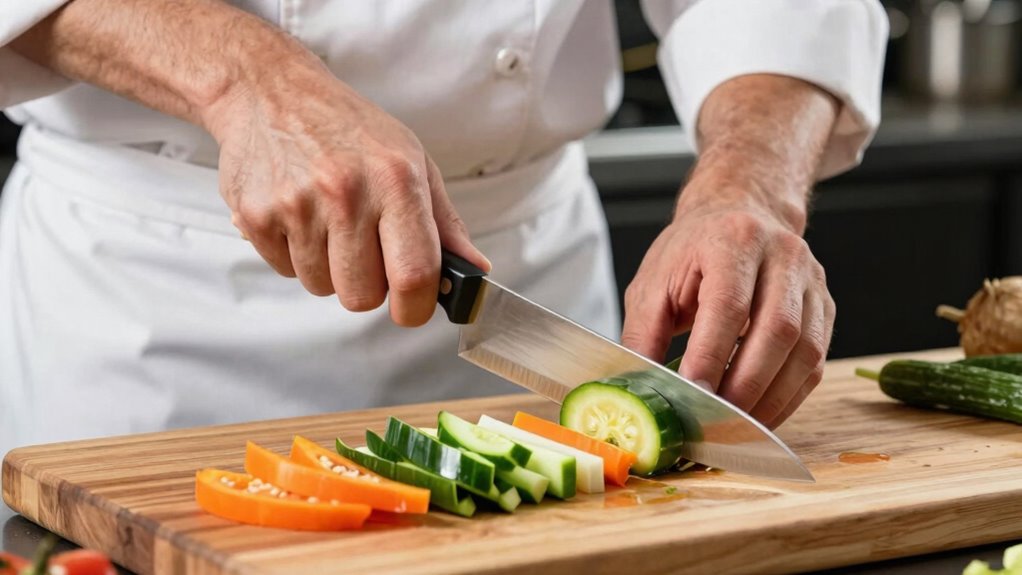
Using proper knife technique allows you to chop more efficiently because it minimizes unnecessary movements and reduces fatigue. Your knife grip plays a vital role; a secure, comfortable grip ensures better control and stability. Maintain a consistent cutting angle, ideally around 15 to 20 degrees, to optimize your slicing motion. This helps you cut through ingredients smoothly without excessive force, speeding up your chopping process. When you hold the knife correctly, your wrist remains flexible, allowing precise, controlled cuts. Avoid gripping the handle too tightly, as it can cause fatigue. Instead, rest your handle lightly in your palm and pinch the blade for better control. Mastering your knife grip and maintaining the right cutting angle makes every chop quicker and more efficient, saving you valuable time in the kitchen. Proper technique can significantly improve your efficiency and safety while chopping, especially considering the importance of knowing your equipment for optimal performance. Additionally, becoming familiar with your cutting tools ensures you use them safely and effectively, further enhancing your speed and precision. Developing a consistent cutting motion can also help you become more comfortable and confident as you work through different ingredients. Paying attention to technique consistency helps prevent injuries and improves overall skill development.
As an affiliate, we earn on qualifying purchases.
Pick the Best Knife to Improve Your Chopping Speed
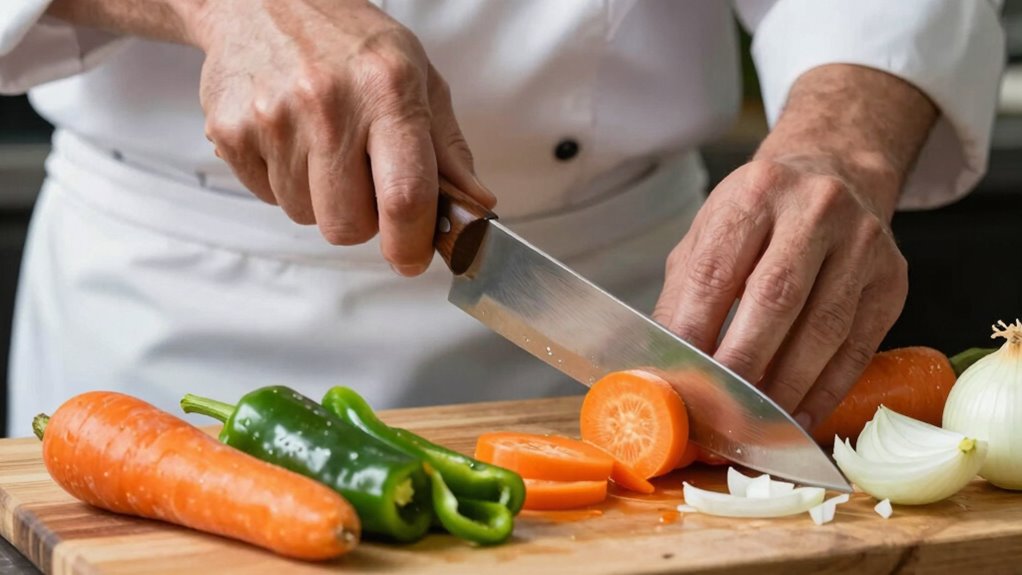
Choosing the right knife can considerably boost your chopping speed because the ideal tool matches your hand size, cutting style, and the types of ingredients you work with. Focus on knife ergonomics—how comfortably the handle fits your grip and reduces fatigue. A well-designed handle allows you to maneuver smoothly and cut more efficiently. Additionally, consider blade materials; high-quality stainless steel or carbon steel blades stay sharp longer, enabling faster, cleaner cuts without frequent sharpening. The weight and balance of the knife also matter, helping you control movements with less effort. Selecting a knife that feels natural in your hand and suits your chopping needs minimizes resistance and increases speed, making your prep work quicker and more enjoyable. Moreover, choosing a well-balanced knife enhances your control and reduces strain during extended chopping sessions. Proper knife maintenance, including regular honing and correct storage, also plays a vital role in maintaining optimal cutting performance over time. Regular sharpening techniques can further improve cutting efficiency, ensuring your knife remains effective for faster prep work. To maximize your efficiency, consider incorporating connected kitchen gadgets that can help track your progress and suggest improvements.
high carbon stainless steel chef knife
As an affiliate, we earn on qualifying purchases.
As an affiliate, we earn on qualifying purchases.
Master the Claw Grip for Safer, Quicker Cutting
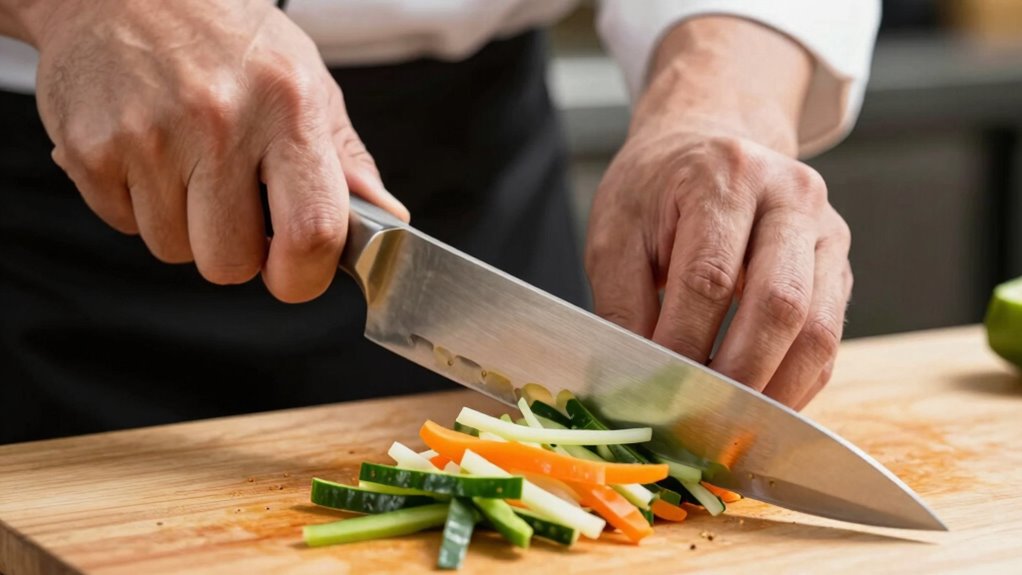
Mastering the claw grip is a simple yet effective way to cut more quickly and safely. To do this, focus on grip adjustment and hand positioning. Curl your fingertips inward so that your knuckles face the blade, creating a barrier between the knife and your fingers. This prevents accidental cuts and allows for more control. Keep your hand close to the blade, but avoid gripping too tightly, which can slow you down. Instead, maintain a relaxed but firm grip that guides the knife smoothly through the food. Consistently practicing this hand positioning helps you develop muscle memory, making your cutting motions faster and more precise. The claw grip is a fundamental skill that boosts both your speed and safety in the kitchen.
As an affiliate, we earn on qualifying purchases.
Use the Rocking Motion to Chop Vegetables Faster
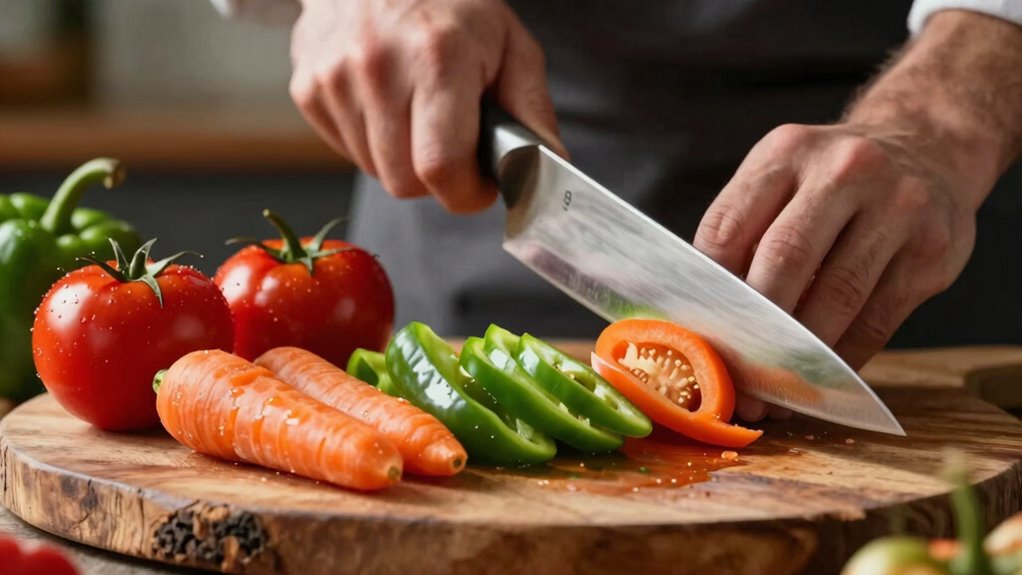
To chop vegetables more quickly, adopt a rocking motion with your knife. This technique increases efficiency during vegetable prep and helps maintain proper knife maintenance. The key is to keep the tip of your knife on the cutting board while using a smooth, continuous motion to cut through vegetables. This method reduces fatigue and improves speed. Ensuring your knife is kept sharp not only makes cuts cleaner and easier but also minimizes the risk of slipping, making your chopping safer and more efficient. Consider these tips: 1. Keep your knife sharp for clean, effortless cuts. 2. Use a fluid rocking motion, shifting weight from heel to tip. 3. Maintain a stable, controlled hand to avoid slipping. 4. Practice regularly to develop muscle memory and boost confidence. Mastering this rocking motion enhances cutting technique and streamlines your vegetable prep, which can also help prevent knife dullness over time. Proper knife care and maintenance are essential for consistent performance, ensuring your tools stay in top condition. Keeping your knife in top condition, making your vegetable prep faster and safer.
Learn the Key Steps to Chop Vegetables Efficiently
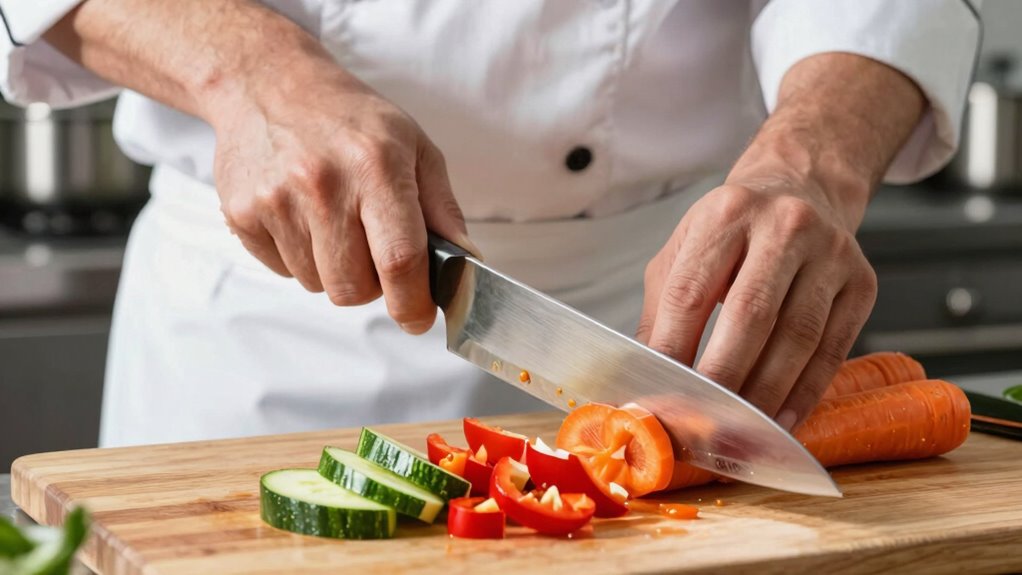
To chop vegetables efficiently, you need to master a proper knife grip that gives you control and safety. Next, practice the rock chop technique to speed up your cutting process without sacrificing precision. Additionally, understanding how to maintain uniform pieces is crucial for even cooking and a professional look. Properly selecting the right cutting techniques can further enhance your efficiency and consistency. For outdoor cooks, having a sharp and well-maintained knife is essential to achieve clean cuts and prevent accidents. An important aspect of knife skills is knowing who makes quality knives, ensuring you invest in reliable tools that will last and perform well. Finally, focus on maintaining uniform pieces for even cooking and a professional look. Incorporating step-by-step guidance can help you refine your technique and build confidence in your skills.
Proper Knife Grip Technique
Using the proper knife grip is essential for chopping vegetables efficiently and safely. A solid grip improves control, reduces fatigue, and speeds up your prep work. To master this, focus on these key steps:
- Hold the handle firmly with your dominant hand, wrapping your fingers around it comfortably.
- Pinch the blade just above the handle with your thumb and index finger for better precision.
- Keep your other three fingers curled around the handle for stability.
- When choosing a cutting board, opt for a sturdy, nonslip surface to prevent slipping, and store your knives properly with blade guards or in a knife block to maintain their sharpness.
- Regularly maintain your knives by sharpening and honing them to ensure optimal cutting performance, which enhances safety and efficiency, helping you cut faster and more accurately.
- Properly grip your knife can also reduce strain on your hand muscles, allowing you to work longer without discomfort. Developing a consistent grip can also improve your overall technique and cutting speed, making your prep work quicker.
- Remember that a consistent technique not only improves speed but also minimizes the risk of accidents, keeping your kitchen safer.
Mastering the Rock Chop
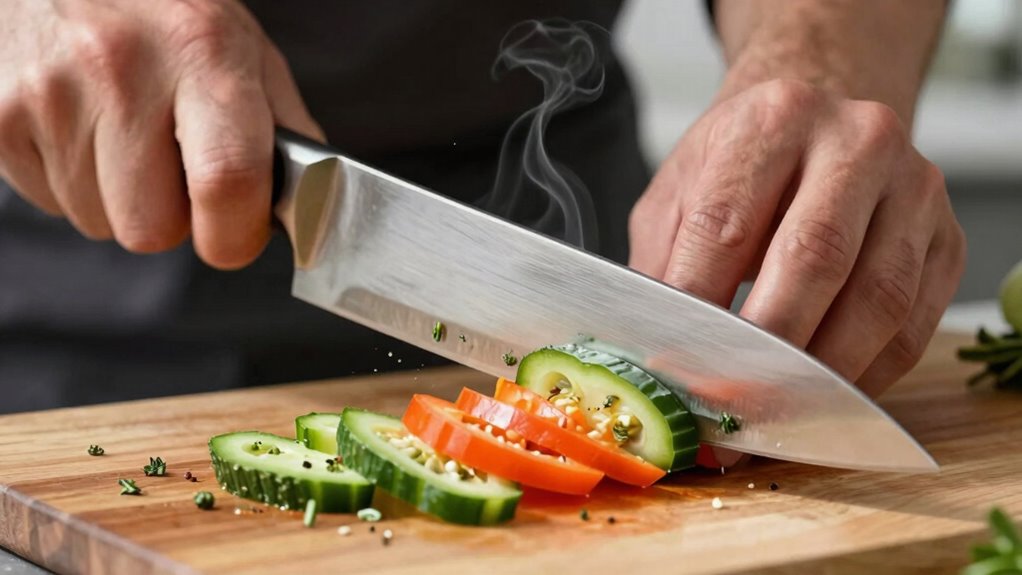
Once you’ve mastered the proper grip, you can move on to the rock chop—a technique that speeds up vegetable prep while maintaining safety. To perform the rock chop, hold your knife with a firm grip, keeping your fingers safely curled under the guiding hand. Place your cutting surface on a stable, non-slip surface to prevent slips. Use a quick, rocking motion, keeping the tip of the knife in contact with the cutting board, and lift the heel to chop through vegetables efficiently. Focus on controlled, smooth movements rather than force, which reduces the risk of accidents and improves precision. Always be mindful of knife safety, especially when working on cutting surfaces—avoid rushing to prevent slips, cuts, or uneven pieces. Mastering the rock chop makes prep faster and safer, especially when practicing proper technique to maximize efficiency.
Maintaining Uniform Pieces
Have you ever noticed how unevenly chopped vegetables can affect both your dish’s appearance and cooking time? To maintain uniform pieces, focus on these key steps:
- Keep your knife sharp for clean, precise cuts.
- Slice vegetables into manageable sections before chopping.
- Use your guiding hand to stabilize and control each cut, ensuring consistent slices.
- Aim for uniform size in each piece to promote even cooking and a professional look.
Avoid Common Cutting Mistakes That Slow You Down
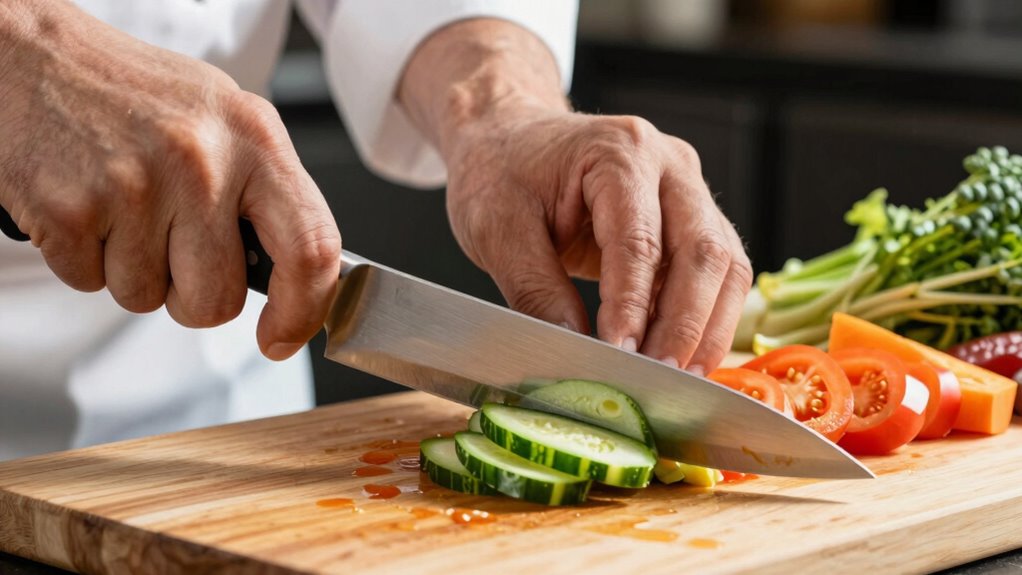
Using a dull knife increases your chances of slipping and cutting yourself, which slows you down. Make sure your knife is sharp to cut smoothly and safely. Proper technique also helps you work faster and reduces mistakes.
Sharp Knives Prevent Slips
A sharp knife is your best tool for preventing slips and making clean cuts quickly. When your knife is sharp, you exert less force, which reduces the risk of accidents and uneven slices. Proper knife maintenance keeps blades in top condition, ensuring they stay sharp longer. Also, paying attention to your cutting surface helps avoid unnecessary slips—use a stable, non-slip board.
Here are four tips to keep your knives sharp and safe:
- Regularly hone your knife to maintain the edge.
- Sharpen your blades with a whetstone or sharpener as needed.
- Use a cutting surface that prevents slipping.
- Always handle knives with care, especially when cutting tough or slippery ingredients.
Proper Technique Ensures Safety
To cut safely and efficiently, mastering proper technique is essential, as common mistakes can slow you down and increase the risk of accidents. Proper knife safety minimizes cutting injuries and keeps your workflow smooth. Focus on a firm grip, controlled movements, and keeping your fingers tucked away. Avoid rushing or improper angles, which can lead to slips and cuts. Here’s a quick guide:
| Mistake | Consequence | Prevention |
|---|---|---|
| Using a dull knife | Slips and cuts | Keep knives sharp |
| Improper grip | Loss of control | Use a secure, comfortable grip |
| Poor cutting technique | Increased risk of injury | Practice correct form |
Following these tips keeps you safe and speeds up your prep time.
Add Speed-Boosting Techniques to Your Kitchen Routine
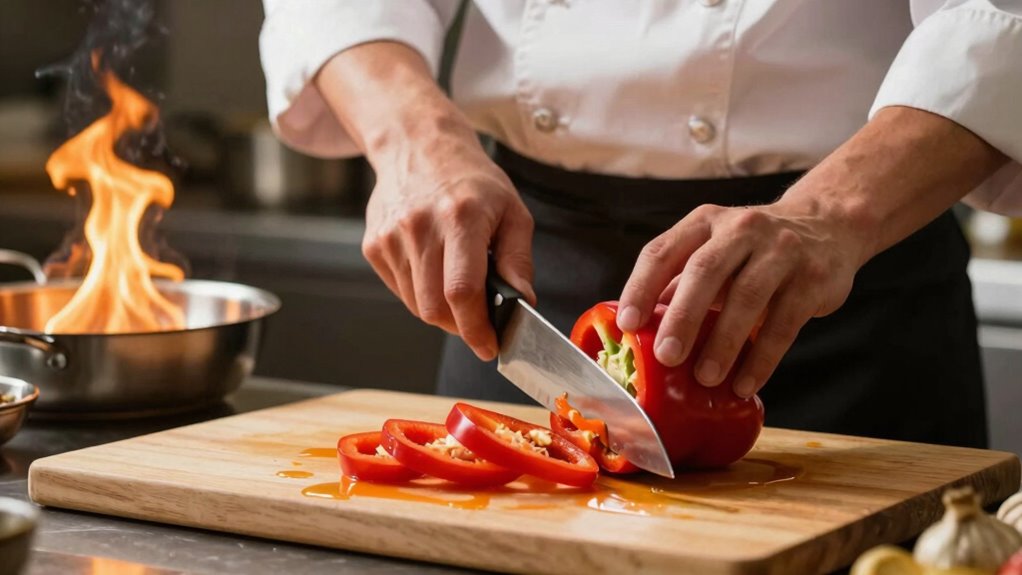
Incorporating simple speed-boosting techniques into your kitchen routine can substantially cut down your prep time and make cooking more efficient. Focus on improving your cutting efficiency and kitchen ergonomics to maximize results. Here are four effective strategies:
- Organize your workspace by grouping tools and ingredients for seamless access.
- Use a consistent, comfortable cutting position to reduce fatigue and increase precision.
- Prepare ingredients in advance by washing, peeling, and measuring beforehand.
- Minimize movement by designing your station to keep frequently used items within arm’s reach.
These small adjustments help streamline your workflow, allowing you to work faster while maintaining safety. By refining your routines with these techniques, you’ll notice a significant boost in overall kitchen efficiency and faster meal prep.
Keep Your Knives Sharp for Faster, Safer Cuts
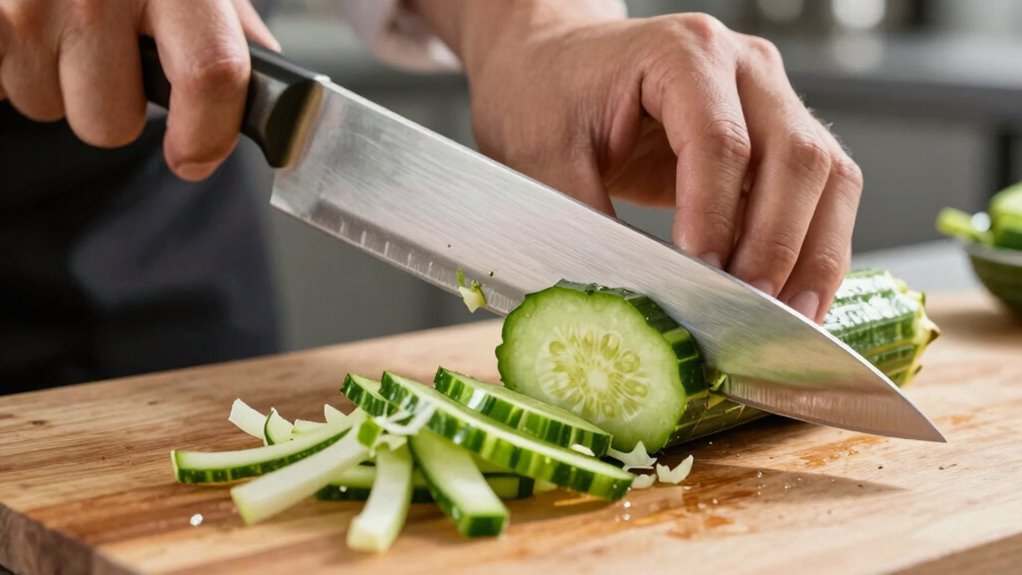
Ever wonder why some cuts glide effortlessly while others require effort? It all comes down to knife maintenance. Keeping your knives sharp ensures clean, precise cuts, saving you time and reducing frustration. Regular honing and sharpening maintain the edge, so your blades cut smoothly through different ingredients. Understanding blade types also helps; for example, Japanese chef’s knives are often thinner and sharper, while Western-style blades are more robust. Dull knives not only slow you down but also increase the risk of slips and injuries. By investing a few minutes to preserve your knives, you’ll experience faster, safer cuts every time. Proper care extends your blades’ lifespan and improves your overall efficiency in the kitchen, making prep work quicker and more enjoyable.
Practice These Drills to Build Confidence and Speed
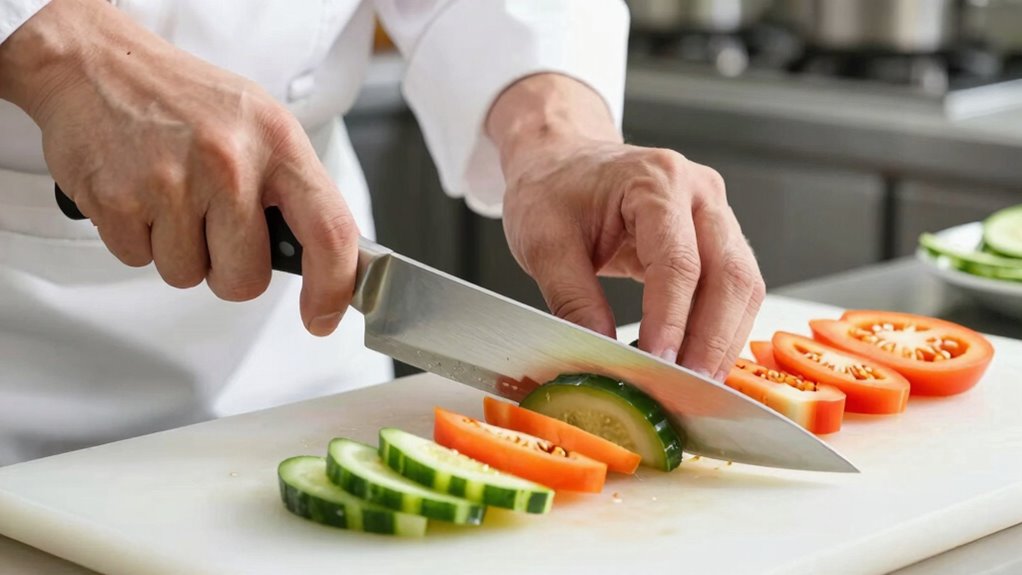
Practicing specific drills can especially boost your confidence and speed in the kitchen. Focused repetition helps you master knife handling and cutting safety, making each cut more efficient. Try these drills:
- Precision slicing: Use a small vegetable and slice it into uniform pieces, improving control and consistency.
- Speed chopping: Practice rapidly chopping herbs or garlic, building agility while maintaining safety.
- Edge control: Set up a line of objects to cut without nicking or slipping, sharpening your knife handling skills.
- Safety drills: Regularly rehearse proper cutting techniques, such as proper grip and finger positioning, to prevent accidents.
Consistent practice with these drills enhances your confidence and speed, making cooking faster and safer.
Frequently Asked Questions
How Often Should I Sharpen My Knives to Maintain Speed?
You should sharpen your knives every 1 to 3 months, depending on how often you cook and the type of knife. Regular knife maintenance, including honing and proper storage, helps keep your blades sharp longer, reducing how often you need sharpening. If you notice your knife struggles to cut or requires more pressure, it’s time for a quick sharpen. Consistent sharpening frequency ensures your knives stay efficient, making cooking faster and safer.
Can Using a Different Knife Style Improve Overall Chopping Speed?
Using a different knife style can definitely boost your chopping speed. When you switch to a knife with a better grip or a more suitable blade shape, it improves your cutting technique and control. Practice with different knife grips, like the pinch grip, to find what feels most natural. This enhances precision and reduces fatigue, making your chopping faster and more efficient overall.
What Is the Ideal Knife Weight for Faster Cutting?
A knife’s ideal weight isn’t about heaviness but balance. You want a blade that feels steady yet nimble, allowing quick, precise cuts. Focus on knife balance—where weight distributes evenly—and handle ergonomics, ensuring comfort during extended chopping. Lighter knives (about 6-8 ounces) with well-balanced design help you cut faster without fatigue. Choose a knife that feels natural in your hand, making speed effortless and your prep seamless.
How Does Cutting Surface Material Affect Chopping Efficiency?
The cutting surface material considerably impacts your chopping efficiency by providing ideal material compatibility and minimizing resistance. For example, wood and plastic surfaces are gentle on your knives, allowing smoother cuts, while harder surfaces like glass or stone can dull blades quickly. Choosing the right cutting surface guarantees you cut more effectively, reduces effort, and prolongs your knife’s sharpness, making your prep faster and safer.
Are There Specific Hand Positions That Increase Cutting Speed?
A stitch in time saves nine, so use an ergonomic grip to boost your chopping speed. Keep your fingers curled inward with your fingertips guiding the knife, ensuring stability and control. Maintain a relaxed wrist and use your whole arm for fluid cuts. Proper finger positioning and hand placement make your movements more efficient, helping you cut faster without sacrificing safety. Practice these hand positions, and you’ll notice a real difference.
Conclusion
Mastering this one knife skill will turn you into a culinary speed demon overnight. Imagine slicing through vegetables like a lightning bolt, turning minutes into seconds, and making your kitchen feel like a high-speed chopathon. With perfect technique, razor-sharp knives, and a little practice, you’ll be the fastest chef alive—leaving everyone in awe as you conquer your chopping tasks in the blink of an eye. Get ready to slice, dice, and conquer at warp speed!
Fall Picks
fall essentials
As an affiliate, we earn on qualifying purchases.