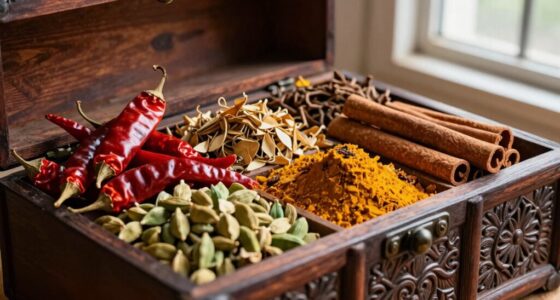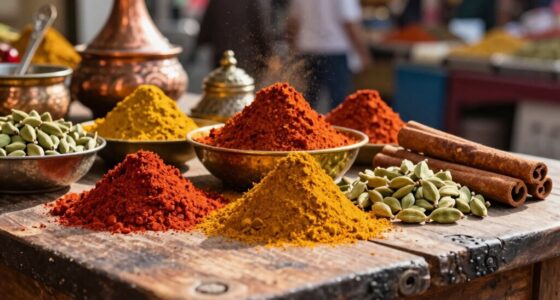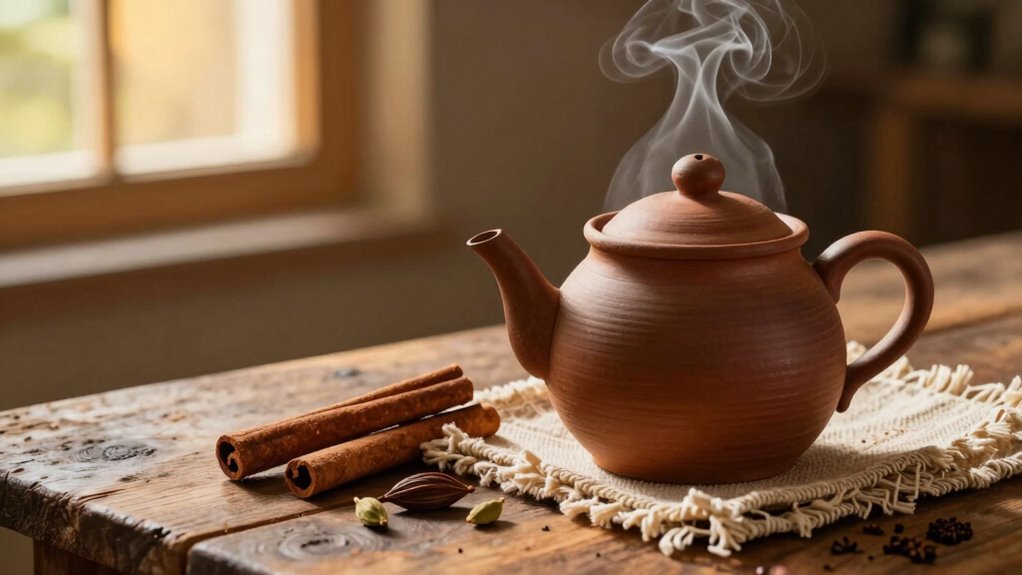
You might wonder how chai became a daily ritual. Its origins trace back centuries in South Asia, where tea cultivation and spice blending began as local traditions. Spices like cinnamon, cardamom, and ginger transformed simple tea into a flavorful, medicinal drink. This combination became essential for hospitality, social bonding, and daily life. As you explore further, you’ll discover how regional tastes and cultural practices shaped chai’s enduring legacy.
Key Takeaways
- Tea cultivation began in South Asia centuries ago, integrating into daily life and local traditions.
- Spice blending, including cinnamon and cardamom, transformed simple tea into flavorful chai.
- Chai became a symbol of hospitality, social bonding, and medicinal benefits in regional cultures.
- Tea’s cultivation in tropical climates and trade routes influenced its aromatic and flavorful qualities.
- Traditional preparation methods and spice combinations evolved, maintaining chai as a cherished daily ritual.
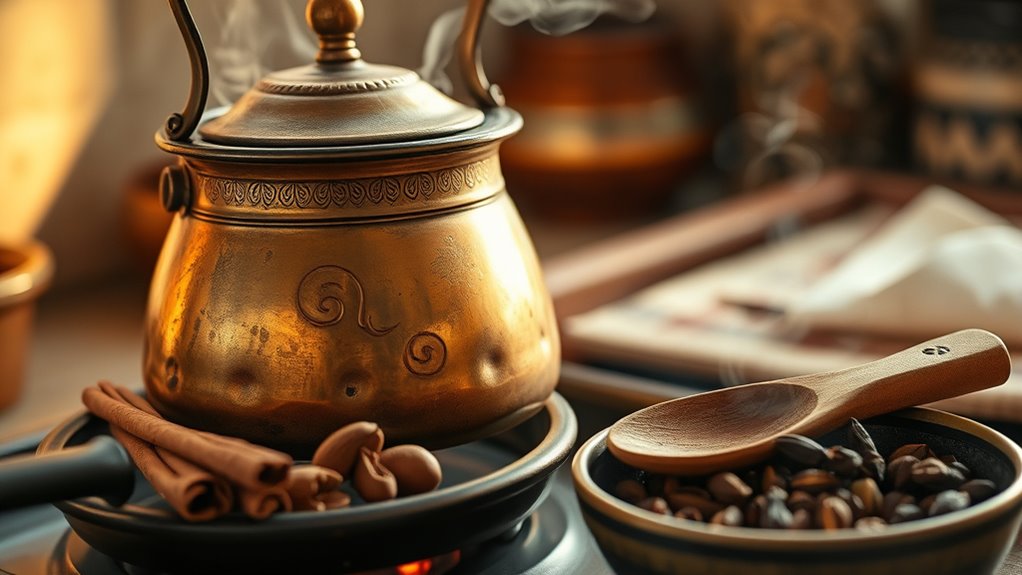
Have you ever wondered where chai, the beloved spiced tea, actually comes from? The story begins centuries ago in South Asia, where tea cultivation first took root. Long before chai became a global phenomenon, it was a local tradition deeply woven into everyday life. The origins of chai are intimately connected to the art of spice blending, which transformed simple tea leaves into a flavorful, aromatic beverage. As tea cultivation spread through regions like India and Sri Lanka, people began experimenting with local spices—cinnamon, cardamom, ginger, cloves, and black pepper—to enhance the natural flavors of the tea. This process of spice blending was both an art and a science, passed down through generations, shaping the unique character of chai.
In those early days, tea wasn’t just a drink; it was a symbol of hospitality and social bonding. As tea cultivation expanded, farmers and herbalists recognized the benefits of adding spices—not only for flavor but also for medicinal purposes. The combination of tea leaves and spices created a warm, comforting drink that could invigorate the senses and soothe the body. Over time, this mixture became a staple in households, tea houses, and markets across the Indian subcontinent. The precise blend of spices varied regionally, reflecting local tastes and available ingredients, yet the core idea of spice blending remained constant. This tradition helped establish chai as more than just a beverage—it became a daily ritual, a cultural touchstone that brought people together.
The process of tea cultivation played a pivotal role in shaping chai’s history. As tea plants thrived in the lush, tropical climates of South Asia, local communities began cultivating tea specifically for their own consumption and trade. The availability of fresh, high-quality tea leaves allowed for experimentation with blending spices directly with the brewed tea. This practice turned a simple drink into an aromatic, flavorful experience. Over centuries, the preparation of chai evolved, influenced by trade routes, colonial exchanges, and regional preferences, but the core concept of spice blending remained unchanged. Today, whether you enjoy a traditional masala chai or a modern twist, you’re partaking in a centuries-old tradition rooted in careful tea cultivation and masterful spice blending.

Vesteel 16 Pieces Dinnerware Sets, Premium Stoneware Dishes Set for 4, Speckled Plates and Bowls Set for Home Restaurant, Microwave and Dishwasher Safe - Off-white
Complete 16-Piece Dinnerware Set for 4: Includes 4 large 10.45” dinner plates, 4 versatile 8” salad plates, 4...
As an affiliate, we earn on qualifying purchases.
Frequently Asked Questions
How Did Chai Spread From India to the Rest of the World?
You discover that chai spread from India to the rest of the world through global export and cultural exchange. Traders and colonial powers introduced the tea to new regions, blending local ingredients and customs. As people embraced chai, its popularity grew, fostering cultural ties and appreciation. Today, you can enjoy chai worldwide, a delicious symbol of historical trade routes and shared traditions that transformed a local beverage into a global favorite.
What Are the Traditional Ingredients of Authentic Chai?
Imagine a warm, fragrant hug in a cup—authentic chai’s traditional ingredients are a lively dance of spiced blends and rich black tea. You’ll need cardamom, cinnamon, ginger, cloves, and black pepper, simmered gently to release their magic during tea preparation. This harmonious mix creates a symphony of flavors that comfort and energize, transforming simple tea time into a cherished daily ritual filled with warmth and tradition.
How Has Modern Tea Culture Influenced Traditional Chai Preparation?
Modern tea culture has transformed traditional chai by blending old brewing techniques with new tea ceremonies, making it more accessible and customizable. You might find innovative brewing methods, like using different spices or milk alternatives, that enhance flavor. This evolution allows you to enjoy chai in various settings, from elaborate ceremonies to quick, everyday preparations, reflecting how contemporary influences have enriched and diversified the cherished ritual of chai drinking.
Are There Regional Variations of Chai Across India?
You’d be amazed by how many regional variations of chai exist across India! In some areas, you’ll find fiery spice blends with extra cinnamon and ginger, while others prefer milder, more aromatic flavors. Regional customs influence everything, from the preparation methods to the types of milk used. Every state adds its unique twist, making chai a vibrant mosaic of flavors that reflect India’s rich cultural tapestry.
What Health Benefits Are Associated With Drinking Chai Regularly?
Drinking chai regularly offers numerous health benefits. You’ll benefit from its antioxidant properties, which help combat free radicals and reduce inflammation. Plus, chai acts as a digestive aid, soothing your stomach and promoting better digestion. The spices like ginger, cardamom, and cinnamon boost your immune system and improve overall wellness. Incorporating chai into your daily routine can support your health while providing a comforting, flavorful experience.

Plates and Bowls Sets for 4 - CJDC-QUELO 16-Piece Stoneware Dinnerware Sets, Ceramic Dishware Set for Indoor Kitchen Use and Formal Dining, Chip and Scratch Resistant Microwave Dishwasher Safe
16-Piece Complete Set: Includes 4 dinner plates(10.8"), 4 dessert plates(8"), 4 salad/cereal bowls(5.5"), 4 soup bowls(8"). This set...
As an affiliate, we earn on qualifying purchases.
Conclusion
So, next time you sip your chai, consider the fascinating story behind it. Some say it started as a medicinal brew in ancient India, while others believe it was a trade secret that became a daily ritual. Though the true origin remains debated, what’s clear is that chai’s blend of spices and tea has truly stood the test of time. Maybe, it’s not just a beverage, but a centuries-old tradition worth savoring every day.

Stoneware dinnerware set 8 persons 32 pcs – Modern style plates and bowls set ceramic – Dishwasher safe and scratch resistant – Bowl and plate set – Dinner service Pure Living beige & blue
✅ Bring The Casual Mediterranean Flair To Your Home: Experience an unparalleled feeling with the unique 32 piece...
As an affiliate, we earn on qualifying purchases.

Porto by Stone Lain Macchio 24-Piece Premium Kitchen & Dining Dinnerware Set Stoneware, White Matte, Crafted in Portugal, Dishwasher and Microwave Safe Scratch-Resistant Dish Set for 8
【COMPLETE SET FOR 8】This 24-piece dish set includes 8 dinner plates, 8 salad plates, and 8 pasta bowls,...
As an affiliate, we earn on qualifying purchases.