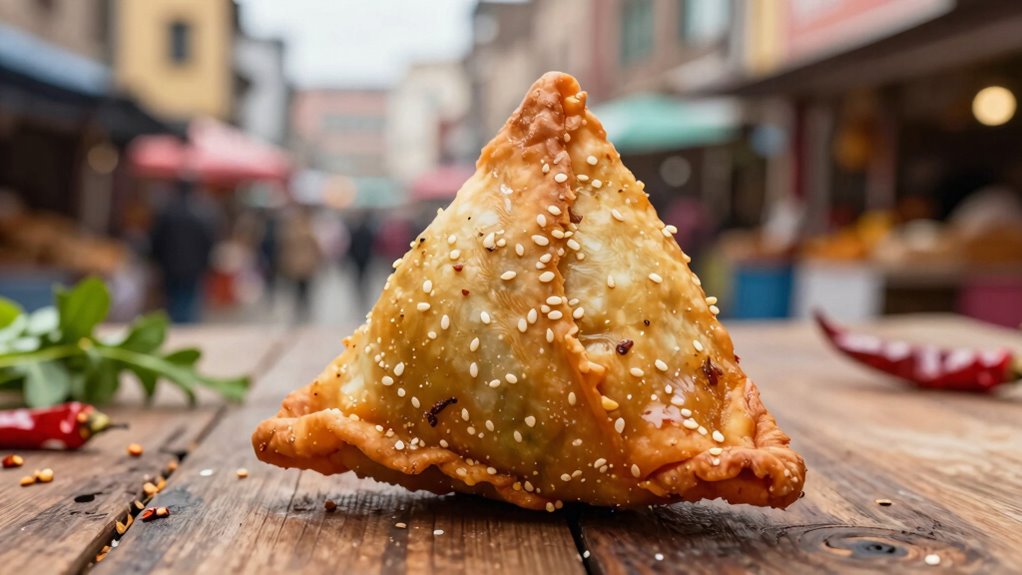

The samosa’s journey begins in Central Asia, where it was called “samsa” and was a meat or vegetable-filled pastry. Traders carried it along ancient routes, introducing it to India, where it adapted to local tastes with vegetarian versions. Over time, it became a beloved street food and festive snack, spreading across regions like the Middle East, Southeast Asia, and beyond. Its enduring popularity shows how traditional foods evolve and connect cultures—discover more about this fascinating culinary voyage.
Key Takeaways
- Originated in Central Asia as “samsa,” a meat or vegetable-filled pastry carried along trade routes.
- Introduced into the Indian subcontinent centuries ago, adapting recipes to local tastes and ingredients.
- Evolved into vegetarian versions and regional variations, reflecting culinary adaptation and cultural preferences.
- Became a popular street food and festive snack in India, influencing similar pastries in the Middle East and Southeast Asia.
- Serves as a cultural symbol, connecting diverse communities and exemplifying the global journey of traditional foods.
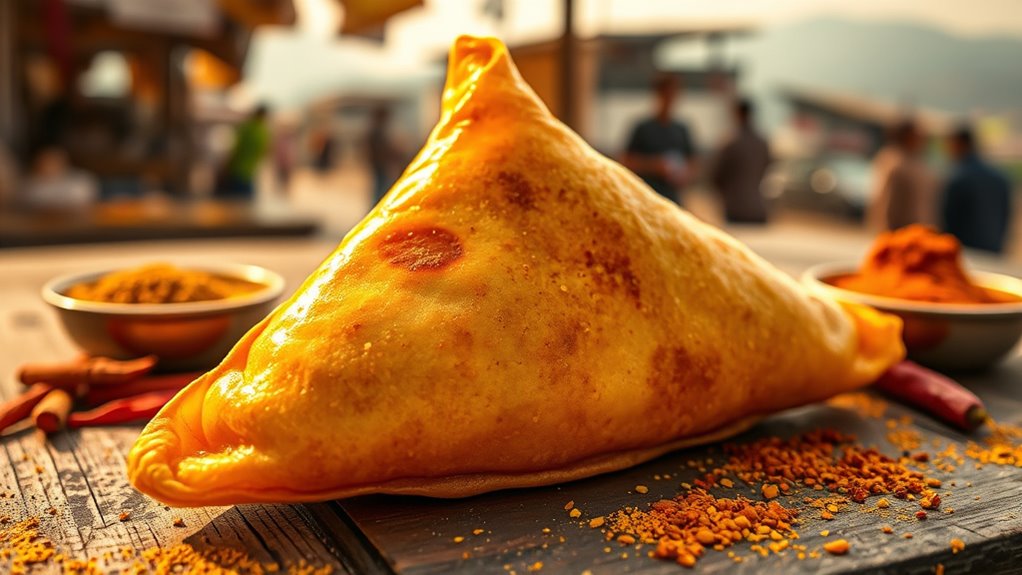
Have you ever wondered how a simple snack like a samosa became a beloved treat across many cultures? It’s a fascinating journey that reveals more than just its deliciousness; it reflects the rich cultural significance and culinary evolution that has shaped its popularity. Originally, the samosa’s roots trace back to Central Asia, where it was known as “samsa,” a pastry filled with meat or vegetables. Traders and travelers carried this snack along trade routes, introducing it into the Indian subcontinent centuries ago. Over time, the recipe adapted to local tastes and ingredients, transforming into the vegetarian version many of us enjoy today. This adaptation highlights how food evolves, blending tradition with regional flavors to create something universally appealing.
The samosa’s journey from Central Asia to global delight showcases culinary adaptation and cultural significance.
As the samosa traveled across continents, it became embedded in various cultures’ food traditions. In India, it became a staple snack, often enjoyed with chutneys during festivals or as street food. Meanwhile, in the Middle East and North Africa, similar stuffed pastries—like the fatayer or sambousek—share a common culinary lineage, illustrating how a single concept can diversify across regions. In Southeast Asia, the samosa influenced local fried snack recipes, merging with local ingredients and cooking techniques. Each adaptation reflects a culinary evolution driven by local tastes and available resources, yet the core idea remains the same: a crispy, savory pocket filled with goodness. Additionally, the cultural significance of the samosa continues to grow as it becomes a symbol of celebration and community bonding. The global spread of the samosa exemplifies how traditional foods can adapt and thrive in diverse settings. Furthermore, understanding the culinary heritage behind such dishes helps appreciate their enduring appeal and cultural importance. The story of the samosa underscores how food can serve as a cultural bridge, connecting people and histories across borders.

Triangle Pastry Press – Empanada Maker for Spanakopita, Fatayer, Samosa & Dumplings | Food-Safe Plastic & Stainless Steel | 3 Sizes: 3.5", 4.7" & 5.5"(3.5 inches)
- ✦ PERFECTLY SEALED TRIANGLES EVERY TIME – Our…
- ✦ ONE PRESS, EVERY CUISINE – Make Greek…
- ✦ 3 SIZES FOR EVERY OCCASION – 3.5"…
As an affiliate, we earn on qualifying purchases.
As an affiliate, we earn on qualifying purchases.
Frequently Asked Questions
What Are the Traditional Ingredients of a Samosa?
You’ll find that traditional samosas usually contain ingredients like spiced potatoes, peas, and sometimes meat or lentils. The crispy exterior is made from a simple flour dough. Today, you may encounter fusion fillings like cheese, vegetables, or even chicken, adding modern twists to the classic. These ingredients come together in a flavorful, savory snack, perfect for enjoying with chutney or as part of a festive platter.
How Did Samosas Originally Originate?
Like a story unfolding, samosas originated in Central Asia, likely among Persian or Afghan traders. You see, their culinary symbolism reflects a blend of cultural influences, representing hospitality and festivity. Over centuries, traders spread this savory snack along trade routes, transforming it into a beloved street food across India, the Middle East, and beyond. Its history shows how food can be a powerful symbol of cultural exchange and shared traditions.
Are There Regional Variations of Samosas Worldwide?
Yes, there are regional variations of samosas worldwide. You’ll find diverse flavor profiles that reflect local ingredients and tastes, from spicy Indian styles to sweet and savory Middle Eastern versions. Fusion cuisine adaptations blend traditional techniques with new influences, creating unique takes like Thai or Mexican-inspired samosas. These regional differences allow you to enjoy a variety of flavors, making samosas a versatile snack that adapts beautifully to different culinary traditions.
How Has the Recipe Evolved Over Centuries?
You’ll find that samosa recipes have evolved considerably over centuries, blending tradition with innovation. Interestingly, modern twists often feature fusion fillings like paneer with pesto or spicy Thai chicken, reflecting global influences. These adaptations showcase your creativity, allowing you to personalize each snack. As fusion fillings grow in popularity, your samosas become more than just street food—they’re a culinary canvas for cultural exchange and contemporary tastes.
What Are Popular Accompaniments for Samosas?
You’ll find that popular accompaniments for samosas include flavorful dipping sauces like tangy tamarind chutney, spicy mint chutney, and cooling yogurt-based dips. For beverage pairings, opt for chilled chai, mango lassi, or a revitalizing soda to complement the savory snack. These pairings enhance the overall experience, balancing flavors and textures, making each bite even more enjoyable.

Dornish Starch Dried Potato Flakes/Instant Mashed Potato 200 Gms
- Type: Dried Potato Flakes
- Usage: Instant Mashed Potato
- Preparation: Ready to Cook
As an affiliate, we earn on qualifying purchases.
As an affiliate, we earn on qualifying purchases.
Conclusion
Today, you can find samosas in over 60 countries, transforming from a humble snack into a global favorite. Imagine that in 2020 alone, worldwide samosa sales increased by 15%, showing its growing popularity. As you’ve seen, this flavorful pastry’s journey across continents highlights how food connects cultures and brings people together. So next time you enjoy a samosa, remember—you’re part of a delicious, worldwide tradition that’s been evolving for centuries.
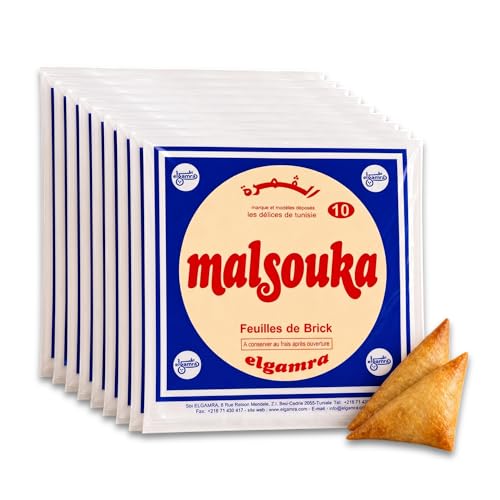
Gamra Brik Malsouka Pastry 100 Sheets pack, Feuille de Brick/Brique Wrappers for Ramadan, Spring Rolls, Samosa, Brique & Pastries, Thin Ready-to-Use Brika Dioul Dough Sheets
- Product Type: Brik Malsouka pastry sheets
- Usage: Ideal for Ramadan and special occasions
- Versatility: Suitable for spring rolls, samosas, pastries, and desserts
As an affiliate, we earn on qualifying purchases.
As an affiliate, we earn on qualifying purchases.

SENSARTE Nonstick Deep Frying Pan Skillet, 11-inch Saute Pan with Lid, Stay-cool Handle, Chef Pan Healthy Stone Cookware Cooking Pan, Induction Compatible
- Non-Stick Coating: Swiss ILAG granite, PFOA-free, smokeless
- Induction Compatible: Works on all cooktops including induction
- Durable Construction: Die-cast aluminum core for quick, even heating
As an affiliate, we earn on qualifying purchases.
As an affiliate, we earn on qualifying purchases.