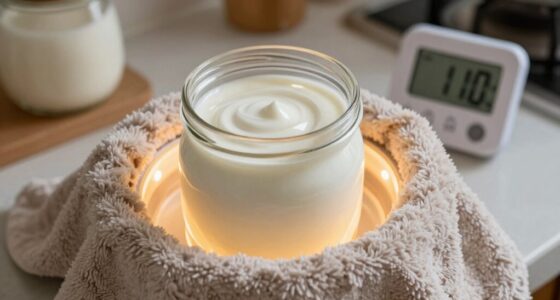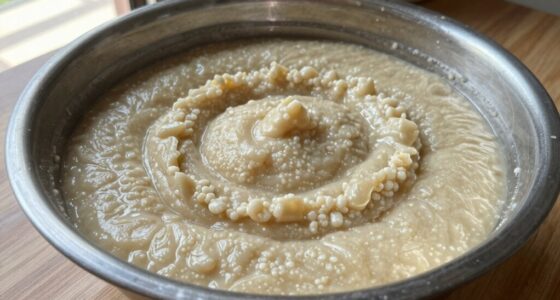
Homemade yogurt might separate because of improper temperature control, low-quality milk, or weak starter cultures that disrupt the protein network. If your yogurt is watery or curdled, stirring it gently or adding a little milk or cream can help. Maintaining a consistent incubation temperature and using fresh ingredients are key. To learn simple tricks for smoother yogurt and fix setbacks, look deeper into effective fermentation techniques and storage tips.
Key Takeaways
- Separation occurs when the protein network breaks down, allowing whey to escape from the yogurt.
- Using low-quality milk or improper pasteurization weakens the protein structure, causing separation.
- Inconsistent fermentation temperature or over/under fermentation disrupts the yogurt’s stability.
- Weak starter cultures or improper incubation times lead to uneven fermentation and whey separation.
- To fix separation, stir the yogurt, add a little milk or cream, or strain it to remove excess whey.

Coolinario L Reuteri Yogurt Starter (10-Pack, 1.5g Sachets) Yogurt Starter Culture with Lactobacillus Reuteri Probiotics | Creamy & Delicious | Non-GMO, No Preservatives, Gluten Free
Effortless to Make at Home: Making yogurt at home is simple and rewarding. Heat 2 liters of your…
As an affiliate, we earn on qualifying purchases.
As an affiliate, we earn on qualifying purchases.
Why Does Homemade Yogurt Sometimes Separate?
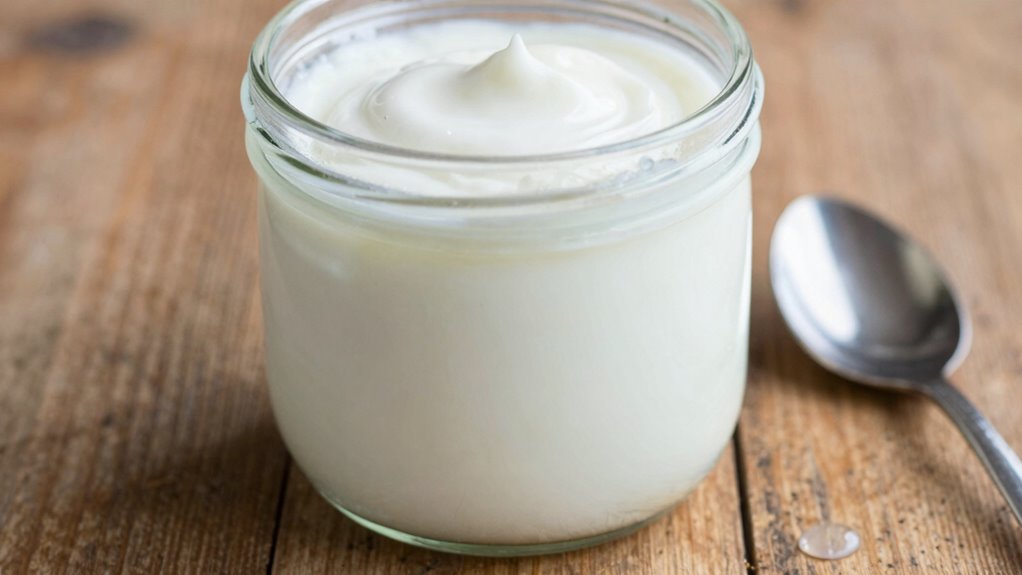
Homemade yogurt sometimes separates because of the natural process of whey expulsion, which occurs when the protein structure in the yogurt begins to break down. The quality of the milk you use directly affects this process; low-quality milk can lead to uneven fermentation and separation. Using a reliable starter culture is essential, as it influences how well the yogurt sets and maintains its consistency. If the starter culture isn’t fresh or appropriate for your milk, the yogurt may develop pockets of whey or separate entirely. Additionally, milk with high water content or inconsistent pasteurization can contribute to separation. To minimize this, select high-quality milk and a proven starter culture, ensuring the proteins form a stable network that keeps the whey integrated. Proper temperature control during fermentation also plays a critical role in maintaining the yogurt’s texture and preventing separation. Ensuring consistent milk composition can further help in achieving a uniform texture and prevent separation issues. Moreover, understanding the natural fermentation process can help you better manage factors that influence the final texture of your homemade yogurt.
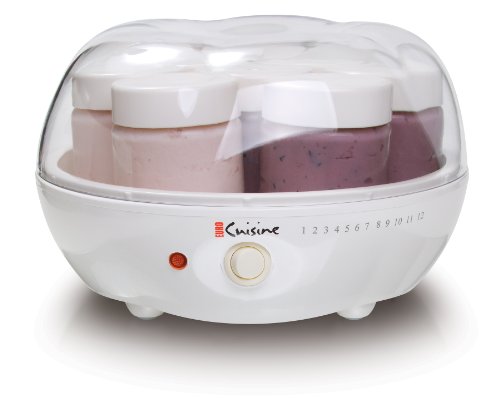
Euro Cuisine YM80 Electric Yogurt Maker Machine- Promote Gut Health with Probiotic Rich Homemade Yogurt -Home Yogurt Incubator with Glass Jars, White
Save Money and Cultivate Powerhouse Probiotics – Prepare rich and creamy, all-natural yogurt at home using the Euro…
As an affiliate, we earn on qualifying purchases.
As an affiliate, we earn on qualifying purchases.
What Causes Whey to Leak From Your Yogurt?
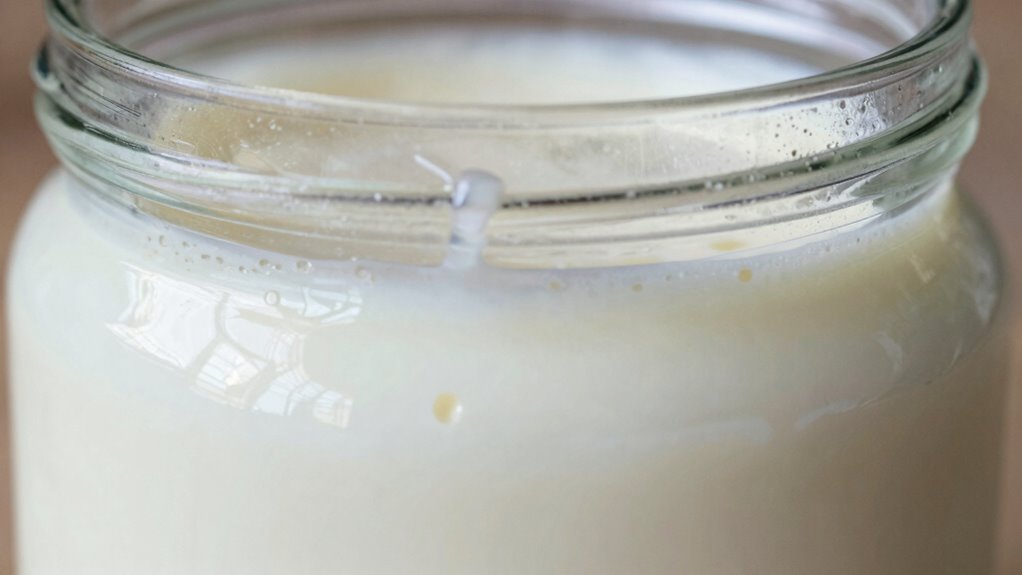
Whey leaks from your yogurt when the protein network that holds the moisture together breaks down or fails to form properly. Poor milk quality, such as milk with too many additives or low-fat content, can weaken this structure, making whey more likely to separate. Additionally, using improper or inconsistent starter cultures can disrupt proper fermentation, resulting in a less stable gel. If your cultures aren’t strong enough or are introduced at the wrong time, the proteins won’t develop a solid network, leading to whey separation. Temperature fluctuations during incubation can also interfere with the formation of a cohesive protein matrix. Ensuring high-quality milk and reliable starter cultures helps create a firm, well-bound yogurt that minimizes whey leakage. Temperature control during incubation is crucial for proper protein network formation, as fluctuations can cause the gel to weaken. Developing attention to detail during the process can help identify potential issues early and improve the overall quality of your homemade yogurt. Incorporating proper fermentation techniques ensures a more stable and cohesive yogurt texture.

Euro Cuisine GY50 Greek Yogurt Maker with Ultra Fine Mesh Strainer Basket, BPA Free, Patented Greek Yogurt Strainer for Homemade Greek Yogurt (White)
Transform Ordinary to Extraordinary – Convert up to 2 quarts of regular yogurt into thick, creamy Greek yogurt…
As an affiliate, we earn on qualifying purchases.
As an affiliate, we earn on qualifying purchases.
How Temperature and Incubation Affect Yogurt’s Creaminess
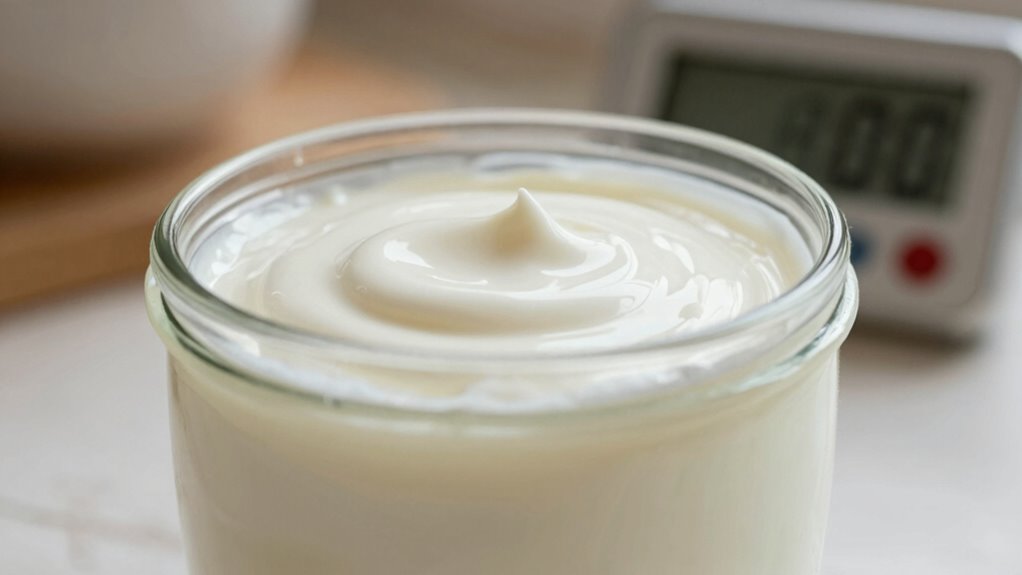
Temperature and incubation time play crucial roles in determining the creaminess of your homemade yogurt. If the temperature is too high or too low, fermentation control suffers, leading to uneven textures or separation. Maintaining temperature stability guarantees consistent bacterial activity, resulting in smooth, creamy yogurt. Here’s a quick look at how different conditions impact creaminess:
| Temperature Range | Incubation Time | Resulting Texture |
|---|---|---|
| 110°F – 115°F | 4-6 hours | Thick, creamy, stable yogurt |
| 100°F – 105°F | 6-8 hours | Slightly thinner, tangy |
| 115°F – 120°F | 3-4 hours | May become grainy or over-fermented |
| Below 100°F | 8+ hours | Weak fermentation, runny |
Proper temperature regulation ensures a smooth, creamy texture by preventing over- or under-fermentation.

Amazon Grocery, Whole Milk Plain Yogurt, 32 Oz
One 32 ounce container of Whole MIlk Plain Yogurt
As an affiliate, we earn on qualifying purchases.
As an affiliate, we earn on qualifying purchases.
Practical Tips to Keep Your Homemade Yogurt Smooth and Creamy
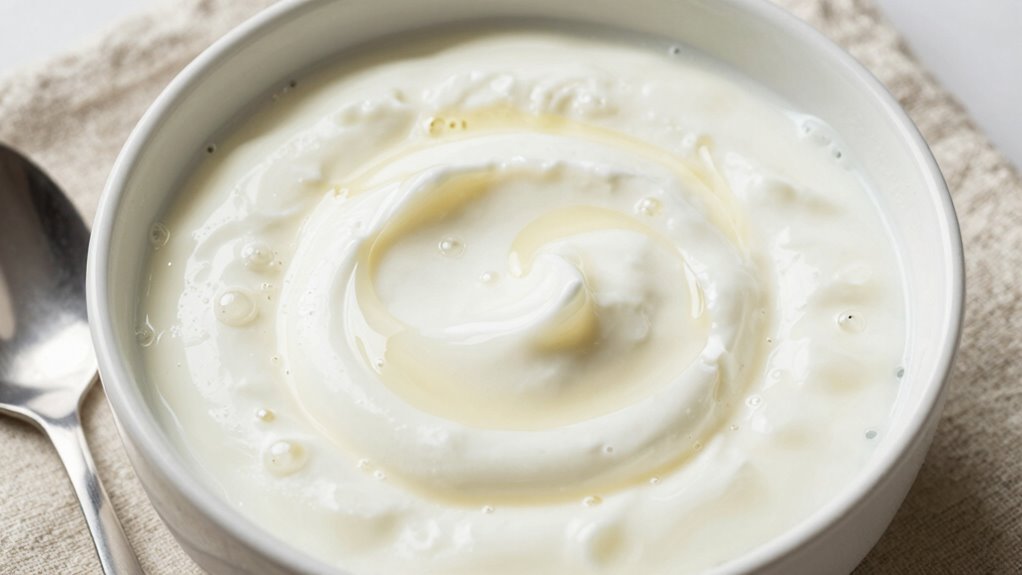
To keep your yogurt smooth and creamy, focus on controlling the fermentation process and handling the ingredients carefully. Start with high-quality milk and maintain consistent temperature during incubation. When adding fruit, do so after fermentation to prevent excess moisture from causing separation. Use clean utensils to avoid introducing bacteria that can alter texture. For storage, keep your yogurt in airtight containers in the fridge to preserve its creaminess. Also, avoid stirring too vigorously, which can break down the yogurt’s structure. Proper fermentation conditions are crucial for preventing separation and achieving that perfect creamy consistency. Proper temperature control during incubation helps ensure uniform fermentation and prevents separation. Additionally, monitoring pH levels can help maintain optimal fermentation and texture. Ensuring proper ingredient handling can significantly impact the final texture of your homemade yogurt. Being mindful of heat distribution during incubation can also help prevent uneven fermentation and separation. Following these tips will help your homemade yogurt stay smooth and delicious.
What to Do When Your Yogurt Has Already Separated?
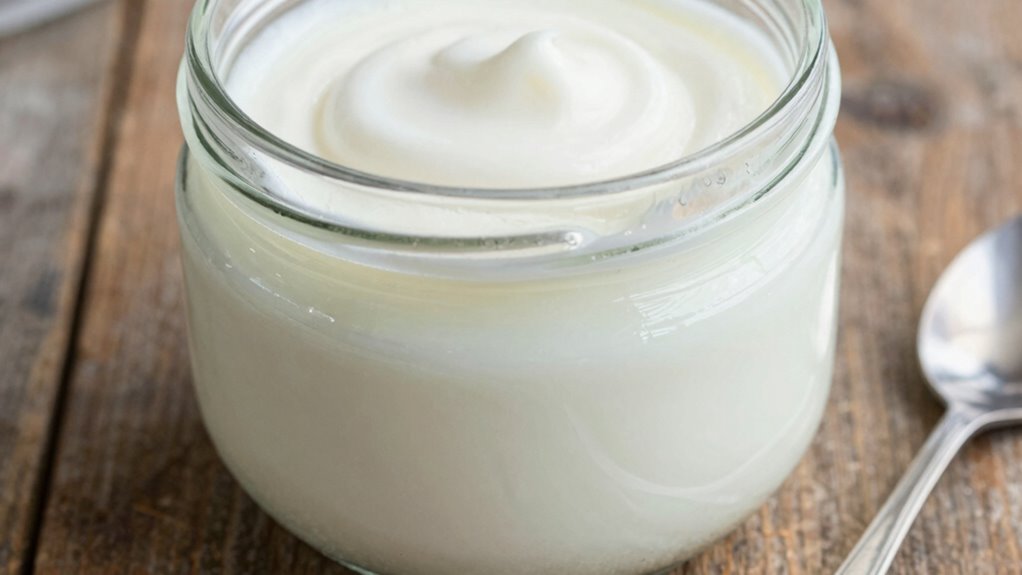
When your homemade yogurt has already separated, don’t panic. It’s a common issue caused by improper yogurt storage, temperature fluctuations, or over fermentation. To fix it, give the yogurt a good stir to blend the whey back into the curds. If it still feels thin, try whisking in a small amount of milk or cream to improve texture. For a flavor variation, you can add fresh fruit, honey, or vanilla after mixing. If the separation bothers you, consider straining the yogurt through cheesecloth to remove excess whey and achieve a thicker consistency. Proper storage techniques can help prevent separation in future batches. Additionally, maintaining consistent temperature control during fermentation can help ensure your yogurt stays well-blended. You might also want to experiment with fermentation time to find the optimal balance for your desired texture. Proper hygiene practices during the process can further reduce the risk of separation caused by bacteria. Incorporating starter culture quality can also influence the final texture and consistency of your homemade yogurt. Remember, separation doesn’t mean your yogurt is spoiled. With proper storage and gentle mixing, you can enjoy your homemade yogurt without sacrificing flavor or texture.
Frequently Asked Questions
Can Using Different Milk Types Affect Separation?
Yes, using different milk types can affect separation. Milk with higher fat content, like whole milk, tends to produce creamier yogurt with less separation, while lower-fat options may separate more easily. Similarly, milk with higher protein content helps stabilize the yogurt, reducing separation. So, choosing milk based on its fat and protein levels impacts the final texture, making your homemade yogurt smoother and more consistent.
Does the Yogurt Container Size Influence Separation?
Ever wondered if your container size affects yogurt separation? It does! A larger container with a bigger batch quantity can lead to uneven fermentation, increasing separation chances. Smaller containers promote consistent heat and fermentation, reducing separation. Think about your batch size and container choice—smaller containers often yield creamier, more stable yogurt. So, by selecting the right container size, you can help prevent separation and improve your homemade yogurt’s texture.
How Does Adding Sweeteners Impact Yogurt Consistency?
Adding sweeteners can affect your yogurt’s consistency by promoting sugar crystallization, which may cause graininess or separation. When you mix in sugar or honey, it can disrupt the smooth texture, especially if added unevenly or in excess. Sweeteners also mask the tangy flavor, potentially leading you to add more, which exacerbates crystallization. To maintain a creamy, consistent yogurt, stir sweeteners thoroughly and add them gradually.
Is Over-Incubation a Common Cause of Separation?
Over-incubation often causes separation because it pushes fermentation timing too far, making the yogurt overly thick or watery. When you set the incubation temperature too high or too low, it can accelerate or slow fermentation, affecting texture. You might notice separation if you leave it for too long. To prevent this, monitor fermentation timing carefully and keep incubation temperature consistent, ensuring your yogurt remains smooth and satisfying.
Can Homemade Yogurt Be Stored to Prevent Separation?
You can store homemade yogurt to prevent separation by following proper storage techniques. After fermentation, transfer it to an airtight container and keep it in the refrigerator at or below 40°F (4°C). Cold storage slows down the fermentation process, reducing liquid separation. Make sure to consume it within one to two weeks for ideal freshness. Regularly stir the yogurt before serving to keep the texture smooth and prevent separation.
Conclusion
So, next time your homemade yogurt separates, remember it’s often just a natural part of the process. With a little attention to temperature, incubation, and stirring, you can keep it smooth and creamy. Sometimes, it’s about patience and a gentle touch—coincidence or not, these small tweaks make all the difference. Keep experimenting, and you’ll enjoy perfectly luscious yogurt every time, turning a simple kitchen task into a satisfying art.