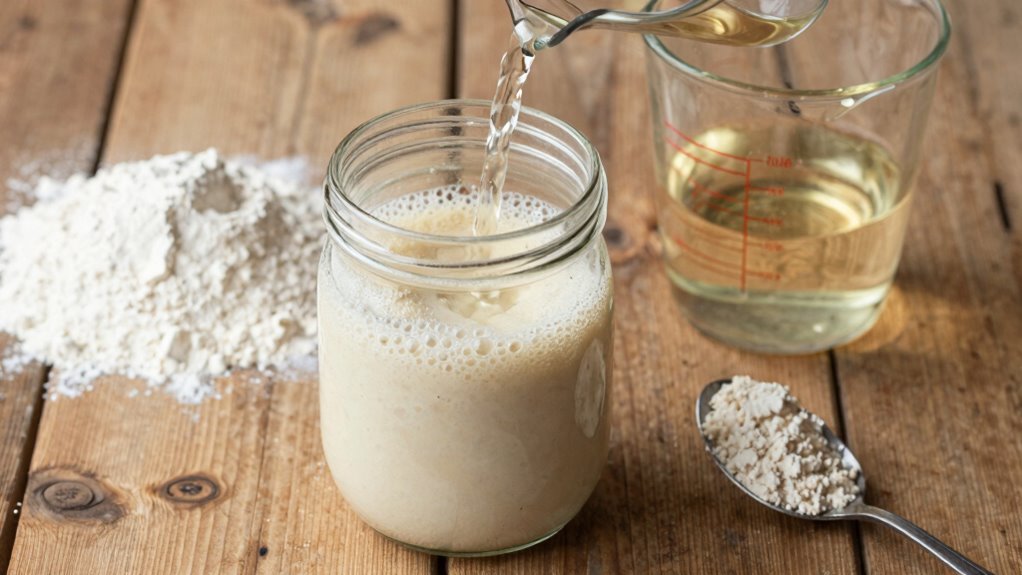

To keep your sourdough starter healthy and active, use a simple feeding ratio of 1:1:1 by weight—equal parts starter, flour, and water. This balance guarantees microbes stay happy, flavors develop nicely, and your starter remains vigorous. Adjustments can be made based on their activity and environmental factors—more water for tangier, more flour for a milder taste. Learning how to fine-tune these ratios will help you craft perfect bread every time.
Key Takeaways
- The standard feeding ratio is 1:1:1 by weight of starter, flour, and water for balanced fermentation.
- Adjust ratios based on activity; more flour can slow fermentation, while more water can boost sourness.
- Consistent ratios support microbial health, flavor development, and prevent over- or under-feeding.
- Temperature influences needed ratios; warmer environments may require less flour or more frequent feedings.
- Visual cues like bubbles and rising help fine-tune feeding ratios for desired starter activity.

Premium Pro Sourdough Starter Jar Kit – 40oz Large Wide Mouth Sourdough Bread Jar with Marked Feeding Band, Thermometer, Scraper, Cloth Cover and Silicone Lid/Base, Glass Container, Baking Supplies
Wide-Mouth Design for Effortless Baking:Our premium sourdough starter jar features a wide opening for easy mixing, feeding, and…
As an affiliate, we earn on qualifying purchases.
As an affiliate, we earn on qualifying purchases.
How to Properly Feed Your Sourdough Starter

Feeding your sourdough starter correctly is essential for maintaining its health and activity. Proper starter storage ensures it stays active and resistant to contamination. When you feed your starter, you provide fresh flour and water, which promote consistent fermentation. This process is key to flavor development, giving your sourdough its unique taste. Keep your starter in a clean container, covered loosely to allow airflow while preventing dryness. Regular feedings help maintain the right balance of yeast and bacteria, ensuring it stays lively. Remember, the timing of feeding affects flavor; frequent feedings can produce milder notes, while less frequent ones deepen the sourness. Successfully managing your starter involves understanding starter care and adjusting your routine accordingly. Maintaining the correct feeding ratios supports healthy microbial activity and optimal fermentation. Proper storage conditions, including temperature and humidity, also play a crucial role in a thriving starter. Additionally, monitoring environmental factors can help prevent issues like mold or over-fermentation. Understanding the microbial balance within your starter allows for better control over its development. By managing starter storage and feeding routine diligently, you set the foundation for successful baking and flavorful bread.

Etekcity Food Kitchen Scale, Digital Grams and Ounces for Weight Loss, Baking, Cooking, Keto and Meal Prep, LCD Display, Medium, 304 Stainless Steel
𝗘𝗳𝗳𝗼𝗿𝘁𝗹𝗲𝘀𝘀 𝗪𝗲𝗶𝗴𝗵𝗶𝗻𝗴: Supports 5 units (oz/lb:oz/fl'oz/g/mL), tare function, and includes 2 AAA batteries for hassle-free operation
As an affiliate, we earn on qualifying purchases.
As an affiliate, we earn on qualifying purchases.
Understanding the Right Feeding Ratios for a Healthy Starter

Finding the right feeding ratio is key to keeping your sourdough starter healthy and active. You’ll want to understand the ideal balance of flour and water based on your starter’s needs. As your starter becomes more active, you might need to adjust these ratios to maintain its strength. Monitoring the feeding schedule can help ensure consistent fermentation and optimal activity.
Ideal Feeding Ratios
Getting the ratios right is essential for maintaining a healthy sourdough starter. Proper feeding ratios support starter preservation and help prevent over- or under-feeding. Typically, a common ratio is equal parts starter, flour, and water by weight (1:1:1). This balances fermentation activity and keeps the starter lively. Keep in mind, temperature effects influence how much starter you need; warmer environments speed up fermentation, so you might need to feed more frequently or adjust ratios slightly. Cooler temperatures slow activity, meaning smaller feedings or less frequent refreshes work better. Consistently maintaining the right feeding ratios ensures your starter remains vigorous, preserves its health, and adapts well to your environment. This consistency is key to successful baking and long-term starter preservation.
Adjusting for Activity
Adjusting your feeding ratios based on your starter’s activity level is crucial for maintaining its health and ensuring consistent fermentation. If your starter is bubbly and rising quickly, it’s a sign you can slightly reduce the flour and water in your feedings to prevent overfeeding, which can slow activity. Conversely, if your starter shows little activity, increase the feeding ratios to boost fermentation. Proper starter maintenance through these adjustments helps develop complex flavors and prevents unwanted sourness or stagnation. Monitoring its activity guides you in fine-tuning your feedings, ensuring a lively, healthy starter. By adapting feeding ratios to your starter’s needs, you promote Free Floating rise, ideal flavor development, and overall robustness for baking success.

Weck Tulip Jars 1 Liter – Large Sour Dough Starter Jars with Wide Mouth – Suitable for Canning and Storage – 2 with Glass Lids
𝐏𝐞𝐫𝐟𝐞𝐜𝐭 𝐟𝐨𝐫 𝐇𝐨𝐦𝐞 𝐂𝐚𝐧𝐧𝐢𝐧𝐠➤ specializing in all problems and questions concerning home canning jar lids, weck has continuously…
As an affiliate, we earn on qualifying purchases.
As an affiliate, we earn on qualifying purchases.
Troubleshooting Common Feeding Mistakes
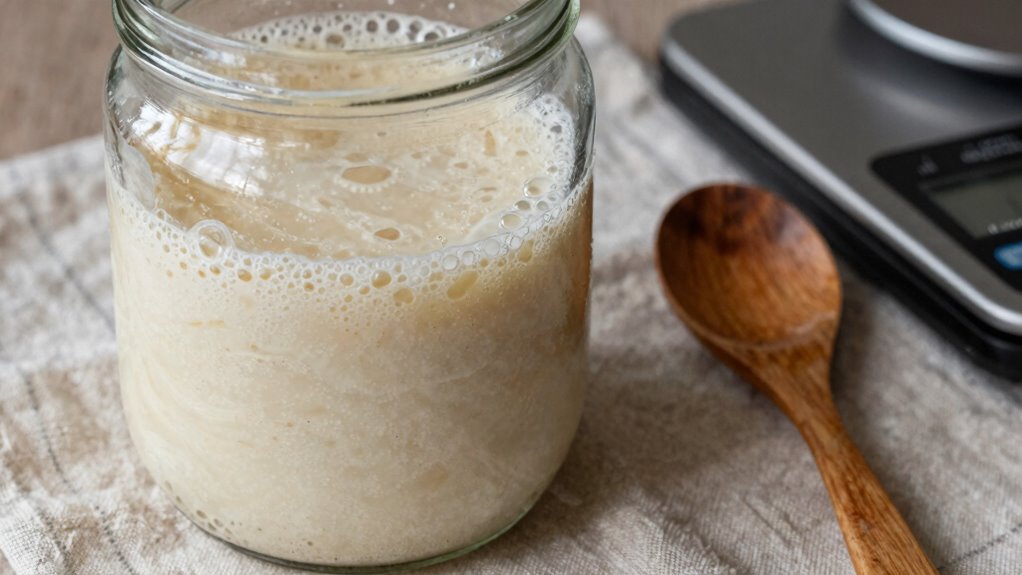
Even experienced sourdough bakers can run into issues if they don’t feed their starter correctly. Common mistakes include improper discarding or storing starter, which can weaken its activity. If you discard too much, you risk losing essential microbes; too little, and it can become overly sour or sluggish. Storing starter at inconsistent temperatures also hampers fermentation. To help, remember:
| Mistake | Solution |
|---|---|
| Discarding too much starter | Discard only what’s necessary |
| Storing at wrong temps | Keep at a stable, warm environment |
| Infrequent feeding | Feed regularly to maintain vigor |
Being aware of feeding ratios can help prevent these common pitfalls and keep your starter healthy. Additionally, understanding microbial balance is key to maintaining a lively and active sourdough culture, which depends on proper feeding frequency to sustain its fermentation activity. Regular monitoring of microbial activity can also help identify early signs of imbalance or sluggishness, ensuring your sourdough remains vibrant and effective. Maintaining a consistent feeding schedule is essential for optimal fermentation and flavor development.
Lonicera Digital Cooking Thermometer for Bread Baking, 5" Probe, Instant Read 2-3s, IPX6 Waterproof Food Thermometer with Backlight, for Liquid, Water & Meat (Red)
5" Probe & IPX6 Waterproof – Long 5-inch food-grade probe keeps your hands safely away from hot liquid…
As an affiliate, we earn on qualifying purchases.
As an affiliate, we earn on qualifying purchases.
How Feeding Ratios Influence Starter Activity and Flavor
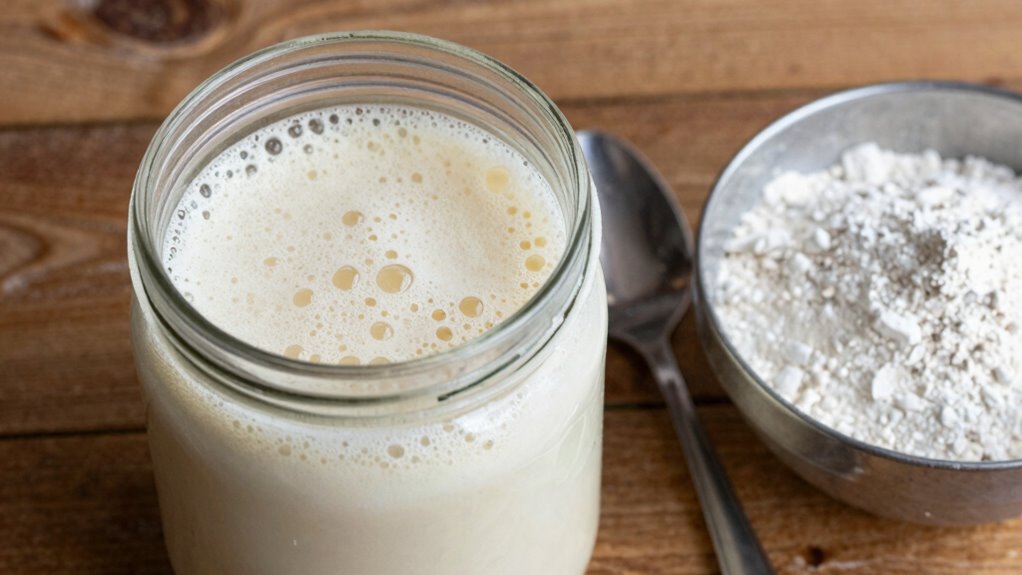
Your feeding ratio directly affects how lively your starter is and the flavor it develops. Adjusting hydration levels can speed fermentation or deepen sourness, while the type of flour you use changes the taste profile. Consistent feeding frequency keeps activity steady, ensuring your starter stays healthy and flavorful. Incorporating antioxidants through specific feeding practices can also enhance the nutritional profile of your starter. Additionally, choosing the right flour type can influence the starter’s resilience and overall activity, much like how a biography can reveal the resilience and growth of a person’s character over time. Understanding fermentation dynamics allows bakers to tailor their starter’s behavior to produce optimal results. Regular monitoring of feeding ratios helps maintain the perfect balance for your starter’s health and performance.
Hydration Levels Impact Fermentation
The hydration level of your sourdough starter plays a crucial role in how it ferments and develops flavor. Proper hydration control helps you achieve the right fermentation balance, influencing both activity and taste. A higher hydration creates a looser, bubbly mixture that ferments quickly, while a lower hydration results in a thicker, more stable starter. Adjusting hydration impacts:
- The speed of fermentation
- Bubbles and rise in the starter
- Flavor complexity and tanginess
- Texture and consistency
- Overall starter strength
Hydration control is a key factor that bakers can manipulate to achieve desired fermentation characteristics and flavor profiles. Maintaining consistent hydration levels allows for more predictable fermentation outcomes, which is especially helpful when troubleshooting or refining your sourdough process.
Flour Types Affect Flavor
Have you ever noticed how different flours can change the flavor of your sourdough starter? Your choice of grain selection plays a big role in developing unique tastes. Whole wheat or rye flours add deeper, nuttier flavors compared to white flour, which results in a milder profile. Storage techniques also influence flavor; keeping your flour in a cool, airtight container helps preserve its freshness and enzymes, affecting fermentation. Using fresh, high-quality flour guarantees your starter develops complex flavors. Different grain types contain varying levels of nutrients and sugars, which impact activity and taste. Understanding fermentation is key to mastering the art of sourdough. Additionally, flour storage techniques can help maintain enzyme activity and prevent spoilage, ensuring consistent flavor development. Proper storage not only preserves flour freshness but also maintains its natural enzymes, which are crucial for optimal fermentation. Maintaining consistent storage conditions helps ensure your starter remains healthy and flavorful over time. By experimenting with flour types and proper storage, you can tailor your starter’s flavor profile and maintain a healthy, vibrant culture.
Furthermore, controlling storage temperature is essential to prevent unwanted microbial growth and preserve the quality of your flour.
Feeding Frequency Shapes Activity
How often you feed your sourdough starter substantially influences its activity level and flavor development. Regular feedings encourage a lively, bubbly starter, while infrequent feedings can cause it to become sluggish. When considering starter storage, consistency is key—whether kept in the fridge or at room temperature, your feeding schedule impacts fermentation. Proper temperature control ensures steady activity; warmer environments speed up fermentation, while cooler temps slow it down.
Imagine your starter as a living organism:
- Bubble formation becoming more vigorous
- Sour aroma intensifying or mellowing
- Volume doubling between feedings
- Crust forming on the surface
- Fermentation speed changing with temperature adjustments
Adjust your feeding frequency based on your storage method and desired flavor profile, maintaining ideal temperature control for best results.
Tips to Keep Your Sourdough Starter Thriving
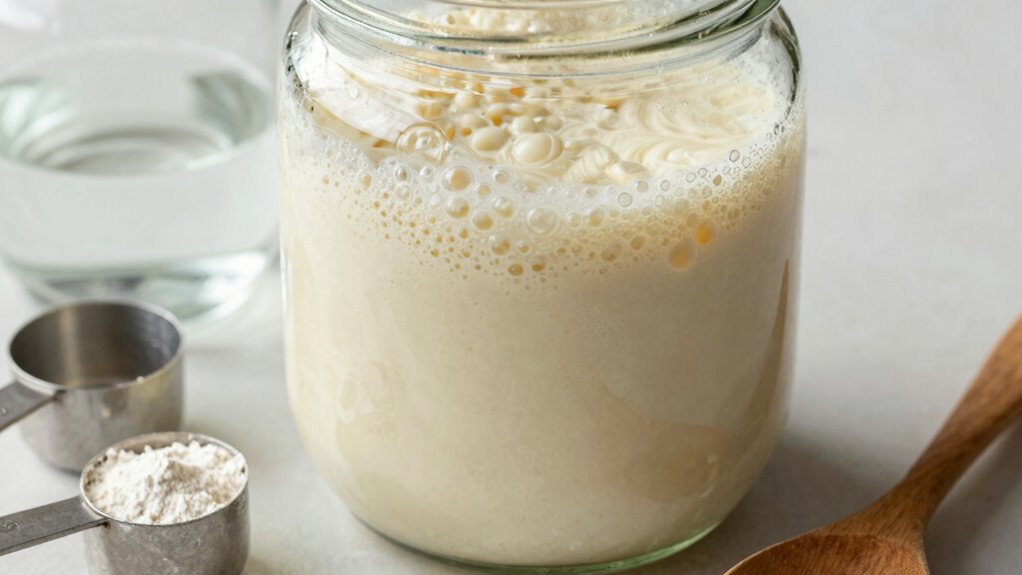
Keeping your sourdough starter healthy requires regular attention and proper care. To do this, focus on good starter storage—keep it in a consistent, airtight container at a stable temperature. Avoid frequent temperature fluctuations, which can slow activity or cause spoilage. Understanding sourdough history helps you appreciate its resilience and natural fermentation process, guiding you to nurture it correctly. Always use clean utensils to prevent contamination and discard any unneeded starter to maintain balance. Feeding your starter at regular intervals keeps it lively and prevents it from becoming sluggish or developing off odors. With proper storage and an understanding of sourdough’s background, you’ll foster a thriving starter ready for baking whenever you need it.
Adjusting Feeding Ratios for Better Bread Results

Adjusting the feeding ratios of your sourdough starter can considerably improve the flavor, activity, and overall quality of your bread. By fine-tuning the balance of flour and water, you influence both starter maintenance and flavor development. For example, using less flour relative to water creates a more active starter with a tangier taste, while a higher flour ratio can deepen complexity. Consider these imagery cues:
- Bubbles forming rapidly, signaling lively fermentation
- A tangy aroma wafting from your jar
- A smooth, airy texture in your starter
- Consistent rise and fall patterns
- A balanced, full-bodied flavor that complements your bread
Adjusting your feeding ratios isn’t just about keeping your starter alive; it’s about shaping its personality for better bread results. Small changes can make a big difference in achieving your desired flavor profile.
Frequently Asked Questions
How Often Should I Discard Some of My Starter During Feeding?
You should discard some of your starter during feeding to maintain proper starter maintenance and keep it healthy. Usually, discard about half before adding new flour and water. This helps control acidity and prevents overgrowth. Stick to a consistent feeding schedule, typically every 12 to 24 hours, depending on room temperature. Regular discarding ensures your starter stays active and strong, making it ready for baking whenever you need it.
Can I Use Different Flours for My Sourdough Starter?
Yes, you can use different flours for your sourdough starter, but keep in mind that alternative flours like rye or spelt may influence its activity. The gluten content varies, affecting how well the starter ferments and develops strength. You might need to adjust feeding schedules or hydration levels. Experimenting is key—just watch your starter closely and adapt as needed to guarantee it stays healthy and active.
What Signs Indicate My Starter Needs More or Less Feeding?
You’ll know your starter needs more or less feeding by observing fermentation signs and its consistency. If it’s bubbly, rises well, and has a tangy aroma, it’s healthy and doesn’t need extra feedings. However, if it’s flat, shows little activity, or develops a foul smell, it needs more frequent feedings. A thick, overly stiff or overly runny consistency also signals you should adjust your feeding schedule.
How Does Temperature Affect the Feeding Ratios and Starter Activity?
Temperature impacts your starter like a thermostat, controlling its activity fluctuations. When it’s warm, your starter becomes lively, needing more frequent feedings. In cooler temps, activity slows, so you should feed less often and adjust ratios to prevent overfeeding. You’ll notice faster fermentation with higher temperatures and slower growth when it’s cold. Keeping your starter at a consistent, ideal temperature helps maintain steady activity and healthy fermentation.
Is It Necessary to Feed My Starter if I’M Not Baking Regularly?
If you’re not baking regularly, you still need to perform starter maintenance by feeding your starter occasionally. A consistent feeding schedule keeps it healthy and active, preventing it from drying out or developing unwanted bacteria. You can refrigerate your starter between feedings to slow down fermentation, then feed it weekly to uphold its strength. Regular feeding ensures your starter stays ready for baking whenever you decide to use it.
Conclusion
By paying close attention to your feeding ratios, you gently nurture your starter’s quiet glow, allowing its flavor and activity to blossom naturally. With a little patience and care, you’ll find your sourdough becomes more responsive and lively, like a trusted friend. Remember, small adjustments and consistent feeding create the perfect harmony. Keep listening to your starter’s subtle signals, and soon, baking bread that sings with character and warmth will become second nature.