The main reason your dosa batter doesn’t ferment is usually because of temperature issues. If it’s too cold or too hot, beneficial microbes won’t grow properly, and fermentation stalls. Poor humidity, incorrect water-to-grain ratio, or rushing the process also contribute. Other causes include using unclean containers or inactive yeast. To fix this, you need to create a warm, stable environment and follow proper techniques. Keep exploring to learn more ways to achieve perfect, fluffy dosas every time.
Key Takeaways
- Improper temperature (too cold or too hot) inhibits yeast activity and slows or stops fermentation.
- Using unactivated or expired yeast prevents the batter from producing the necessary gases.
- Incorrect water-to-grain ratio or overly thick batter impairs microbial activity and gas formation.
- Excessive acidity or high salt content can hinder fermentation microbes.
- Poor batter handling or insufficient fermentation time leads to flat, unfermented batter.

Masontops Complete Mason Jar Fermentation Kit – Pickle Kit, Sauerkraut Making Kit Kimchi Container – Fermentation Airlock Lids Wide Mouth Mason Jars
- Complete Fermentation Kit: Transforms mason jars into fermenters
- Includes 9 Pieces: Lids, weights, tamper, and recipe book
- Versatile Fermentation Options: Make sauerkraut, kimchi, pickles, hot sauce
As an affiliate, we earn on qualifying purchases.
As an affiliate, we earn on qualifying purchases.
How to Recognize Properly Fermented Dosa Batter

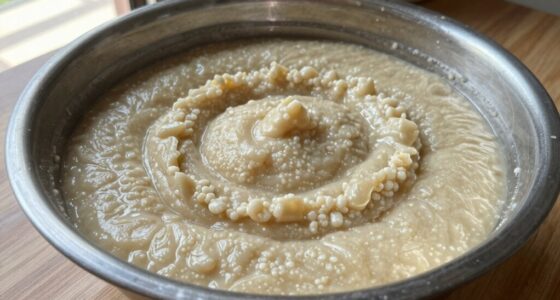
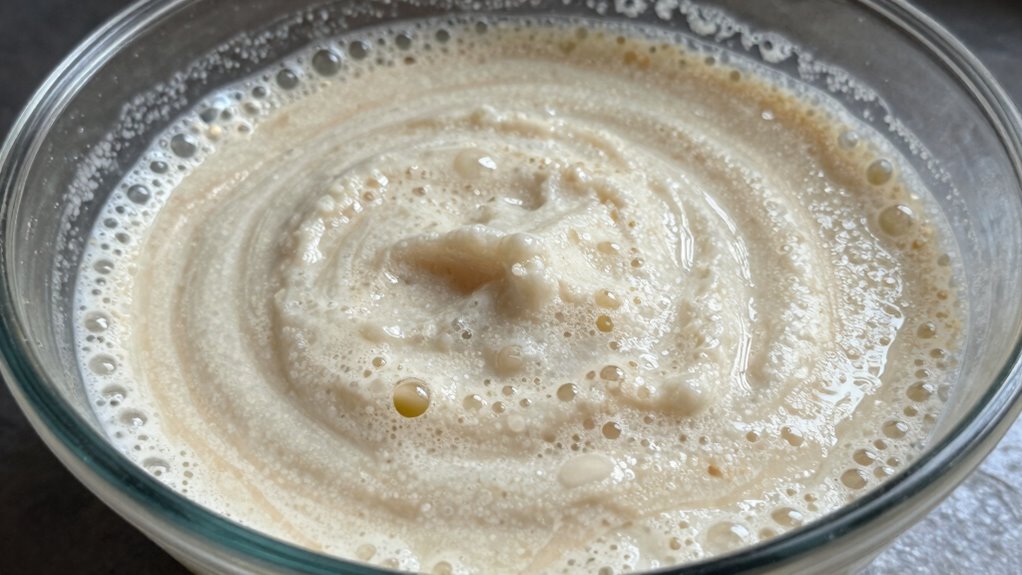
You can tell your dosa batter is properly fermented when it develops a slightly sour smell and becomes airy with bubbles on the surface. Traditional fermentation relies on natural yeasts and bacteria from the environment, which slowly transform the batter over 8-12 hours. If you notice a tangy aroma and a spongy texture, your fermentation process is on the right track. Modern methods, such as adding a small amount of commercial yeast or using a warm, controlled environment, can accelerate this process. Regardless of the technique, the batter should feel light and look bubbly, indicating active fermentation. Maintaining optimal fermentation conditions ensures consistent results and helps avoid failed batches. Properly fermented batter ensures your dosas turn out light, crispy, and delicious, whether achieved through traditional or modern methods. Additionally, understanding the role of fermentation conditions can help optimize the process for better results, especially since temperature and humidity significantly influence fermentation success. Being mindful of ambient environmental factors can make a noticeable difference in achieving the perfect fermentation.

SAF-INSTANT YEAST RED LABEL SINGLE 1 lb (16oz) PACKAGE
- Product Name: SAF-INSTANT Yeast Red Label 1 lb
As an affiliate, we earn on qualifying purchases.
As an affiliate, we earn on qualifying purchases.
Why Fermentation Is Essential for Light, Crispy Dosas
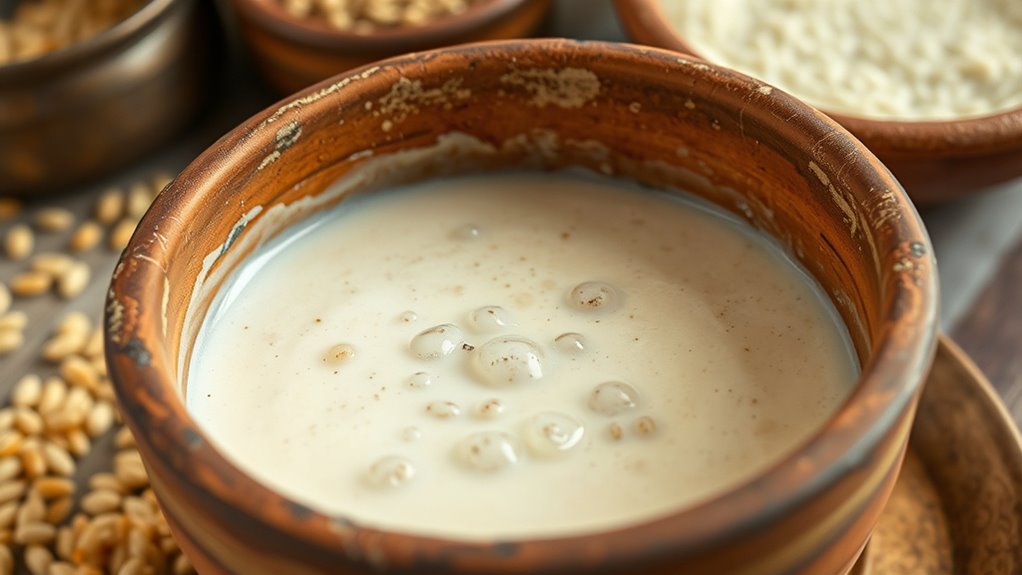
Fermentation activates the yeast, which produces carbon dioxide that makes your dosas light and airy. To get the perfect texture, you need an ideal environment with proper warmth and moisture, along with batter that’s the right consistency. When these factors align, your dosas turn out crispy and delicious every time. Additionally, maintaining a healthy scalp environment can support the fermentation process and overall batter quality. Ensuring a stable temperature can greatly improve fermentation efficiency and dough rise. Creating a consistent environment helps prevent fluctuations that can hinder fermentation progress. Proper temperature control is crucial for optimal yeast activity and consistent results, especially since optimal conditions directly influence fermentation success.
Proper Yeast Activation
Proper yeast activation is essential because it kickstarts the fermentation process that transforms a simple batter into light, crispy dosas. When you activate the yeast correctly, you ensure it becomes a powerful fermentation catalyst, releasing carbon dioxide that creates the batter’s rise and airy texture. To do this, dissolve the yeast in warm water with a pinch of sugar, allowing it to foam and bubble within 5-10 minutes. This signals that the yeast is active and ready to ferment. If the yeast doesn’t activate properly, fermentation stalls, and your dosas may turn out flat and dense. Proper yeast activation guarantees a lively fermentation, producing the ideal environment for the batter to develop its characteristic lightness and crispiness.
Ideal Fermentation Environment
Creating the right environment for fermentation is essential because it directly influences the batter’s rise and texture. You want a warm, stable spot where temperature and humidity stay consistent. This helps the natural yeast and bacteria activate properly, ensuring your dosa batter develops the light, crispy texture you crave. Your fermentation container choices matter too; glass or food-grade plastic are ideal as they won’t affect batter quality. Also, maintaining proper dosa batter consistency helps fermentation happen evenly. Here’s a quick comparison:
| Aspect | Tips |
|---|---|
| Temperature | Keep around 75-85°F for ideal fermentation |
| Humidity | Maintain moderate humidity, avoid dry air |
| Container Material | Use glass or food-grade plastic |
| Batter Thickness | Keep batter slightly thick but pourable |
| Location | Place in a warm, draft-free spot |
Additionally, ensuring good air circulation around the batter can prevent mold growth and promote even fermentation. It’s also helpful to monitor ambient temperature regularly to maintain the optimal conditions.
Correct Batter Consistency
Achieving the right batter consistency is essential because it directly affects how your dosas turn out. If the batter is too thick, it won’t spread evenly, and the dosas won’t be crispy. If it’s too thin, they may turn out flat and rubbery. To get it just right, focus on these key points:
- Aim for a smooth, pourable batter that’s neither too runny nor too stiff.
- Adjust the water quantity gradually while mixing to reach *ideal* consistency.
- Remember, proper fermentation timing depends on this consistency—too thick or thin batter won’t ferment properly.
- Using the right batter consistency helps ensure effective fermentation, leading to light, crispy dosas every time.
- Proper airflow around the batter container can also influence fermentation quality, ensuring even and consistent results. Additionally, maintaining the right environmental conditions like temperature can significantly impact the fermentation process. Ensuring proper airflow and environment can facilitate more uniform fermentation and better rise, which is why understanding microbial activity is important for successful fermentation.

Fermabox Foldable Bread Proofing Box – Bread Proofer Box – 60-120°F Temp Control, 24H Timer
- Reliable Proofing Temperature: Maintains 60–120°F for consistent rising
- Even Heat Distribution: Four-sided insulation for uniform warmth
- Foldable and Compact: Sets up in seconds, folds flat for storage
As an affiliate, we earn on qualifying purchases.
As an affiliate, we earn on qualifying purchases.
Key Ingredients That Help Dosa Batter Ferment Well
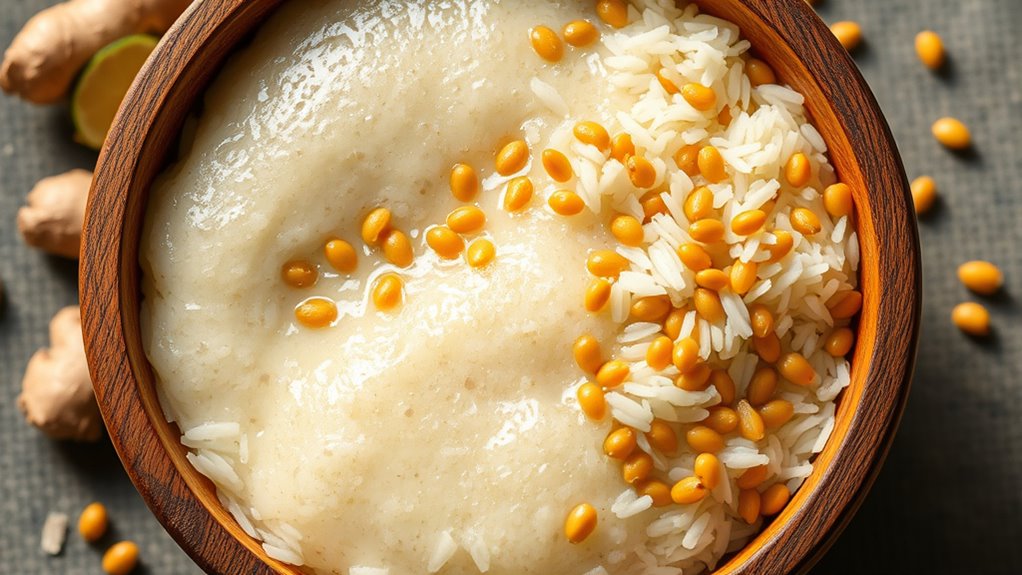
To guarantee your dosa batter ferments properly, focusing on key ingredients can make all the difference. Traditional methods often rely on specific ingredients to promote fermentation, such as rice and urad dal. Cultural variations influence the choice of grains and fermentation techniques, but the core ingredients remain consistent. Using freshly milled rice and black gram lentils provides the natural enzymes needed for fermentation. Rinsing and soaking these ingredients thoroughly helps activate microbes, aiding the process. Some people add a small amount of fenugreek seeds, which can boost fermentation as well. Avoid substitutes that lack natural enzymes, and stick to authentic ingredients if you want reliable, well-fermented batter. These key ingredients, rooted in traditional methods, are essential for consistent fermentation success. Incorporating proper fermentation techniques can further enhance the quality and texture of your dosa batter. Ensuring optimal temperature and humidity during fermentation also plays a crucial role in achieving the perfect batter. Additionally, maintaining a warm environment can significantly improve fermentation efficiency and consistency. Proper microbial activity is essential for a reliable and quick fermentation process. Cultivating the right microbial environment through pre-soaking can also help initiate fermentation more effectively.
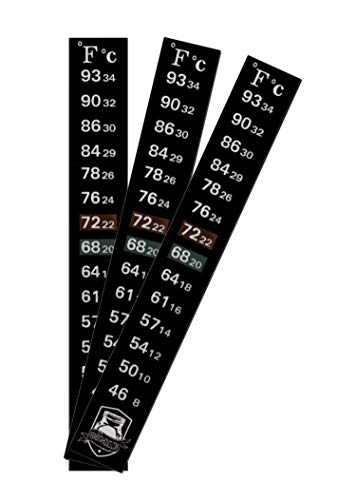
3 Pack Fermentation Adhesive Strip Thermometer – Displays Temperature in Degrees Celsius & Fahrenheit – Great for Kombucha, Beer, Wine, Vegetable Fermentation (46 to 93, Degrees Fahrenheit)
- Temperature Range: 46°F to 93°F
- Easy Brew Monitoring: Ensures perfect fermentation
- Prevent Temperature Mistakes: Avoids common brewing errors
As an affiliate, we earn on qualifying purchases.
As an affiliate, we earn on qualifying purchases.
How Water Quality and Temperature Impact Fermentation Success
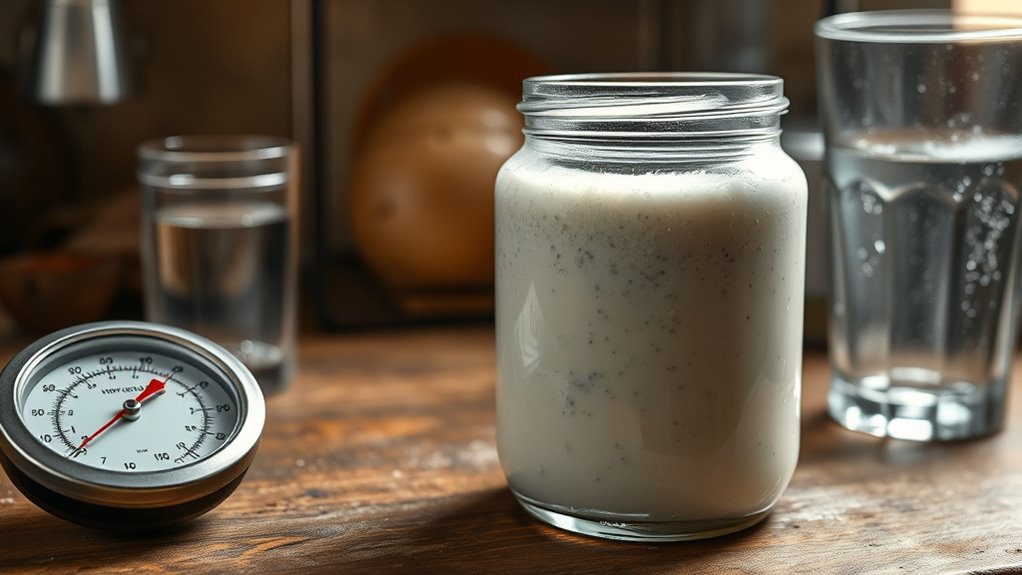
Your water’s pH level can directly affect how well your batter ferments; too acidic or alkaline water may hinder the process. Additionally, maintaining the right temperature—around 75-80°F—ensures the yeast and bacteria activate properly. Paying attention to these factors can make or break your fermentation success. Using vetted wave and wind conditions can help you create a more stable environment for fermentation. Monitoring water quality can further optimize your fermentation process, ensuring consistent results. Moreover, understanding Rhythm Failure and its related themes can inspire more mindful approaches to fermentation timing and conditions.
Water pH Levels
Water pH levels play a crucial role in the fermentation process, as they influence the activity of the natural enzymes and microbes responsible for converting starch into fermentable sugars. If your water is too acidic or too alkaline, it can hinder fermentation. Here are three key points to consider:
- Ideal water pH for dosa batter fermentation ranges between 6.0 and 7.0, maintaining a neutral to slightly acidic environment.
- High acidity levels can slow down microbial activity, preventing proper fermentation.
- Using water with a pH outside this range may result in a batter that either doesn’t ferment or ferments improperly.
Monitoring your water’s pH ensures effective enzyme function, leading to successful fermentation and fluffy dosas.
Optimal Fermentation Temperature
Maintaining the right fermentation temperature is essential because it directly influences the activity of the microbes that convert starch into sugars. Ideal temperatures, typically between 25°C and 32°C, promote vigorous microbial activity, ensuring a healthy rise in the batter. If the temperature is too low, starter cultures become sluggish, extending fermentation duration or causing failure. Conversely, excessive heat can kill beneficial microbes, preventing proper fermentation. Consistent temperature helps achieve predictable results, reducing variability in batter rise. Using a thermometer can help you monitor conditions. If fermentation stalls, adjusting the temperature slightly upward or downward can jump-start the process. Remember, stable, warm environments support efficient fermentation, leading to fluffy, well-fermented dosas. Proper temperature control is key to consistent, successful dosa batter fermentation.
Common Mistakes That Stop Dosa Batter From Fermenting
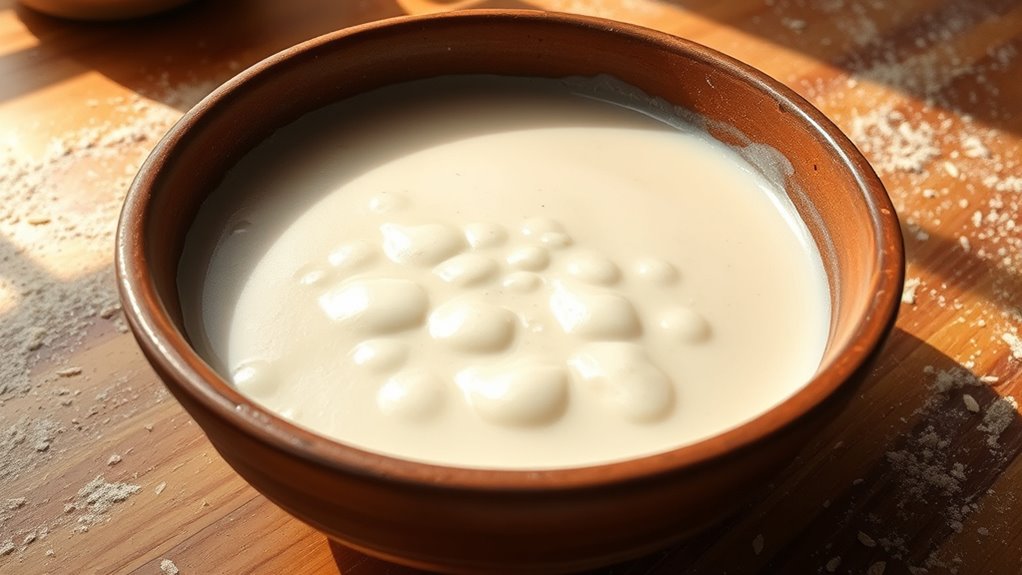
One common reason for dosa batter failing to ferment is using inappropriate ingredients or incorrect proportions. If your ingredients aren’t balanced, yeast activation and fermentation timing suffer. Here are key mistakes to avoid:
- Using too much salt or acidic ingredients: Excess salt or acids suppress yeast activity, hindering fermentation.
- Incorrect water-to-grain ratio: Too much water dilutes enzymes, slowing yeast activation.
- Skipping proper soaking and resting: Rushing the process prevents the batter from developing the right environment for fermentation.
Ensure your batter has the right balance, and don’t rush the fermentation process. Proper timing allows yeast to activate fully, making fermentation successful. Avoid these mistakes to help your dosa batter rise perfectly.
Best Techniques for Soaking and Grinding Dosa Batter
To guarantee your dosa batter ferments properly, pay attention to soaking time, grinding consistency, and temperature. Soak the rice and urad dal for the right duration to activate enzymes, and grind until the batter is smooth but not overly fine. Keep the batter at a warm, stable temperature to promote fermentation and achieve the best results.
Proper Soaking Duration
Achieving the right soaking duration is essential for a successful dosa batter, as it directly influences fermentation and texture. If you soak the grains for too short a time, they won’t fully hydrate, leading to poor fermentation. Conversely, soaking too long can cause spoilage. To get it right, consider these tips:
- Soak for 8-12 hours, depending on room temperature and grain type.
- Maintain consistent temperature control to speed up or slow down soaking.
- Check the grains periodically; they should become soft and swollen without excess water.
Grinding Consistency and Temperature
Maintaining the right grinding consistency and controlling temperature are essential for making perfect dosa batter. You should aim for a smooth, slightly coarse texture, which helps fermentation. If your grinding consistency is too fine, it can hinder airflow and yeast activity, while a too-coarse grind may not ferment properly. Temperature control is equally important; keep the batter warm during grinding and fermentation, preferably around 28-30°C (82-86°F). Using a wet grinder helps achieve uniform consistency, but if you use a blender, pulse gently to avoid overheating the batter. Avoid grinding for too long, as heat buildup can kill the natural yeast. Proper grinding consistency combined with temperature control creates an environment conducive to healthy fermentation.
Environmental Factors That Boost Fermentation Results
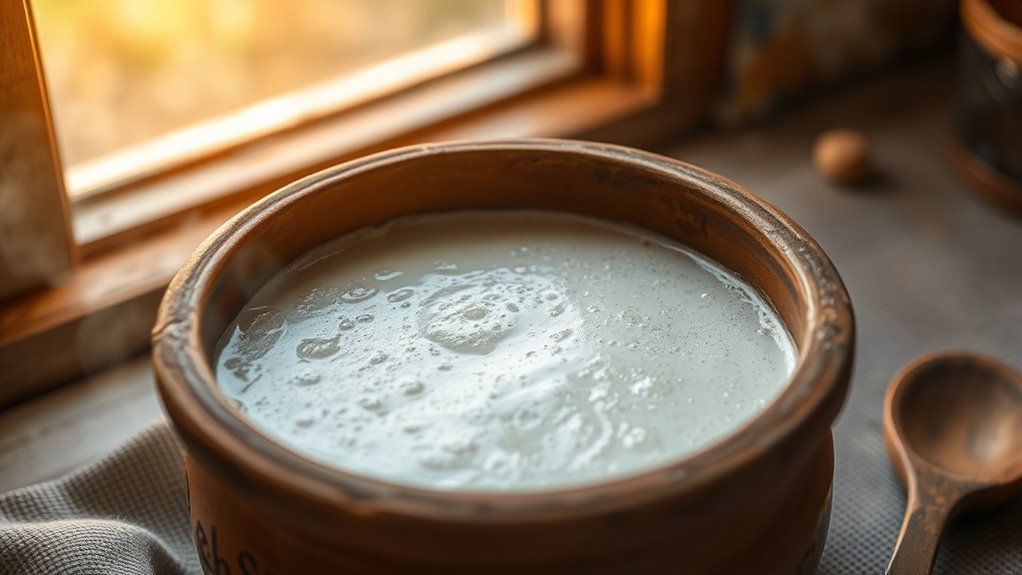
Environmental factors play a crucial role in boosting fermentation results when preparing dosa batter. Proper humidity control helps maintain consistent moisture levels, preventing the batter from drying out or becoming too wet. Choosing the right container is equally important; opt for non-reactive, breathable vessels that allow airflow and prevent souring. To optimize fermentation:
- Keep the batter in a warm, humid spot to encourage microbial activity.
- Use containers with loose lids or cloth covers for airflow and fermentation clarity.
- Avoid sudden temperature fluctuations that can hinder fermentation progress.
Troubleshooting Dosa Batter That Won’t Rise
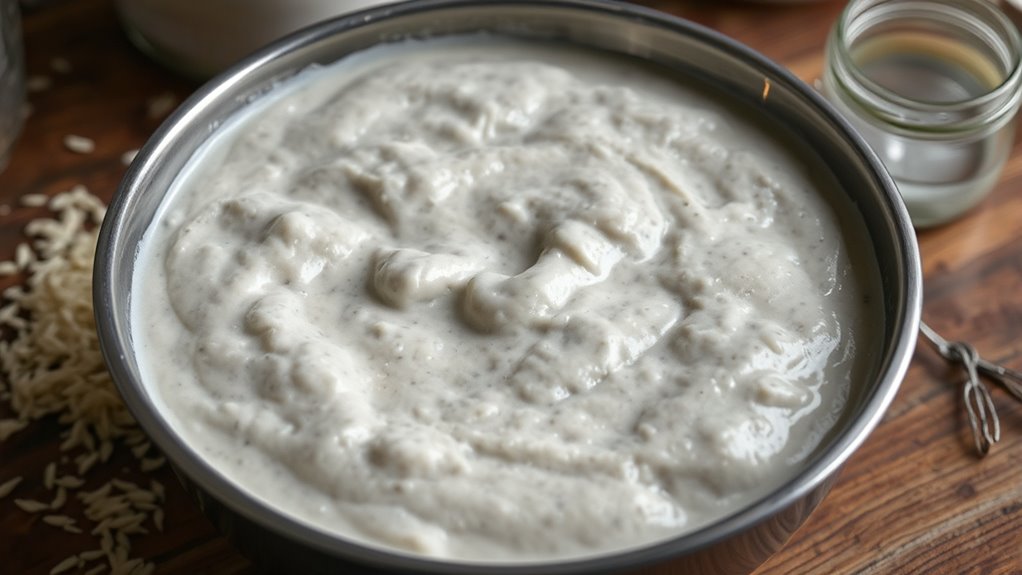
When your dosa batter refuses to rise, it’s often because the fermentation process has been interrupted or hindered. First, check your starter culture—the active fermentation agents like rice and urad dal should be fresh and properly prepared. If they’re old or inactive, fermentation timing will be affected, causing slow or no rise. Ensure your batter is kept at a consistent, warm temperature; too cold slows fermentation, while too hot can kill the microbes. Stir the batter gently to incorporate air and distribute the starter culture evenly. If fermentation still doesn’t happen, consider adding a fresh starter culture or giving it more time, especially if your environment is cooler. Troubleshooting these key factors usually resolves issues with batter not rising.
Natural Ways to Accelerate or Fix Fermentation Failures
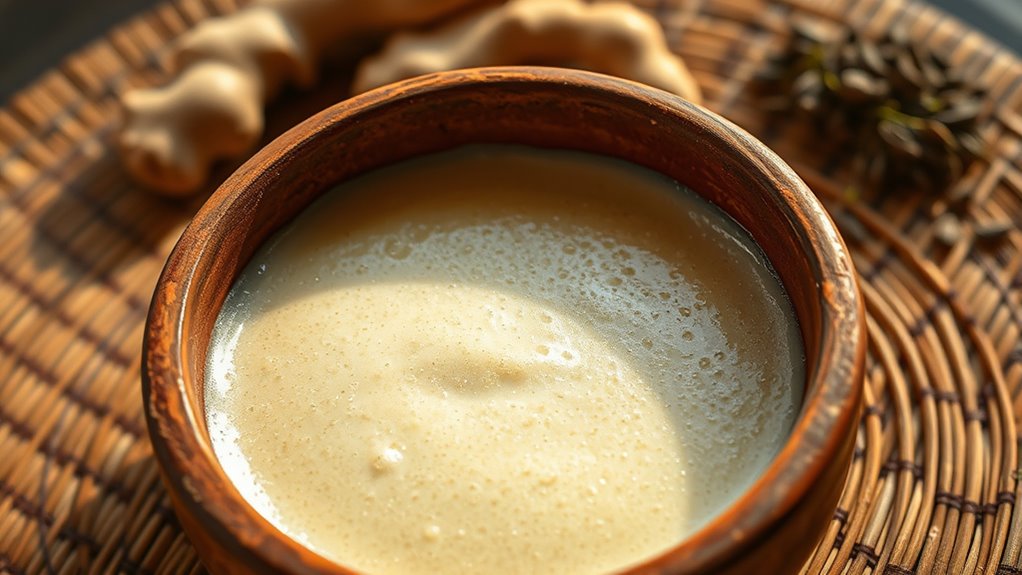
If your dosa batter isn’t fermenting as expected, natural methods can often jump-start the process without commercial additives. Understanding fermentation science and traditional techniques can help you troubleshoot effectively. Here are three ways to accelerate fermentation:
Natural methods like warm environments, adding yogurt or old batter, and using organic flour can jump-start fermentation effectively.
- Warm Environment: Keep your batter in a warm, consistent spot—around 75-80°F—to activate naturally occurring yeasts and bacteria.
- Add a Small Amount of Yogurt or Old Batter: Incorporating a spoonful of already fermented batter introduces beneficial microbes, speeding up fermentation.
- Use Organic, Unbleached Flour: Traditional techniques emphasize natural ingredients rich in wild microbes, which facilitate fermentation.
These methods leverage fermentation science and traditional wisdom, helping your batter develop properly without artificial aids.
Tips to Consistently Make Light, Fluffy Dosa Batter Every Time
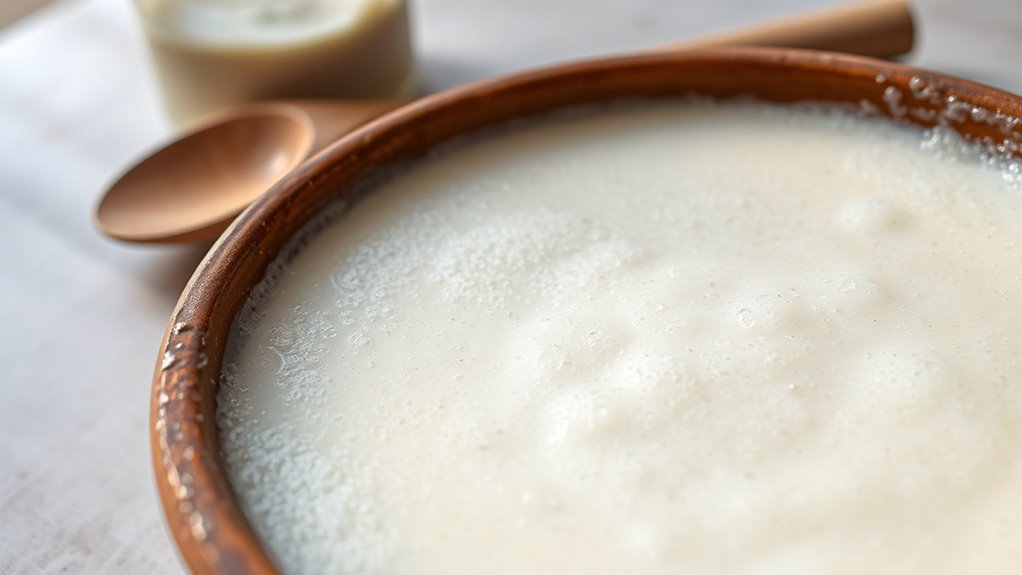
Achieving consistently light, fluffy dosa batter depends on mastering a few key techniques that promote ideal fermentation and texture. First, guarantee proper yeast activation by soaking your grains and adding a small amount of yeast or fermentation booster if needed, as this jumpstarts the process. Next, pay attention to fermentation timing; don’t rush it. Leave the batter in a warm, draft-free spot for 8 to 12 hours, or until it doubles in size and develops bubbles. Use a clean, wide-mouthed container to allow even fermentation. Stir gently before making dosas to incorporate gases. Consistently controlling fermentation timing and activating yeast properly will help you achieve the perfect, airy batter every time.
Frequently Asked Questions
Can Adding Yeast Improve Fermentation of Dosa Batter?
Adding yeast can improve fermentation of dosa batter by providing extra yeast addition, which boosts the fermentation process. Yeast helps produce carbon dioxide and alcohol, speeding up fermentation and enhancing the batter’s texture and flavor. However, traditional fermentation relies on natural microbes, so using yeast may alter the authentic taste. If you want quicker results and consistent fermentation, incorporating yeast could be a helpful method for you.
Does the Type of Rice Affect Fermentation Success?
Yes, the rice variety you choose can considerably impact fermentation success. Some rice types, like parboiled or aged rice, contain more nutrients and starches that aid fermentation, while others may lack the necessary enzymes. Opt for short or medium-grain rice, as they tend to ferment better. Experimenting with different rice varieties helps you find the best option for a consistently successful fermentation process.
How Does Altitude Influence Dosa Batter Fermentation?
You might think altitude effects are minor, but they actually cause fermentation challenges you can’t ignore. Higher elevations slow down yeast activity due to lower oxygen levels and cooler temperatures, making your dosa batter take longer to ferment or not at all. So, instead of blaming your ingredients, realize that altitude effects demand adjustments in your fermentation process, or else your batter might just refuse to rise, no matter how much you wait.
Is It Necessary to Ferment Dosa Batter Overnight?
You don’t need to ferment dosa batter overnight, but it’s recommended for the best dosa consistency and flavor. Fermentation timing varies with room temperature; warmer environments need less time, while cooler ones may require longer. If your batter isn’t fermenting well, try adjusting the temperature or adding a little more starter. Proper fermentation guarantees a light, fluffy dosa with ideal texture and taste.
Can Using Cold Water Prevent Proper Fermentation?
Think of the fermentation process as a delicate dance; cold water can throw a wrench in the rhythm. When you use cold water, it cools down the batter, slowing down the yeast and bacteria activity needed for fermentation. This chill hampers the natural rise, making it harder for your dosa batter to ferment properly. To keep the dance lively, use room temperature water to encourage lively fermentation.
Conclusion
Just like the alchemists of old who transformed base metals into gold, mastering dosa fermentation transforms simple ingredients into culinary magic. By understanding the science behind fermentation, avoiding common pitfalls, and nurturing your batter with care, you’ll consistently achieve light, crispy dosas that delight every time. Remember, patience and attention to detail are your secret ingredients. With these tips, you’ll turn your kitchen into a true dosa laboratory, creating perfect results every time.