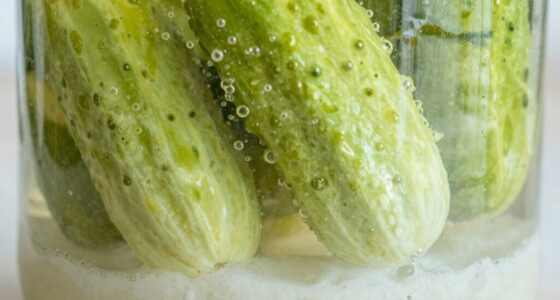
To make your ferments safer, keep the salt around 2-3% of your water or produce weight. This ideal range discourages harmful bacteria and mold while supporting good microbes that drive fermentation. Too little salt risks spoilage, while too much can slow down or dull your flavors. Maintaining this balance ensures steady, safe fermentation. Want to discover more tips to perfect your fermentation process? Keep going to find out how proper salt levels make all the difference.

Get kitchen staples and gadgets delivered free — and shop member deals
- Fast, free delivery on millions of items
- Access to Prime Big Deal Days deals on October 6–7
- Prime Video, Amazon Music and more included
Key Takeaways
- Maintaining a salt concentration of 2-3% creates an environment that discourages harmful bacteria and molds.
- Precise measurement of salt ensures consistent fermentation safety and prevents spoilage.
- Proper salt levels slow down fermentation to optimal rates, reducing risk of unsafe microbial growth.
- Balancing salt enhances beneficial microbes while inhibiting undesirable ones for safer ferments.
- Adjusting salt within the optimal range stabilizes microbial activity, ensuring safer, more reliable fermentation outcomes.
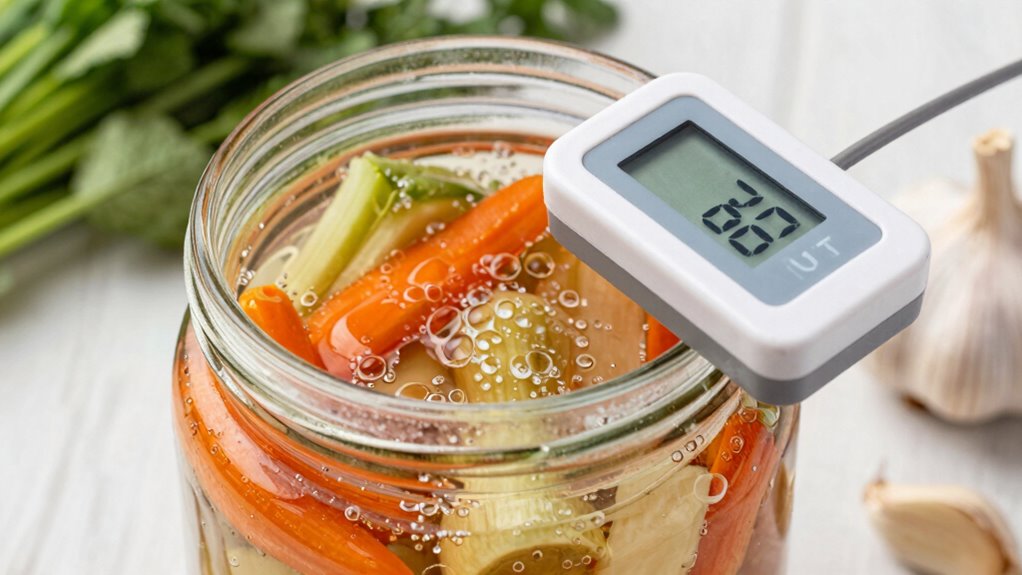
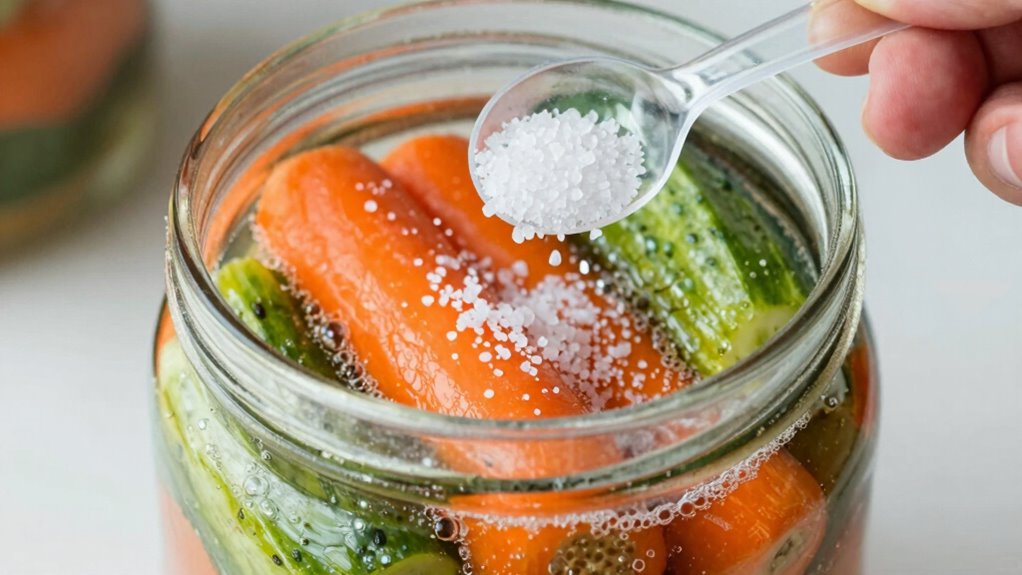
Fermentation can be a safe and rewarding process, but getting the salt percentage right is crucial to prevent spoilage and guarantee successful results. Salt acts as a natural preservative, creating an environment that discourages harmful bacteria while encouraging the growth of beneficial microbes. When you get the salt levels just right, you not only improve safety but also enhance the flavor of your ferments. Proper salt percentages support a balanced fermentation speed, ensuring the process doesn’t go too fast, which can lead to off-flavors, or too slow, which might result in spoilage. Understanding salt concentration helps you achieve consistent and safe fermentation outcomes. Getting the salt percentage correct is straightforward once you understand the basics. For most vegetables and fermented foods, a common guideline is to aim for a salt concentration of around 2% to 3%. This means that for every 100 grams of water or produce, you add about 2 to 3 grams of salt. Using a kitchen scale makes it easy to measure precisely, and the consistency ensures reliable outcomes. Too little salt, and the environment becomes vulnerable to mold, yeast, or undesirable bacteria that can spoil your batch. Too much salt, and fermentation slows down considerably, preventing the flavors from developing properly and making the process unnecessarily lengthy. By maintaining the correct salt percentage, you also influence flavor enhancement. Salt doesn’t just preserve; it amplifies the taste of your ferments, bringing out subtle notes and balancing acidity. A well-salted ferment will taste richer and more complex. Experimenting within the recommended salt range allows you to fine-tune the flavor according to your personal preferences. For example, a slightly higher salt concentration might produce a crisper, more savory profile, while a lower one can result in a more delicate, milder taste. The impact of salt on fermentation speed is equally important. If the salt percentage is too high, it can inhibit microbial activity, causing fermentation to slow down or stall altogether. Conversely, too little salt accelerates fermentation but also increases the risk of spoilage. Striking the right balance ensures a steady, controlled fermentation pace, giving beneficial bacteria enough time to do their work without risking unsafe growth. Additionally, understanding microbial activity can help you optimize fermentation conditions for better results. Monitoring microbial behavior and how it responds to salt levels can help you fine-tune your process for consistent outcomes. Maintaining optimal salt levels is essential because it directly influences microbial behavior and fermentation success. This control over fermentation speed results in a more predictable, safer process, and ultimately, a tastier, more stable product. Properly managing fermentation conditions also plays a significant role in achieving consistent and desirable outcomes.
fermentation salt measurement scale
As an affiliate, we earn on qualifying purchases.
As an affiliate, we earn on qualifying purchases.
Frequently Asked Questions
Can I Adjust the Salt Percentage for Different Types of Vegetables?
Yes, you can adjust the salt percentage for different vegetables. Increasing salt enhances flavor and helps preserve texture, especially for tougher vegetables like carrots or cabbage. Softer vegetables, like cucumbers, need slightly less salt to avoid overpowering their delicate flavor. Experimenting with salt levels allows you to balance flavor enhancement and texture preservation, ensuring your ferments stay safe, crisp, and tasty. Just remember to keep within safe fermentation ranges.
How Does Salt Percentage Affect Fermentation Speed?
Imagine a race where salt concentration acts as the starting gun—higher salt levels slow down fermentation, while lower levels speed it up. Salt percentage directly impacts the fermentation rate: increased salt concentration inhibits mold and unwanted bacteria, slowing the process, whereas reduced salt allows beneficial bacteria to thrive more quickly. Adjusting salt levels carefully helps you control fermentation speed, ensuring safe, delicious results every time.
Is There an Ideal Salt Percentage for Beginners?
For beginners, an ideal salt percentage is around 2-3%, which balances safety and flavor. This range allows you to explore flavor variations without risking spoilage. If you need to do a salt substitution, stick close to this percentage to maintain fermentation stability. Keep in mind, adjusting salt levels slightly can change flavor profiles, so experiment gradually and note your results to perfect your ferments.
Can Too Much Salt Prevent Fermentation Altogether?
Too much salt can definitely stop fermentation in its tracks, preventing safe, successful fermentations. Excessive salt creates a salty, hostile environment that hampers helpful bacteria and favors salt contamination, risking fermentation failure. To keep fermentation safe and steady, stick to the recommended salt percentage, usually around 2-3%. This balance fosters beneficial bacteria growth while warding off harmful microbes, ensuring your ferments stay flavorful, safe, and satisfying.
What Signs Indicate Fermentation Is Unsafe Despite the Salt Level?
You’ll know fermentation is unsafe despite the salt level if you see signs like off-odor, slimy texture, or unusual mold growth. Fermentation bacteria might be overwhelmed if salt toxicity occurs, leading to spoilage. If you notice these signs, it’s best to discard the batch. Proper salt balance encourages healthy bacteria, but excessive salt can hinder fermentation, making it unsafe despite the salt level seeming adequate.
fermentation salt percentage kit
As an affiliate, we earn on qualifying purchases.
As an affiliate, we earn on qualifying purchases.
Conclusion
Now that you know the salt percentage trick, you can confidently ferment your foods more safely. By paying attention to the salt ratio, you minimize the risk of spoilage and guarantee a tasty, healthy result every time. Isn’t it worth taking that small step to perfect your ferments? Remember, a little attention to detail goes a long way in creating delicious, safe preserves you can enjoy for years to come. Happy fermenting!
fermentation starter culture with salt control
As an affiliate, we earn on qualifying purchases.
As an affiliate, we earn on qualifying purchases.
As an affiliate, we earn on qualifying purchases.
Fall Picks
fall essentials
As an affiliate, we earn on qualifying purchases.