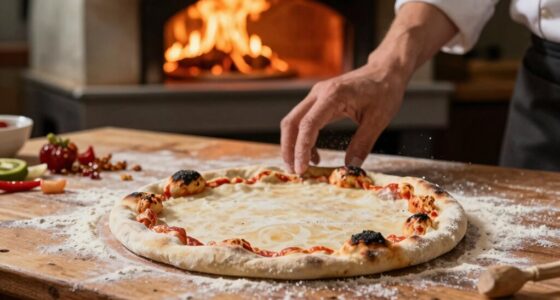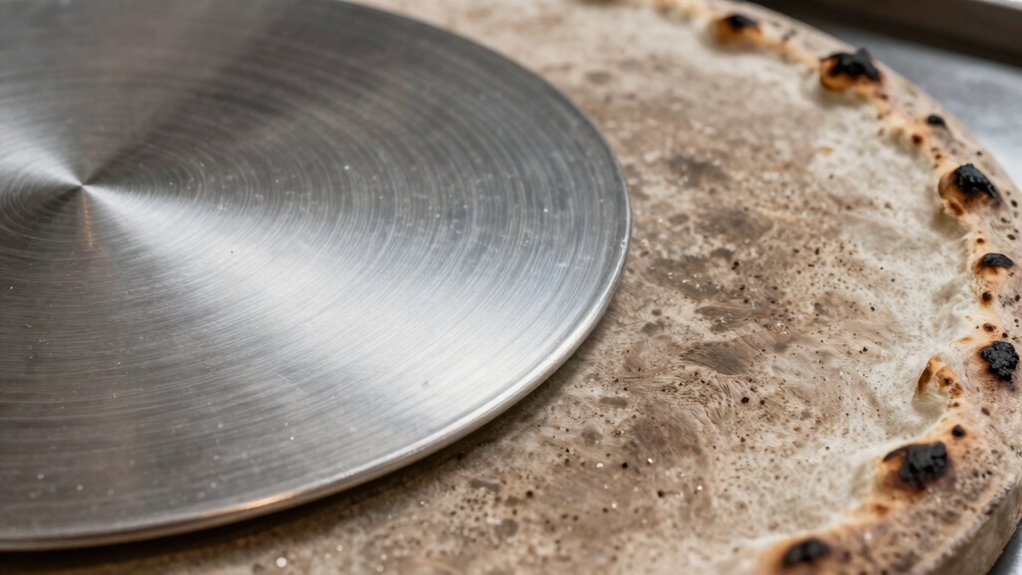

You’ll notice pizza steel feels different from a pizza stone because its metallic material conducts heat much faster, leading to quicker heat transfer to your crust. Steel responds rapidly to oven temperature changes, helping you achieve a crisper crust in less time. In contrast, stones heat more slowly and respond gradually, which can result in uneven cooking. Want to understand how these differences affect your pizza’s texture and cooking efficiency? Keep exploring to discover more.

Get kitchen staples and gadgets delivered free — and shop member deals
- Fast, free delivery on millions of items
- Access to Prime Big Deal Days deals on October 6–7
- Prime Video, Amazon Music and more included
Key Takeaways
- Pizza steel conducts heat faster and more evenly than a stone, resulting in a different baking sensation.
- Steel’s quick heat response creates a crisper crust compared to the slower heating of stones.
- The material’s thermal properties cause steel to feel more responsive and reactive during baking.
- Steel retains heat better, maintaining consistent baking conditions even when the oven door opens.
- The difference in material texture and weight affects how steel and stone feel during handling and baking.
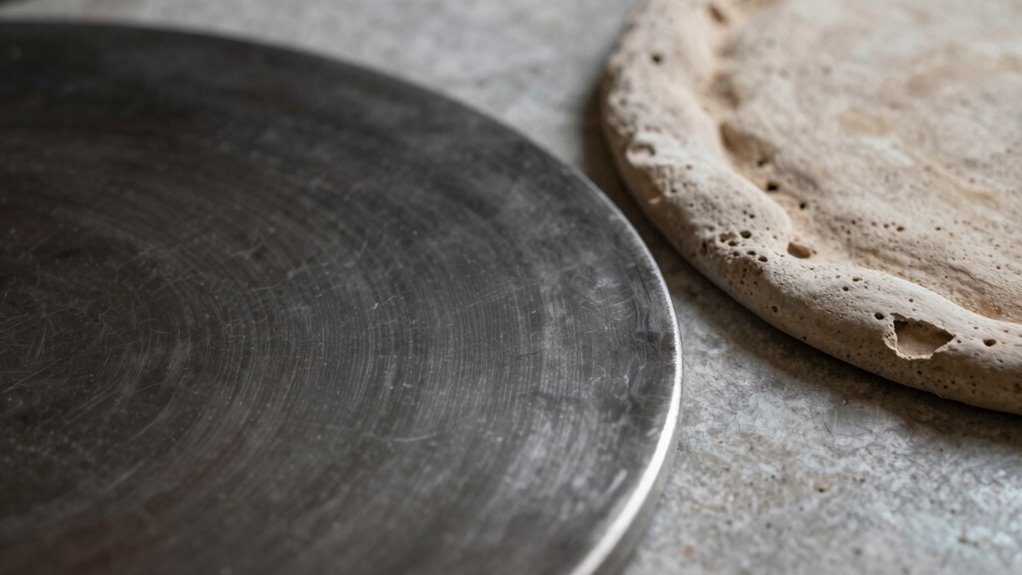
When it comes to making pizza at home, you might notice that a pizza steel feels different from a traditional pizza stone, and that’s because of how each material conducts heat. This difference significantly affects the final texture and cooking time of your pizza. Your oven temperature and the way heat is retained play significant roles in this difference. A pizza steel heats up faster and more evenly because it conducts heat exceptionally well, thanks to its metallic nature. This means that when you slide your pizza onto the steel, it immediately absorbs the heat and starts cooking from the bottom with great efficiency. In contrast, a pizza stone, usually made from ceramic or cordierite, heats more slowly and doesn’t transfer heat as quickly or evenly. As a result, your pizza might take a little longer to cook, and the crust may not be as uniformly crisp.
The key difference lies in heat retention. Steel, being a metal, retains heat extremely well once heated, which allows it to stay hot even when you open the oven door or add a cold pizza. This consistent heat retention ensures that your pizza’s bottom gets that perfect, crispy texture without overcooking the toppings. Because a steel reaches the desired oven temperature faster, it’s more responsive to changes you make, such as raising or lowering the oven temperature. You can crank up the heat, and the steel will quickly adapt, giving you that high-temperature environment needed for a Neapolitan-style pizza. Additionally, heat conduction is a critical factor that influences how quickly and evenly your pizza cooks on each surface. Understanding how heat retention works helps you optimize your baking process for better results. A better understanding of material properties can help you choose the right tool for specific pizza styles. Recognizing the difference in thermal response between these materials can help you achieve more consistent results with each bake.
Moreover, the thermal mass of a steel allows it to store and transfer heat more effectively, contributing to a more efficient cooking process overall. On the other hand, a pizza stone takes longer to reach the same oven temperature, and its heat retention isn’t quite as immediate. It stores heat well over time, but it doesn’t respond as swiftly to temperature changes. This means you need to preheat it longer and be patient to achieve that ideal cooking environment. When you place a cold pizza on a stone, the stone absorbs some of the heat, which can temporarily lower its temperature, impacting how quickly and evenly your crust cooks. With a steel, however, the impact is minimal because of its superior heat conduction and retention.
As an affiliate, we earn on qualifying purchases.
Frequently Asked Questions
Can Pizza Steel Be Used in a Microwave?
No, you shouldn’t use a pizza steel in a microwave. Microwave compatibility is limited because pizza steel is made from metal, which can cause sparks and damage your microwave. Additionally, metal doesn’t distribute heat evenly in microwaves, so your pizza won’t cook properly. For best results, stick to oven baking or use microwave-safe cookware. Using a pizza steel is ideal in a conventional oven where it offers excellent heat distribution for crispy pizzas.
How Does Thickness Affect Pizza Steel Performance?
Thicker pizza steel enhances performance by improving heat retention, which helps you achieve a crisp crust and even cooking. The thickness influence means it retains more heat, allowing faster, more consistent results. However, it also takes longer to heat up initially. You should consider your oven size and cooking style to find the right balance. Overall, a thicker steel provides better heat retention, making your pizza baking more efficient and satisfying.
Is Pizza Steel More Durable Than a Pizza Stone?
Yes, pizza steel is generally more durable than a pizza stone due to its material comparison. Steel withstands high temperatures and heavy use without cracking or chipping, unlike ceramic stones. Its superior heat retention allows for even cooking, making it a long-lasting choice. You’ll find that steel’s resilience and ability to handle thermal shocks make it a more durable option for frequent pizza baking.
Can Pizza Steel Be Used for Baking Other Foods?
Yes, pizza steel can be used for baking other foods, thanks to its exceptional heat conduction. An interesting statistic shows that steel heats up 18% faster than traditional ceramic. This makes it a versatile alternative cookware, offering impressive baking versatility. You can bake bread, cookies, or even roasted vegetables on it, as its even heat distribution guarantees consistent results, making it a valuable addition to your kitchen arsenal.
Does Seasoning or Oil Affect a Pizza Steel’s Properties?
Seasoning effects and oil interactions can influence your pizza steel’s performance. When you season it, a thin layer of oil creates a natural non-stick surface and helps prevent rust, but too much oil can lead to smoke or sticky buildup. Regularly oil it lightly after cleaning, and avoid harsh soaps. Proper seasoning enhances heat transfer and makes your pizza crispier, ensuring your steel stays in great condition for consistent baking results.
As an affiliate, we earn on qualifying purchases.
Conclusion
In the end, understanding why pizza steel feels different from a pizza stone helps you make the right choice for your kitchen. Both tools have their quirks, but once you get the hang of them, you’ll see it’s all about finding what works best for you. So, don’t be afraid to try both—you might find that one just clicks with your style. Remember, the proof of the pudding is in the eating!
As an affiliate, we earn on qualifying purchases.
As an affiliate, we earn on qualifying purchases.
NFL season / tailgating Picks
team gear
As an affiliate, we earn on qualifying purchases.