
The Pizza Launch Problem happens when your dough lacks the right elasticity to handle tossing and shaping. If it’s too stiff, it tears or loses its shape; if it’s too stretchy, it may over-stretch and develop holes. Proper kneading, resting, and ingredient choices help you control elasticity. Getting the temperature right during baking is also key. Want to learn how to prevent this issue and perfect your dough? Keep exploring for more tips.
Key Takeaways
- Insufficient dough elasticity causes tearing and shape loss during tossing or launching.
- Overly elastic dough over-stretches, creating holes and uneven crusts when launched.
- Proper kneading, resting, and ingredient balance improve elasticity for handling and shaping.
- Inadequate baking temperature can compromise dough structure after launch.
- Controlling elasticity and oven temperature prevents dough from tearing or collapsing during launch.

Have you ever wondered what happens when a pizza delivery drone encounters a sudden obstacle mid-flight? Well, imagine that scenario, but instead of a drone, it’s your carefully crafted dough that faces a sudden jolt. When the dough hits that unexpected bump—say, a gust of wind or a rough handling—the elasticity of the dough becomes crucial. If your dough isn’t elastic enough, it’ll tear or lose its shape, ruining the overall texture and presentation. On the other hand, if it’s too elastic, it might stretch too thin, risking holes or uneven thickness. Achieving the perfect dough elasticity is a delicate balance, and it’s a key factor in preventing what I’d call the “Pizza Launch Problem”—where the dough can’t withstand the stresses of tossing and baking.
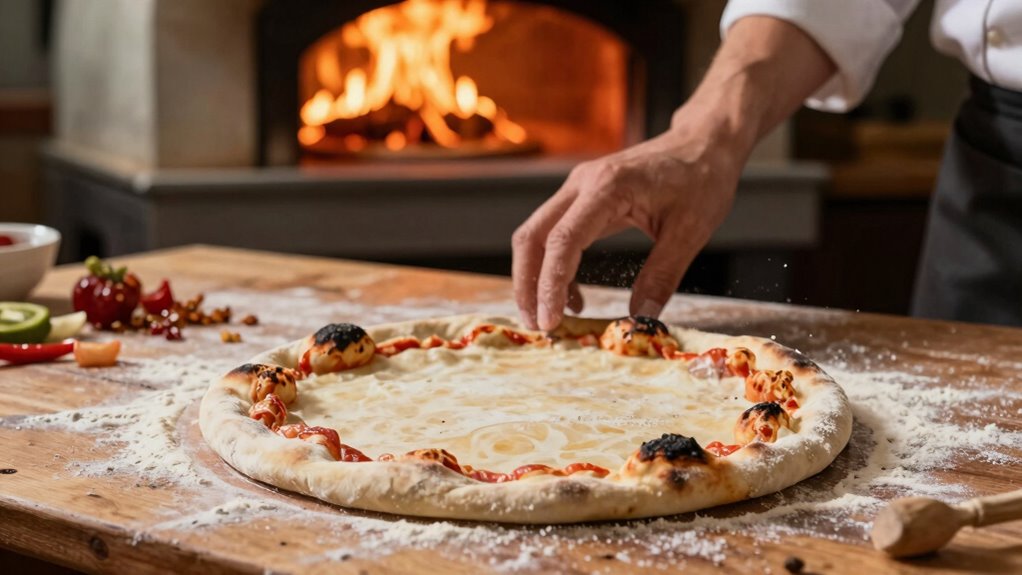
Once the dough is properly elastic, the next critical step is baking it at just the right oven temperature. If the oven’s too hot, the dough can char quickly on the outside while remaining undercooked inside. Conversely, if it’s too cool, the crust can turn out pale and soggy, losing that desirable crispness. The oven temperature acts as the final judge of whether your dough maintains its integrity after tossing and baking. When the temperature is just right, the dough transforms into a beautifully crisp, golden crust—firm enough to hold toppings without collapsing but tender enough to bite into comfortably.
Proper oven temperature ensures a crisp, golden crust that holds toppings and stays tender inside.
But here’s the tricky part: the initial handling of the dough influences how well it responds to the oven temperature. Overworking the dough, for example, can decrease its elasticity, making it more prone to tearing. Underworking it might leave it too slack, causing it to warp or sag during baking. And your choice of oven temperature needs to adapt based on your dough’s elasticity. A dough with high elasticity can handle a higher oven temperature, giving you that perfect, bubbly crust. A less elastic dough requires a gentler heat to prevent burning or uneven cooking. Proper kneading and resting play a crucial role in controlling dough elasticity, ensuring that your pizza can withstand the stresses of the baking process. Additionally, understanding the science of dough helps in fine-tuning these techniques for consistent results. Moreover, employing dough conditioning techniques can optimize elasticity and improve overall handling. Recognizing dough elasticity as a fundamental aspect allows bakers to better troubleshoot and refine their process for optimal results.
Furthermore, being aware of the impact of ingredients like hydration levels and flour type can significantly influence the dough’s elasticity and overall performance. In essence, controlling dough elasticity through proper kneading and resting, combined with precise oven temperature management, helps you avoid the pitfalls of the “Pizza Launch Problem.” When these elements work in harmony, your pizza emerges flawless—crispy on the outside, tender on the inside, and perfectly shaped. So, whether you’re tossing dough in the air or placing it in the oven, understanding how elasticity and temperature interplay ensures your pizza turns out just right every time.

Mrs. Anderson’s Baking Dough Docker, For Consistent Pizza Crust
- Purpose: Prevents air bubbles for even rising
- Material: BPA free heat-safe plastic
- Dimensions: 5 x 8 inches
As an affiliate, we earn on qualifying purchases.
As an affiliate, we earn on qualifying purchases.
Frequently Asked Questions
How Can Dough Consistency Affect Pizza Launch Success?
Dough consistency directly impacts your pizza launch success because if the dough lacks elasticity or stretchability, it’s harder to toss and shape without tearing. When your dough has good elasticity, it stretches smoothly, allowing you to launch it confidently. On the other hand, stretchability issues cause frustration, uneven bases, and potential failures during tossing. Ensuring consistent dough elasticity helps you achieve perfect launches and a professional-looking pizza every time.
What Tools Are Best for Launching Pizza Dough?
You need the right tools to master dough stretching and guarantee topping adhesion. A sturdy pizza peel, preferably made of wood or metal, lets you launch the dough smoothly. A well-designed pizza screen helps keep the dough even during baking, preventing tears. A bench scraper or dough cutter aids in shaping, while a silicone or dough mat can prevent sticking. These tools keep your pizza launch clean, consistent, and perfect every time.
Does Dough Temperature Influence Launch Performance?
Yes, dough temperature greatly influences launch performance. When your dough is too cold, it’s less elastic, making it harder to shape and launch smoothly. Warm dough, closer to ideal oven temperature, improves elasticity, allowing you to stretch and launch with ease. Maintaining the right dough temperature guarantees peak elasticity, resulting in better control during launch and a more even cook in the oven.
Can Specific Flour Types Improve Dough Resilience?
Imagine a hand gently tossing a resilient dough, her fingers feeling the gluten strength stretch smoothly. Yes, specific flour types with higher flour protein content can improve dough resilience. Flours like bread flour, rich in gluten, give your dough better elasticity and structure, making it more forgiving during handling and launch. By selecting the right flour, you enhance durability and consistency, preventing tears and ensuring a perfect launch every time.
How Do Environmental Factors Impact Dough During Launch?
Environmental factors like air circulation and humidity control directly impact your dough during launch. Poor air circulation can cause uneven drying, leading to cracks or tears, while high humidity makes the dough sticky and hard to handle. You need to maintain a balanced environment by ensuring proper airflow and controlling humidity levels, so your dough stays consistent, elastic, and easy to work with, ultimately improving your pizza’s quality and launch success.

Orblue Pizza Dough Docker Pastry Roller with Spikes, Pizza Docking Tool for Home & Commercial Kitchen – Pizza Making Accessories that Prevent Dough from Blistering, Black
- Prevents Dough Blistering: Pokes holes to prevent puffing
- Versatile Baking Tool: Ideal for pizza, pies, cookies, biscuits
- Premium Material: Made of food-grade high-impact plastic
As an affiliate, we earn on qualifying purchases.
As an affiliate, we earn on qualifying purchases.
Conclusion
So, next time you’re tossing that perfect dough, remember the pizza launch problem. It’s like trying to launch a rocket with a loaf of bread—messy and unpredictable. Yet, just like a failed launch doesn’t ruin the mission, a misfire in pizza tossing doesn’t ruin your day. With patience and practice, you’ll master the art, turning chaos into delicious perfection. Because in the end, even the biggest mess can become the best pizza experience.

Old Stone Round Pizza Stone, 16-Inch
- Creates restaurant-quality dishes: Pizzas, bread, pastries, vegetables
- Durable and non-cracking: Made from lead-free clay blend
- Even heat transfer: Absorbs and distributes oven heat
As an affiliate, we earn on qualifying purchases.
As an affiliate, we earn on qualifying purchases.

Hans Grill Pizza Dough Proofing Box – Pack of 2 Stackable BPA-Free Trays with Covers – Perfect as a Bread Proofing Box and Dough Container – Premium Quality Pizza Storage Container (2 Pack Large)
- Keeps Dough Fresh: Maintains optimal dough texture and freshness
- Large Capacity: Holds up to 6 dough balls per container
- Multi-Purpose Use: Suitable for dough, fruits, and vegetables
As an affiliate, we earn on qualifying purchases.
As an affiliate, we earn on qualifying purchases.