In Indian cooking, acids like lemon, tamarind, and kokum do more than just add tang. They balance flavors, tenderize meats and vegetables, and help develop complex, vibrant dishes. These ingredients also preserve freshness and support fermentation, boosting depth and aroma. Using the right amount at the right time can elevate your dishes without overpowering them. Keep exploring to discover how mastering acid can transform your flavors effortlessly.
Key Takeaways
- Acid enhances flavor, balances richness, and brightens Indian dishes, playing a crucial role in taste harmony.
- Lemon, tamarind, and kokum provide natural acidity that tenderizes, adds depth, and supports fermentation.
- These ingredients influence aroma, texture, and mouthfeel, contributing to overall dish complexity.
- Proper use of acids at specific cooking stages ensures nuanced flavor without overpowering.
- Acidic ingredients are culturally significant, symbolizing freshness and aiding preservation in regional cuisines.
As an affiliate, we earn on qualifying purchases.
What Role Does Acid Play in Indian Flavors?

Have you ever wondered why a splash of lemon or vinegar can elevate the flavors of Indian dishes? Acid plays a crucial role by enhancing taste and balancing richness. It’s deeply connected to fermentation processes, where natural acids develop flavors and preserve ingredients over time. Preservation techniques in Indian cuisine often rely on acids like tamarind or kokum to extend shelf life and prevent spoilage. These acids not only keep foods fresh but also deepen the complexity of the flavor profile. When you add acidic ingredients, you trigger chemical reactions that brighten spices and soften textures. This interplay of acidity with fermentation ensures dishes stay flavorful longer while maintaining their vibrant, authentic taste. Additionally, acids are essential in flavor development, as they can influence the overall aroma and mouthfeel of dishes. The chemical reactions involved in cooking with acids help to unlock hidden layers of flavor and improve overall dish harmony. Understanding the impact of acidity can help you balance flavors more effectively in Indian cooking. Moreover, the use of acids in Indian food highlights their role in culinary preservation, which has been practiced for centuries to adapt to regional climates and storage limitations. Acid is truly a cornerstone of Indian culinary mastery. Vetted
As an affiliate, we earn on qualifying purchases.
The Key Acidic Ingredients in Indian Cooking
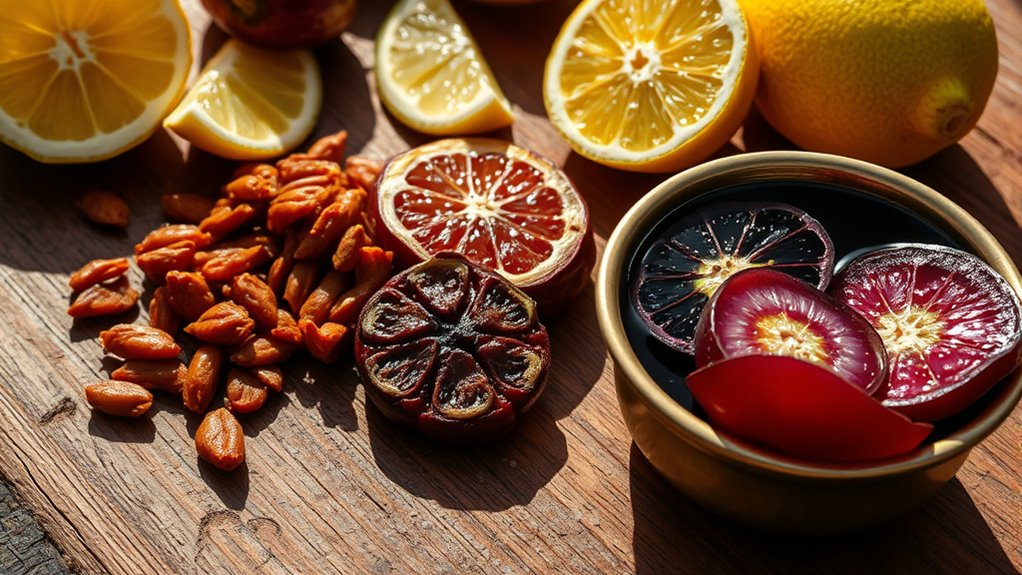
You’ll notice that lemon adds a bright, fresh flavor to many dishes, balancing spices with its tang. Tamarind brings a pungent depth that enriches curries and chutneys, giving them a complex edge. Kokum offers a unique tartness, adding a subtle sour note that enhances regional flavors without overpowering them. Additionally, it is important to ensure that these ingredients are prepared using halal practices, especially when sourced from commercial suppliers. Proper handling and sourcing of these acidic ingredients can greatly influence the overall quality and authenticity of your dishes.
Lemon’s Bright Flavor
Why is lemon such an essential ingredient in Indian cooking? Its bright, tangy flavor enhances dishes and balances rich spices. Beyond taste, lemon holds cultural significance, symbolizing freshness and auspiciousness in many traditions. It also plays a vital role in traditional preservation methods, helping to keep foods fresh and preventing spoilage. Lemon juice is often added at the end of cooking to brighten flavors and add a lively acidity. Its versatility makes it a staple across regional cuisines, from curries to chutneys. Using lemon isn’t just about flavor; it’s about connecting with cultural practices and preserving culinary heritage. When you squeeze lemon into your dishes, you’re tapping into a tradition that values natural, vibrant ingredients to elevate every bite. Incorporating acidic ingredients like lemon can also help tenderize meats and balance the overall flavor profile of a dish. Additionally, understanding the role of acids in cooking can deepen your appreciation for traditional techniques and flavor combinations. Recognizing the culinary significance of lemon can help you create more authentic and flavorful Indian dishes. Moreover, acids like lemon can contribute to food safety by inhibiting bacterial growth during storage, which has been a traditional practice in Indian cuisine.
Tamarind’s Pungent Depth
While lemon provides a bright, citrusy tang, tamarind introduces a deeper, more complex pungency that defines many Indian dishes. Its rich, tangy flavor results from natural sour fermentation during processing, giving it a rounded, earthy quality. Tamarind’s acidity isn’t just for tartness; it’s essential for flavor balancing, enhancing spices and other ingredients without overpowering them. When you add tamarind, you create layers of depth that deepen the dish’s overall profile. Its pungent acidity cuts through richness and helps meld flavors seamlessly. This unique sourness also influences the dish’s texture and aroma, making tamarind an irreplaceable ingredient in Indian cooking. Understanding tamarind’s pungent depth allows you to harness its full potential, elevating your dishes with authentic complexity. Additionally, tamarind’s role in sustainable food processing highlights its importance in eco-friendly culinary practices. Recognizing the natural fermentation process behind tamarind’s flavor can help you select higher-quality ingredients that support sustainable practices.
Kokum’s Unique Tartness
Kokum’s tartness adds a distinctive, fruity acidity that’s central to many Indian dishes, especially in coastal and southwestern cuisines. Its flavor offers a bright, slightly sweet yet sour note that enhances the overall tartness balance in recipes. Unlike lemon or tamarind, kokum’s flavor is more subtle and nuanced, providing a gentle tang without overpowering other ingredients. When you use kokum, it helps you achieve a unique depth of flavor while maintaining the right level of acidity. This tartness complements spicy curries, fish dishes, and rice preparations, bringing an invigorating brightness that lifts the entire dish. Kokum’s ability to deliver a delicate, fruity tartness makes it a versatile ingredient, essential for balancing flavors in many traditional Indian recipes. Additionally, kokum’s popularity is increasing as more people explore Indian culinary traditions and seek authentic ingredients to elevate their cooking. Its acidic properties also assist in tenderizing meats and balancing rich flavors, further emphasizing its importance in authentic Indian cuisine.
As an affiliate, we earn on qualifying purchases.
How Lemon Brightens and Balances Indian Dishes
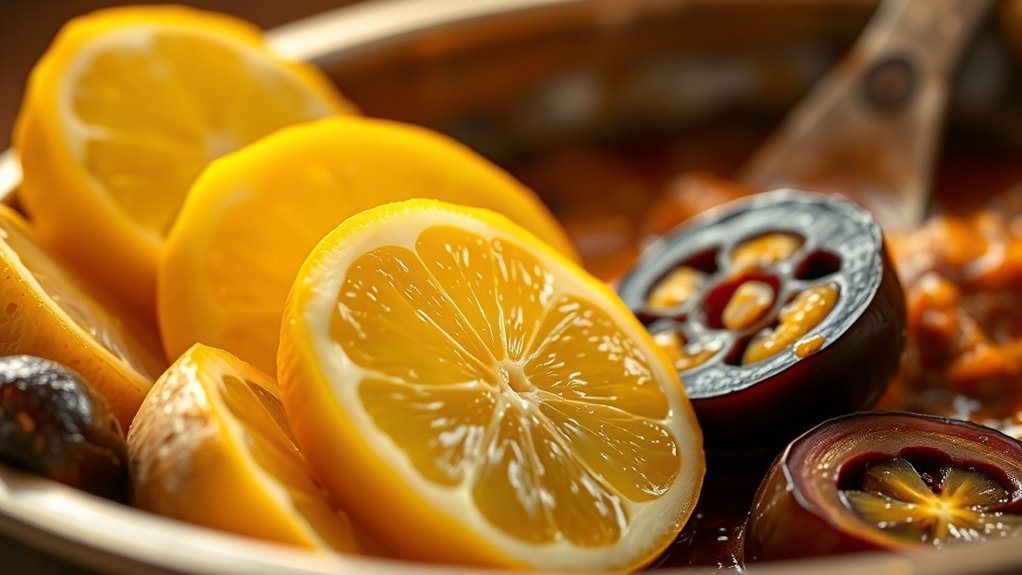
When you squeeze lemon onto Indian dishes, it instantly enhances the flavor by adding brightness and depth. It also helps cut through the heat from spices, balancing each bite. This simple trick makes your dishes more vibrant and satisfying.
Enhances Flavor Depth
Lemon plays a vital role in Indian cooking by adding brightness that enhances the overall flavor profile. Its acidity doesn’t just lift dishes; it deepens their complexity, revealing layers of taste you might otherwise miss. When used thoughtfully, lemon can also support fermentation benefits, helping ingredients break down and develop richer flavors over time. Culturally, lemon’s significance goes beyond taste—it’s a symbol of freshness and auspiciousness in many traditions. By balancing sourness with other spices, lemon creates a harmonious flavor depth that elevates curries, chutneys, and rice dishes. This balancing act allows the true essence of spices and ingredients to shine, making your dishes more nuanced and satisfying. Overall, lemon’s acidity facilitate a richer, more vibrant palate experience.
Cuts Through Spiciness
Acidity from lemon acts as a natural counterbalance to the fiery heat of Indian spices, instantly brightening dishes and reducing overwhelming heat. This is a key aspect of culinary chemistry, where acid helps cut through rich, spicy flavors to create a more harmonious balance. When you add lemon, it neutralizes some of the capsaicin’s burn, making the dish more enjoyable. Lemon’s sharpness enhances flavor balancing by highlighting other ingredients and preventing spiciness from overpowering the dish. This technique not only tempers heat but also adds an invigorating tang that elevates the overall taste. Understanding how lemon interacts with spices allows you to control heat levels effortlessly, creating dishes that are both spicy and vibrant without being overwhelming. The pH level of lemon juice plays a crucial role in its ability to modify the perception of heat in Indian dishes. Using acidic ingredients like lemon is often recommended by culinary professionals to achieve optimal flavor harmony. Additionally, recognizing the role of acidity in balancing flavors can help you develop a more nuanced and refined palate when cooking Indian cuisine. Incorporating acidity in cooking can also enhance the overall freshness and complexity of your dishes. An awareness of culinary chemistry can further refine your ability to craft well-balanced Indian dishes.
As an affiliate, we earn on qualifying purchases.
Tamarind’s Unique Flavor and Texture Contributions

Tamarind adds a distinctive depth to Indian dishes, balancing flavors with its unique combination of tanginess and subtle sweetness. Its tamarind’s texture is thick and sticky, which helps it meld seamlessly into curries, chutneys, and sauces. This texture allows you to control the consistency of your dish, enhancing mouthfeel without overpowering other ingredients. The flavor balance tamarind provides is complex; it’s tart yet slightly sweet, adding a layer of richness that elevates the overall taste. When used correctly, tamarind’s unique flavor and texture contribute a nuanced complexity, making dishes more vibrant and well-rounded. Its versatility means you can adjust the amount to suit your desired flavor profile, ensuring a perfect harmony of acidity and sweetness in your cooking. Additionally, understanding ear wax odor can help identify subtle changes in ingredient freshness, ensuring optimal flavor. Recognizing the acidic properties of tamarind can also guide you in balancing flavors effectively. Moreover, the benefits of acidity play a crucial role in enhancing the overall culinary experience by balancing richness and adding brightness to dishes. Proper knowledge of ingredient freshness can further improve your cooking outcomes and flavor stability.
Kokum in South Indian and Goan Cuisine: A Regional Perspective
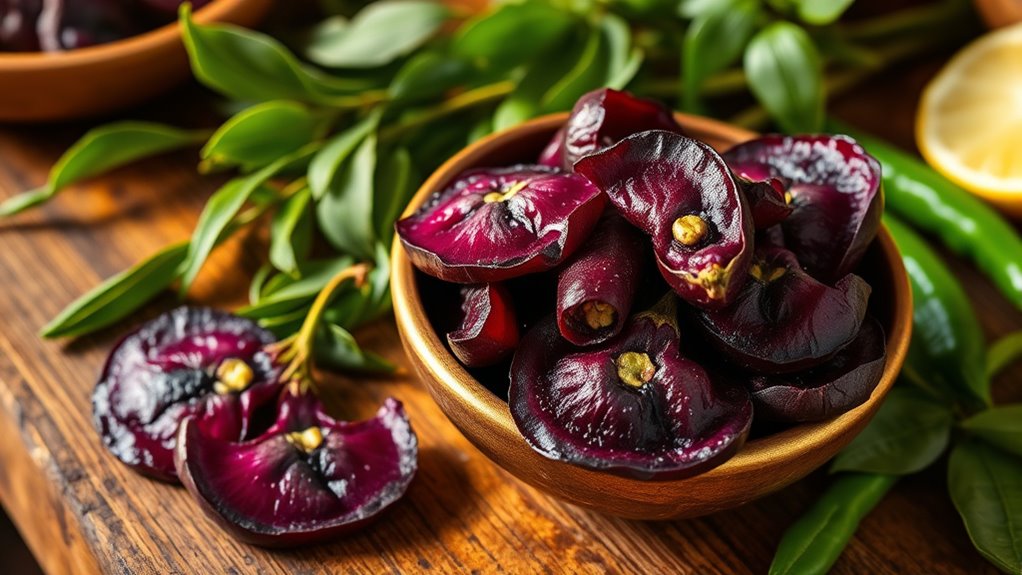
Kokum, like tamarind, plays a vital role in South Indian and Goan cuisines, bringing a distinctive tartness that enhances regional dishes. Its use reflects regional ingredient diversity and aligns with local cultural taste preferences. You’ll find kokum used in various ways:
- As a souring agent in Goan fish curries, balancing rich flavors
- In South Indian chutneys, adding a tangy depth to traditional accompaniments
- To prepare invigorating kokum drinks, matching local palate preferences for cooling beverages
- As a natural preservative in pickles, preserving regional flavors without artificial additives
This regional ingredient diversity makes kokum essential, offering a unique sour note that complements regional culinary traditions and meets the cultural taste preferences of South Indian and Goan communities.
How Acid Tenderizes and Enhances Flavors : The Science Explored
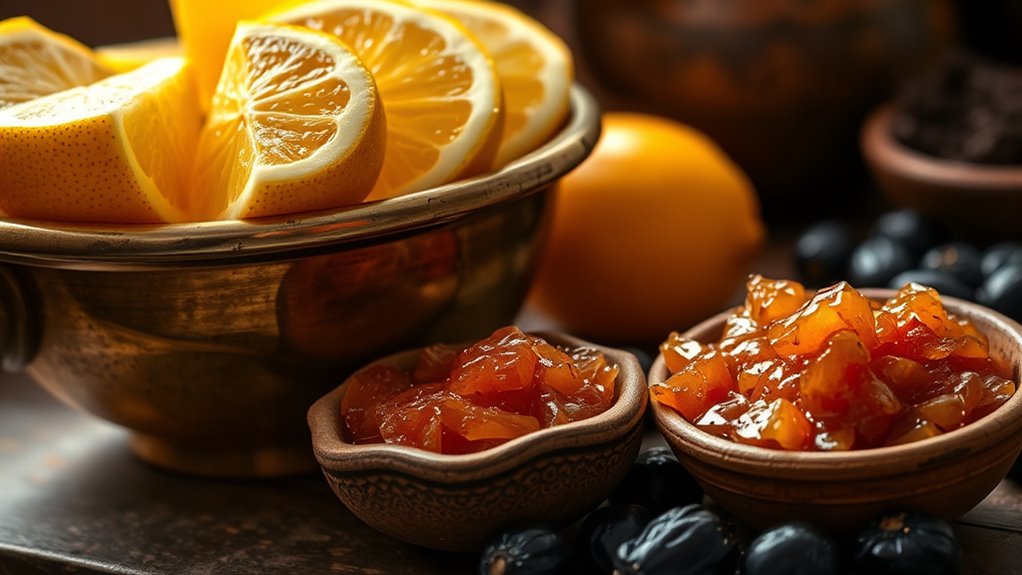
When acid interacts with proteins and other food components, it triggers chemical changes that tenderize tough cuts of meat and soften vegetables. This process often involves breaking down complex proteins, making dishes more palatable. Acid also plays a key role in flavor enhancement by balancing pH, which controls the extraction of flavors and the overall taste profile. Additionally, acids like lemon and tamarind support fermentation benefits, encouraging beneficial bacteria that develop complex flavors and improve digestibility. Maintaining the right pH balance is vital; too much acid can overpower a dish, while too little might not achieve the tenderizing or flavor-enhancing effects. Understanding these scientific principles helps you use acid effectively, releasing its full potential in Indian cooking.
Tips for Using Acidic Ingredients Without Overdoing It
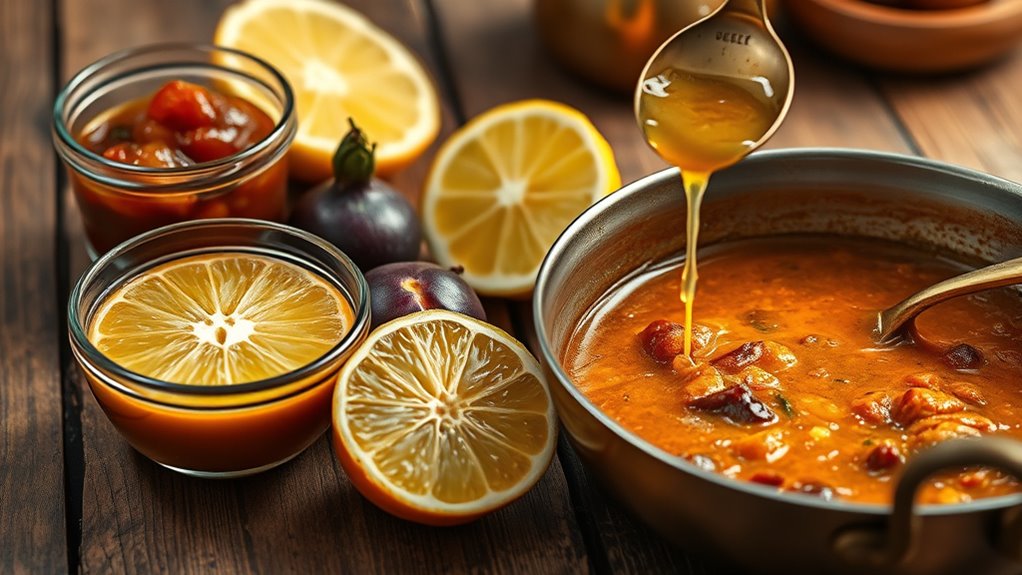
Balancing acidity in Indian dishes is crucial to prevent overpowering flavors and guarantee harmony in the final result. To achieve this, use these tips:
- Start small—add acidic ingredients gradually, tasting as you go to avoid overpowering the dish.
- Use proper cooking techniques—adding acids at the right stage, like towards the end, preserves their brightness and prevents bitterness.
- Adjust acidity for ingredient preservation—a splash of lemon or tamarind can brighten flavors without compromising shelf life or texture.
- Balance with other elements—pair acids with sweetness or fat to mellow sharpness and create a well-rounded flavor profile.
Regional Variations in Acid Use Across India
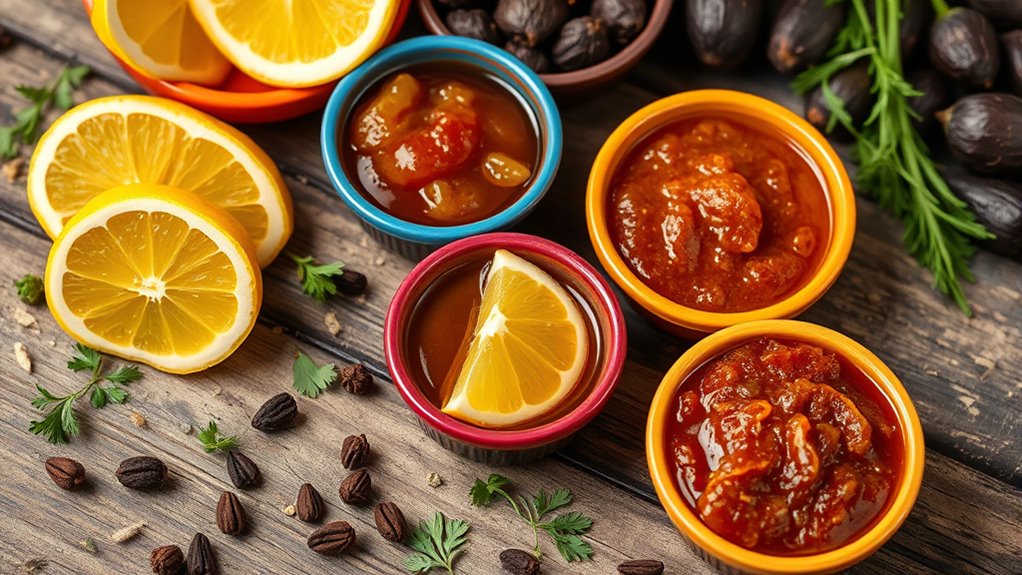
Across India, the use of acids in cooking varies widely, reflecting regional ingredients, flavors, and culinary traditions. In the North, lemon and yogurt add brightness to dishes, while the South relies heavily on tamarind and kokum for tang. The Northeast incorporates acids through traditional fermentation, creating unique flavors in fermented rice and vegetable dishes. In Gujarat and Rajasthan, spice blends like khadi and chutneys often include acid-rich ingredients to balance heat and sweetness. The West uses kokum and amchur (dried mango powder) to impart tang, especially in coastal and desert cuisines. These regional variations demonstrate how acids are integrated differently, often alongside traditional fermentation processes or regional spice blends, to enhance flavor, preserve ingredients, and maintain cultural authenticity in Indian cooking.
Troubleshooting: Adjusting Acid Levels for Perfect Flavor
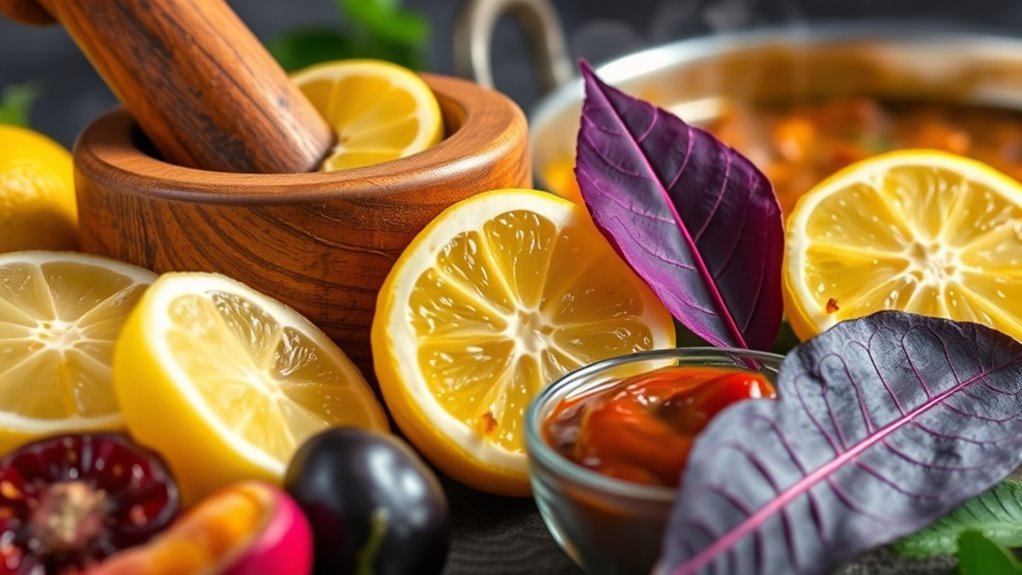
Adjusting acid levels in your cooking is essential for achieving the perfect flavor balance, especially since too much or too little can considerably alter the dish’s taste. Proper acidity balancing enhances flavors and can even influence fermentation benefits, like developing depth in fermented condiments. To fix acidity issues:
Balancing acidity is key to perfect flavor and fermentation depth in your dishes.
- Taste your dish before adjusting—this helps determine if it’s too tangy or flat.
- Add small amounts of acid (lemon juice or tamarind) gradually, stirring well.
- Balance excess acidity with a pinch of sugar or honey, which can mellow sharpness.
- If the dish is too bland due to low acidity, incorporate more lemon, kokum, or tamarind.
Frequently Asked Questions
How Does Acid Influence the Color of Indian Dishes?
You’ll notice that adding acid to Indian dishes enhances their color and boosts visual appeal. Acid reacts with natural pigments like chlorophyll and carotenoids, intensifying reds, greens, and yellows. This color enhancement makes dishes more vibrant and appetizing. By controlling the amount of lemon, tamarind, or kokum, you can achieve the perfect hue, ensuring your dish looks as delicious as it tastes.
Can Acid Ingredients Be Substituted in Traditional Recipes?
Did you know that swapping acid ingredients can open up new flavor profiles? You can easily replace lemon with vinegar, tamarind with dried mango powder, or kokum with pomegranate seeds. These ingredient substitutions let you explore alternative flavor profiles while maintaining the dish’s balance. Just remember, the acidity level varies, so adjust quantities to avoid overpowering your recipe. Experimenting keeps Indian cooking exciting and tailored to your taste!
What Are Common Signs of Too Much or Too Little Acid?
You’ll notice signs of too much acid through a pH imbalance, causing your dish to taste overly tangy or sour, while too little acid leaves it flat and dull. In your body, excess acid may lead to digestive symptoms like heartburn or indigestion, whereas too little can cause bloating. Adjust the acid carefully, tasting as you go, to guarantee your dish remains balanced and enjoyable.
How Does Acid Affect the Shelf Life of Indian Condiments?
Acid plays a vital role in Indian condiments by slowing down the fermentation rate and enhancing flavor preservation. When you add the right amount of acid, it creates an inhospitable environment for bacteria, extending shelf life. Too much acid can overpower flavors, while too little may shorten shelf life. By balancing acidity, you guarantee your condiments stay fresh longer and retain their vibrant taste.
Are There Health Benefits Linked to Using These Acidic Ingredients?
Using acidic ingredients like lemon, tamarind, and kokum in your cooking offers health benefits, including improved nutrient absorption. These acids help your body better absorb vitamins and minerals from foods, boosting immunity and overall health. Additionally, they have antioxidant properties that may reduce inflammation and support digestion. Incorporating these ingredients regularly can enhance your diet’s nutritional quality while adding vibrant flavors to your meals.
Conclusion
So, next time you think acid is just a splash of lemon or tamarind, remember it’s actually the secret superhero of Indian cuisine—tenderizing, balancing, and adding depth. Ironically, it’s often the smallest ingredient that makes the biggest impact. So go ahead, embrace the tang, and marvel at how a simple squeeze can transform your dish from dull to divine. After all, who knew that a little acid could be the real flavor magician?