
TL;DR

Get kitchen staples and gadgets delivered free with Prime
- Fast, free delivery on millions of items
- Prime Video, Amazon Music and more included
- Member-only deals all year
A Good Housekeeping report outlines a dietitian’s approach to making sandwiches with protein-rich fillings, vegetables and higher-fiber bread. The advice includes chicken or tuna salad made with Greek yogurt, eggs, cheese, chickpeas and optional soups on the side; the report does not give nutrient totals for specific combinations.
Good Housekeeping has published a dietitian’s guide to making sandwiches with more protein, recommending protein-rich fillings alongside vegetables and higher-fiber bread. The advice offers a practical alternative to relying only on shakes or bars, though the report does not provide protein counts for its suggested combinations.
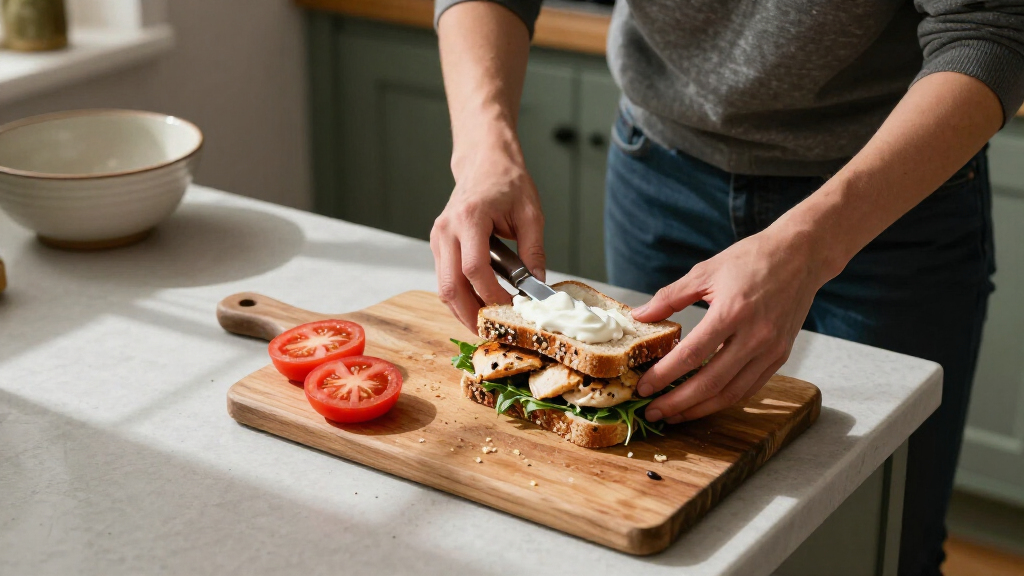
The dietitian’s starting point is a filling such as chicken salad or tuna salad. In the report, she says she often makes these with Greek yogurt or cottage cheese instead of mayonnaise and sometimes mixes in chopped or grated hard-boiled eggs to add more protein. These are recipe suggestions, not measured nutrition results: the article does not specify portions or calculate how much protein each version contains.
She then adds ingredients for flavor and variety, including avocado, cucumber, tomato and leafy greens. Sprouted-grain bread is offered as one option for additional protein, while a high-protein wrap, such as a cottage-cheese or egg wrap, is another. Cheese can add protein and flavor, and the report suggests lentil soup as a possible side when someone wants to add more protein to the meal.
The options are not limited to poultry. The report names tuna, eggs and leftover steak as possible fillings, as well as a plant-based smashed-chickpea salad. Its suggested version combines chickpeas with lemon juice, seasoning and plain Greek yogurt, plus dill, celery, shallots and a little Dijon mustard. The dietitian says vegan mayonnaise can be used instead of yogurt; hummus or avocado spread can also go on the bread, with bean soup as a possible side.
A Familiar Lunch, With More Balance
The guidance matters because it treats the sandwich as a flexible meal rather than a food that needs specialized products or a complicated recipe to fit into a protein-conscious lunch. Many of the suggestions use familiar ingredients, including leftovers, eggs, beans and vegetables. That can give readers several ways to assemble a filling based on what they already have, while mixing protein sources with produce and fiber.
The dietitian also cautions against making protein the only measure of a meal. She describes aiming for fiber, produce, healthy fats and complex carbohydrates alongside protein, with higher-fiber bread or wraps and vegetables as straightforward additions. The report presents this as her approach to making lunch satisfying and nourishing; it does not establish that any single sandwich combination will meet an individual’s dietary needs.
As an affiliate, we earn on qualifying purchases.
How the Sandwich Formula Works
The report opens by noting that sandwiches contribute to Americans’ protein intake, citing CDC data. It does not identify the specific CDC data release, provide a date or include figures in the supplied material, so the scale of that contribution cannot be assessed from the article excerpt alone.
The dietitian’s method has three broad parts: choose a protein-rich filling, add vegetables or other ingredients for flavor and nutrition, and select a bread or wrap that suits the meal. For a plant-based variation, chickpeas contribute both protein and fiber according to the report, while the suggested seasonings and vegetables add texture and flavor. The article frames these as adaptable ideas, not a required formula.
““When I’m making a sandwich specifically because I want more protein, I usually start with a protein-rich filling.””
— The dietitian quoted in the Good Housekeeping report
As an affiliate, we earn on qualifying purchases.
Protein Counts and Data Details
The supplied report does not give protein amounts, serving sizes or nutrition comparisons for the sandwich combinations. The amount of protein will depend on the ingredients and portions used, and the article does not quantify how much different breads, wraps, fillings or sides contribute. It also refers to CDC data without naming the release or including the underlying figures, leaving the timing and comparison basis unclear.
The suggestions are general meal ideas, not individualized nutrition advice. The report does not address specific dietary restrictions, medical conditions or the nutritional needs of particular readers. It also does not provide food-storage or preparation instructions for its fillings.
As an affiliate, we earn on qualifying purchases.
Ways to Adapt the Lunch
The report offers no scheduled follow-up or additional data release. Readers can apply the suggestions by choosing a filling, adding vegetables and selecting bread or a wrap, then adjusting ingredients to their preferences. For readers who want to compare options precisely, the next step would be checking product labels or using a nutrition resource with the actual ingredients and serving sizes; the report itself does not supply those calculations.
plant-based chickpea salad ingredients
As an affiliate, we earn on qualifying purchases.
As an affiliate, we earn on qualifying purchases.
Key Questions
What is the dietitian’s basic method for a high-protein sandwich?
Start with a protein-rich filling, then add vegetables and choose bread or a wrap. The report gives chicken or tuna salad, eggs, cheese and chickpeas as examples, but does not set a required recipe.
How does the report suggest making chicken or tuna salad?
The dietitian says she often uses Greek yogurt or cottage cheese instead of mayonnaise and may add chopped or grated hard-boiled eggs. No serving sizes or protein totals are provided.
What is a plant-based sandwich option in the report?
The report suggests smashed chickpeas mixed with lemon juice, salt, pepper, dill, celery, shallots and a little Dijon mustard. Plain Greek yogurt is one binder, while vegan mayonnaise is offered as an alternative.
Does the report say how much protein these sandwiches contain?
No. It provides ingredient ideas but does not list protein counts or portion sizes, so the totals will depend on the amounts and products used.
Source: rss
Columbus Day / Indigenous Peoples' Day Picks
long weekend sales
As an affiliate, we earn on qualifying purchases.