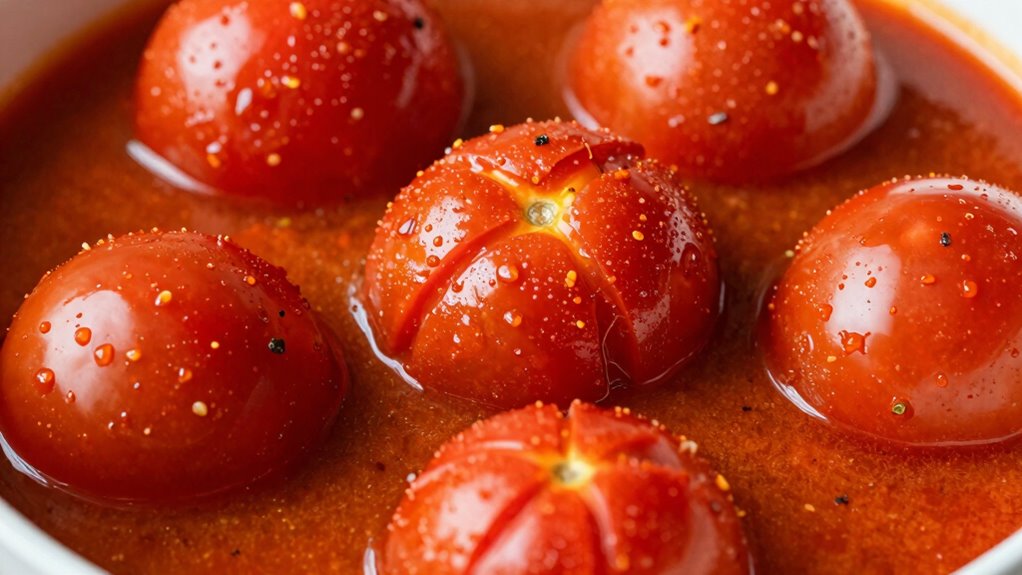

If your tomato gravy turns sour, it’s often due to using overly tart or unripe tomatoes, or adding them too early without cooking them down properly. Canned or preserved tomatoes can also add excess acidity if not balanced with sugar or baking soda. Poor cooking techniques, like not simmering long enough or skipping steps like roasting or sautéing, can leave the gravy too sharp. Keep exploring to discover how adjusting ingredients and methods can perfect your curry’s flavor.
Key Takeaways
- Fresh tomatoes, especially during peak season, contain higher acidity that can make gravy sour if not cooked properly.
- Using canned or roasted tomatoes can help reduce sourness due to their concentrated, sweeter flavor profile.
- Overcooking or simmering tomatoes excessively can intensify acidity, leading to a tangier, sourer gravy.
- Adding a pinch of sugar, baking soda, or dairy balances the natural acidity, preventing sourness in the curry.
- Proper sautéing and seasoning adjustments during cooking help control acidity and achieve a balanced, flavorful gravy.

Tomatoes in gravy is a comforting and versatile dish that has been a staple in many households for generations. It’s a dish that adapts well to different seasons, allowing you to enjoy fresh, vibrant flavors when tomatoes are in season and more preserved, concentrated tastes during the off-peak months. When working with seasonal variations, you might notice that fresh summer tomatoes bring a natural sweetness to your gravy, while canned or roasted tomatoes in winter lend a deeper, richer flavor. Adjusting your ingredients based on the time of year helps you achieve the best balance of acidity and sweetness, which directly impacts the overall flavor of your dish.
Your choice of cooking techniques plays a vital role in how your tomatoes in gravy turn out, especially when it comes to controlling acidity. For example, simmering your tomatoes slowly over low heat allows flavors to meld and develop complexity. It also gives you better control over the acidity, which is key because overly acidic tomatoes can make your gravy sour. To counteract this, some cooks add a pinch of sugar or a splash of baking soda during simmering to neutralize excess acidity. Alternatively, roasting tomatoes beforehand can intensify their sweetness and reduce their sour notes, leading to a more balanced gravy. Using different techniques like sautéing onions and garlic before adding tomatoes can also deepen the flavor profile and help mellow out any sharp acidity initially present.
If you’re experimenting with seasonal variations, you may find that fresh tomatoes require a different approach than canned ones. Fresh tomatoes, especially during peak season, can be quite juicy and tart, so you might want to cook them down longer to concentrate flavors and reduce excess moisture. Canned tomatoes often come with added salt and acidity, so balancing these with sweeteners or dairy can help create a smoother, more harmonious gravy. Remember, the key is to taste as you cook and adjust the seasonings accordingly. A little patience with your cooking techniques can transform a simple tomato gravy from sour to perfectly balanced, highlighting the natural sweetness and depth of flavor that different seasons and methods bring.
Additionally, understanding seasonal variations and how they influence acidity will help you craft a gravy that’s flavorful without turning sour. It’s all about balancing those natural tangs with the right adjustments, whether that’s through ingredient choice or cooking style. Paying attention to seasonal produce can make a significant difference in your cooking results, ensuring that you use the best ingredients for each time of year. When you pay attention to these details, you’ll consistently produce a delicious, well-rounded tomato gravy that complements a variety of dishes and satisfies your palate.
stainless steel saucepan for tomato sauce
As an affiliate, we earn on qualifying purchases.
As an affiliate, we earn on qualifying purchases.
Frequently Asked Questions
Can Adding Sugar Reduce the Sourness Caused by Tomatoes in Curry?
Yes, adding sugar can reduce the acidity from tomatoes in your curry. Sugar helps balance flavors by counteracting the sourness caused by the acidity in tomatoes. When you notice your curry turning sour, try stirring in a small amount of sugar gradually. This simple trick enhances the overall flavor, making your curry smoother and more harmonious without overpowering the other spices.
Which Type of Tomatoes Are Best for Making Gravy?
You should use plum or Roma tomatoes for making gravy because their dense flesh and fewer seeds help achieve a smoother gravy consistency. These tomato varieties are less watery and more flavorful, which prevents your curry from becoming too runny or sour. Their natural sweetness balances acidity, giving you a rich, well-textured gravy. Stick to these types, and you’ll enjoy a flavorful, perfectly textured curry every time.
How Does the Cooking Time Affect the Acidity of Tomatoes?
You’ll find that longer cooking duration considerably reduces the acidity levels of tomatoes, often by up to 50% over an hour. As you cook, the heat breaks down organic acids, mellowing their sharpness. So, if you want a milder, less sour curry, simmer your tomatoes longer. Conversely, shorter cooking times preserve their natural acidity, which can make your dish taste tangier and more vibrant.
Are There Specific Spices That Can Balance Tomato Sourness?
Yes, you can use specific spice combinations to balance tomato sourness. Adding a pinch of sugar or honey works well, but spices like cumin, cinnamon, or a dash of garam masala also help mellow acidity. These flavorings create a more balanced taste profile, reducing sourness. Incorporate them during cooking to achieve a harmonious flavor balancing that complements your curry’s overall richness and depth.
Does the Ripeness of Tomatoes Influence the Gravy’s Flavor?
Yes, tomato ripeness substantially impacts the gravy’s flavor. Ripe tomatoes provide a sweeter, richer taste, balancing acidity and reducing sourness. Less ripe tomatoes tend to be more tart, which can make your curry taste sourer. When you choose tomatoes at the right ripeness—deep red and slightly soft—you enhance the gravy’s overall flavor, making it smoother and more harmonious, and preventing unwanted sour notes.
canning and preserving tomatoes kit
As an affiliate, we earn on qualifying purchases.
As an affiliate, we earn on qualifying purchases.
Conclusion
So, next time your curry turns sour unexpectedly, remember it might be the tomatoes. Yes, they can sometimes release acids that alter the flavor, but don’t blame the ingredient alone. Proper cooking methods, like adding tomatoes at the right stage and balancing with sugar or spices, can prevent this. Don’t shy away from using fresh tomatoes—you’ll enjoy richer flavor and avoid unpleasant sourness. With a little care, your curry will always stay delicious and balanced.
As an affiliate, we earn on qualifying purchases.
As an affiliate, we earn on qualifying purchases.