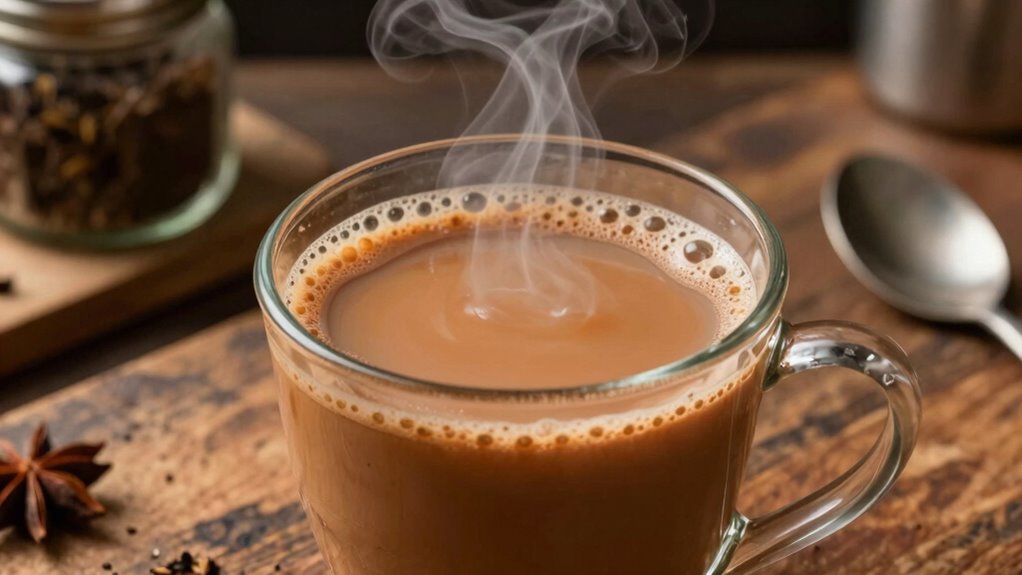

If your chai tastes flat at home, the main issues are often ingredient quality and water handling. Using stale or low-quality tea leaves, and rushing the brewing process, can strip away flavor and aroma. Hard or poor-quality water also dulls the depth of spices and tea. To get rich, fragrant chai, you need fresh ingredients, balanced mineral water, and proper brewing time. Keep these factors in mind, and you’ll uncover more ways to boost your chai’s richness.

Get kitchen staples and gadgets delivered free — and shop member deals
- Fast, free delivery on millions of items
- Access to Prime Big Deal Days deals on October 6–7
- Prime Video, Amazon Music and more included
Key Takeaways
- Using stale or low-quality tea leaves reduces flavor richness and aromatic complexity.
- Hard or unfiltered water can mask or diminish the chai’s full flavor profile.
- Insufficient brewing time prevents full extraction of spices and tea oils.
- Overly soft or mineral-deficient water hampers the development of depth and aroma.
- Rushing the brewing process or using low-quality ingredients results in a flat, dull taste.
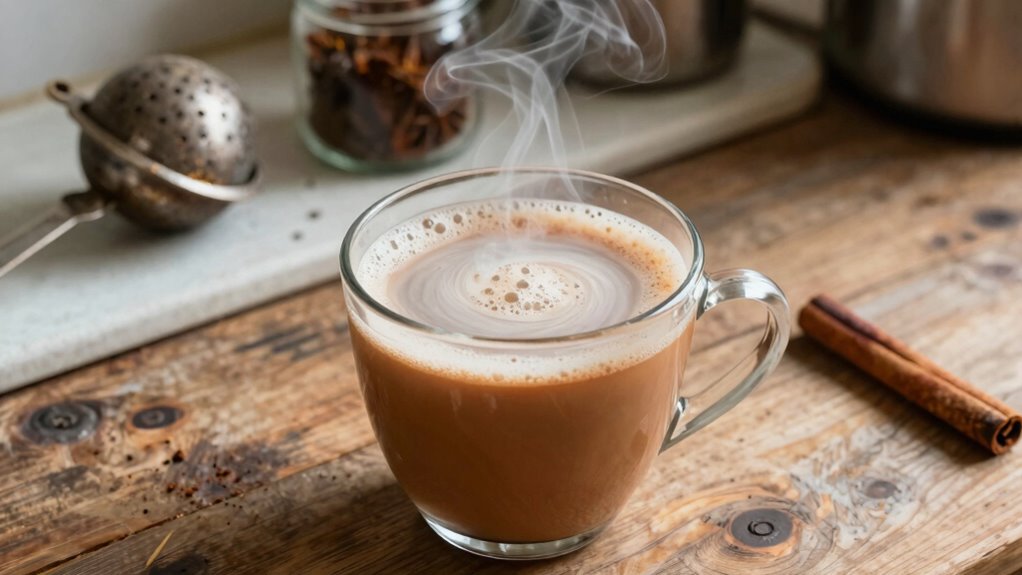
First, the quality of your tea leaves plays a significant role. Cheap or old tea leaves simply won’t deliver the same depth of flavor as fresh, high-quality ones. When you use stale or mass-produced tea, the subtle nuances and richness fade away, leaving your chai feeling dull. To get that robust, full-bodied flavor, invest in whole leaf black tea, preferably from a reputable source. Whole leaves retain more oils and aroma compounds, which release slowly during brewing, resulting in a more flavorful cup. When choosing your tea, look for bright, fragrant leaves that haven’t been crushed or broken, as these tend to preserve freshness longer.
Second, water mineral content can make or break your chai’s flavor. Water that’s too hard—rich in minerals like calcium and magnesium—can overshadow the delicate flavors of the tea and spices. Conversely, overly soft water might lack the minerals needed to extract full flavor from your ingredients. Ideally, use filtered water with balanced mineral levels. If your tap water is very hard, consider using a filtration pitcher or bottled water to improve taste and extraction. Proper mineral balance allows the tea leaves and spices to fully release their flavors, creating that rich, velvety body you’re craving. Additionally, understanding water mineral content can help you choose the best water for brewing. Ensuring your water has the right mineral balance can significantly enhance the extraction process and overall flavor profile. Using the correct water composition can also prevent unwanted bitterness or flatness in your chai. Maintaining the proper water quality is essential for achieving the desired depth of flavor in your chai. Moreover, monitoring and adjusting your water’s mineral levels can make a noticeable difference in the final taste.
Additionally, how you brew your chai impacts the extraction of flavor. Simmering your spices gently over a longer period allows their essential oils and aromatic compounds to infuse thoroughly. Combine high-quality tea leaves with fresh spices and filtered water, and give it enough time to develop. Rushing the process or using low-quality ingredients means missing out on the complex layers of flavor that make café-style chai so satisfying.
high-quality whole leaf black tea for chai
As an affiliate, we earn on qualifying purchases.
As an affiliate, we earn on qualifying purchases.
Frequently Asked Questions
Can the Type of Tea Leaves Affect Chai’s Flavor?
Yes, the type of tea leaves affects chai’s flavor. Freshness matters—stale leaves can make your chai taste flat. Additionally, brewing temperature is essential; too hot or too cold can dull the flavors. Using high-quality, fresh tea leaves and ensuring you brew at the right temperature enhances the richness and aroma of your chai, preventing it from tasting dull or flat.
Does Water Quality Influence Chai Taste?
Water quality is like the foundation of a house—if it’s flawed, it affects everything else. Poor water mineralization and an unbalanced pH level can dull chai’s vibrant flavors, making it taste flat. Using water with the right mineral content and a balanced pH guarantees your chai brews with richness and depth. So, always check your water quality, because it directly influences how your chai turns out.
How Does Chai Brewing Time Impact Flavor?
Brewing time considerably impacts chai flavor, especially through steeping duration and temperature. If you steep too briefly, the flavors won’t fully develop, leaving your chai flat. Conversely, over-steeping can make it bitter. Aim for a moderate brewing temperature and a steeping duration of about 5-7 minutes, allowing the spices and tea to infuse properly. This balance ensures a rich, well-rounded flavor without bitterness.
Are Specific Spices More Likely to Cause Flatness?
Yes, certain spices can cause flatness if they’re old or stale, affecting spice freshness. Overusing spices, especially potent ones like cardamom or cloves, can overpower the flavor, making your chai taste dull. To avoid this, keep spice quantities balanced and make sure your spices are fresh. Using fresh spices and measuring accurately helps maintain vibrant flavors, preventing your chai from tasting flat and ensuring a rich, aromatic experience.
Can the Container Used Affect Chai’s Taste?
Yes, the container you use can affect chai’s taste. For example, storing chai spices in a metal container might cause a metallic taste over time, especially if exposed to moisture or air. Container material and storage conditions are essential; glass or airtight ceramic jars preserve flavor better. Poor storage can lead to flavor loss or flatness, so choose your containers wisely and keep them in a cool, dry place to maintain chai’s rich aroma and taste.
filtered water pitcher for tea brewing
As an affiliate, we earn on qualifying purchases.
As an affiliate, we earn on qualifying purchases.
Conclusion
So, next time your chai tastes flat at home, remember it’s not just about the ingredients, but about how you brew it. Think of your chai as a melody—if even one note is off, the whole song feels flat. With a little patience and attention, you can reveal its true richness. Don’t settle for a dull tune; make your chai singing with vibrant, full-bodied flavor that warms your soul like a cozy hug.
As an affiliate, we earn on qualifying purchases.
As an affiliate, we earn on qualifying purchases.
Halloween Picks
halloween
As an affiliate, we earn on qualifying purchases.