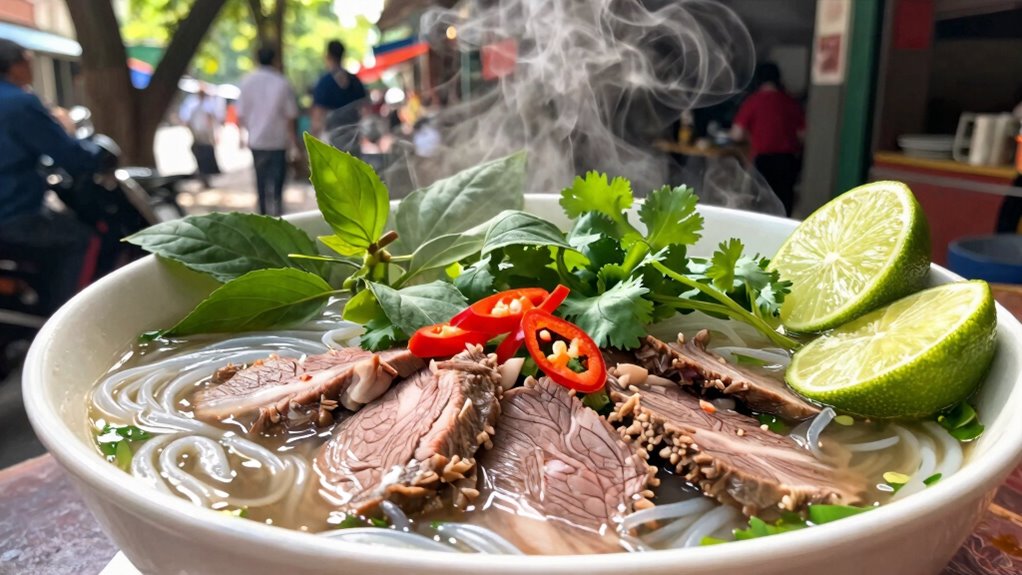

Vietnamese food feels fresh and deep because it combines vibrant, seasonal ingredients like herbs, lime, and crisp vegetables that invigorate your palate. At the same time, it offers complex flavors from fermented, sweet, and spicy elements layered together. Cultural influences from France and China add unique depth, while regional differences create diverse taste profiles. If you keep exploring, you’ll uncover how this balance makes Vietnamese cuisine truly lively and flavorful.
Key Takeaways
- The use of fresh, seasonal ingredients and herbs creates a vibrant, crisp flavor that feels invigorating and lively.
- Complex layers of fermented, sweet, spicy, and tangy flavors add depth without sacrificing freshness.
- Cultural influences and regional diversity blend traditional and innovative elements, enriching the depth of flavor.
- Fusion of French and indigenous ingredients introduces surprising contrasts that enhance both freshness and complexity.
- Light, delicate northern dishes contrast with robust southern flavors, balancing freshness with deep, layered taste profiles.

Vietnamese food is a vibrant celebration of freshness and depth, blending bright herbs, bold flavors, and complex textures that awaken your senses. This culinary experience isn’t just about taste; it’s about a harmony of elements that make each dish feel both lively and profound. One reason it feels so lively is the emphasis on ingredients that are often raw, crisp, and seasonal. You’ll notice the generous use of herbs like mint, cilantro, and Thai basil, which add a fragrant, cooling touch that brightens every bite. The lightness of these herbs, combined with the acidity of lime and the crunch of fresh vegetables, creates a vibrant, invigorating experience that makes you feel energized with each mouthful.
At the same time, Vietnamese food offers a deep, complex palate that stems from centuries of cultural influences. The use of fermented ingredients, such as fish sauce (nuoc mam), adds a savory umami depth that anchors the dishes in tradition. These flavors are layered, often with subtle sweetness from sugar, heat from chilies, and tang from vinegar, creating a balanced symphony that invites you to explore every nuance. The regional diversity further enriches this depth—northern dishes tend to be lighter and more delicate, while southern recipes often feature sweeter, more robust flavors. This variety reflects Vietnam’s history of cultural exchange, from Chinese and French influences to indigenous culinary practices, blending together to produce a cuisine that feels both rooted and innovative. Recognizing how these influences shape the cuisine can deepen your appreciation for its culinary diversity.
Your experience of Vietnamese food is heightened by the concept of fusion flavors, where different culinary traditions merge seamlessly. For example, French colonial influence introduced ingredients like pâté and baguettes, which have been adapted into Vietnamese staples like Bánh Mì. This fusion creates a unique depth, combining familiar flavors with local ingredients. The result is dishes that are both comforting and surprising—crunchy yet tender, spicy yet cool, familiar yet exotic. These elements come together in a way that keeps your palate engaged, constantly discovering new layers of flavor. Additionally, the use of regional diversity enhances the depth and variety of flavors, making each region’s cuisine distinct yet interconnected. Appreciating the culinary influences helps deepen the overall understanding of how Vietnam’s diverse history shapes its cuisine, enriching its complexity.
As an affiliate, we earn on qualifying purchases.
Frequently Asked Questions
How Do Vietnamese Spices Contribute to the Flavor Depth?
Vietnamese spices contribute to flavor depth through skillful spice layering, blending herbs like cilantro, mint, and basil with aromatic ingredients such as star anise and cinnamon. This creates flavor complexity, where each bite reveals multiple layers of taste. You’ll notice how the spices harmonize, balancing freshness with richness, making the dishes both vibrant and profound. The thoughtful combination of spices guarantees every dish feels fresh yet deeply satisfying.
Are There Regional Variations in Vietnamese Food Freshness?
Did you know that northern Vietnamese cuisine emphasizes fresh herbs and lighter flavors, while southern dishes often feature richer, sweeter profiles? Regional ingredients like mint and cilantro dominate the north, reflecting its cooler climate, whereas the south uses tropical fruits and seafood. These culinary traditions create notable variations in perceived freshness, making Vietnamese food uniquely dynamic across regions. So, yes, regional variations considerably influence how fresh each dish feels.
What Traditional Techniques Enhance Freshness in Vietnamese Cooking?
You can enhance freshness in Vietnamese cooking through traditional techniques like careful ingredient sourcing, ensuring you select vibrant herbs, vegetables, and seafood. Pay attention to cooking presentation by keeping dishes light and colorful, which highlights fresh ingredients. Techniques like quick blanching or pickling preserve flavor and texture, while minimal seasoning allows the natural freshness to shine. These methods make your dishes taste lively, authentic, and deeply satisfying.
How Does Vietnamese Cuisine Balance Freshness With Umami Flavors?
You experience Vietnamese cuisine’s balance by savoring its fresh herbs and crisp vegetables alongside rich, umami-packed broths. Fermentation techniques, like fish sauce and fermented shrimp, deepen flavors without overpowering the freshness. Culinary presentation highlights this contrast—vivid greens next to dark, savory sauces—creating a sensory harmony. This interplay keeps your palate engaged, feeling both invigorated and satisfyingly grounded with every bite.
What Role Do Herbs Play in Creating the Depth of Flavors?
Herbs play a vital role in creating depth of flavors through thoughtful herb pairing, blending aromatic herbs like cilantro, mint, and Thai basil to add complexity. They also help preserve freshness, ensuring each bite feels vibrant and lively. When you incorporate herbs skillfully, you enhance both the freshness and the rich, layered taste, making Vietnamese dishes resonate with a fresh yet deeply satisfying flavor profile that keeps your palate engaged.
As an affiliate, we earn on qualifying purchases.
Conclusion
You might think Vietnamese food simply balances fresh herbs with bold flavors, but it’s more than that — it’s a culinary dance between tradition and innovation. The theory suggests that this harmony comes from centuries of blending indigenous ingredients with external influences, creating dishes that feel both invigorating and profound. So, next time you savor pho or banh mi, remember: you’re tasting history, culture, and a mastery of balancing freshness with depth, all in one bite.
As an affiliate, we earn on qualifying purchases.
As an affiliate, we earn on qualifying purchases.