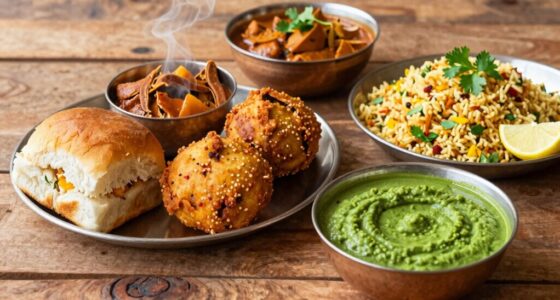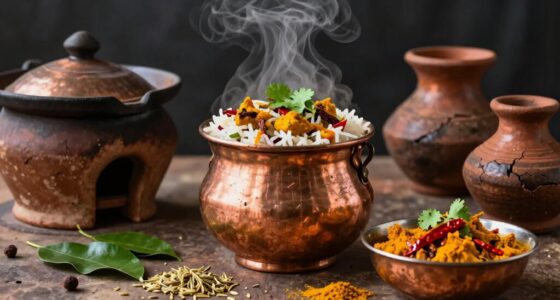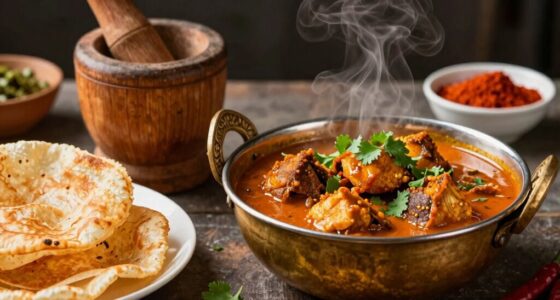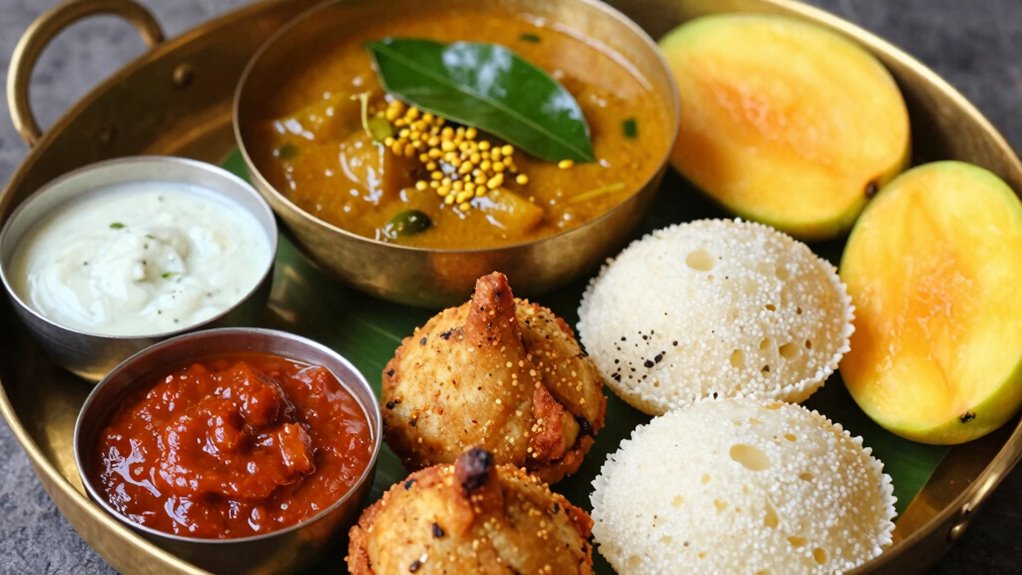

You’ll notice that South Indian cooking layers flavors through regional spice profiles, like coriander and cumin in Tamil Nadu or coconut and mustard seeds in Kerala. Techniques like tempering spices in hot oil and grinding fresh spices deepen their aroma, while fermentation adds tang and lightness. Coconut balances spicy heat with creaminess, creating a harmonious flavor. If you want to explore how these elements come together for authentic taste, there’s much more to discover below.
Key Takeaways
- Regional spice profiles, such as coriander and cumin in Tamil Nadu and coconut in Kerala, define distinct flavor palettes.
- Tempering spices in hot oil releases essential aromas, forming a foundational flavor layer.
- Freshly ground spices and slow-roasting techniques intensify and deepen authentic flavors.
- Fermentation of batter and ingredients adds tanginess, enhances texture, and boosts nutritional value.
- Thoughtful layering of spices, fermentation, and ingredients creates complex, balanced, and vibrant flavors.
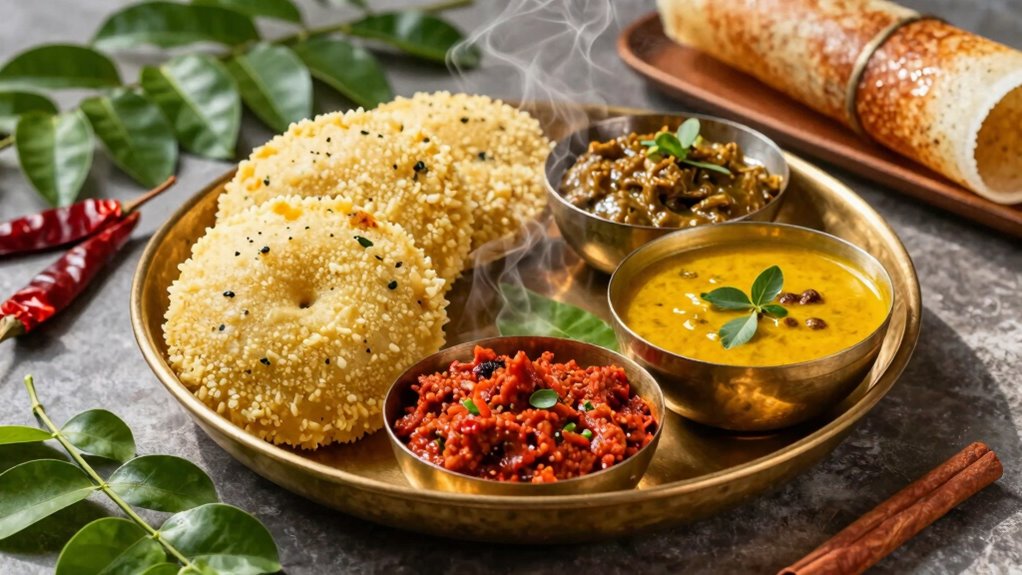
Have you ever wondered what makes South Indian dishes so uniquely flavorful? The answer lies in a blend of regional spice variations and traditional cooking techniques that have been passed down through generations. South Indian cuisine is renowned for its vibrant flavors, which are achieved not just through ingredients but through the thoughtful way those ingredients are combined and prepared. Each region within South India has its own distinct spice profile, reflecting local agriculture, climate, and cultural influences. For example, Tamil Nadu favors more intense, aromatic spices like coriander, cumin, and black pepper, while Kerala leans toward the use of coconut, mustard seeds, and curry leaves. These regional spice variations create a diverse palette of flavors that define the cuisine’s character.
South Indian flavors are shaped by regional spices and traditional cooking techniques passed down through generations.
To truly understand South Indian flavor, you need to appreciate the traditional cooking techniques that bring these spices to life. Cooking methods such as tempering, where spices are briefly fried in hot oil to release their essential oils and aroma, are fundamental. This process, called *tadka* or *popu*, is used at the start of many dishes, infusing the entire meal with deep, layered flavors. Grinding spices fresh, often using a stone mortar and pestle, enhances their potency and aroma, making the dishes more vibrant and fragrant. Slow roasting spices before grinding or adding them to dishes can also deepen their flavor, creating a rich, complex taste. Additionally, understanding the regional spice profiles helps cooks tailor their dishes to achieve authentic flavors. Region-specific spice blends are an important aspect of this regional diversity, enabling cooks to craft dishes true to their local heritage. Exploring these regional spice variations further can inspire more authentic and flavorful cooking experiences.
Another essential technique involves preparing rice and lentils in specific ways. For example, in dishes like idli or dosa, fermented batter is used, which adds a tangy flavor and light, fluffy texture. Fermentation itself is a traditional technique that not only influences taste but also enhances nutritional value. Coconut, a staple in many South Indian recipes, is grated and used directly or as coconut milk, adding a creamy sweetness that balances the spiciness of other ingredients. The careful layering of flavors through these techniques is what makes South Indian dishes so memorable.

TIMBER TASTE® World Spice Sampler Set – 5 Exotic Blends Chimichurri Chakalaka Paella Tandoori Tzatziki | Mens Gifts Spice Gift Set Foodie Cooking Kit | Gourmet Basket – Birthday Gift for Him
- Includes 5 Global Spice Blends: Exotic blends from five continents
- Enhances Any Meal: Perfect for global flavor enthusiasts
- Ideal Gift for Food Lovers: Great for birthdays and special occasions
As an affiliate, we earn on qualifying purchases.
As an affiliate, we earn on qualifying purchases.
Frequently Asked Questions
How Do Regional Differences Affect South Indian Flavor Profiles?
Regional differences shape South Indian flavor profiles through diverse spice blends and culinary heritage. You’ll notice that coastal areas favor coconut and seafood, while inland regions emphasize rice and lentils. These variations influence the use of spices like coriander, cumin, and mustard seeds. By exploring regional spice blends, you experience the rich culinary heritage that makes South Indian cuisine unique, vibrant, and deeply rooted in local ingredients and traditions.
What Role Does Fermentation Play in South Indian Dishes?
Fermentation techniques in South Indian cooking are like magic spells, transforming simple ingredients into culinary masterpieces. They develop a sour flavor so profound, it awakens your taste buds to new dimensions. You’re likely to find this magic in dishes like idli, dosa, and appam, where fermentation not only enhances flavor but also boosts digestibility. It’s the secret behind the irresistible tang that defines South Indian cuisine’s unique charm.
How Are Spices Balanced for Different Types of South Indian Cuisine?
You balance spices in South Indian cuisine through thoughtful spice blending and aromatic layering. You start by selecting key spices like cumin, coriander, and turmeric, then blend them to create a harmonious flavor profile. You layer aromas by toasting spices, adding fresh herbs, and using ingredients like curry leaves and mustard seeds. This careful equilibrium guarantees each dish is vibrant, flavorful, and true to its regional style.
What Traditional Cooking Techniques Influence Flavor Development?
Traditional techniques deeply drive flavor development. You’ll notice herbal infusions, where herbs are gently simmered to release aromatic oils, and coconut gratings are toasted to bring out nutty nuances. These methods, combined with tempering spices in hot oil and slow simmering curries, layer flavors beautifully. You actively build taste profiles, ensuring each dish boasts a vibrant, authentic South Indian flavor, rich in aroma and depth.
How Do Seasonal Ingredients Impact Flavor Choices?
Seasonal ingredients greatly influence your flavor choices by inspiring herbal infusions and citrus accents that match the time of year. When fresh herbs are in season, you incorporate them into dishes, enhancing aroma and taste. Citrus accents brighten flavors during specific seasons, adding freshness and balance. You naturally adapt your cooking to these ingredients, creating vibrant, seasonally appropriate dishes that highlight the unique flavors each time of year.
As an affiliate, we earn on qualifying purchases.
Conclusion
You now see how South Indian cooking blends spices, balances flavors, and celebrates tradition. You understand how each ingredient plays a role, how each step enhances the final dish, and how every bite tells a story. Embrace the harmony of flavors, the dance of textures, and the warmth of culture. Let this flavor logic inspire you to cook with passion, to savor with joy, and to share the rich taste of South India with those around you.
Stone mortar and pestle for spices
As an affiliate, we earn on qualifying purchases.
As an affiliate, we earn on qualifying purchases.
Fermentation starter for idli and dosa
As an affiliate, we earn on qualifying purchases.
As an affiliate, we earn on qualifying purchases.