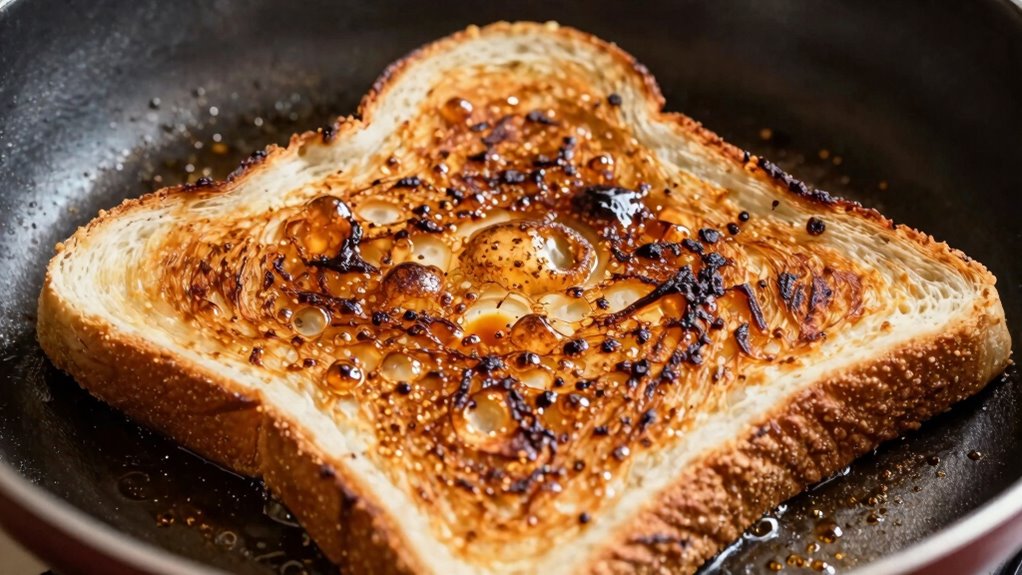
The surface area of your pan affects how quickly your food browns because a larger area exposes more surface to heat, speeding up the Maillard reaction and ensuring even heat distribution. It also promotes faster moisture evaporation, which is essential for achieving a crisp, browned surface. If your pan is too small or food is crowded, browning slows down due to uneven heat and trapped moisture. To learn more about optimizing browning, keep exploring how pan choices can influence your cooking results.
Key Takeaways
- Larger surface areas expose more food to heat, accelerating the Maillard reaction for faster browning.
- Increased surface area promotes rapid moisture evaporation, reducing moisture barriers that hinder browning.
- Wide, shallow pans enhance heat contact and distribution, leading to more even and quicker browning.
- Proper food arrangement with ample surface exposure improves heat circulation and browning speed.
- Smaller surface areas concentrate heat, causing uneven cooking and slower browning.
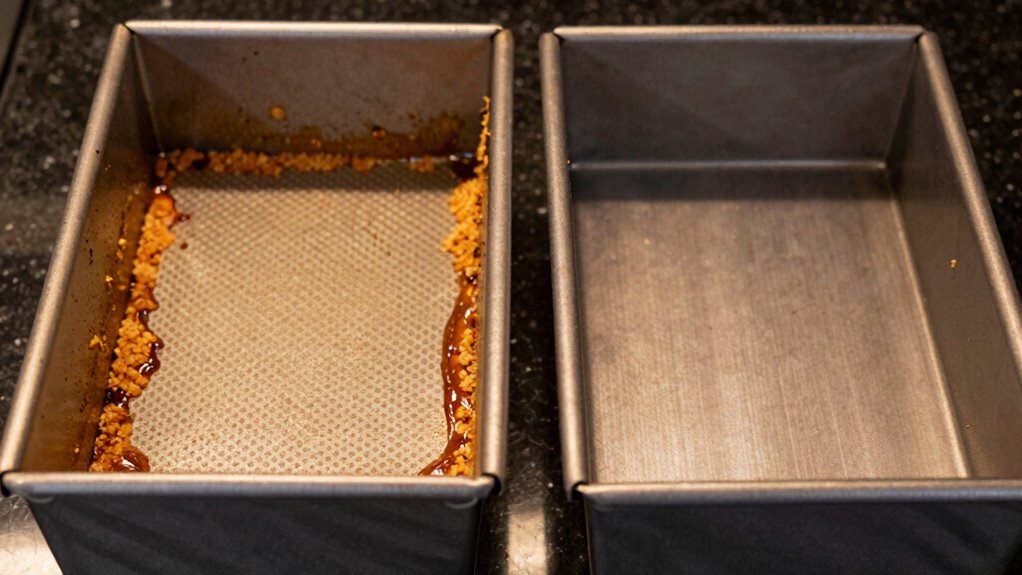
When you cook food in a pan, the surface area exposed to heat plays a crucial role in how quickly it browns. A larger surface area means more contact with the heat source, which accelerates the browning process. This isn’t just about aesthetics—browning results from chemical reactions like the Maillard reaction, which require high heat and dry conditions. As you increase the surface area, heat distribution becomes more efficient across the food’s surface, ensuring consistent browning without hot spots. Conversely, a smaller surface area concentrates heat in a limited zone, which can cause uneven cooking and slower browning.
Moisture evaporation is another critical factor influenced by surface area. When you expose more of the food to the pan’s heat, moisture escapes more rapidly from its surface. This rapid moisture loss is essential because water acts as a barrier to browning; it cools the surface and slows the chemical reactions needed for browning to occur. So, a larger surface area helps you achieve a drier surface faster, promoting quicker and more uniform browning. If moisture remains trapped, the food steams rather than sears, delaying the browning process and potentially resulting in soggy or undercooked textures. Additionally, understanding how surface area impacts heat transfer can help you select the right pan for optimal cooking results. Recognizing the importance of heat distribution is essential for achieving the desired texture and flavor in your dishes. Properly managing heat flow within the pan can further enhance your browning outcomes, especially when cooking delicate or small ingredients.
A larger surface area promotes faster moisture evaporation, ensuring quicker, more even browning and better texture.
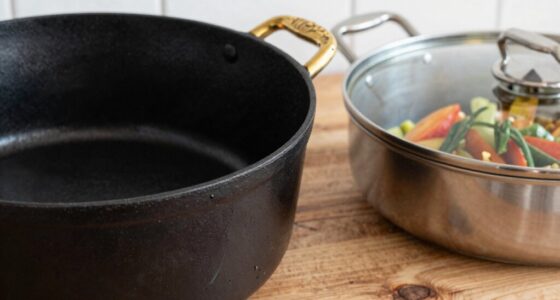
The shape and size of your pan directly impact these factors. A wide, shallow pan provides a greater surface area, exposing more food to heat and facilitating faster moisture evaporation. This setup is ideal for achieving a crispy, browned exterior in less time. On the other hand, a narrow, deep pan limits surface exposure, reducing heat distribution efficiency and slowing moisture evaporation. That means your food might take longer to brown or may not brown evenly. It’s important to recognize that even if you’re cooking the same amount of food, the pan’s surface area can change how quickly and well it browns.
Additionally, the way you arrange your food in the pan influences the process. Crowding the pan reduces the effective surface area exposed, trapping moisture and creating a steamy environment. Spacing out the food allows heat to circulate better, improving heat distribution and moisture evaporation. This way, you can control the browning speed more precisely. Ultimately, understanding how surface area affects heat distribution and moisture evaporation helps you optimize your cooking techniques for better browning, flavor, and texture. Recognizing the effect of surface area can significantly improve your culinary results.

Tramontina Professional 14-Inch Non Stick Extra Large Frying Pan
Extra-Large for Big Batches: Designed for professional and home chefs, this 14-inch fry pan is ideal for cooking…
As an affiliate, we earn on qualifying purchases.
As an affiliate, we earn on qualifying purchases.
Frequently Asked Questions
How Does Pan Material Influence Surface Area Effects?
You’ll notice that pan material impacts surface area effects through its pan coating and surface texture. A smoother surface reduces the contact area, slowing browning, while a textured surface increases surface contact, speeding the process. The material’s heat conduction also influences how heat distributes across the pan, affecting browning speed. So, selecting a pan with the right coating and texture can help you control browning and cooking efficiency effectively.
Does Pan Shape Affect Browning Speed Differently?
Your pan shape definitely affects browning speed, as it influences surface area and heat distribution. A wider, flatter pan increases surface contact, speeding up browning, while a tall, narrow one slows it down. Pan thickness also plays a role in cooking consistency, as thicker pans retain heat better, ensuring even browning. Remember, it’s all about finding the right shape and thickness to get that perfect crust without burning.
How Does Temperature Control Interact With Pan Surface Area?
Temperature control interacts with pan surface area by influencing heat distribution and moisture retention. When you adjust the heat, a larger surface area allows for more even heat distribution, helping foods brown uniformly. It also affects moisture retention; a wider pan can lead to faster moisture loss, speeding browning. Conversely, managing temperature carefully guarantees consistent heat, preventing over-browning or uneven cooking, especially in pans with varied surface areas.
Can Adding Oil Change the Impact of Surface Area on Browning?
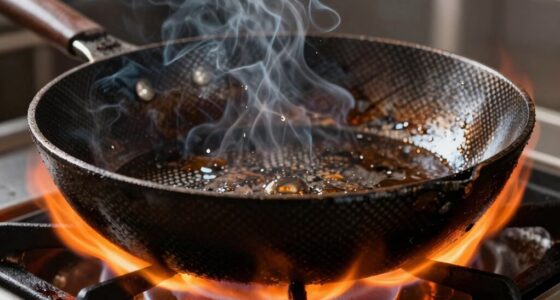
Imagine a sizzling skillet, oil shimmering on its surface—adding oil can amplify the impact of surface area on browning. Oil acts as a conductor, enhancing heat transfer and creating a uniform crust. This surface modification speeds up browning, especially on larger or uneven areas, by promoting consistent contact. So, yes, adding oil not only improves flavor but also markedly influences how quickly and evenly your food browns.
Are There Specific Recipes That Benefit From Surface Area Adjustments?
Yes, certain recipes benefit from surface area adjustments through specific cooking techniques. For example, searing meats or roasting vegetables with larger surface areas promotes better browning by increasing ingredient interactions with heat. Techniques like slicing, flattening, or spreading ingredients out enhance caramelization and flavor development. By manipulating surface area, you optimize browning speed, resulting in richer flavors and improved texture for dishes like crispy roast potatoes or well-seared steaks.

Merten & Storck Pre-Seasoned Carbon Steel 12” Frying Pan Skillet, Use on Induction, Stove and Grill, Durable, Even-Heating, for Searing, Grilling, Oven Use, and Campfire, Indoor/Outdoor
NEW YORK MAGAZINE’S The Strategist: Selected as the top budget-friendly carbon steel option, noted for being “a no-nonsense…
As an affiliate, we earn on qualifying purchases.
As an affiliate, we earn on qualifying purchases.
Conclusion
In the end, understanding how your pan’s surface area influences browning can be like discovering a secret ingredient in your cooking. By paying attention to this subtle detail, you’ll subtly enhance your dishes, making them more inviting and perfectly cooked. So, next time you’re in the kitchen, think of your pan as a gentle guide, quietly helping you create culinary magic. Embrace this little wisdom, and watch your browning game reach enchanting new heights.

CAROTE10 inch Non Stick Black Frying Pan Skillet, PFOA-Free
Eco-friendly Classic Granite – Non-stick Granite Material, PFOS,PFOA free, our cookware ensures your daily cooking is always safer…
As an affiliate, we earn on qualifying purchases.
As an affiliate, we earn on qualifying purchases.

VocVoi Stainless Steel Pan, 12 Inch with Lid Stainless Steel Frying Pan, Non Toxic Tri-Ply Skillet, PFOA&PTFE Free, Oven and Dishwasher Safe, Induction Compatible
【TRI-PLY STAINLESS STEEL】Tri-Ply Stainless Steel Pan Combines Ergonomic kitchenware Design and superior features for better cooking performance. Stainless…
As an affiliate, we earn on qualifying purchases.
As an affiliate, we earn on qualifying purchases.