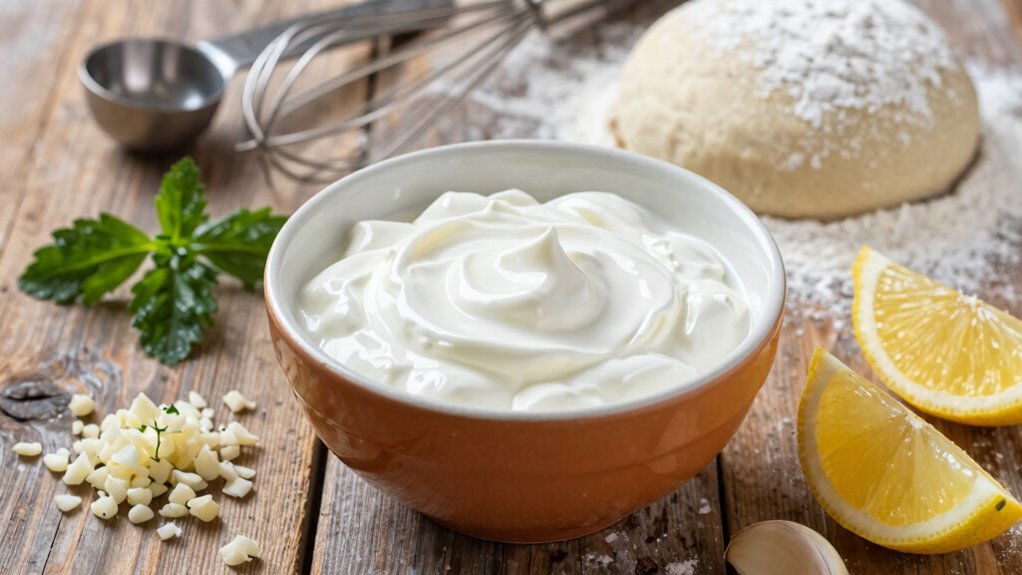

Yogurt works in marinades, sauces, and doughs because its natural acids and enzymes tenderize meat and enhance flavor, making dishes more tender and flavorful. In sauces, it adds creaminess and a tangy kick while helping ingredients blend smoothly. In doughs, yogurt’s fermentation promotes a softer, fluffier texture and improves shelf life. If you want to discover more about how yogurt can transform your cooking, keep exploring its versatile benefits.

Get kitchen staples and gadgets delivered free — and shop member deals
- Fast, free delivery on millions of items
- Access to Prime Big Deal Days deals on October 6–7
- Prime Video, Amazon Music and more included
Key Takeaways
- Yogurt’s acids and enzymes penetrate meat, tenderizing it and enhancing flavor absorption in marinades.
- Its fermentation and acidity improve sauce creaminess, flavor complexity, and natural thickening.
- Yogurt’s lactic acid acts as a leavening agent, producing softer, fluffier baked goods.
- The probiotics in yogurt support digestion and extend shelf life of baked products.
- Its tangy flavor and fermentation boost overall dish flavor, texture, and nutritional value.
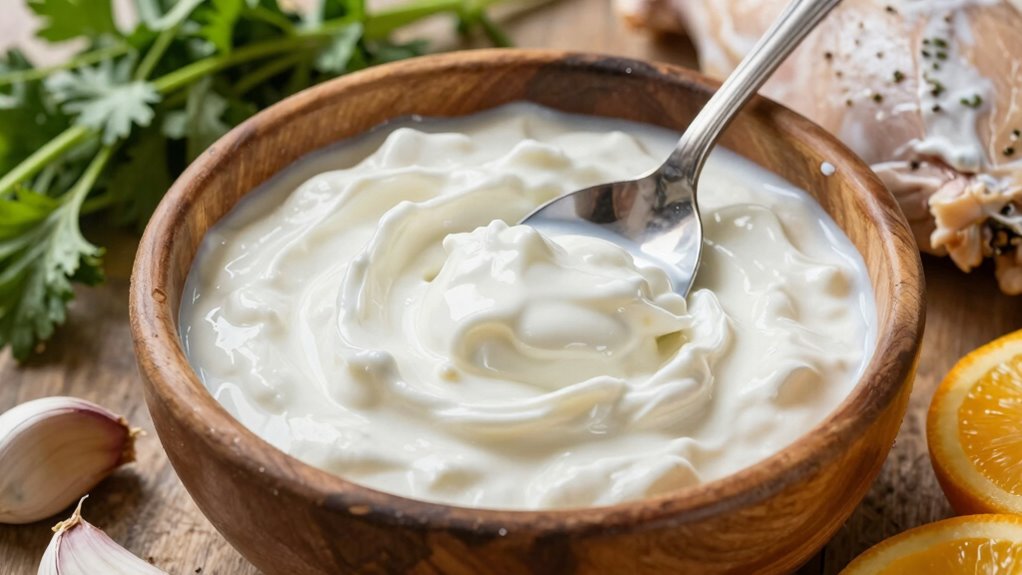
Yogurt is a versatile ingredient that enhances the flavor and texture of marinades, sauces, and doughs alike. Its unique qualities make it a favorite in many recipes, especially because of its fermentation benefits. When you use yogurt, you’re introducing beneficial bacteria that help break down proteins and fibers, making your dishes more tender and flavorful. This fermentation process not only improves the texture but also boosts the nutritional profile of your meal. The tangy taste of yogurt adds a subtle complexity that elevates the overall flavor, making your dishes more vibrant and well-rounded.
Yogurt enhances flavor, tenderizes dishes, and boosts nutrition with its natural fermentation and tangy complexity.
In marinades, yogurt works wonders because of its ability to tenderize meat and absorb flavors. The acids and enzymes in yogurt penetrate the meat’s surface, breaking down tough muscle fibers and resulting in a more succulent bite. Plus, the fermentation benefits of yogurt mean that it helps infuse a depth of flavor that’s hard to achieve with other marinading agents. When you marinate chicken, lamb, or beef in yogurt-based mixtures, you’ll notice a richer, more nuanced taste, with the yogurt’s tang subtly balancing the spices. This process also shortens marination time, which is great when you’re in a hurry but still want maximum flavor.
When it comes to sauces, yogurt adds a creamy texture and a tangy kick that complements a variety of ingredients. Using yogurt in sauces allows you to incorporate probiotics that can enhance digestion and contribute to gut health. The flavor enhancement that yogurt provides makes your sauces more complex and satisfying. Whether you’re making a spicy curry, a cold cucumber raita, or a tangy vinaigrette, yogurt’s natural acidity helps to meld ingredients seamlessly, creating a smooth, cohesive sauce that clings well to whatever you’re serving. Its ability to thicken sauces without the need for added cream or butter makes it a healthier choice while still delivering rich mouthfeel and flavor.
In doughs, particularly for breads and flatbreads, yogurt acts as a natural leavening agent. The fermentation benefits encourage the growth of beneficial bacteria, which produce gases that help the dough rise. This results in a softer, fluffier texture and a subtly tangy flavor that complements various toppings or fillings. When you incorporate yogurt into your dough, you’re not just improving its structure—you’re also adding a layer of complexity to your baked goods’ flavor profile. The acidity from yogurt interacts with flour proteins, strengthening the dough and creating a more elastic, easy-to-work-with consistency. Additionally, yogurt’s fermentation qualities can help improve the shelf life of baked products by naturally inhibiting mold growth.
As an affiliate, we earn on qualifying purchases.
Frequently Asked Questions
Can Dairy Allergies Affect Yogurt’s Effectiveness in Recipes?
Dairy allergies can affect yogurt’s effectiveness in recipes since traditional yogurt contains dairy proteins. If you have a dairy allergy, you should consider dairy allergy alternatives like coconut, almond, or soy-based yogurts. Lactose-free options are also available, but they still contain dairy proteins, so they might not be suitable. Using these alternatives guarantees you get similar tangy flavor and moisture benefits without risking allergic reactions.
How Does Yogurt Compare to Other Acidic Marinades?
Yogurt often outperforms other acidic marinades because it offers gentle flavor enhancement and natural texture modification. Its lactic acid tenderizes meat effectively without overpowering flavors, unlike sharper acids like vinegar or citrus. Yogurt’s creamy consistency helps it cling better to ingredients, ensuring even marination. Plus, its mild acidity reduces the risk of over-marination, making it a versatile choice for balancing flavor and texture in your dishes.
Is Store-Bought Yogurt as Effective as Homemade?
Store-bought yogurt can be just as effective as homemade for flavor enhancement and texture improvement. It’s convenient and usually has a consistent quality, making it easy to achieve the desired tenderness and richness in your dishes. Just choose plain, full-fat yogurt for the best results, and confirm it’s fresh. While homemade might offer slight differences in tanginess, store-bought yogurt works well in marinades, sauces, and doughs.
Does the Type of Yogurt (Greek vs. Regular) Matter?
You’ll find that the type of yogurt does matter when using it in marinades, sauces, and doughs. Greek yogurt, with its thicker texture and higher protein content, creates a creamier and tangier result, ideal for rich marinades and dense doughs. Regular yogurt, being thinner and milder, works better in lighter sauces or when you want a softer texture. Choose based on the flavor and consistency you’re aiming for.
How Long Can Yogurt-Based Marinades Be Refrigerated?
You can keep yogurt-based marinades in the refrigerator for up to 24 hours, ensuring refrigeration safety. After this period, the marinade may start to spoil, and bacteria could grow, risking food safety. If you plan to marinate longer, consider removing the meat and discarding the marinade afterward. Always store it in an airtight container, and check for any signs of spoilage before use.
As an affiliate, we earn on qualifying purchases.
Conclusion
Next time you cook, think of yogurt as your secret brushstroke, adding vibrant color and depth to your culinary canvas. Its tangy embrace tenderizes, enriches, and binds your dishes like a skilled artist blending shades on a palette. Whether in marinades, sauces, or doughs, yogurt transforms simple ingredients into a masterpiece. Embrace this versatile ingredient, and watch your cooking soar to new, delicious heights—turning everyday meals into flavorful works of art.
As an affiliate, we earn on qualifying purchases.
As an affiliate, we earn on qualifying purchases.
NFL season / tailgating Picks
team gear
As an affiliate, we earn on qualifying purchases.