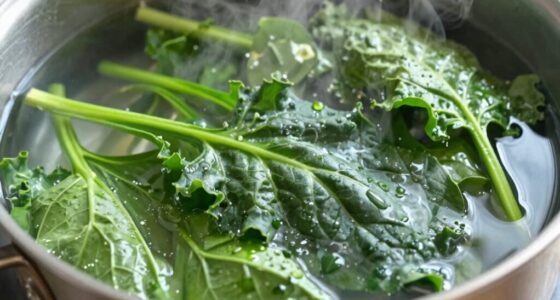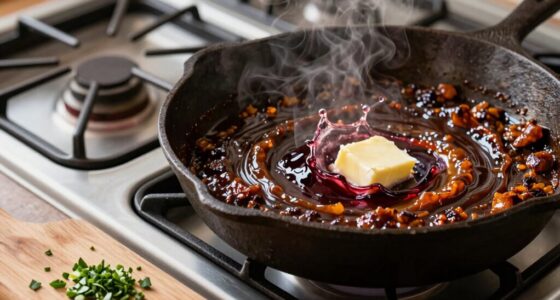
Deglazing might look fancy, but it’s really just smart cooking. By removing browned bits from the pan and adding liquid—like wine or broth—you reveal deep flavors and create a rich sauce with minimal effort. Keeping the heat just right and letting the liquid reduce intensifies the taste. It’s a simple step that transforms everyday ingredients into a delicious dish. If you keep exploring, you’ll discover even more tips to master this clever technique.
Key Takeaways
- Deglazing transforms simple pan residues into rich, flavorful sauces, making it a smart and practical cooking technique.
- It enhances flavor by using caramelized bits, turning everyday cooking into a more sophisticated, layered dish.
- Proper timing and technique maximize flavor extraction without over-reducing or losing delicate tastes.
- Using common liquids like wine or broth keeps the process simple while elevating the dish’s complexity.
- It’s a quick, efficient way to boost flavor and create gourmet-quality sauces with minimal effort.
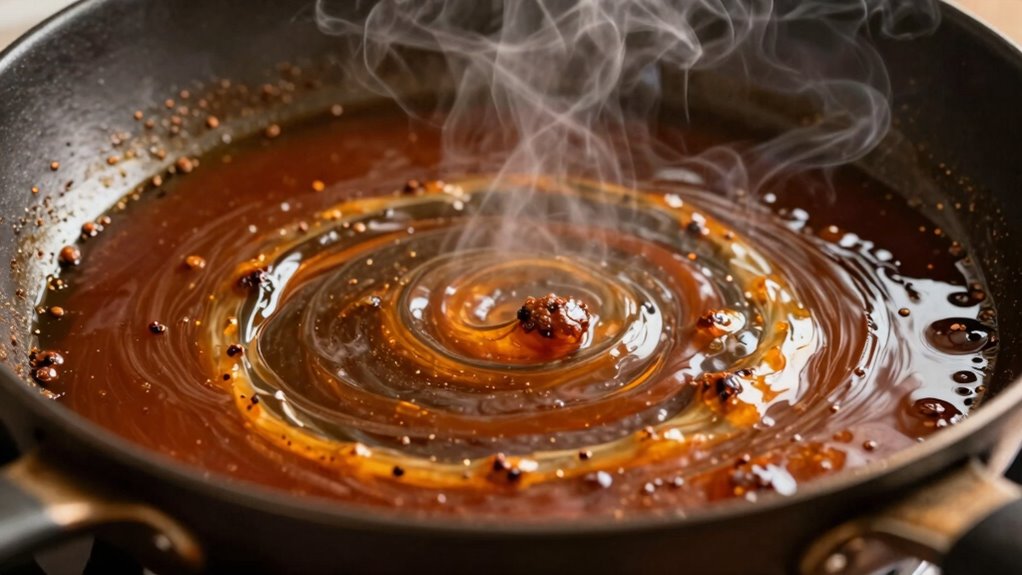
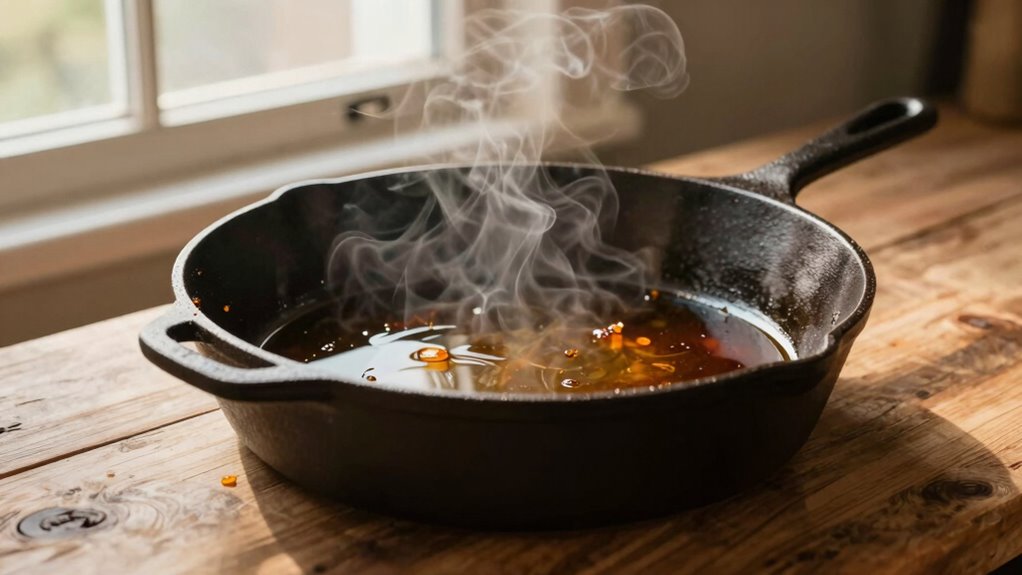
The key to effective flavor enhancement through deglazing lies in timing and technique. After you’ve cooked your main ingredients and they’re nicely browned, remove them from the pan temporarily. Keep the heat on medium-high, then pour your chosen liquid into the hot skillet. You’ll notice the liquid immediately starts to bubble and loosen those caramelized bits. Using a wooden spoon or spatula, scrape the bottom of the pan to lift all those flavorful bits—this is the heart of the pan technique. As the liquid reduces slightly, it becomes a concentrated base for sauces or gravies, intensifying the overall flavor of your dish.
Deglazing isn’t just about adding taste; it’s about making the most of everything you’ve already cooked. Instead of discarding the browned bits or leaving them stuck to the pan, you leverage them for flavor enhancement. This simple step can turn a basic sauté into a rich, complex sauce with minimal effort. It’s a smart move that transforms the pan drippings into a savory foundation, saving you from needing additional seasonings or ingredients later. Plus, it helps you *ensure* the pan is cleaned efficiently, reducing cleanup by cleaning as you go. Understanding the science behind pan browning can further help you optimize your cooking process and master this technique.
Using this pan technique also *ensures* your dish develops a layered flavor profile. Once you’ve deglazed, you can add herbs, butter, or cream to craft a sauce tailored to your taste. Whether you’re making chicken, steak, or vegetables, this method is adaptable and quick. Recognizing the importance of timing in deglazing can help prevent over-reduction or the loss of delicate flavors. Understanding the science behind pan browning can further help you optimize your cooking process. It’s a perfect example of how a small, deliberate step can elevate your cooking from everyday to extraordinary. So next time you’re searing meat or vegetables, remember: deglazing is not just fancy—it’s smart, flavorful cooking in action.
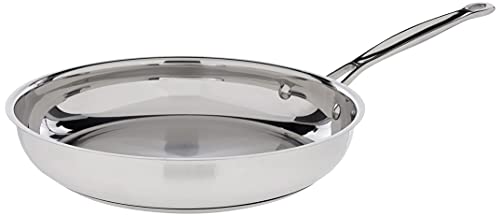
Cuisinart 10-Inch Open Skillet, Stainless Steel Skillet Large Kitchen Pan, Dishwasher Safe, Compatible with Induction, Electric, Gas Cooktops, Oven Safe Saucepan, Cool Grip Handles
- Elegant Mirror Finish: Classic look with professional performance
- Fast, Even Heating: Aluminum encapsulated base prevents hot spots
- Durable Stainless Steel Surface: Resists discoloration and flavor alteration
As an affiliate, we earn on qualifying purchases.
As an affiliate, we earn on qualifying purchases.
Frequently Asked Questions
Can Deglazing Be Done With Any Type of Liquid?
Yes, you can deglaze with almost any type of liquid. The key is liquid versatility, allowing you to choose from wine, broth, vinegar, or even water, depending on the flavor you want to enhance. By deglazing, you lift flavorful bits from the pan, boosting taste. It’s a simple technique that turns a plain pan sauce into a rich, delicious addition, making your dish more savory and satisfying.
How Long Does Deglazing Typically Take?
Deglazing usually takes about 1 to 3 minutes, depending on your pan and liquid. While it seems quick, this technique mastery enhances flavor dramatically. You quickly loosen browned bits, creating a rich base for sauces. Think of it as a simple step with fancy results—your dish gains depth and complexity. Keep an eye on it, stirring gently, to avoid burning. In just a few minutes, you elevate your cooking with smart flavor enhancement.
Is Deglazing Necessary for All Recipes?
No, deglazing isn’t necessary for all recipes, but it’s great for flavor enhancement and adds depth to your dishes. This technique versatility allows you to lift flavorful browned bits from the pan, enriching sauces, stews, and sautés. If you’re making a quick stir-fry, you might skip it. But for rich, savory sauces or braises, deglazing makes a noticeable difference, turning simple ingredients into something more flavorful and complex.
What Are Common Mistakes to Avoid When Deglazing?
When deglazing, avoid rushing or using too much liquid at once, which can drown the pan’s subtle flavors. Instead, gently scrape up the flavorful pan residue to enhance your dish’s flavor and guarantee proper removal of stubborn bits. Be mindful not to add cold liquids directly from the fridge, as this can seize the pan’s fond. Patience and gentle stirring help you achieve perfect flavor enhancement without losing those precious browned bits.
Can Deglazing Be Used With Non-Meat Dishes?
Yes, you can definitely use deglazing in non-meat dishes. For vegetarian techniques, deglazing works great with vegetables, tofu, or grains, adding depth and flavor. If you’re vegan, try plant-based liquids like vegetable broth, wine, or even fruit juices. Simply pour your chosen liquid into the pan to loosen flavorful bits, creating a rich sauce that enhances your dish. It’s a smart way to boost flavor without meat.

SHAOHSING RICE COOKING WINE 750ML (Golden Brand)
- Type: Shaoshing rice cooking wine
- Volume: 750ml
- Brand: Golden Brand
As an affiliate, we earn on qualifying purchases.
As an affiliate, we earn on qualifying purchases.
Conclusion
So, next time you see deglazing in action, remember it’s not just a culinary trick but a clever way to reveal flavor’s hidden treasure chest. It’s like turning the last page of a good book—bringing all the rich, savory notes together in one perfect bite. With a little confidence and a splash of liquid, you’re transforming simple ingredients into a symphony of taste. Cooking smart makes every meal a masterpiece, and deglazing is your secret conductor.

Wooden Spatulas, 2 PCs Natural Acacia Wooden Cooking Utensils Set for Non-stick Pan Kitchen Tool, flipping and Wok Spatula, Wooden Spoons & Spurtle for Cooking
- Material: Natural Acacia Wood, Food Safe
- Durability: Less Damage, Heat Resistant
- Design: Lightweight and Easy to Use
As an affiliate, we earn on qualifying purchases.
As an affiliate, we earn on qualifying purchases.
As an affiliate, we earn on qualifying purchases.