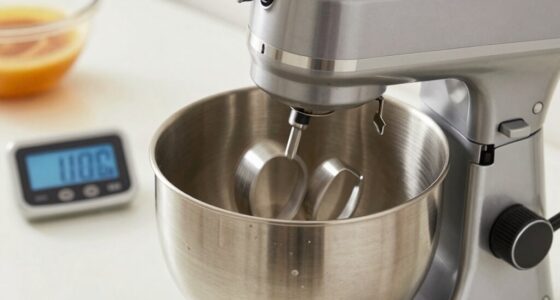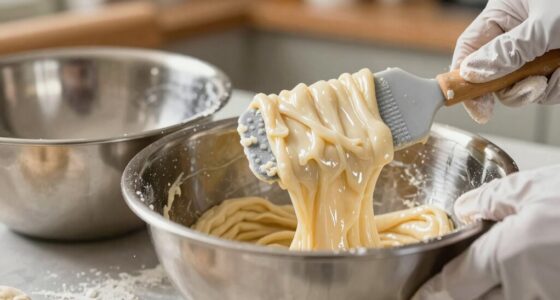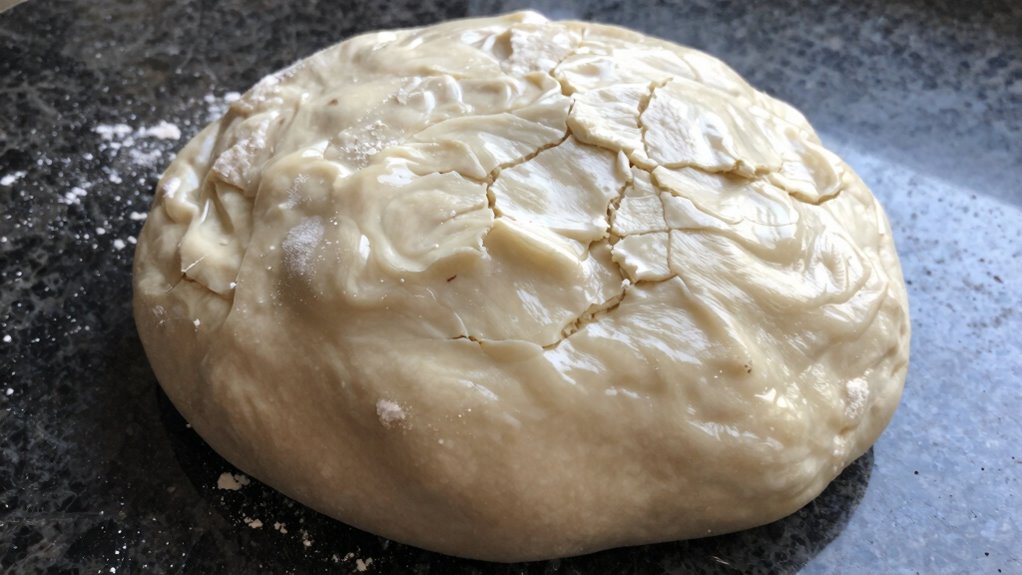
When you overmix dough, you cause the gluten network to overdevelop, making the dough feel tight and resistant. This happens because the gluten strands stretch and bond excessively, creating a dense, elastic structure that fights back when you try to handle it. As a result, the dough becomes tough and difficult to shape. If you want to learn more about why it behaves this way and how to avoid it, keep exploring the details.
Listen free for 30 days with Audible
Thousands of audiobooks and originals — cancel anytime.
As an affiliate, we earn on qualifying purchases.
Key Takeaways
- Overmixing accelerates gluten development, creating a dense, elastic network that resists shaping and stretching.
- Excess gluten strands make the dough stiff, tight, and difficult to handle.
- Overmixed dough traps and releases gases prematurely, reducing elasticity and causing resistance during proofing.
- The strong gluten network limits expansion, making the dough feel firm and resistant to rising.
- Overmixing disrupts the balance between gluten formation and fermentation, leading to a dough that fights back during handling.
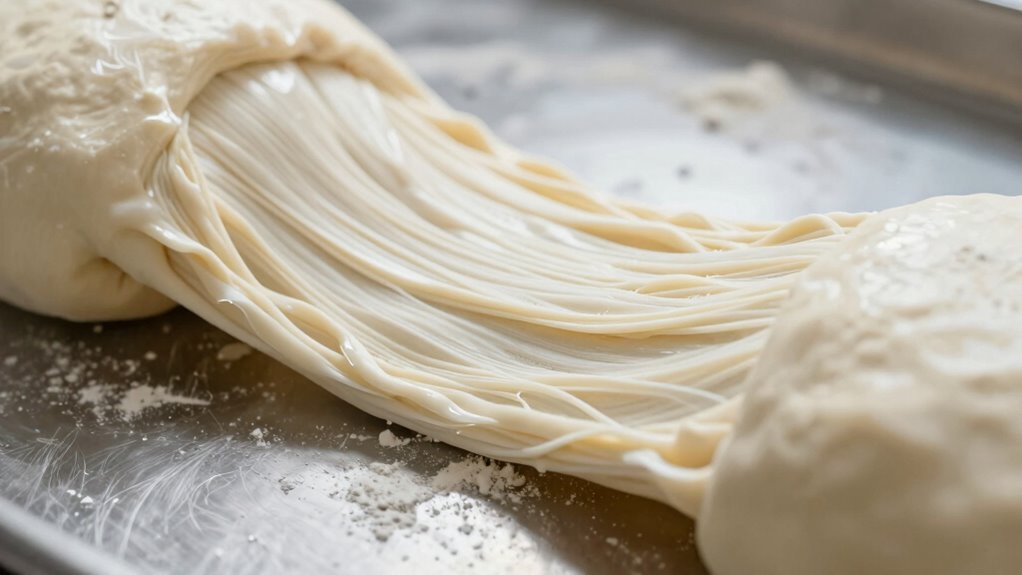
When you overmix dough, it often feels tight and tough, making it harder to work with and resulting in baked goods that lack tenderness. This happens because the mixing process influences the gluten development process, which is essential for the dough’s structure. As you knead or stir the dough excessively, you accelerate gluten formation, creating a dense network of proteins that makes the dough elastic and firm. While gluten is crucial for giving bread its chewy texture and maintaining its shape, overdoing it leads to a tough, rubbery crumb rather than a soft, airy interior.
Understanding the fermentation effects is key to grasping why overmixing causes such a reaction. Fermentation, driven by yeast or bacteria, produces gases that help the dough rise and develop flavor. When you overmix, you risk disrupting this delicate fermentation process. Excessive mixing can degas the dough, releasing the trapped carbon dioxide prematurely, which results in less rise and a denser crumb. The dough becomes resistant to expansion, fighting back against your efforts to shape or proof it properly. This resistance isn’t just a matter of texture; it’s a direct consequence of the overly developed gluten network, which hampers the dough’s flexibility and ability to expand during baking.
As you continue to mix beyond the ideal point, the gluten strands become overly stretched and tight, which is why the dough feels so resistant. This tightness makes it difficult to handle, and even the slightest overmix can cause the dough to become sticky or tough. When baked, the excess gluten leads to a dense, chewy texture rather than the desired lightness. The more you overmix, the more you interfere with the natural balance between gluten development and fermentation effects, ultimately impairing the dough’s ability to rise properly and achieve that tender crumb you’re aiming for.
Additionally, understanding the gluten development process helps in recognizing the importance of mixing in moderation, as it directly impacts the dough’s final texture and rise. In essence, overmixing short-circuits the delicate interplay between gluten development and fermentation. It creates a dough that’s too elastic and resistant, fighting back against shaping and rising. To avoid this, mix just until the ingredients are combined and the dough is cohesive, respecting the natural limits of gluten formation and fermentation. Doing so allows your dough to develop enough structure without becoming tough, leading to baked goods that are tender, airy, and perfectly textured.
As an affiliate, we earn on qualifying purchases.
Frequently Asked Questions
Can Overmixing Affect the Dough’s Flavor?
Overmixing dough can affect its flavor because it leads to excessive gluten development, which can make the dough tougher and alter its taste. As gluten forms more extensively, it can trap gases and moisture differently, subtly impacting flavor. You might notice a slightly denser or less tender final product. So, keeping mixing moderate helps preserve the intended flavor, ensuring your baked goods turn out just as delicious as you want.
How Can I Fix Overmixed Dough?
To fix overmixed dough, start by gently folding in a little extra flour to adjust the dough consistency, making it less dense. Use gentle mixing techniques moving forward to prevent further overmixing. Rest the dough for 10-15 minutes to allow gluten to relax, which can ease tightness. Keep a close eye on your mixing process, and stop as soon as the dough reaches the right consistency to avoid fighting back.
Does Overmixing Change the Dough’s Nutritional Value?
Overmixing dough doesn’t substantially change its nutritional value, but it can cause some nutritional degradation due to increased enzyme activity. You might notice a slight reduction in the dough’s overall nutrients, yet the core vitamins and minerals stay intact. Instead of focusing on small changes, concentrate on perfect mixing to prevent overworking the dough, ensuring a better texture and flavor in your baked goods.
Is Overmixing Common With Certain Types of Flour?
Yes, overmixing is common with certain types of flour, especially bread and high-gluten flours. These flours absorb more water, promoting extensive gluten development. When you overmix, the dough becomes tight and fights back because excessive gluten formation traps air and moisture, making it tough to handle. To prevent this, mix just until the ingredients combine, avoiding overdevelopment of gluten that leads to a stiff, resistant dough.
How Can I Prevent Overmixing in Future Baking?
To prevent overmixing in future baking, pay close attention to your mixing techniques and dough consistency. Start by mixing just until ingredients are combined, avoiding prolonged stirring. Use gentle folding or low-speed mixing, and stop as soon as the dough reaches a smooth, cohesive texture. Coincidences happen when you stay mindful of these cues, helping you control overmixing and achieve the perfect dough every time.
As an affiliate, we earn on qualifying purchases.
Conclusion
So, next time your dough feels like a rebellious teenager, tight and fighting back, remember it’s craving gentle care. Overmixing is like stirring a storm in a delicate garden—it stirs chaos instead of harmony. Treat your dough with patience and finesse, letting it relax and unfold naturally. With a gentle touch, your dough will soften like a lullaby, ready to rise and blossom into something beautiful, rather than resist and fight against your touch.
As an affiliate, we earn on qualifying purchases.
As an affiliate, we earn on qualifying purchases.
Fall Picks
fall essentials
As an affiliate, we earn on qualifying purchases.