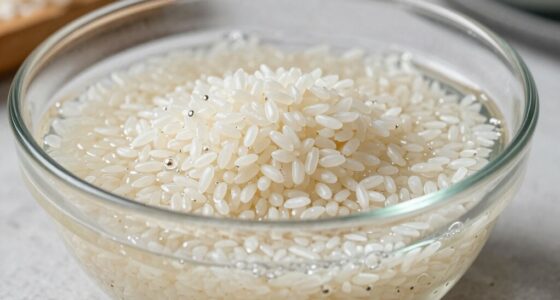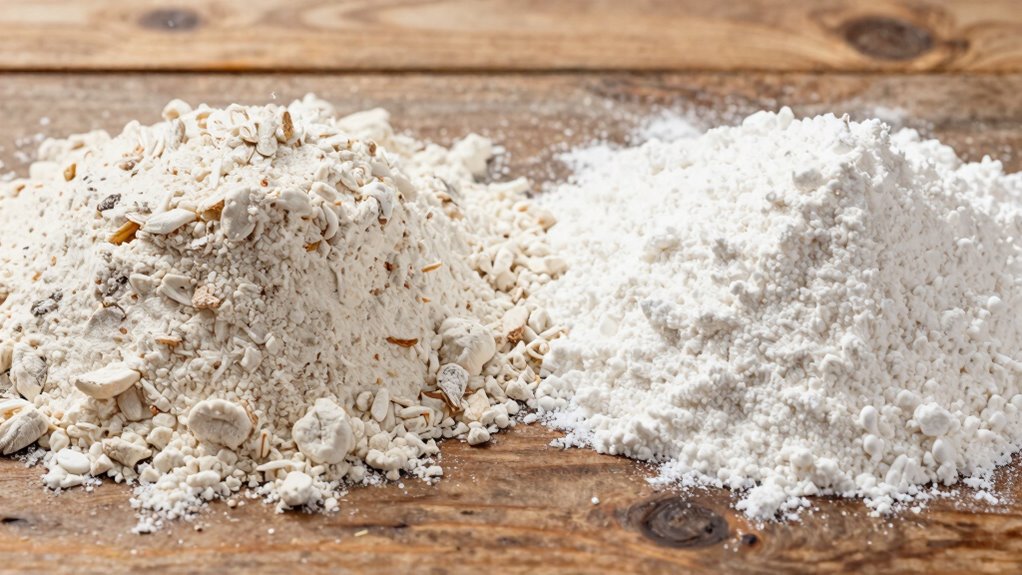

Atta and maida differ mainly in gluten content and nutritional value, which affects your baked goods’ texture and health benefits. Atta, made from whole wheat, provides fiber, vitamins, and a denser, nutty flavor, perfect for hearty breads like chapati. Maida, being refined, results in soft, light pastries with less nutrition. Knowing these differences helps you choose the right flour for your recipes. To discover how each impacts your cooking, keep exploring further.
Key Takeaways
- Atta contains moderate gluten for hearty, elastic breads, while Maida has lower gluten for soft, tender baked goods.
- Atta is whole wheat flour rich in fiber and nutrients; Maida is refined, stripped of fiber and most nutrients.
- Processing extends Maida’s shelf life and results in a finer, smoother texture, unlike the shorter shelf life of Atta.
- Atta produces dense, nutty-flavored breads; Maida creates lighter, fluffier pastries and desserts.
- Choose Atta for healthier, fiber-rich recipes; opt for Maida for tender, delicate baked items.

When choosing flour for your recipes, understanding the key differences between atta and maida can make a significant impact on your cooking. One of the main distinctions lies in their gluten content, which directly influences how your baked goods or bread turn out. Atta, made from whole wheat, contains a moderate amount of gluten. This gluten gives dough a certain elasticity, making it suitable for hearty Indian breads like chapati and paratha. Maida, on the other hand, is refined white flour that has been stripped of the bran and germ, resulting in a lower gluten content. This makes maida ideal for pastries, cakes, and soft bakery items that require a tender, light crumb. So, depending on what you’re preparing, the gluten level will determine the texture and structure of your final product.
Atta offers moderate gluten for hearty breads, while maida’s lower gluten suits soft baked goods.
Nutritional value is another critical aspect to contemplate. Atta, being whole wheat flour, retains most of the wheat’s natural nutrients, including fiber, vitamins, and minerals. This makes it a healthier choice if you’re aiming for more nutritious meals or want to boost your fiber intake. The fiber in atta helps digestion, stabilizes blood sugar levels, and keeps you feeling full longer. Nutritional benefits of whole wheat flour also include antioxidants that support overall health. Maida, by contrast, is heavily refined, which strips away much of the fiber and nutrients. As a result, maida provides quick energy but lacks the nutritional benefits found in whole wheat flour. If you’re health-conscious or looking to incorporate more wholesome ingredients into your diet, atta offers a more nutrient-dense option.
Additionally, the processing methods of these flours affect their shelf life and cooking properties. Atta, with its intact bran and germ, has a shorter shelf life but offers more health benefits. Maida, being more processed, has a longer shelf life and is often preferred for its fine texture and versatility in various recipes. Moreover, storage techniques can help prolong the freshness of both types of flour and prevent spoilage, especially in humid climates. However, this difference can influence how each flour behaves in different cooking techniques and storage.
However, it’s essential to recognize that these differences influence not just health but also taste and texture. Atta produces denser, more substantial bread and rotis, with a nutty flavor that complements traditional Indian dishes. Maida yields softer, fluffier baked goods with a mild flavor, suitable for pastries and desserts. When you choose between the two, think about the end goal: whether you want a hearty, fiber-rich bread or a delicate, airy cake.
Ultimately, understanding both gluten content and nutritional value helps you make smarter choices in your cooking. If you’re after a healthier, more filling option, atta is the way to go. But if you’re aiming for tender, light-textured baked goods, maida is your best bet. By keeping these differences in mind, you can tailor your recipes to get the perfect results every time, making your cooking more effective and satisfying.
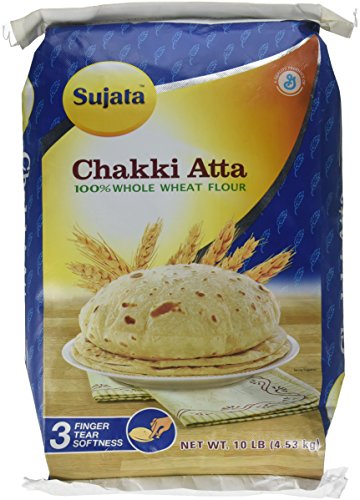
Sujata Chakki Atta, Whole Wheat Flour, 10-Pound Bag
Net quantity of 10 pounds
As an affiliate, we earn on qualifying purchases.
As an affiliate, we earn on qualifying purchases.
Frequently Asked Questions
Which Flour Is Healthier, Atta or Maida?
You’ll find atta healthier than maida because it offers better nutritional benefits, including more fiber and vitamins. Atta’s flavor profile is richer and nuttier, making it a more wholesome choice for your diet. Maida, on the other hand, is more processed and lacks these nutrients. If you want a nutritious, flavorful option that supports digestion and overall health, atta is the better pick for you.
Can Atta Be Used as a Substitute for Maida?
You can use atta as a substitute for maida, but keep in mind it’s not a perfect replacement. Some believe atta’s whole grain nature makes it healthier, but it may alter texture and taste. For alternative baking options, consider blending atta with other flours. Nutritional comparisons show atta offers more fiber and nutrients, making it a better choice for health-conscious baking. Just be prepared for slight differences in your baked goods.
How Does Storage Affect the Quality of Atta and Maida?
You should know that storage conditions greatly impact the quality of atta and maida. Keep them in an airtight container in a cool, dry place to prevent moisture and pests. Poor storage shortens their shelf life and can cause rancidity or mold growth. Proper storage preserves flavor, nutrients, and texture, ensuring your flour stays fresh longer and maintains its baking and cooking qualities effectively.
Are There Gluten Content Differences Between Atta and Maida?
You’ll find that atta typically has higher gluten levels than maida, making it more elastic and ideal for whole wheat breads. In contrast, maida has lower gluten content, resulting in a softer, finer texture perfect for pastries. These nutritional differences impact your baking—atta offers more fiber and protein, while maida provides a lighter, refined product. Understanding these gluten content differences helps you choose the right flour for your recipes.
Which Flour Is Better for Gluten-Free Recipes?
If you’re into gluten-free baking, neither atta nor maida is ideal because they contain gluten. Instead, you should choose alternative flours like almond, rice, or coconut flour. These gluten-free options work better for your recipes and help you avoid gluten-related issues. So, when baking gluten-free, opt for these alternative flours to guarantee your baked goods turn out delicious and safe for your dietary needs.

Rani Maida Flour (Indian All Purpose Flour) 32oz (2lbs) 908g ~ All Natural | Vegan | Gluten Friendly | NON-GMO | Kosher | Indian Origin
You'll LOVE our Maida Flour (Indian All Purpose Flour) by Rani Brand–Here's Why:
As an affiliate, we earn on qualifying purchases.
As an affiliate, we earn on qualifying purchases.
Conclusion
Understanding the difference between atta and maida can truly transform your cooking. Did you know that India consumes over 10 million tons of wheat annually, with a significant portion used for atta? This highlights how integral wheat-based flours are to daily life. By choosing the right flour, you not only improve your recipes but also align with traditional health benefits. Next time, consider what your dish needs—atta or maida—and make that simple switch count.

King Arthur 100% Organic Bread Flour, Unbleached, 5 lb (Pack of 1) – Non-GMO Project Verified, No Preservatives
High Protein Flour: 12.7% protein – a full point more than other national brands, King Arthur flour ensures…
As an affiliate, we earn on qualifying purchases.
As an affiliate, we earn on qualifying purchases.

King Arthur Cake Flour, Unbleached and Unenriched, 2 lb (Pack of 1) – Non-GMO Project Verified, No Preservatives
Milled from the finest American wheat, our flour contains no bleach, no bromate and no artificial preservatives of…
As an affiliate, we earn on qualifying purchases.
As an affiliate, we earn on qualifying purchases.