
The secret to silkier tomato puree without straining is to blend your prepared, ripe tomatoes until they’re completely smooth, using a high-quality immersion or blender. Start by washing, peeling, and removing seeds for a cleaner texture. Then, blend in short pulses to avoid over-processing, adding small amounts of water if needed. This natural technique breaks down skins and seeds, resulting in a velvety, homogeneous puree. Keep going, and you’ll master this trick for perfect tomato bases every time.
Key Takeaways
- Use ripe, freshly picked tomatoes for natural sweetness and smoother texture.
- Properly blanch, peel, and remove seeds to eliminate bitterness and gritty bits.
- Incorporate high-quality extra virgin olive oil during blending for added gloss and richness.
- Blend in short pulses with an immersion or high-speed blender until completely smooth.
- Gently pass the puree through a sieve or use a coarse strainer to achieve silkiness without straining.
Why a Smooth Tomato Puree Matters for Your Cooking

A smooth tomato puree is essential because it creates a consistent, velvety base for your dishes. When your puree is silky, it enhances the overall texture, making every bite feel luxurious and well-balanced. This texture enhancement ensures that your sauces, soups, or stews have a uniform consistency, preventing lumps or uneven patches. Additionally, a smooth puree promotes better flavor development. When the tomatoes are pureed thoroughly, their natural sweetness and acidity are evenly distributed, allowing your dish to reach its full flavor potential. Proper color accuracy also plays a role in visually appealing dishes, making the final presentation more appetizing. Achieving a silky, smooth puree is especially important when using connected equipment that can help optimize your blending process for perfect results. You can also control the consistency more precisely, avoiding the need for straining or additional adjustments. Using the right tools and techniques can also reduce food waste by making the process more efficient. You won’t need to worry about stray bits disrupting the dish’s harmony. Overall, achieving a silky, smooth puree elevates your cooking’s quality, making every meal more appealing and flavorful.
The Key Ingredient That Keeps Your Puree Silky
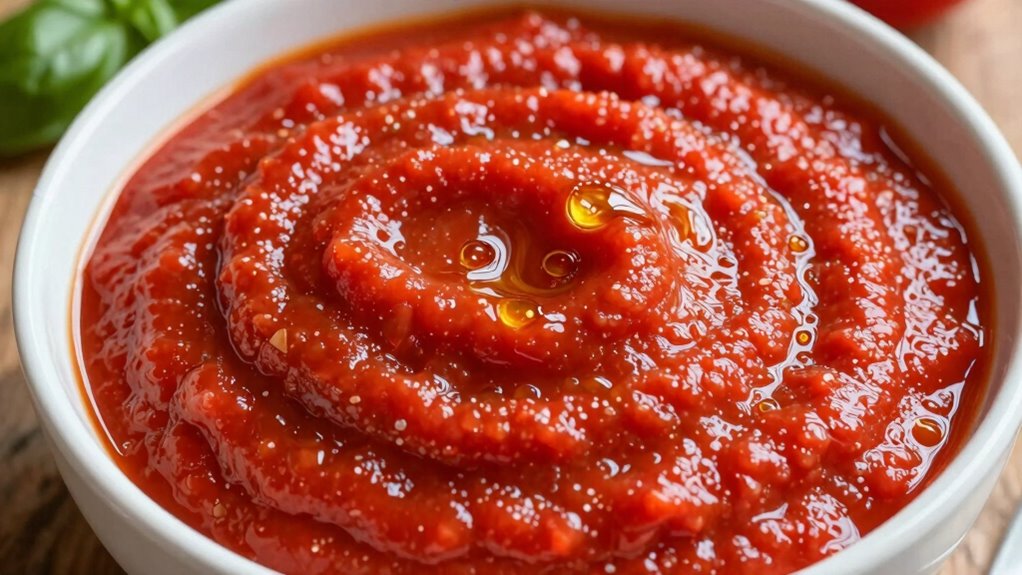
The secret to keeping your tomato puree silky starts with choosing ripe tomatoes—they provide natural sweetness and richness. Adding a splash of good olive oil helps create a smooth, luscious texture. Be sure to blend at the right speed to avoid over-processing and maintain that perfect silky consistency. Additionally, employing a blending technique can further enhance the smoothness of your puree. Using the correct food processing methods ensures you achieve the ideal texture without the need for straining. For optimal results, adjusting the processing time based on your blender’s power can make a significant difference in achieving that velvety finish. Incorporating culinary expertise into your process can elevate the quality of your tomato puree even further. Paying attention to wave and wind conditions can also influence the ripeness and flavor development of your tomatoes, resulting in an even better puree.
Use Ripe Tomatoes
Ever wondered why ripe tomatoes make your puree silky and smooth? The secret lies in their natural sweetness and balanced acidity. Ripe tomatoes have fewer seeds and skin, reducing the need for seed removal and creating a smoother texture. They also contain ideal acidity, which helps maintain the puree’s vibrant flavor and silky consistency without adding extra ingredients. To visualize this, imagine:
| Ripe Tomatoes | Less Seed Removal | Perfect Acidity Balance |
|---|---|---|
| Juicy and plump | Seeds easily separate | Enhances flavor and texture |
Using ripe tomatoes ensures your puree stays silky, with a natural, fresh taste. It’s all about selecting the right fruit to achieve that smooth, velvety finish effortlessly. Developing a good understanding of fruit quality assessment can further help you choose the best tomatoes for your puree. Recognizing ripeness indicators is essential for selecting the optimal produce, and paying attention to seasonal availability can improve your results. Additionally, understanding fruit ripening processes can help you better predict the perfect harvest time for the best puree quality.
Furthermore, selecting tomatoes at the peak of their ripeness maximizes their natural sugars, which contribute significantly to the silky texture and flavor.
Incorporate Olive Oil
Adding a splash of olive oil to your tomato puree is a simple yet effective way to keep it silky and smooth. Olive oil incorporation helps create a rich, velvety texture that lasts. Before adding the oil, make sure you’ve removed tomato seeds, which can cause a gritty feel. Seed removal ensures a cleaner, more uniform puree, allowing the olive oil to blend seamlessly. When you stir in the olive oil, do so gradually, letting it emulsify with the natural juices. This step enhances the puree’s glossiness and smoothness without the need for straining. Using high-quality extra virgin olive oil makes a noticeable difference, enriching the flavor and maintaining that silky consistency you’re aiming for. This trick keeps your puree effortlessly smooth and restaurant-quality.
Blend at Proper Speed
Achieving that perfectly silky tomato puree depends considerably on blending at the right speed. If you blend too fast, you risk breaking down the texture quality, resulting in a watery or uneven consistency. Conversely, blending too slowly may leave chunks or cause uneven mixing, compromising smoothness. To keep your puree silky, start at a low to medium blending speed and gradually increase as needed. This gentle approach helps break down tomatoes evenly without over-processing. Use short pulses if necessary, to control the texture and avoid overheating, which can affect flavor and texture quality. Understanding the thermal behavior of your blender can help prevent overheating and maintain optimal performance during processing. Additionally, consistent blending at the proper speed ensures a smooth, velvety puree without the need for straining, giving you the perfect silky finish every time. Being aware of your blender’s performance limits can also help you achieve consistently silky results. Moreover, selecting a blender with advanced cooling features can extend its lifespan and improve processing consistency. Paying attention to your blender’s thermal management can also prevent overheating and preserve the quality of your puree.
How to Prepare Your Tomatoes for Instant Smoothness
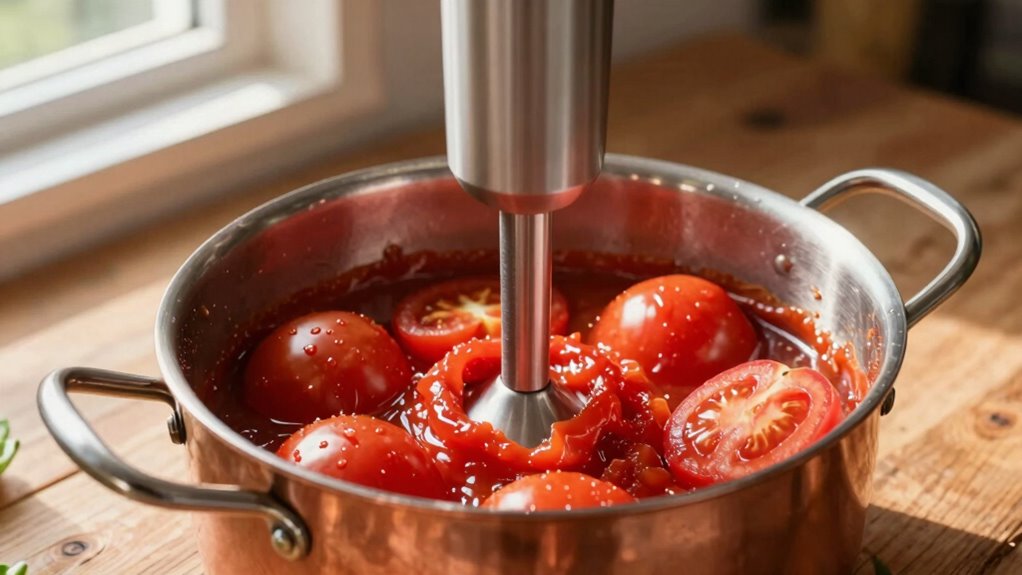
To prepare your tomatoes for instant smoothness, start by washing them thoroughly to remove any dirt or contaminants. Next, gently loosen the skin with a few seconds of blanching in boiling water, softening it for easier removal. Seed removal is also key; slice the tomatoes and scoop out the seeds to prevent bitterness. Softening the skin and removing seeds create a smoother puree without straining. Use the following table for quick tips:
| Step | Tip |
|---|---|
| Washing | Rinse under cold water to eliminate dirt |
| Blanching | Boil briefly to loosen skin |
| Skin removal | Peel easily after blanching |
| Seed removal | Scoop out seeds for a smoother texture |
| Final prep | Chop into smaller pieces before blending |
This process ensures a silky, seedless, smooth tomato base. Understanding food preparation techniques can further enhance your results. Additionally, employing proper kitchen tools can make each step more efficient and effective.
The Simple Step to Break Down Seeds and Skins Naturally
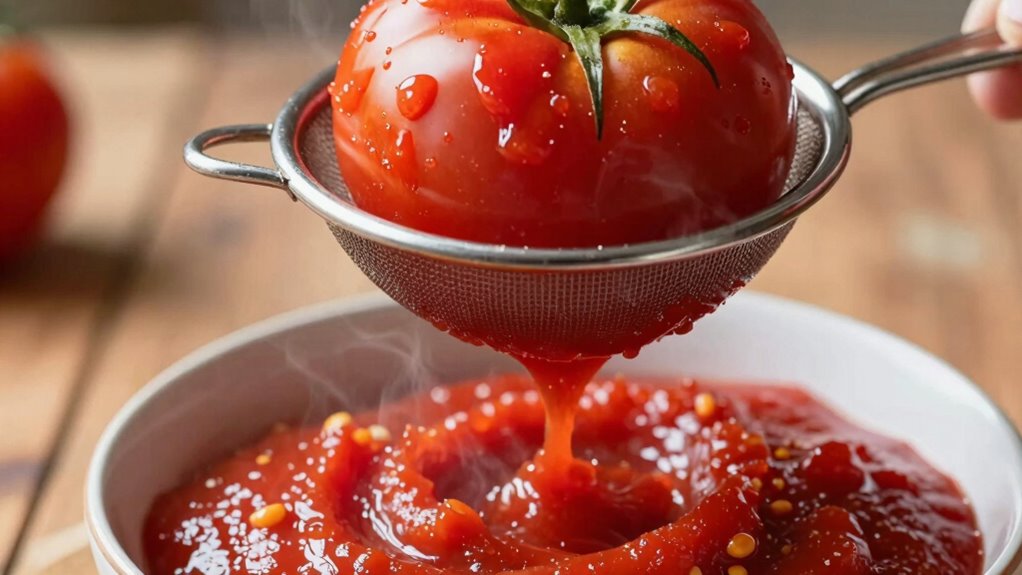
Using a simple natural method, you can effectively break down tomato seeds and skins without any complicated equipment. Start by gently mashing the tomatoes with your hands or a fork, which helps loosen the skin and seed membranes. As you do this, the skin begins to break down naturally, making it easier to blend later. To assist with seed removal, press the mashed tomatoes through a coarse sieve or use your fingers to push the seeds out. This process also encourages skin breakdown, softening the texture and reducing bitterness. The key is to be gentle yet thorough, ensuring seeds are separated without losing too much juice. Engaging with this process can also foster creativity, helping you discover new methods to improve your kitchen techniques. Incorporating proper techniques can further enhance the smoothness of your puree and reduce waste. This natural approach simplifies seed removal and skin breakdown, resulting in a smoother, silkier tomato puree without extra steps.
Tips for Blending Your Tomatoes to Perfection

Make sure you’re using the right blending tools to get smooth results. Start with a pulse or short bursts, then gradually blend to reach your desired consistency. Adjust the thickness slowly to avoid over-blending and losing that silky texture.
Use Proper Blending Tools
Choosing the right blending tools can make all the difference when preparing smooth, silky tomato puree. The right kitchen gadgets ensure you attain perfect blending techniques without frustration. Use a high-quality blender or an immersion blender for smooth results, as they handle tomatoes efficiently. Avoid overloading your blender to prevent uneven textures. Consider the texture you want: a powerful blender creates a velvety puree, while a hand blender offers control.
| Kitchen Gadgets | Emotional Impact |
|---|---|
| Immersion Blender | Confidence in your skills |
| High-speed Blender | Satisfaction and ease |
| Manual Masher | Nostalgia and tradition |
| Food Processor | Versatility and control |
Adjust Consistency Gradually
To achieve the perfect consistency, it’s essential to adjust your tomato puree gradually rather than all at once. Add small amounts of liquid—water, broth, or extra virgin olive oil—bit by bit, blending thoroughly before adding more. This method allows you to control the texture enhancement, ensuring your puree isn’t too runny or too thick. As you progress, taste and evaluate the flavor development, since thinner purées can sometimes dilute the richness. Carefully balancing the consistency helps preserve the natural tomato flavor and creates a silky, smooth texture without straining. Patience is key; by making incremental adjustments, you’ll avoid over-thinning and keep your puree vibrant, flavorful, and perfectly blended to your desired silky finish.
Common Mistakes That Can Make Your Puree Gritty or Chunky
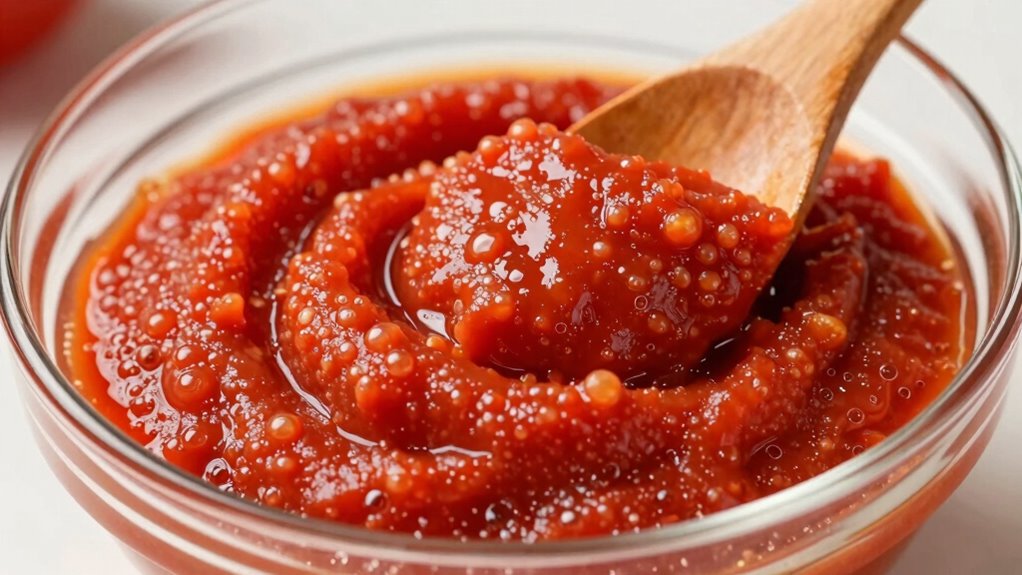
One common mistake that can turn your tomato puree gritty or chunky is using improperly cooked or overripe tomatoes, which release more seeds and skin, making it difficult to achieve a smooth texture. To avoid this, focus on seed removal and skin peeling before blending. Seeds can add grit, so remove them thoroughly—cut the tomatoes and scoop out the seeds. Skin peeling is equally important; leaving skins on can result in a rougher texture. Blanch the tomatoes briefly in boiling water, then transfer them to ice water to easily peel off the skins. Skipping these steps often leads to a puree with unwanted bits and a less velvety consistency. Proper preparation guarantees a silky, smooth tomato puree without the need for straining.
Variations of the Trick for Different Tomato Types
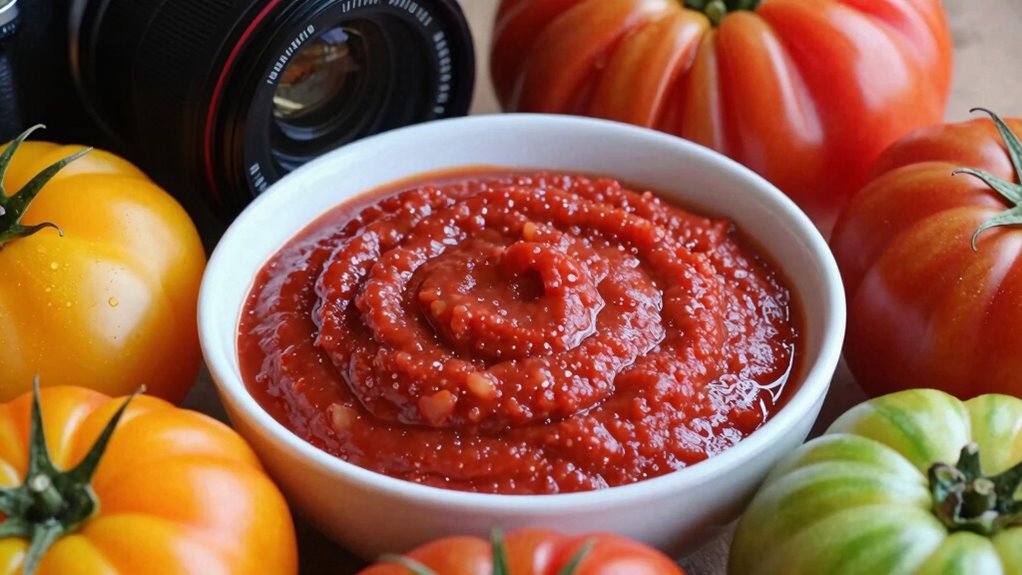
Different tomato varieties may require slight adjustments to the seed removal and skin peeling process to achieve the best smoothness. For instance, heirloom tomatoes often have thicker skins and more delicate flesh, so gentle peeling is key. Roma or plum tomatoes typically have fewer seeds and thinner skins, making them easier to process with minimal adjustments. Cherry tomatoes, with their small size and thin skin, usually need less prep, but their sweeter flavor profiles can influence how you handle them—removing seeds can help maintain a balanced taste. San Marzano tomatoes, prized for their flavor profiles, benefit from careful peeling to preserve their rich, sweet taste. Adapting your technique based on tomato variety ensures you get a silky puree that highlights each type’s unique characteristics.
How to Adjust the Technique for Larger Batches

When making larger batches, you need to scale up your process carefully to maintain the smooth texture. Pay attention to adjusting processing times and ingredient amounts to keep consistency. Using batch-specific tips guarantees your puree stays silky no matter the size.
Scaling Up the Process
To successfully scale up the silkier tomato puree technique, you need to adjust your approach to accommodate larger batches without sacrificing quality. When making bigger quantities, invest in proper tomato storage to keep your produce fresh and prevent spoilage, which can impact flavor enhancement. Use large, stainless steel or non-reactive bowls to blend and process tomatoes evenly, ensuring consistent texture. Keep the process efficient by working in manageable portions, so heat distribution remains even and the puree stays silky. Be mindful of batch size, as larger quantities may require longer blending times or gentle reheating to maintain smoothness. Proper storage during and after processing preserves the fresh flavor, helping your larger batches taste just as vibrant and silky.
Batch Consistency Tips
As you scale up your tomato puree process, maintaining consistency becomes crucial to guarantee each batch remains silky and flavorful. To achieve this, adjust your technique based on seasonal variations and storage methods. Use fresh, ripe tomatoes during peak seasons for ideal results, and consider freezing or canning surplus to preserve quality. When processing larger batches, ensure uniform blending by using a powerful blender or food processor. Keep track of your ingredient ratios and processing times to replicate successful batches. The table below illustrates key differences:
| Season | Storage Method | Impact on Consistency |
|---|---|---|
| Peak summer | Freezing | Maintains flavor, easy to thaw |
| Off-season | Canning | Preserves texture and flavor |
| Short-term | Refrigeration | Best for immediate use |
| Long-term | Vacuum sealing | Prevents spoilage |
Troubleshooting: When Your Puree Still Isn’t Smooth Enough
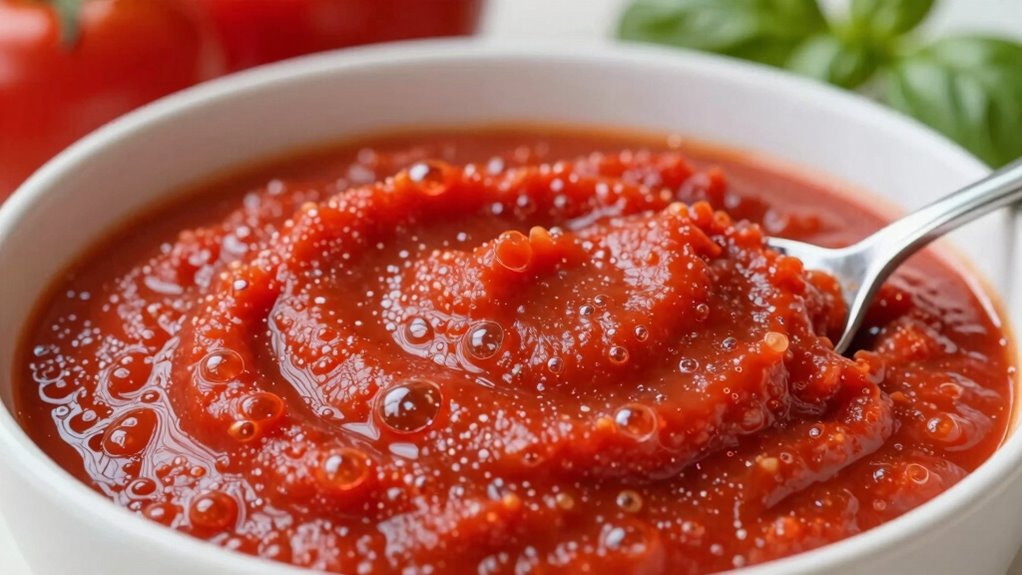
If your tomato puree still isn’t smooth enough, it’s often because the mixture hasn’t been blended long enough or isn’t broken down sufficiently. To improve texture, verify you’ve removed seeds beforehand, as they can cause graininess. Seed removal not only smooths the puree but also enhances its overall texture. If stubborn bits remain, blend the mixture a little longer, using a high-speed blender or immersion blender. For extra smoothness, pulse gently to break down larger particles without overprocessing. If you notice uneven texture, try passing the puree through a fine sieve or use a tamper to push ingredients through your blender’s blades. These steps will help you achieve a silky, uniform puree without the need for straining, making your sauce perfectly smooth.
Why Mastering This Trick Elevates All Your Tomato-Based Dishes

Achieving a perfectly smooth tomato puree isn’t just about improving texture; it transforms the overall quality of your dishes. When your puree is silkier, it blends seamlessly into soups, sauces, and stews, creating a consistent, rich base that elevates every bite. This texture enhancement guarantees your dishes look professional and feel luxurious. Additionally, mastering this trick boosts flavor, as a smoother puree allows the natural sweetness and acidity of the tomatoes to shine through more vividly. Without the need for straining, you save time while still achieving a refined consistency. When you use this technique regularly, your tomato-based dishes will taste more vibrant and refined, making every meal a confirmation of your skill and attention to detail.
Frequently Asked Questions
Can This Trick Work With Canned Tomato Purees?
Yes, this trick works with canned tomato purees. You can use it to enhance the texture by making the puree silkier without straining, and it helps preserve the natural flavor. Simply blend or stir the puree vigorously, or add a small amount of olive oil, to achieve a smooth, velvety consistency. This method guarantees you get a richer, more appealing texture while maintaining the authentic tomato flavor.
Does the Trick Affect the Tomato Flavor or Acidity?
The trick doesn’t considerably affect the tomato flavor or acidity. You might notice a slight difference in texture, but the overall flavor remains intact. The process is gentle enough that it preserves the natural acidity and vibrant taste of the tomatoes. So, you can confidently use this method without worrying about flavor alteration or impacting the acidity, ensuring your puree stays delicious and balanced.
Is This Method Suitable for Making Tomato Sauces or Soups?
This method is perfect for making tomato sauces or soups, as it enhances texture and preserves flavor without adding extra steps. You get a smoother, silkier consistency, making your dishes more appealing. The technique maintains the natural acidity and rich tomato flavor, ensuring your sauce or soup tastes fresh and vibrant. Use it consistently for a refined, professional finish, especially when you want a luxurious mouthfeel without compromising flavor.
How Long Does the Process Take From Start to Finish?
The entire process takes about 15 to 30 minutes, depending on your preparation steps. You’ll start by washing and chopping the tomatoes, then blend them until smooth, which takes just a few minutes. Timing considerations include ensuring the tomatoes are ripe and properly prepared. Once blended, you can quickly adjust the puree’s consistency, making it a fast and efficient way to get silky tomato results without straining.
Can I Use This Technique With Other Vegetable Purees?
Think of your kitchen as a painter’s palette—yes, this technique works with other vegetable purees too. By blending and using a fine sieve, you enhance texture and preserve flavor, making every puree silkier and more vibrant. This approach isn’t limited to tomatoes; it’s your secret for achieving smooth, refined results with carrots, squash, or peas. Keep experimenting—your dishes will thank you with richer, more consistent textures.
Conclusion
Once you master this trick, your tomato puree will be as smooth as glass, transforming your dishes effortlessly. I once made a simple marinara that tasted like it was simmered all day, simply by applying this technique. Think of it as polishing a gem—once refined, it shines brighter. With this small step, you’ll elevate every sauce and soup, turning everyday ingredients into culinary treasures. Your kitchen adventures just got a whole lot smoother!