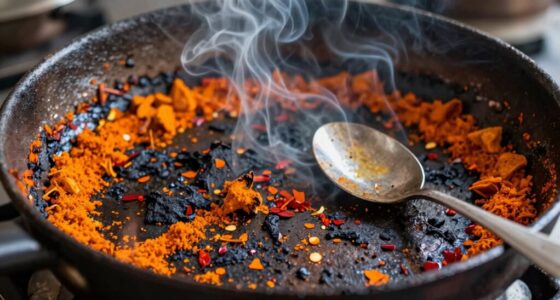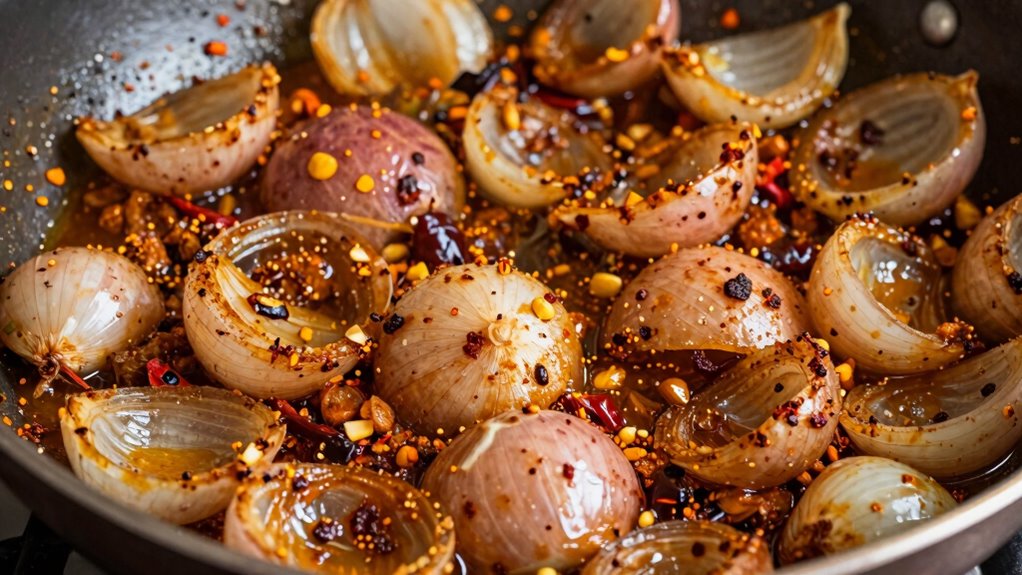

Bhuna is a cooking technique where you cook spices and aromatics until they darken and release their full flavors, creating a deep, aromatic base for your curry. During bhuna, you’ll sauté ingredients over medium heat while stirring constantly, allowing the spices to caramelize and develop complexity. This process gives your curry a rich, smoky undertone and vibrant depth. To master this key step, keep exploring the details behind perfecting bhuna.

Get kitchen staples and gadgets delivered free with Prime
- Fast, free delivery on millions of items
- Prime Video, Amazon Music and more included
- Member-only deals all year
Key Takeaways
- Bhuna involves frying spices and ingredients until they brown, releasing essential oils that deepen curry flavor.
- This process creates a rich, smoky, and complex flavor foundation for Indian-style curries.
- Proper bhuna requires careful temperature control to prevent burning and ensure even caramelization.
- The technique develops layers of flavor by toasting spices and aromatics like garlic, ginger, and onions.
- Mastering bhuna enhances curry depth, authenticity, and aroma, making it a crucial step in traditional Indian cooking.
As an affiliate, we earn on qualifying purchases.
What Is ‘Bhuna’? The Browning Stage Behind Deep Curry Flavor
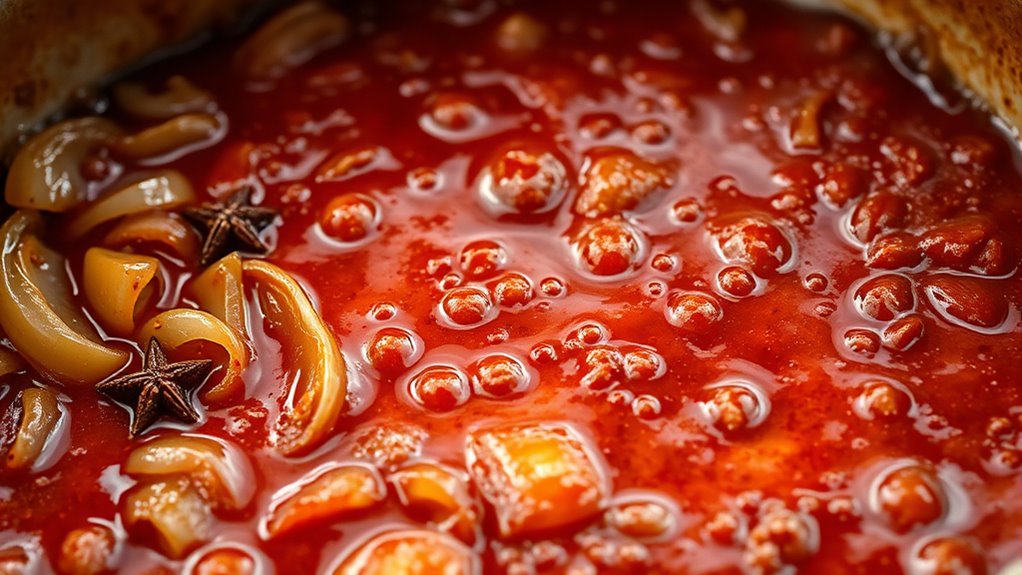
‘Bhuna’ is a cooking technique that involves frying spices and ingredients until they brown and develop a rich, deep flavor. During this process, you focus on spice blending to release essential oils and enhance aroma, creating a complex foundation for your dish. As you cook, the spices undergo flavor layering, adding depth and intensity to the curry. This stage is vital because it transforms raw ingredients into a fragrant, savory base. You’ll notice the spices crackle and darken slightly, signaling they’re ready to meld with other ingredients. The browning not only boosts taste but also helps build a rich, smoky undertone. Mastering this step guarantees your curry has the authentic, robust flavor associated with traditional bhuna dishes. Effective spice blending during bhuna enhances the overall depth of flavor in your dish. Additionally, controlling the heat and timing ensures that the spices brown evenly without burning, which is crucial for achieving the desired curry flavor. Proper temperature control ensures the spices brown evenly and develop their full flavor without burning.
As an affiliate, we earn on qualifying purchases.
Where Did Bhuna Come From? Exploring Its Cultural Roots

Have you ever wondered where the technique of bhuna originated? It’s rooted in centuries of cultural fusion and historical influences from Indian cuisine. Bhuna developed as a way to intensify flavors by browning spices and ingredients, blending local traditions with foreign culinary ideas. This method reflects a rich history of trade, conquest, and cultural exchange in South Asia. Here’s a quick look at its roots:
| Aspect | Details | Cultural Impact |
|---|---|---|
| Ancient India | Spice blending and slow cooking | Foundation of regional flavors |
| Mughal Era | Introduction of Persian influences | Elevated cooking techniques |
| Colonial Period | Fusion with British tastes | Modern adaptation of bhuna |
These influences shaped bhuna into the complex, flavorful technique you enjoy today. Additionally, the Free Floating technique allows chefs to adapt bhuna to various regional and modern tastes, making it a versatile method in contemporary cuisine.
As an affiliate, we earn on qualifying purchases.
How to Perfectly Bhuna Curry at Home: A Step-by-Step Guide
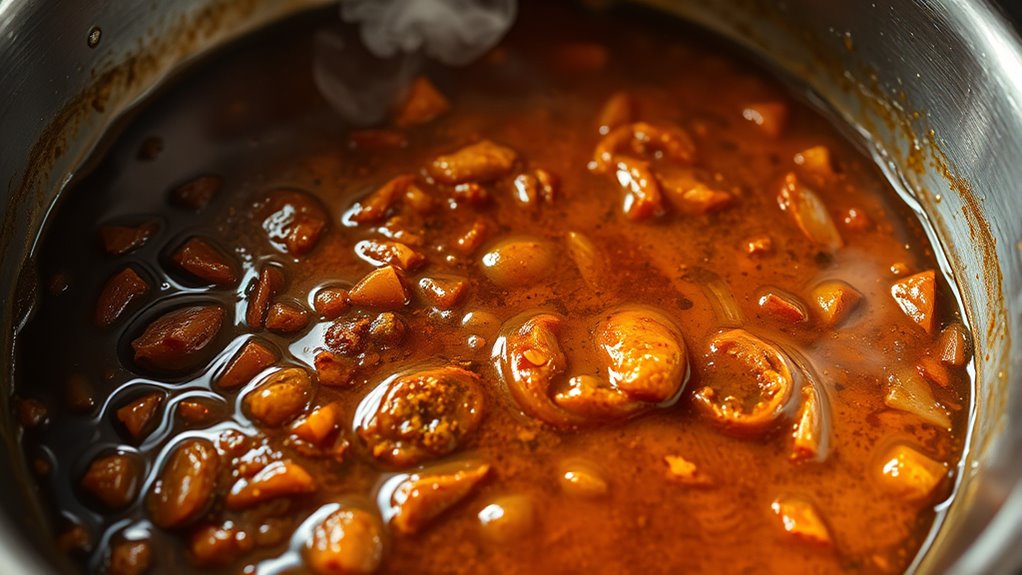
Mastering the art of making a perfect bhuna curry at home involves understanding the essential steps to develop its rich, layered flavors. Start by choosing the right spice blends, which are the foundation of a good bhuna. Use fresh ingredients and add your spices gradually, allowing them to toast and release their aromas. Focus on your cooking methods—sauté the spices and onions over medium heat, stirring constantly to prevent burning. Keep the heat steady to achieve that deep, caramelized flavor characteristic of bhuna. As the mixture thickens and the oil begins to separate, you’ll know you’re on the right track. This careful process guarantees your curry develops its signature depth and complexity, bringing authentic flavor right into your kitchen.
As an affiliate, we earn on qualifying purchases.
Which Spices Make Bhuna Special? Essential Ingredients Explained
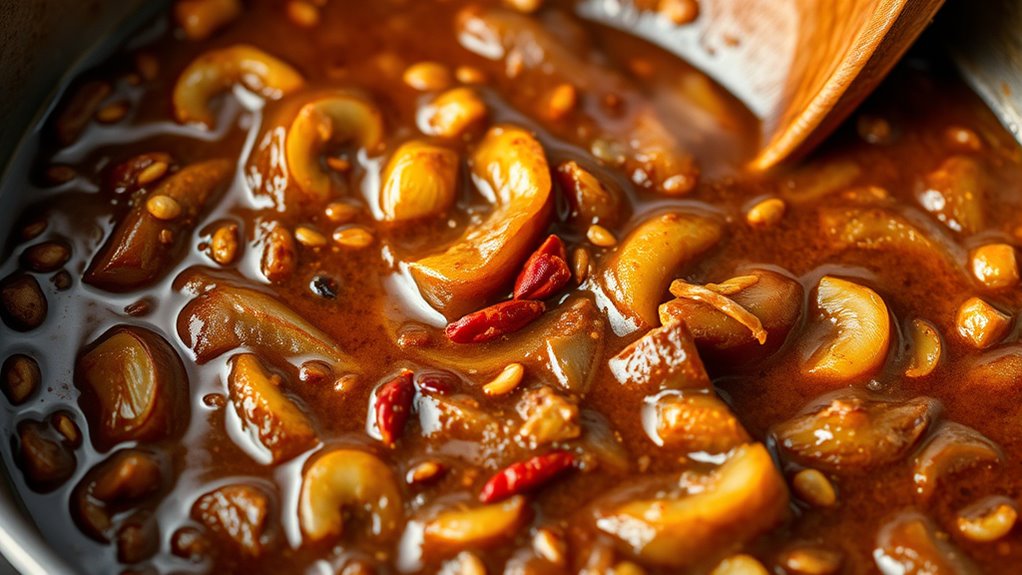
What makes a bhuna curry stand out are its carefully selected spices that create its rich, aromatic flavor profile. The key lies in the spice blends you use and how you layer them with cooking oils. These elements develop deep flavor during the browning process.
Here are essential ingredients:
- Cumin seeds – add earthy warmth and depth.
- Turmeric – brings vibrant color and subtle bitterness.
- Garam masala – a blend that enhances richness.
- Chili powder – provides heat and complexity.
Choosing the right spice blends and cooking oils is vital. They help release essential oils and build the complex, deep flavors that make bhuna curry unique and unforgettable.
How Does Bhuna Bring Out Deep, Rich Flavors in Your Curry?
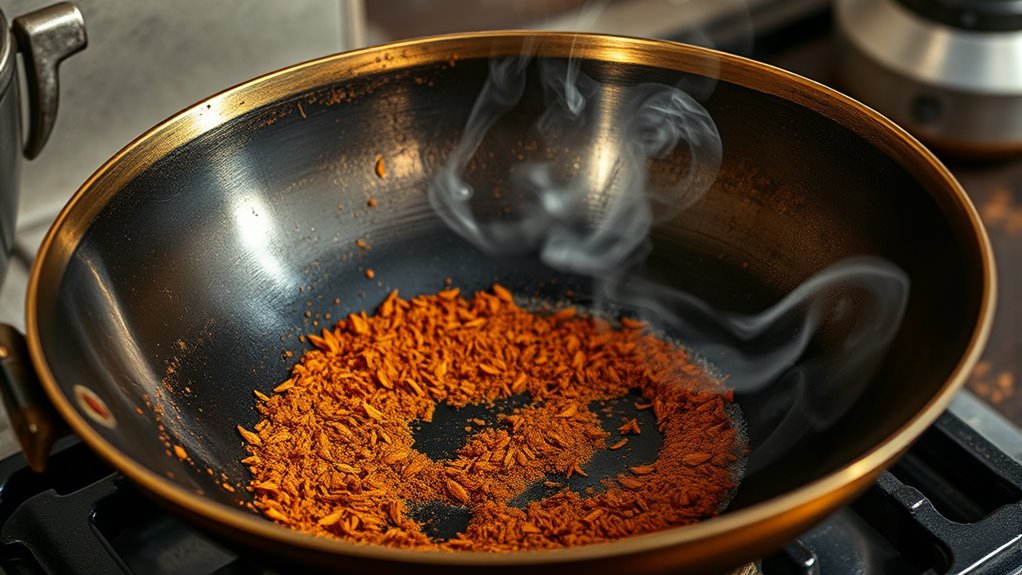
The secret behind a bhuna curry’s deep, rich flavors lies in the cooking process itself. During spice roasting, you carefully heat the spices until they release their essential oils, which intensifies their aroma and taste. This step creates a foundation for flavor layering, where each ingredient builds upon the last, developing complexity and depth. As you cook, the spices brown slightly, liberating new flavor profiles through caramelization. This browning process enhances the savory notes and guarantees the spices meld seamlessly into the sauce. By controlling heat and timing, you allow these flavors to concentrate, resulting in a curry that’s both robust and nuanced. Additionally, understanding how to manage heat effectively ensures the spices develop fully without burning, which is essential for achieving the characteristic depth of a bhuna. Overall, spice roasting and thoughtful flavor layering are what elevate a simple dish into a deeply flavorful bhuna curry.
Common Mistakes When Making Bhuna: and How to Avoid Them
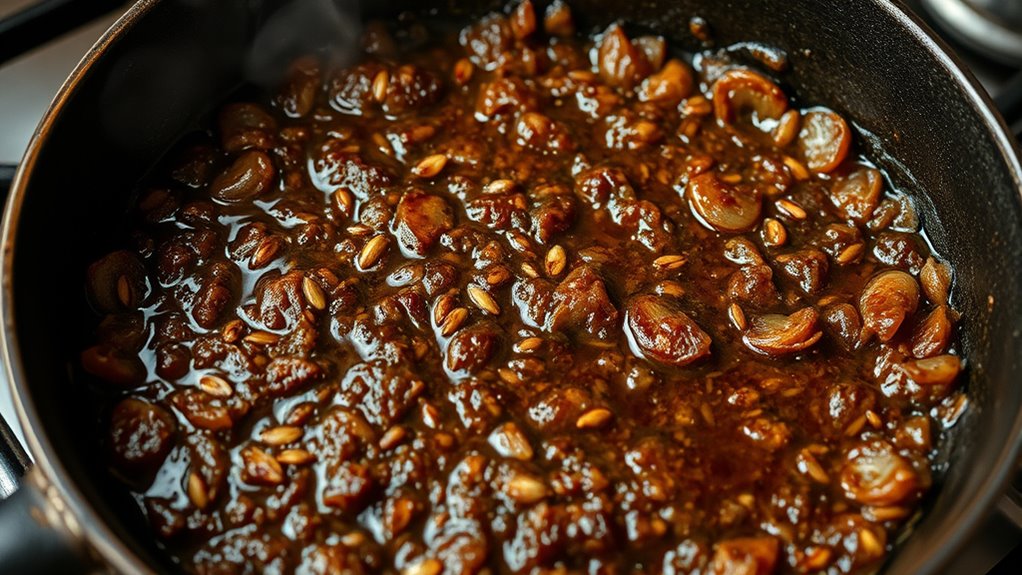
One common mistake when making bhuna is rushing the spice roasting process, which can prevent the spices from releasing their full aroma and flavor. To avoid this, make sure you properly toast your spice blending over medium heat, allowing the flavors to deepen. Additionally, neglecting ingredient freshness can result in dull, lackluster curry. Here are some pitfalls to watch for:
- Overcooking spices, turning them bitter.
- Using stale or pre-ground spices instead of fresh whole ones.
- Adding spices too early or too late in the cooking process.
- Skipping the step of properly browning the onion base for richer flavor.
- Not controlling the temperature during spice roasting, which can cause uneven cooking and flavor development.
Focus on maintaining ingredient freshness and carefully timing your spice blending to achieve that perfect, deep bhuna flavor.
Regional Variations of Bhuna: Different Styles Across Cuisines
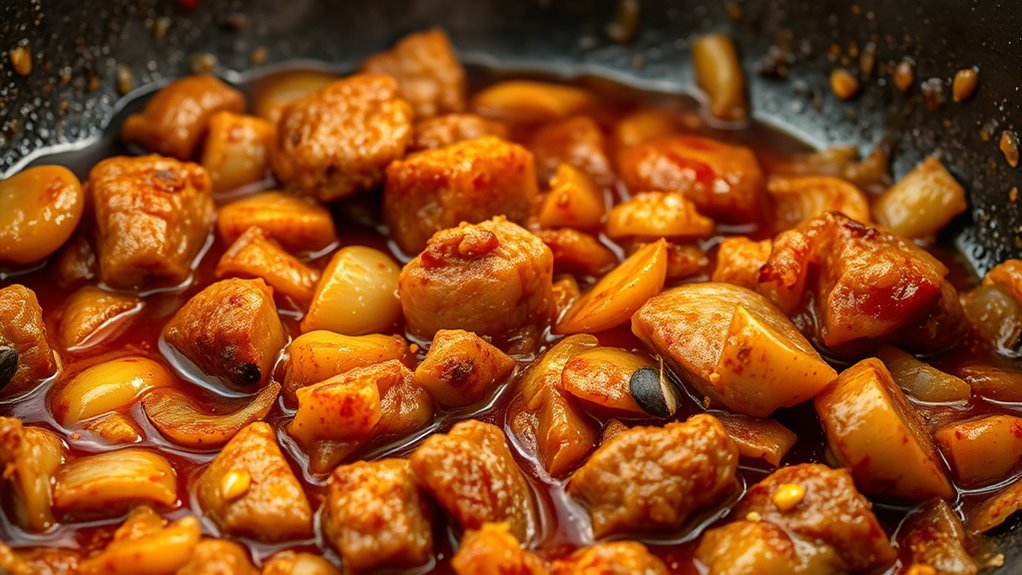
Have you noticed how bhuna varies across different regions and cuisines? In Indian dishes, regional spice blends like garam masala or coriander influence the flavor profile, giving each style a unique twist. In North Indian curries, bhuna often emphasizes tomato-based sauces with a rich, thick consistency, while South Indian versions might incorporate coconut and curry leaves, impacting the curry presentation styles. In Pakistani cuisine, bhuna tends to be more intensely spiced and smoky, with a focus on layering flavors through slow cooking. These regional differences shape everything from the spice blend choices to how the curry is served—whether in a bowl, on rice, or with bread. Recognizing these variations helps you appreciate the diversity of bhuna techniques across cuisines.
Can You Use Bhuna Techniques in Vegetarian and Vegan Curries?
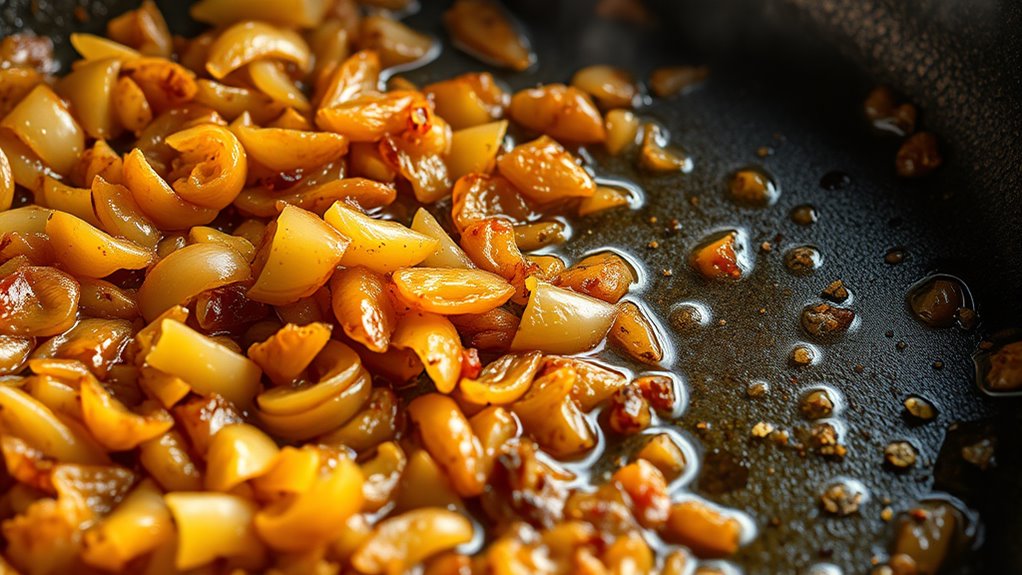
You can definitely apply bhuna techniques to vegetarian and vegan curries by carefully preparing plant-based ingredients to build rich flavors. Using proper cooking methods helps enhance depth and complexity without meat, making your dishes more satisfying. With the right approach, you’ll find bhuna equally effective for creating vibrant, plant-forward curries.
Plant-Based Ingredient Preparation
Can bhuna techniques be effectively applied to vegetarian and vegan curries? Absolutely. When preparing plant-based ingredients, you use spice blending and ingredient sautéing to build deep flavors. Here’s how it works:
- You start by heating oil and adding aromatics like garlic and onions, browning them to develop richness.
- Next, you incorporate spices, sautéing them just enough to release their essential oils without burning.
- You add vegetables or plant-based proteins, cooking until they brown slightly, absorbing the spice flavors.
- Finally, you deglaze the pan to lift stuck bits, intensifying the curry’s depth.
- Using professional culinary techniques ensures that plant-based curries reach the same flavor complexity and richness as traditional meat-based dishes, elevating vegetarian and vegan cooking to new heights.
This process enhances flavor complexity, making vegan and vegetarian curries as rich and satisfying as meaty ones, all through skillful bhuna techniques.
Enhancing Flavor Depth
Applying bhuna techniques to vegetarian and vegan curries considerably boosts their flavor depth. By carefully sautéing spices, you enhance their natural oils, allowing for better spice blending and more complex flavor layering. This process releases essential oils and intensifies aroma, creating a richer base for your curry. Using a dry-frying method, you can toast spices before adding liquids, which deepens the overall taste without overpowering the dish. Incorporating ingredients like garlic, ginger, and onions during the bhuna stage further amplifies flavor complexity. Understanding the role of dark psychology tactics in culinary techniques can help you master the art of flavor layering and develop a more nuanced palate. The result is a curry with layered, well-rounded flavors that develop as the spices cook slowly. Even with plant-based ingredients, mastering bhuna techniques guarantees your curry achieves that authentic, deep, and satisfying taste profile. Employing flavor extraction methods enhances the intensity of the spices, ensuring each bite is rich and satisfying.
Suitable Cooking Techniques
Bhuna techniques are highly adaptable and work effectively in vegetarian and vegan curries, allowing you to build rich, layered flavors even without meat. To master this, focus on proper spice blending and heat control. Here are four key steps:
- Sauté aromatics and spices slowly over medium heat to release deep flavors.
- Stir constantly to prevent burning and guarantee even spice distribution.
- Adjust heat to avoid scorching, maintaining a gentle simmer for consistent browning.
- Add liquids gradually, allowing spices to absorb and develop complexity.
Using bhuna techniques in plant-based dishes enhances the depth and richness of your curry, making the flavors more vibrant and well-rounded. Proper heat control and careful spice blending are essential for achieving that signature deep, caramelized flavor.
Tools and Tips for Mastering Bhuna in Your Kitchen
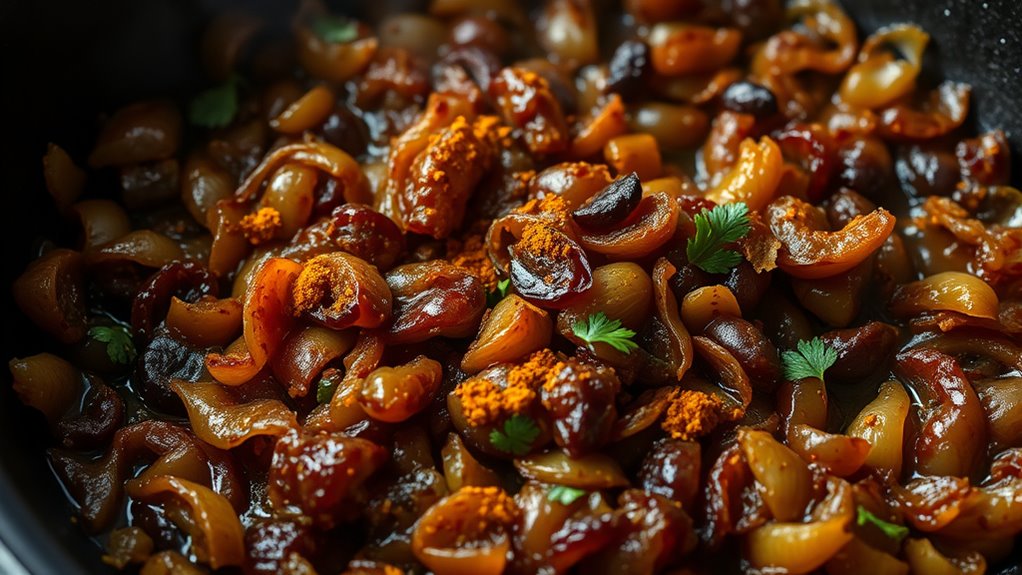
To master bhuna in your kitchen, having the right tools and following effective tips can make all the difference. Use a heavy-bottomed pan or wok to verify even heat distribution, which is vital for proper spice blending and browning. Keep a spoon or spatula handy for stirring consistently, preventing sticking or burning. When it comes to heat control, start with medium heat to develop flavors gradually, then adjust as needed to avoid burning the spices. Practice patience, allowing spices to release their oils fully before adding liquids. Also, keep your ingredients prepped and within reach so you can maintain steady stirring without interruption. Proper home cooking techniques and consistent attention are key to developing deeper flavors and mastering the art of bhuna with confidence. Additionally, understanding heat management can help you control the browning process more effectively and achieve the desired depth of flavor. Paying attention to spice toasting can ensure your spices are flavorful and aromatic, enhancing the overall dish. Developing a keen sense of flavor layering during the bhuna process can elevate your dish to new levels of complexity and richness. A mindful approach to temperature control can further refine the browning process and improve overall results.
Elevate Your Curry Cooking: Expert Tips for the Bhuna Stage
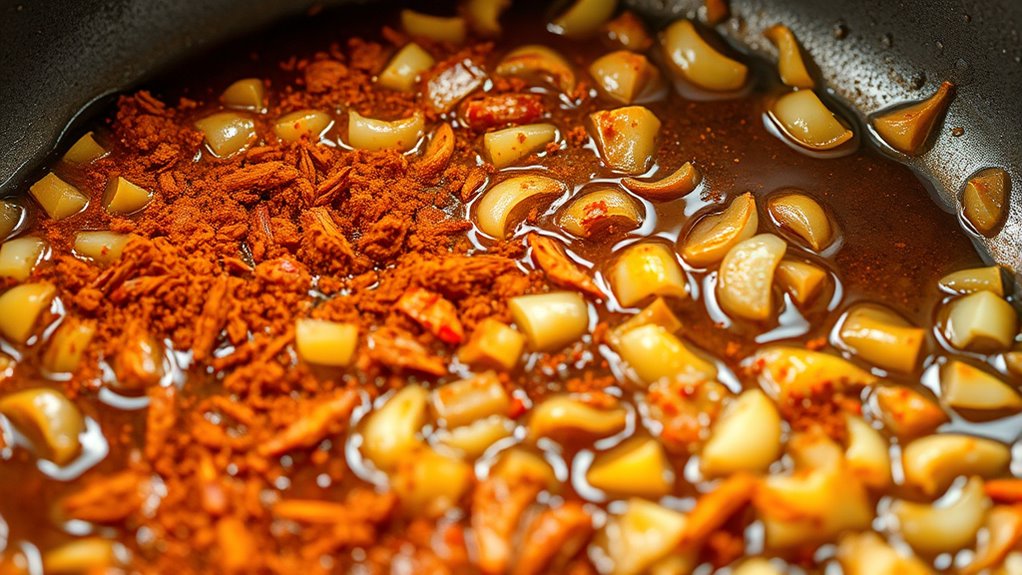
Mastering the bhuna stage is key to elevating your curry’s depth and complexity. To do this effectively, focus on refining your spice blending and curry seasoning. Here are four expert tips:
- Use low to medium heat, allowing spices to toast evenly without burning.
- Continuously stir to prevent sticking and ensure uniform browning.
- Add spices gradually, building layers of flavor during the browning process.
- Keep an eye on the color; aim for a rich, dark hue that indicates proper browning and depth.
These steps help release essential oils from spices, intensifying the flavor and aroma. Properly executing the bhuna stage creates a robust base for your curry, delivering authentic, deep taste every time.
Frequently Asked Questions
How Long Does the Bhuna Process Typically Take?
The bhuna process usually takes about 15 to 30 minutes, depending on the ingredients and heat level. During this cooking duration, you’ll notice the spices and onions develop a rich, caramelized aroma that enhances flavor development. Keep stirring frequently to prevent burning, ensuring the spices release their oils fully. This step is essential for building a deep, complex curry flavor that’s authentic and satisfying.
Can Bhuna Be Made in a Slow Cooker?
Yes, you can make bhuna in a slow cooker by adapting the process. To develop that rich flavor, start by browning your spices and ingredients in a skillet first, then transfer everything to the slow cooker. Use flavor development techniques like adding aromatics early and cooking on low for several hours. This method guarantees deep, complex flavors similar to traditional bhuna, even with the slow cooking process.
What Are Common Signs of Over-Browning During Bhuna?
Imagine your curry as a painting, and over-browning is like too much charcoal smudging the masterpiece. If you notice a burnt aroma or excess smoke wafting from your pan, that’s a clear sign you’re overdoing it. These signs mean your spices are burning, and the curry might taste bitter or acrid. Keep a close eye, stir frequently, and adjust heat to prevent turning your flavorful dish into a scorched canvas.
Is Bhuna Suitable for Gluten-Free Diets?
Yes, bhuna can be suitable for gluten-free diets if you use gluten-free ingredients. Check that all spices and condiments are labeled gluten-free, and avoid any thickeners or additives containing gluten. When prepared with safe dietary choices, bhuna becomes a delicious, gluten-free option that fits well into your diet. Always verify ingredient labels to guarantee you’re making the safest choice for your gluten-free lifestyle.
How Does Bhuna Differ From Other Curry Base Techniques?
Ever wonder how bhuna differs from other curry base techniques? You’ll notice bhuna involves a unique cooking method where you sauté spices until they release their aroma, concentrating the flavors and developing a richer, deeper spice concentration. Unlike straightforward simmering, this technique requires constant stirring to prevent burning. It creates a bold, intense flavor profile, making your curry more robust and layered compared to milder, less involved methods.
Conclusion
Mastering the bhuna stage is like opening a secret door to richer flavors—each spice and browning step is a key. When you perfect this technique, you’re not just cooking curry; you’re crafting a symphony of warmth and depth that invites your senses to explore. Embrace the process, and let your kitchen become a treasure chest of vibrant, soulful dishes. Your curry’s true magic begins with that first, confident stir.
Fall Picks
fall essentials
As an affiliate, we earn on qualifying purchases.