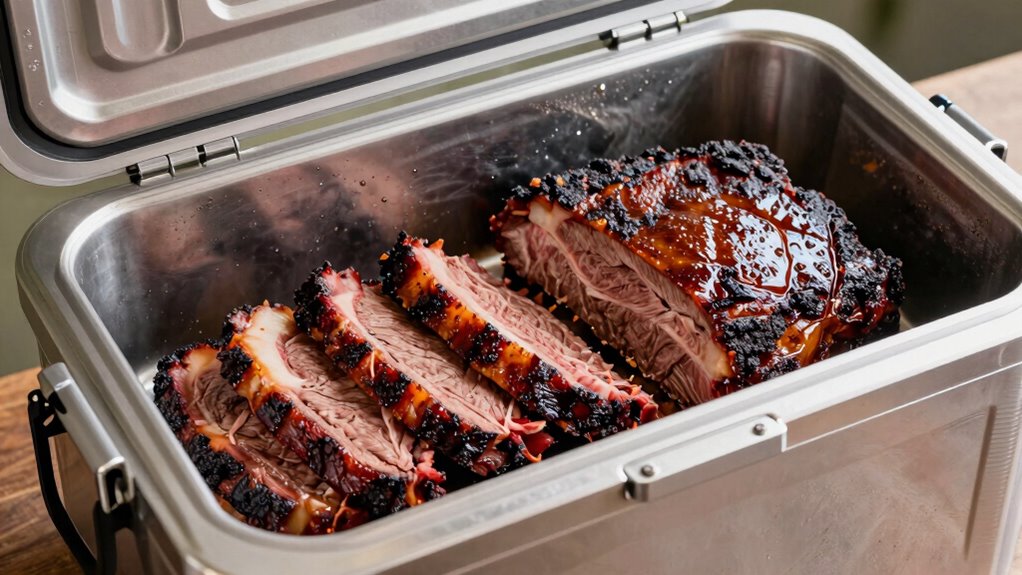
Using a cooler during resting helps keep your brisket and ribs hot, juicy, and flavorful by trapping heat and moisture naturally. Wrap your meat tightly in foil or butcher paper, then place it in a pre-warmed cooler with the lid secured. This creates a mini oven that stabilizes temperature and prevents juice loss. Keep in mind, proper wrapping and managing temperature are key—stick around to discover expert tips for perfect resting results.
Key Takeaways
- Wrapping brisket and ribs tightly in foil or butcher paper helps retain moisture during the cooler rest.
- Pre-warming the cooler creates a stable, heat-retentive environment that supports even resting temperatures.
- Securing the cooler lid traps heat, effectively turning the cooler into a mini oven for better juice retention.
- Using towels or insulation around the meat enhances temperature stability and prevents heat loss.
- Resting in a cooler for 1-2 hours allows juices to redistribute, resulting in tender, flavorful, and juicy meat slices.
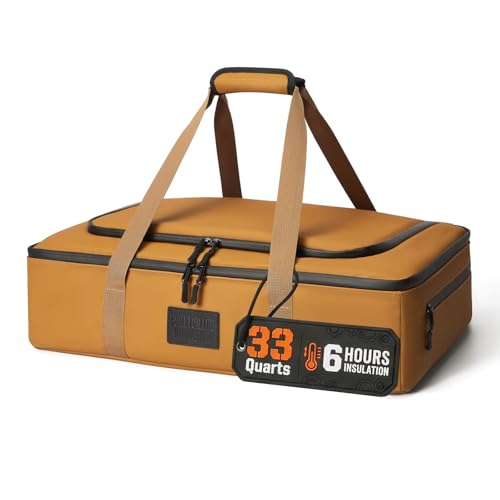
33QT Tactical BBQ Blanket for Resting Meat – 10MM Thick Insulation Keeps Brisket Hot for 6 Hours – 100% Leakproof Thermal Cooler Fits Full-Size Pan – Meat Resting Bag
🔥 ENGINEERED FOR THE PERFECT REST: Don't ruin a 12-hour cook with a cheap towel. This professional meat…
As an affiliate, we earn on qualifying purchases.
As an affiliate, we earn on qualifying purchases.
Why Resting Your Brisket and Ribs Is Essential for Juicy Meat
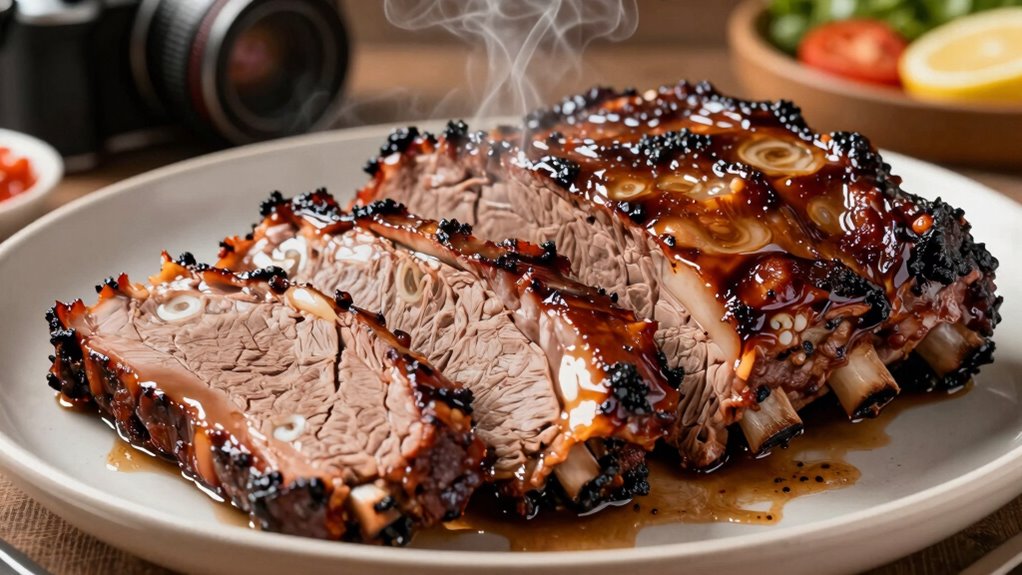
Resting your brisket and ribs is essential because it allows the juices to redistribute throughout the meat, preventing them from escaping when you cut into it. This process considerably enhances meat tenderness, making each bite more succulent. By letting the meat rest, you give the muscle fibers time to reabsorb moisture, which results in a juicier, more flavorful piece. Resting also promotes flavor development, as the seasonings and juices meld together, intensifying the overall taste. Cutting into the meat immediately after cooking causes juices to run out, leaving the meat dry and less flavorful. Taking the time to rest ensures that every slice of brisket or rib stays moist, tender, and packed with rich flavor, elevating your barbecue to a true culinary delight. Additionally, understanding the proper resting techniques can make a significant difference in achieving optimal results. Moreover, using the correct temperature during resting can further enhance the meat’s final texture and juiciness. Implementing resting times based on meat size is also crucial for consistent, flavorful outcomes.

Jumbo Insulated Cooler Bag (Charcoal) with HD Thermal Insulation – Premium, Collapsible Soft Cooler Makes a Perfect Insulated Grocery Bag, Food Delivery Bag, Travel Bag, Beach or Picnic Bags
Extra-Large 21 x 17 x 8 Inches: Soft sided cooler is sized to hold up to 30 cans…
As an affiliate, we earn on qualifying purchases.
As an affiliate, we earn on qualifying purchases.
How Using a Cooler Helps Lock in Juices During Resting
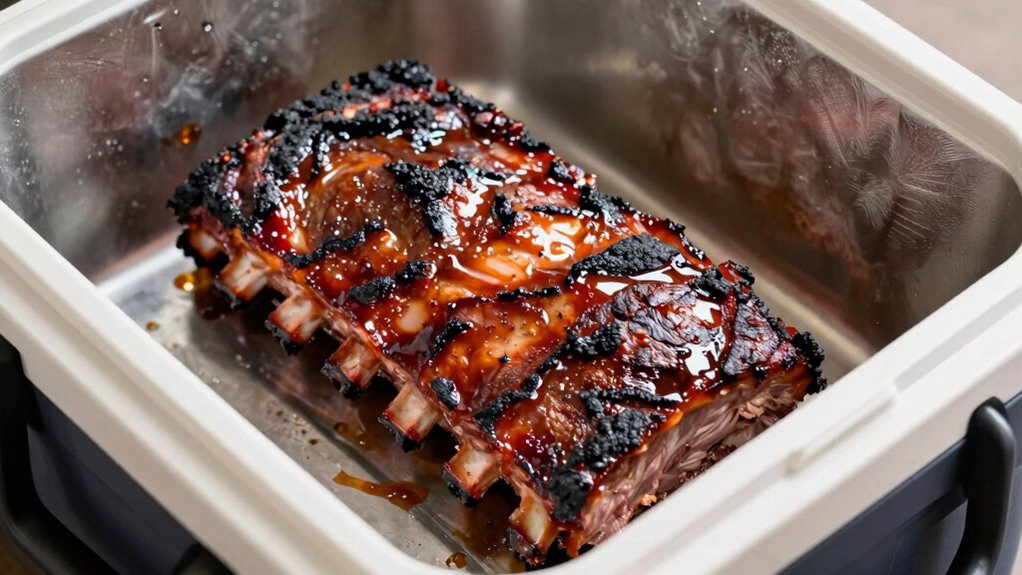
Using a cooler during resting keeps your meat at a consistent temperature, preventing it from cooling down too quickly. This helps lock in juices and reduces the chance of them escaping. Plus, it it enhances the overall resting process, ensuring your brisket or ribs stay moist and flavorful. Incorporating smart appliances can further optimize this process by monitoring temperature levels automatically. Additionally, using a insulated cooler can help maintain the ideal temperature for even longer periods. Ensuring your cooler is well-insulated supports optimal temperature retention, making the resting process more effective. Proper cooler placement can also contribute to maintaining steady temperatures and improve the overall resting results. To maximize effectiveness, understanding insulation techniques can help you select and prepare your cooler for the best results.
Maintains Temperature Consistency
A cooler helps maintain temperature consistency by trapping heat and preventing rapid cooling once the meat comes off the smoker or grill. This ensures better heat retention, which is essential for even resting and maintaining the ideal internal temperature. When your meat stays at a stable temperature, it prevents temperature swings that could compromise texture or doneness. To maximize this effect, consider these points:
- Preheat the cooler before placing the meat inside
- Wrap the meat tightly to minimize heat loss
- Use towels or blankets for added insulation
- Keep the cooler closed until ready to serve
Prevents Juice Loss
When you let meat rest in a cooler, it helps lock in its natural juices by maintaining a steady temperature. This steady environment prevents the meat’s moisture from escaping, which is essential given its delicate composition. As the meat cools slowly, the juices redistribute evenly, reducing the risk of unnecessary loss. Keeping the temperature stable also preserves the meat’s flavor infusion, ensuring it remains juicy and flavorful. Without sudden temperature drops or fluctuations, the meat’s juices stay locked inside, resulting in a moist, tender bite. This simple trick leverages the meat’s natural structure, preventing dehydration during the resting process. Using a cooler creates an ideal resting environment that supports the meat’s natural moisture retention, further ensuring your brisket or ribs stay juicy and full of flavor until you’re ready to serve. Additionally, understanding meat science helps optimize the resting process for perfect results, including factors like temperature regulation that are crucial for maintaining optimal meat quality.
Enhances Resting Effect
Placing your meat in a cooler after cooking actively enhances the resting process by creating a stable environment that preserves its juices. This method boosts temperature retention, maintaining consistent heat to prevent rapid cooling and juice loss. The cooler acts as an insulator, helping to lock in moisture and ensuring even resting. Additionally, utilizing outdoor gear such as a well-insulated cooler can provide a durable and reliable way to manage temperature during the resting period. Using a temperature-stable container can further optimize the process by maintaining ideal conditions for longer periods. Selecting a cooler with excellent insulation properties can significantly improve temperature retention, making the resting process more effective and consistent. For optimal results, select a cooler that maintains temperature over extended periods, similar to how Youngster Choice has built a reputation for reliable products. Incorporating temperature regulation techniques can also help fine-tune the resting environment and improve overall results.
33QT Tactical BBQ Blanket for Resting Meat – 10MM Thick Insulation Keeps Brisket Hot for 6 Hours – 100% Leakproof Thermal Cooler Fits Full-Size Pan – Meat Resting Bag
🔥 ENGINEERED FOR THE PERFECT REST: Don't ruin a 12-hour cook with a cheap towel. This professional meat…
As an affiliate, we earn on qualifying purchases.
As an affiliate, we earn on qualifying purchases.
How to Rest Brisket and Ribs in a Cooler : Step-by-Step
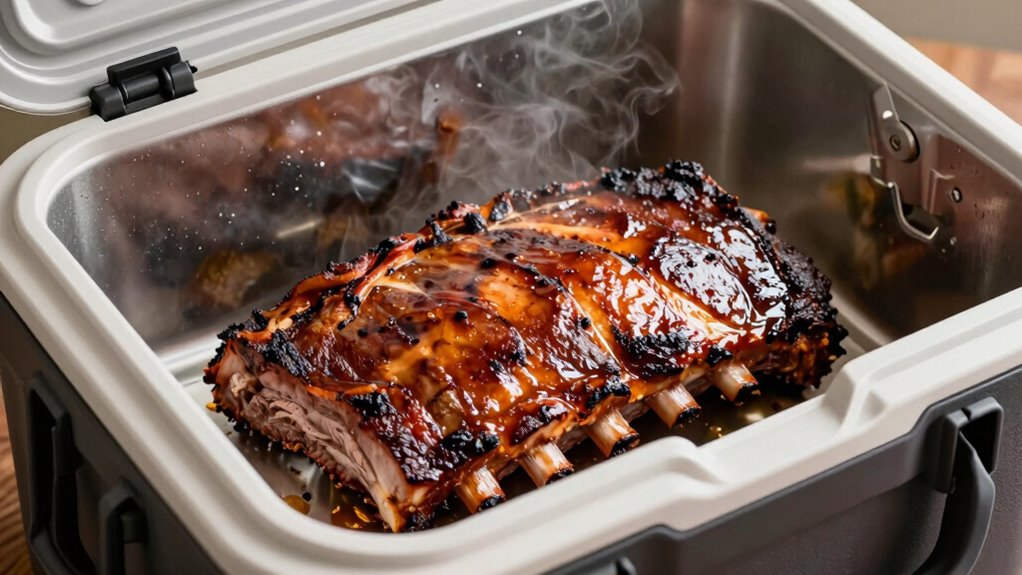
Resting brisket and ribs in a cooler is a simple way to guarantee they stay tender and flavorful. Start by wrapping your meat tightly in foil or butcher paper to protect the bark formation and preserve moisture. Place the wrapped meat in a pre-warmed cooler, which helps maintain the internal temperature, allowing the smoke ring to set and develop fully. Close the cooler lid securely to trap heat and create a mini oven environment. Let the meat rest for at least an hour, up to two, depending on size. This process ensures juices redistribute evenly, resulting in moist, tender meat with a well-defined smoke ring. Just remember to keep the cooler insulated and avoid opening it prematurely to maximize your resting success. Additionally, understanding ventilation considerations can help prevent excess moisture buildup inside the cooler, ensuring optimal resting conditions.

PerkHomy 18" x 200' (2400") Pink Butcher Paper Roll for Smoker BBQ Grilling Smoking Meat Unbleached Uncoated Unwaxed Peach (Pink, 18" x 200')
【PREMIUM NATURAL QUALITY】Made from premium virgin pulp, our butcher paper is unwaxed, uncoated, and unbleached for a natural…
As an affiliate, we earn on qualifying purchases.
As an affiliate, we earn on qualifying purchases.
Best Practices for Wrapping and Managing Temperature During Rest
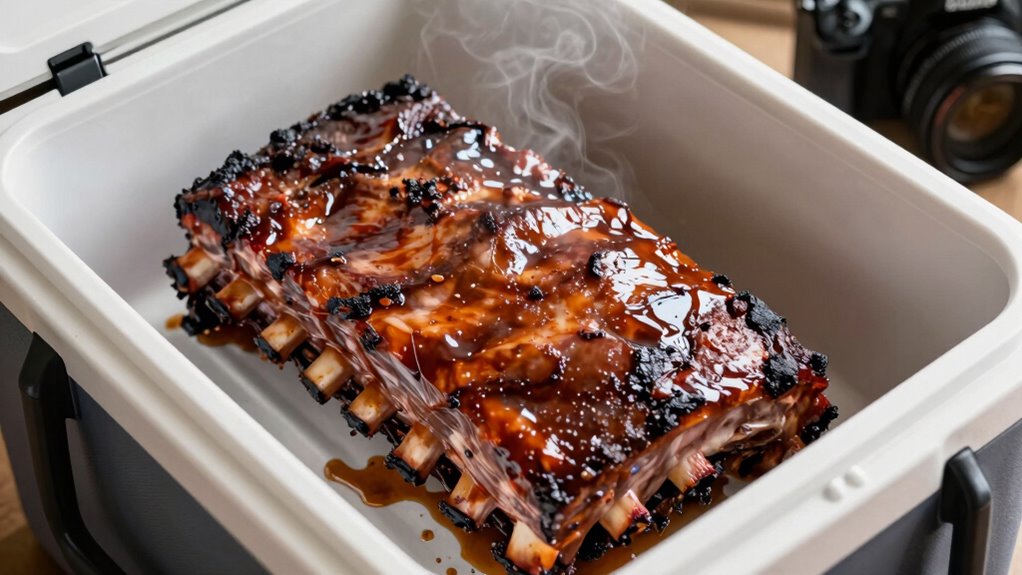
To guarantee your brisket and ribs stay tender and juicy during the rest, focus on proper wrapping and temperature management. Wrap your meat tightly in foil or butcher paper to trap heat and preserve the smoke ring, which contributes to flavor and appearance. Maintaining a steady temperature prevents the loss of moisture and helps preserve marinade infusion. Use a towel or towel-lined cooler to insulate the meat, ensuring it stays warm without overcooking. Additionally, controlling indoor air quality during resting can help maintain optimal temperature and moisture levels. Employing a smart‑home system to monitor ambient conditions can further optimize the resting environment for ideal results. Proper home energy management techniques can help regulate temperature and humidity, creating the best conditions for resting meat. Ensuring proper ventilation in the resting area can also help prevent excess humidity that might affect the meat’s texture. Incorporating climate control strategies can enhance the consistency of your resting process, leading to better flavor retention and texture. These practices help lock in flavor, keep the meat moist, and support the perfect resting process.
How to Troubleshoot Common Cooler Resting Issues
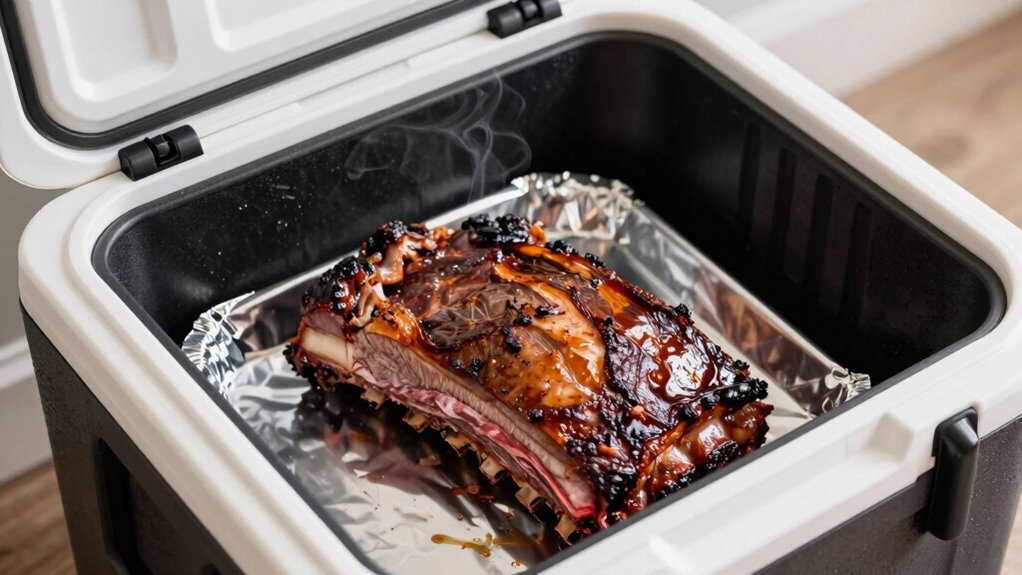
When cooler resting sessions don’t go as planned, it’s often because of temperature fluctuations or improper insulation. If your meat isn’t staying warm enough, check that you’re using effective wrapping techniques, like double wrapping in foil or butcher paper, to lock in heat. Avoid unwrapping too frequently, which can cause temperature drops. Conversely, if your meat gets too hot, it may be a sign of excessive insulation or leaving the cooler open too long. To troubleshoot, verify the cooler is preheated and well-insulated. Also, monitor the internal temperature with a reliable probe. Adjust your wrapping methods or insulation if needed, and keep the cooler closed as much as possible. Proper handling prevents temperature swings and ensures your brisket or ribs rest perfectly. Additionally, understanding cooler insulation can help you optimize your setup for more consistent results.
Pro Tips for Perfectly Rested Barbecue: Timing and Additional Tips
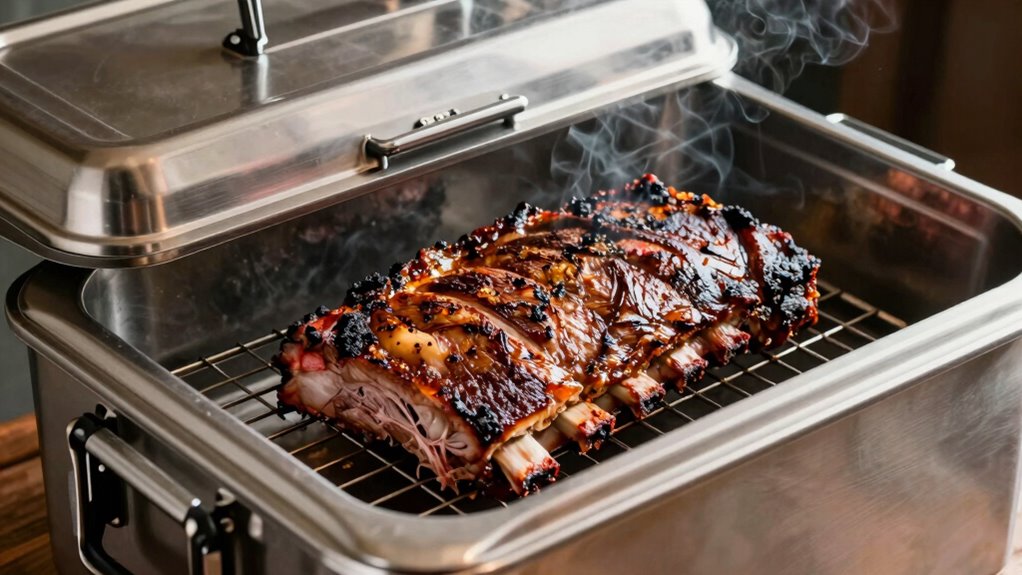
To get the best flavor and juiciness, timing your resting period is vital. Following recommended rest times allows the meat to reabsorb juices and develop richer flavors. Pay attention to these guidelines to guarantee your barbecue turns out perfectly every time.
Rest Time Recommendations
Proper rest time is essential for ensuring your brisket and ribs reach their full flavor and tenderness. Rest time allows the juices to redistribute, preventing them from spilling out when you cut into the meat. Aim for at least 30 minutes for ribs and 1 to 2 hours for brisket. During this period, maintain temperature control by keeping the meat in a warm, insulated environment or cooler. This helps prevent temperature drops that could affect texture and moisture. Remember, rushing the rest can lead to dry or tough meat. To optimize your resting process, keep in mind:
- Use a cooler or insulated resting box
- Wrap meat loosely with foil if needed
- Avoid slicing immediately after rest
- Check internal temperature before serving
Enhancing Flavor and Juiciness
Enhancing flavor and juiciness hinges on precise timing and strategic resting techniques. Resting allows juices to redistribute, resulting in better flavor infusion and texture improvement. To maximize these benefits, consider the following tips:
| Tip | Why It Helps | How To Apply |
|---|---|---|
| Rest in a warm environment | Keeps juices flowing, enhances flavor | Wrap in foil and rest in a warm spot |
| Use a towel or cooler | Prevents temperature loss, retains moisture | Wrap meat and place in a towel-lined cooler |
| Rest for ideal duration | Ensures juices are reabsorbed | Follow recommended resting times |
| Slice after resting | Preserves juiciness and flavor | Slice against the grain for texture enhancement |
Mastering these steps ensures your barbecue delivers both flavor infusion and tender, juicy results.
Frequently Asked Questions
Can I Rest Different Types of Meat in the Same Cooler?
Yes, you can rest different types of meat in the same cooler, but you should consider meat flavor and cooling efficiency. Wrap each meat tightly to prevent flavor transfer, and keep the cooler at a stable, low temperature. This guarantees all meats rest safely without cross-flavor contamination or spoilage. Just make sure to monitor temperatures and avoid overcrowding, so cooling stays efficient and the meat stays juicy.
How Long Can I Safely Keep Brisket or Ribs in a Cooler?
You can safely keep brisket or ribs in a cooler for up to 2 hours if the meat temperature stays above 140°F, ensuring food safety. To extend this time, insulate the cooler well and monitor the meat temperature regularly. Avoid leaving meat in the cooler for more than 4 hours, as bacteria can grow if the temperature drops below safe levels. Always prioritize food safety to prevent any health risks.
Does Resting in a Cooler Affect the Meat’s Smoke Flavor?
Surprisingly, resting in a cooler won’t ruin your smoke flavor; it might even help it. Ironically, keeping your meat warm in a cooler can preserve heat and moisture, enhancing smoke penetration and flavor retention. While resting, the smoky goodness stays locked in, and you won’t lose that rich, smoky aroma. So, go ahead—your cooler can be your secret weapon to juicy, flavorful brisket and ribs.
What Temperature Should the Cooler Be Kept at During Resting?
You should keep the cooler at around 140°F to 160°F during resting, which helps maintain the meat temperature without overcooking. The cooler’s insulation traps heat, allowing the meat to stay warm and tender. Use a meat thermometer to monitor the temperature and make certain it stays in this safe zone. This method helps the meat retain its juices, flavor, and perfect texture while safely resting before serving.
Can I Use a Regular Cooler or Is a Specialized One Necessary?
Think of your cooler as a cozy cabin for your meat, where insulation keeps the heat just right. You can definitely use a regular cooler for resting, as long as it’s well-insulated and maintains a steady temperature. The key is to keep the meat’s temperature stable, preventing it from cooling too quickly or losing moisture. Just guarantee your cooler seals tightly, transforming it into a perfect resting sanctuary.
Conclusion
Resting your brisket and ribs in a cooler guarantees your barbecue stays juicy and tender, much like a secret recipe passed down through generations. By following the steps and tips outlined, you’ll master this classic technique and impress your guests. Remember, even in this age of modern gadgets, sometimes the simplest methods—like using a trusty cooler—remain the best. So, don’t rush; let your meat rest and savor the delicious results, just like a well-aged wine from ye olde days.