The ‘blooming spices’ mistake happens when you add spices too early or burn them during cooking, which destroys their aroma and flavor. Rushing this step causes bitterness and dulls the dish’s depth. To avoid this, add delicate spices at the right moments and toast whole spices carefully over medium heat, stirring constantly. If you keep these tips in mind, you’ll improve your masala, and there’s more you can do to perfect your spice technique.
Key Takeaways
- Adding spices to hot oil too early can cause burning, leading to bitterness and loss of flavor.
- Rushing the blooming process prevents proper release of spice oils and aromatic compounds.
- Over-toasting or burning spices turns their aroma bitter and masks natural flavors.
- Proper timing, such as adding delicate spices later, enhances flavor without risking burning.
- Using controlled heat and stirring constantly helps prevent the ‘blooming spices’ mistake and preserves masala quality.

RSVP International Kitchen Roasting Collection Dishwasher Safe, Nut/Seed Toasting Pan, Stainless Steel
- Material: Stainless steel with mesh screen
- Design: Inside ridges prevent burning
- Convenience: Locking mesh keeps contents secure
As an affiliate, we earn on qualifying purchases.
As an affiliate, we earn on qualifying purchases.
What Is the ‘Blooming Spices’ Mistake and Why Does It Happen?
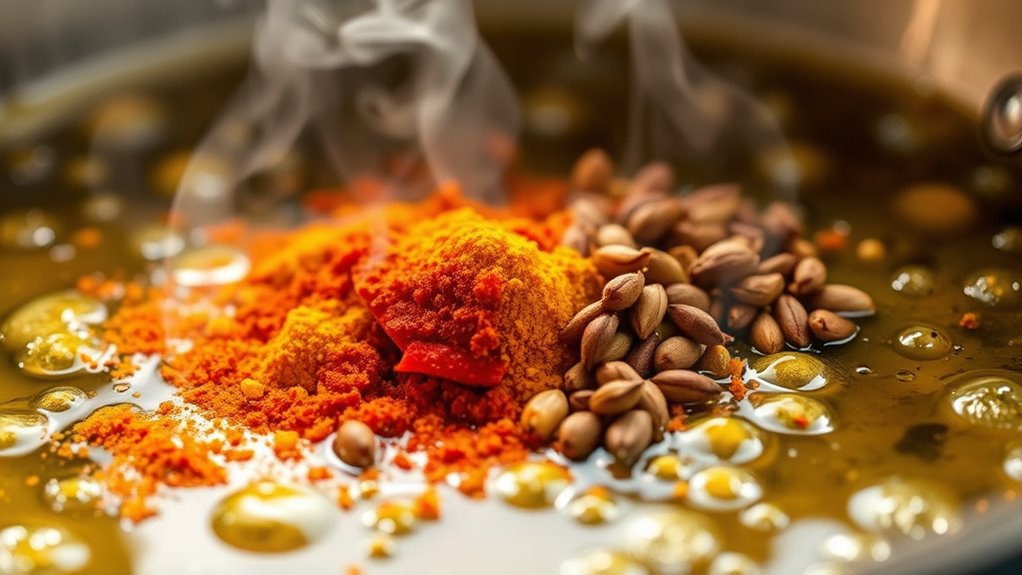
The ‘Blooming Spices’ mistake occurs when chefs prematurely add spices to hot oil, causing them to burn instead of releasing their full flavor. This mistake hampers effective spice roasting, which is essential for flavor extraction. When spices are added too early, they risk burning quickly, turning bitter and losing their aromatic qualities. Proper blooming involves adding spices at the right time, allowing their oils to release fragrant compounds without burning. This process enhances the depth and complexity of your dish’s flavor. If you rush and add spices too soon, you miss out on the full potential of their aroma and taste. Understanding the right moment for spice addition is key to unlocking rich, well-rounded flavors in your masala. Additionally, controlling the heat level during cooking ensures spices do not burn, preserving their flavor and aroma.

ZenithCart Stainless Steel Tadka Pan | with Riveted Sturdy Handle | 200ml, 140g | Used to Heat Spices for Seasoning in Indian Cuisine | PACK OF 1
- Even Heat Distribution: Thick bottom for uniform heating
- Easy to Clean: Smooth steel surface for quick cleaning
- Induction & Gas Compatible: Suitable for induction and gas stoves
As an affiliate, we earn on qualifying purchases.
As an affiliate, we earn on qualifying purchases.
How Can Over-Toasting or Burning Spices Ruin Your Masala?

Over-toasting or burning spices can quickly ruin the flavor of your masala, turning what should be a fragrant, complex mixture into a bitter, charred mess. When spices burn, their delicate aroma is lost, and instead, you get a harsh, acrid smell that overpowers the dish. This not only diminishes the spice aroma but also throws off the flavor balance, making your masala taste off. You might end up with a smoky, burnt taste that masks the other ingredients’ natural flavors. To avoid this, keep a close eye on your spices as they toast, and remove them from the heat as soon as they begin to release their aroma. Proper toasting enhances flavor without risking the bitterness that over-toasting or burning causes. Additionally, using energy-efficient kitchen techniques can help maintain precise control over heat, reducing the risk of accidental burning.
As an affiliate, we earn on qualifying purchases.
When and How Should You Add Spices During Cooking?
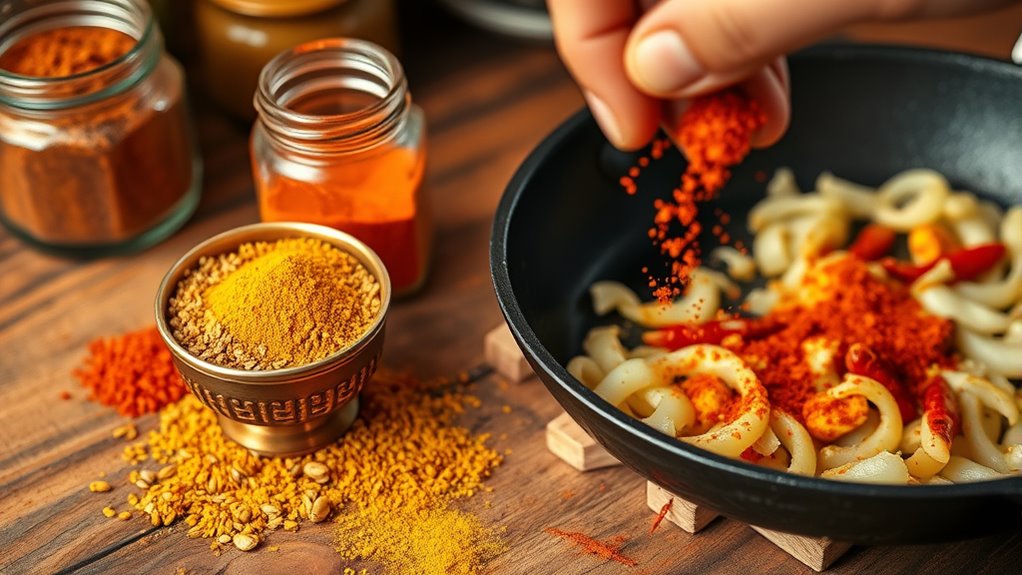
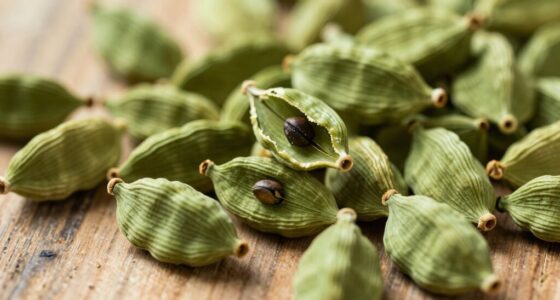
Knowing when to add spices during cooking is crucial for developing ideal flavor. To preserve spice freshness and aroma, add delicate spices like ground coriander or turmeric early in the process, allowing their flavors to meld. Whole spices such as cinnamon sticks or cardamom pods can be introduced at the start to infuse the oil and base. Midway through cooking, add spices that benefit from brief simmering, like garam masala or cumin, to deepen their aroma. For finishing touches, sprinkle fresh or toasted spices at the end to preserve their vibrant aroma and bright flavor. Avoid over-toasting or burning spices, which can diminish their freshness. Proper spice timing is essential for unlocking the full potential of your masala. Timing and method matter—adding spices at the right moments enhances your masala’s complexity and prevents flavor loss. Proper spice timing also involves understanding how heat can alter spice oils, impacting overall flavor.

Rani Garam Masala Indian 11-Spice Blend 3oz (85g) PET Jar ~ All Natural, Salt-Free | Vegan | No Colors | Gluten Friendly | NON-GMO | Kosher | Indian Origin
- Authentic 11-Spice Blend: Rich, full flavor with all 11 spices
- Family-Owned USA Brand: Trusted quality from a 40-year family business
- Kosher Certified: Suitable for kosher diets
As an affiliate, we earn on qualifying purchases.
As an affiliate, we earn on qualifying purchases.
How Do You Know if Your Spices Are Over- or Under-Processed?

How can you tell if your spices have been over-processed or under-processed? One clue is spice freshness; dull, faded flavors often mean over-processing or age. Over-processed spices tend to lose their aromatic oils, resulting in a flat taste, while under-processed spices may have uneven textures or larger particles. Pay attention to grinding techniques—if spices are ground too finely, they can become bitter or lose flavor quickly; too coarse, and they won’t release their full aroma. Freshly ground spices generally have a vibrant scent and a balanced texture. If your spices smell dull or their texture feels inconsistent, they’re likely over- or under-processed. Proper grinding techniques help preserve spice freshness, ensuring your masalas deliver maximum flavor without waste.
How Can You Properly Bloom and Toast Spices for Better Flavor?
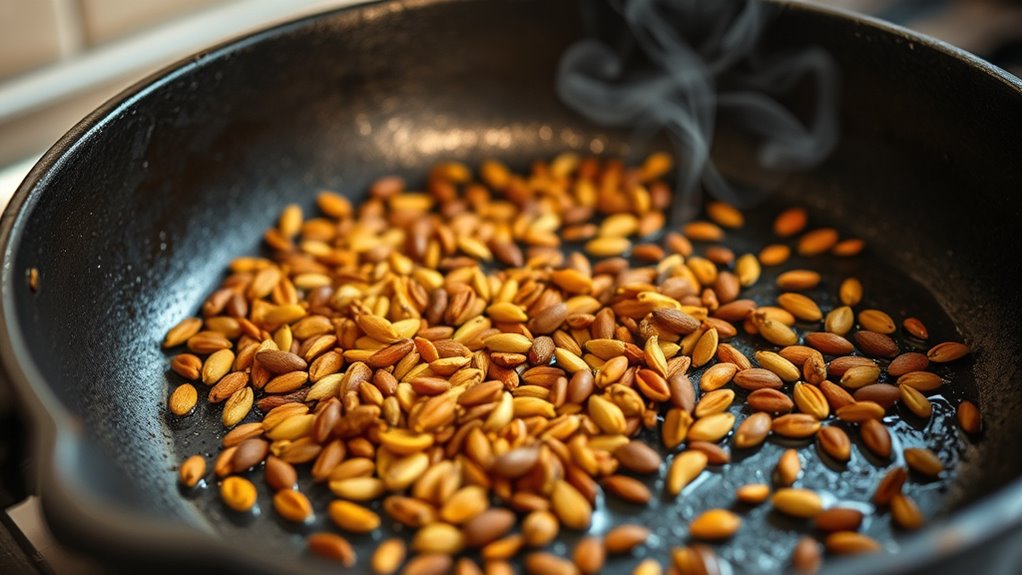
To open the full flavor of your spices, it’s essential to bloom and toast them properly, which enhances their aroma and depth. Proper blooming releases essential oils, boosting flavor and aroma. To do it right:
- Use a dry skillet over medium heat to avoid excess oil
- Stir constantly to prevent burning
- Toast until spices become fragrant, about 1-2 minutes
- Remove from heat immediately to preserve flavor
- Store toasted spices in airtight containers for maximum flavor preservation
This process not only intensifies taste but also prevents flavor loss over time. Keep spices in a cool, dark spot to maintain their freshness. Proper blooming and toastings ensure your spices retain maximum flavor, making every dish more flavorful without wasting your masala.
What Are Common Mistakes When Handling Spices, and How Can You Avoid Them?
One common mistake when handling spices is neglecting their freshness and storage. Old or improperly stored spices lose flavor quickly. To avoid this, store spices in airtight containers away from heat, light, and humidity. Using poor grinding techniques can also diminish flavor; grind spices just before use for maximum potency. Proper Free Floating techniques can help in maintaining the potency of your spices. Here’s a quick guide:
| Mistake | Solution | Tip |
|---|---|---|
| Storing spices improperly | Use airtight, dark containers | Keep away from sunlight |
| Grinding spices too early | Grind just before cooking | Use a mortar and pestle |
| Ignoring spice freshness | Replace old spices regularly | Check aroma and color |
| Overusing or underusing | Measure spices accurately | Taste as you cook |
What Can You Do If Your Masala Gets Over-Bloomed or Burned?
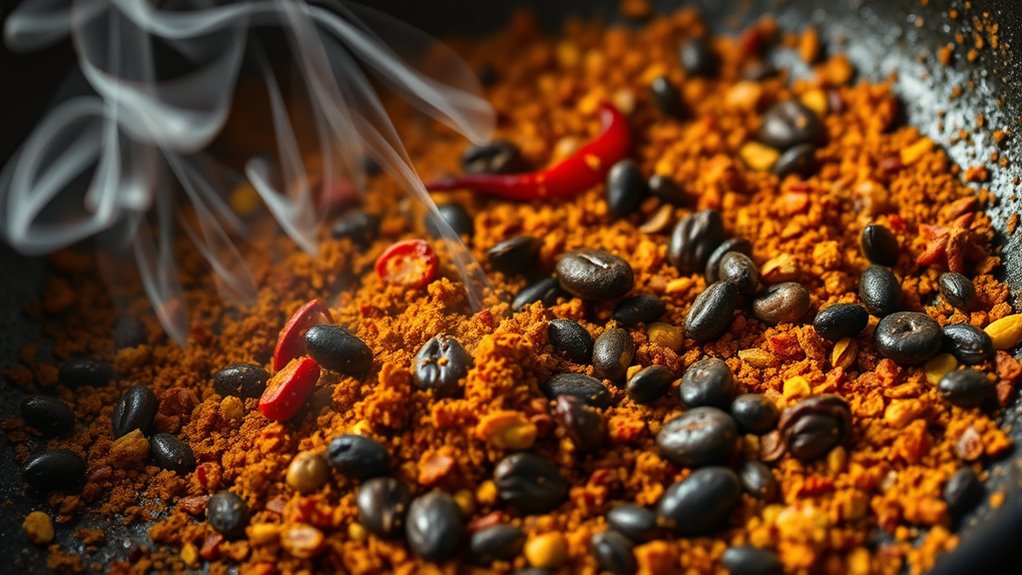
When your masala becomes over-bloomed or burned, it can quickly ruin the dish’s flavor. To salvage it, start by removing the pan from heat immediately. You can then try these steps:
If your masala burns, remove from heat and carefully adjust with water, fresh spices, or a splash of yogurt to save flavor.
- Add a splash of water, broth, or coconut milk to dilute the burnt spice aroma.
- Stir in fresh, unburned spices or herbs to restore flavor balance.
- Incorporate a pinch of sugar or acid (like lemon juice) to mask bitterness.
- Mix in a dollop of yogurt or cream to mellow harsh flavors.
- Adjust seasoning gradually, tasting often to prevent further over-blooming.
These actions help reduce the burnt aroma and restore the dish’s flavor balance, giving your masala a better chance to shine despite the mishap.
Frequently Asked Questions
Can Using Pre-Ground Spices Affect the Blooming Process?
Using pre-ground spices can hinder the blooming process because they lack the freshness preservation that whole spices offer. When you store spices improperly, their flavor diminishes, making it harder for them to release their essential oils during cooking. Fresh whole spices, stored properly in airtight containers away from sunlight, bloom better. So, switching to freshly ground spices or grinding just before use guarantees you maximize flavor and aroma in your dishes.
Does the Type of Pan Influence Spice Blooming Quality?
Yes, the type of pan affects spice blooming quality. A good-quality, heavy-bottomed pan distributes heat evenly, allowing spices to bloom properly and absorb flavors effectively. Poor-quality or thin pans can cause uneven heating, leading to burnt spices or weak aroma development. To maximize spice absorption and enhance flavor, always use a sturdy, well-made pan that maintains consistent heat during your cooking process.
How Does Moisture Impact the Blooming of Spices?
Moisture content plays a vital role in spice activation during blooming. Too much moisture can hinder the process, causing spices to clump or steam instead of releasing their aromatic oils. On the other hand, very dry spices may not activate fully, limiting flavor development. To optimize spice blooming, make certain your spices are dry but not overly moisture-laden, allowing the heat to release essential oils and enhance your dish’s aroma.
Are There Specific Spices That Shouldn’t Be Bloomed?
Think of some spices as delicate flowers—they don’t need blooming techniques. Whole spices like cinnamon sticks, bay leaves, and cardamom pods tend to lose their spice freshness when over-bloomed or heated too long. These should be added later in your cooking, not during blooming. Blooming works best for ground spices like cumin, coriander, and garam masala, helping release their essential oils and flavors effectively without wasting your valuable masala.
What Are Signs of Stale or Old Spices During Blooming?
When blooming spices, you’ll notice signs of stale or old spices through dull aroma and minimal aroma loss during cooking. Fresh spices release a vibrant, fragrant aroma, while older ones have a muted scent. If your spices don’t produce a strong aroma or if they quickly lose their aroma when heated, it indicates they’re past their freshness indicators. Always use fresh spices for the best flavor and aroma in your dishes.
Conclusion
To avoid wasting spices, mastering the art of blooming is essential. Did you know that improper spice toasting can reduce their flavor by up to 30%? By paying attention to timing and heat, you’ll release richer, more vibrant masala every time. Remember, a little care goes a long way—your taste buds will thank you, and your dishes will taste more authentic. Keep practicing, and soon, you’ll perfect the perfect spice bloom every time.