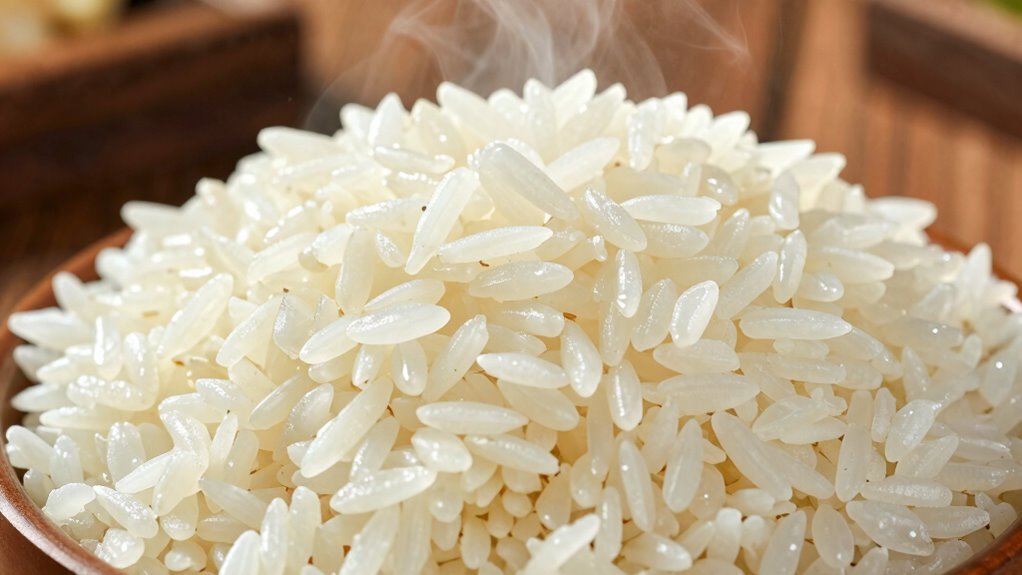

To get fluffy, non-gluey basmati rice, rinse it thoroughly until the water runs clear to remove excess starch. Soak the rice for 20-30 minutes to help grains stay separate. Use the right water-to-rice ratio, bring to a boil, then reduce heat and cover tightly without stirring. Let it simmer undisturbed, fluff with a fork afterward. Mastering these steps can create perfect grains every time—learn more for even better results.
Key Takeaways
- Rinse Basmati rice thoroughly until water runs clear to remove surface starch.
- Soak rice for 20-30 minutes to improve water absorption and grain separation.
- Use 1.5 cups of water per cup of rice and avoid stirring during cooking.
- Cover the pot tightly and simmer undisturbed for 15-20 minutes until water is absorbed.
- Fluff rice gently with a fork after cooking to maintain separate, non-sticky grains.
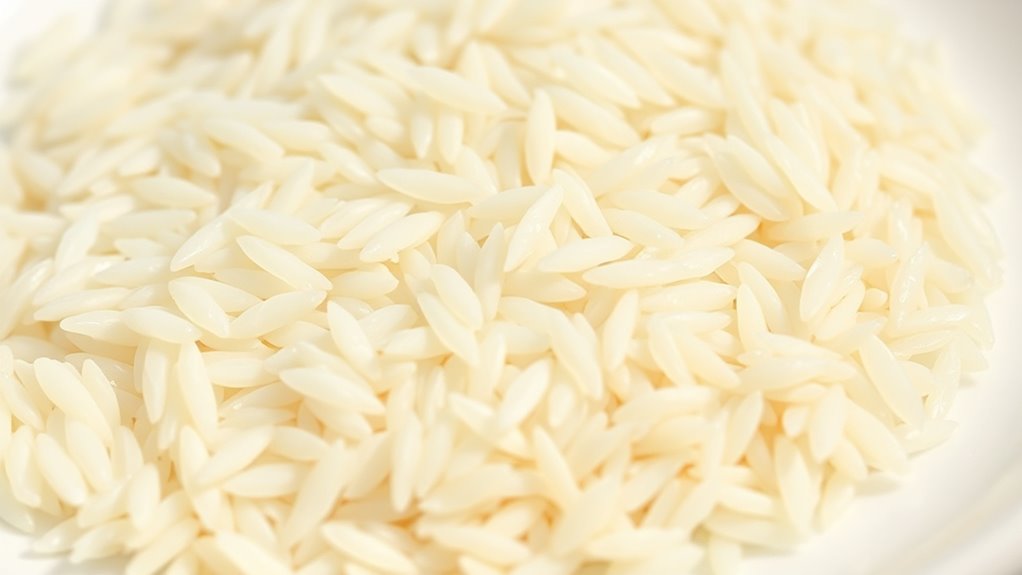
If you’ve ever struggled with sticky, clumpy basmati rice, there’s a simple trick to keep it fluffy and separate every time. The key lies in mastering basic cooking techniques and paying attention to how you store your rice. Basmati rice is known for its long, slender grains and delicate aroma, but it can easily turn into a gluey mess if not cooked properly. To avoid this, start by rinsing your rice thoroughly under cold water until the water runs clear. This step removes excess surface starch that can cause clumping during cooking. After rinsing, soaking the rice for about 20-30 minutes can help the grains absorb water evenly, resulting in a more light and airy texture.
When it comes to cooking techniques, using the right amount of water is essential. Typically, for every cup of basmati rice, use about 1.5 cups of water. Bring the water to a boil, then add a pinch of salt and your drained rice. Once it reaches a boil again, reduce the heat to low, cover the pot tightly with a lid, and let it simmer gently. Avoid stirring during this process, as agitation can break the grains and lead to stickiness. Instead, let the rice cook undisturbed for 15-20 minutes until the water is absorbed and the grains are tender. Fluff the rice with a fork once done to separate the grains and prevent them from sticking together.
Proper rice storage plays an important role in maintaining the quality of your basmati rice. Keep your rice in an airtight container in a cool, dark place to prevent moisture absorption and pest infestation. Store it away from strong odors, as rice can easily absorb surrounding smells, which might affect its aroma and flavor. If you have leftover cooked rice, spread it out on a baking sheet to cool quickly before transferring it to an airtight container and refrigerating. Reheat it gently, adding a splash of water and steaming it briefly to restore its fluffiness.

GreenLife Rice Cooker with Removable PFAS-Free Ceramic Nonstick Pot, 3-Cups Uncooked/6-Cups Cooked, Grains & Oatmeal Multicooker, Compact One-Switch Design, Auto Keep Warm, Easy Clean, Gray
HEALTHY CERAMIC NONSTICK INTERIOR: GreenLife’s healthy and easy-to-clean ceramic nonstick is PFAS-free, derived from sand and delivers effortless…
As an affiliate, we earn on qualifying purchases.
As an affiliate, we earn on qualifying purchases.
Frequently Asked Questions
Can I Use Brown Basmati Rice With This Trick?
Yes, you can use brown basmati rice with this trick, but expect a different rice texture because brown rice takes longer to cook and has a chewier consistency. Adjust your cooking techniques by increasing water and cooking time accordingly. Keep an eye on the rice as it cooks, and rinse it well beforehand to achieve a fluffy, non-gluey result similar to white basmati rice.
How Long Should I Rinse Basmati Rice?
Imagine crystal-clear water washing over fluffy rice grains, removing excess starch. You should rinse basmati rice for about 2-3 minutes until the water runs almost transparent. This process helps control water absorption, preventing clumpiness and ensuring perfectly separated grains. Be gentle but thorough, swirling the rice as you rinse, then drain well. Proper rinsing guarantees your rice cooks fluffy, non-gluey, with each grain standing proud.
Does Altitude Affect Rice Cooking Times?
Yes, altitude affects rice cooking times due to lower air pressure at higher elevations. You should make altitude adjustments by increasing cooking time, as water boils at a lower temperature. Expect cooking time variations, and check rice periodically to prevent overcooking or undercooking. Use a thermometer or taste test to guarantee perfect doneness. Making these adjustments helps you achieve fluffy, non-gluey rice regardless of your altitude.
Can I Store Cooked Rice for Later Use?
Yes, you can store cooked rice for later use. For rice preservation, transfer it to an airtight container and refrigerate within two hours of cooking. When reheating, use microwave or stovetop techniques, adding a splash of water to keep it moist. Make sure to reheat thoroughly to kill bacteria. Avoid leaving rice at room temperature for too long to prevent foodborne illness and ensure it stays fresh.
Is This Method Suitable for Other Rice Varieties?
Ever wondered if your favorite rice varieties can benefit from this method? Yes, it works well for alternative rice types like jasmine or long-grain rice. Just keep in mind, different rice varieties might need slight adjustments in cooking time or water ratios. You can use basic cooking equipment like a pot or rice cooker for best results. This trick helps guarantee fluffy, non-sticky rice, no matter the variety you choose.

304 Stainless Steel Rice Paddle Spoon Spatula, 8-inch Long Non Stick Mirror Finish Stand-Up Design for Rice Mashed Potato Salads, Apply for Kitchen Home Restaurant Serving
304 Stainless Steel Rice Paddle Spoon Spatula: Crafted from premium 304 stainless steel, this rice paddle is designed…
As an affiliate, we earn on qualifying purchases.
As an affiliate, we earn on qualifying purchases.
Conclusion
Now that you know the simple trick, your basmati rice will never be gluey again. Just remember, rinsing thoroughly and soaking for 30 minutes can reduce stickiness by up to 50%. Imagine serving perfectly fluffy rice at every meal, impressing your family and friends. With this easy tip, you’re just moments away from achieving restaurant-quality grains every time you cook. So go ahead, give it a try and enjoy that light, airy bite you’ve been craving!

Lifewit Rice Dispenser 25 Lbs(11.3kg), Rice Storage Container Sealed Moisture Proof with Measuring Cup for Kitchen Pantry Household, BPA-Free, 1 Pack Grey
Large Capacity: This rice storage container can hold 25.4lb (11.3kg) of rice, allowing you to store more rice…
As an affiliate, we earn on qualifying purchases.
As an affiliate, we earn on qualifying purchases.

Helen's Asian Kitchen Professional Rice Washing Bowl – Stainless Steel Rice Rinser Strainer with Side Drainer, 3-Quart Capacity. Ideal for Quinoa, Rice, Grains, Legumes, Vegetables. Kitchen Essential
EFFICIENT RICE WASHING SYSTEM: Professional-grade stainless steel rice washing bowl features integrated side drainer and 3-quart capacity. Perfect…
As an affiliate, we earn on qualifying purchases.
As an affiliate, we earn on qualifying purchases.