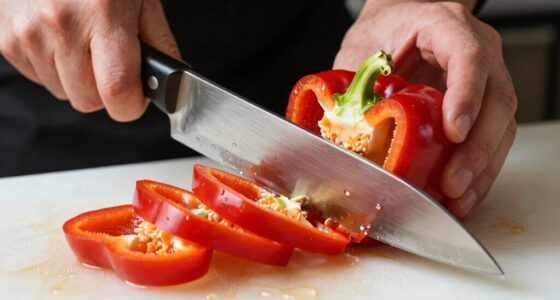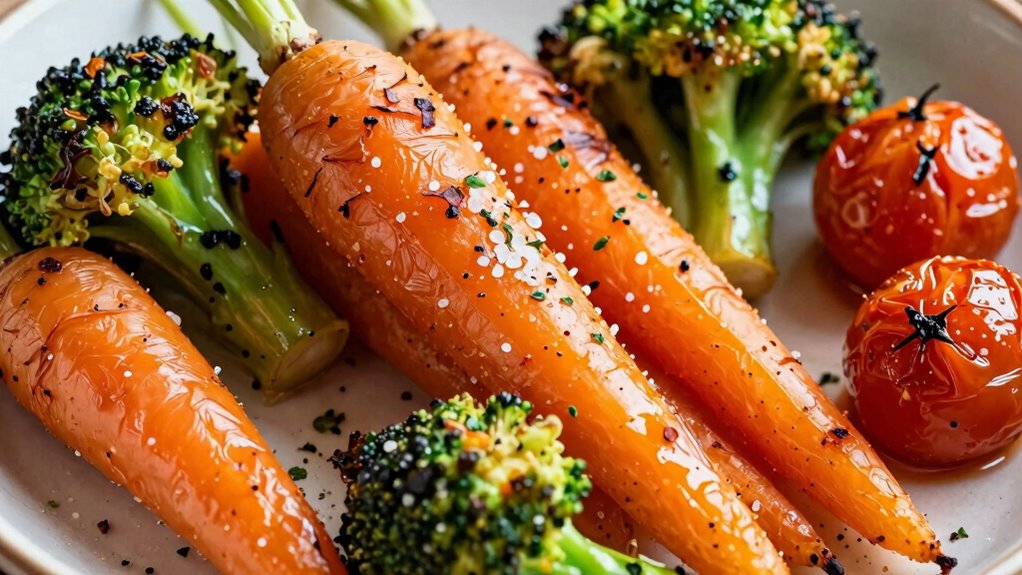

To get better roasted vegetables, focus on moisture control by thoroughly drying them before cooking. Use a light coat of oil and season well to boost flavor and browning. Spread the vegetables in a single layer, ensuring they’re not crowded, so they crisp up evenly. Roast at a high temperature around 425°F, flipping halfway for uniform crunch. Finish with a quick broil for extra crispiness. Keep these tips in mind, and you’ll reveal even more secrets for perfect results.

Get kitchen staples and gadgets delivered free with Prime
- Fast, free delivery on millions of items
- Prime Video, Amazon Music and more included
- Member-only deals all year
Key Takeaways
- Thoroughly dry vegetables before roasting to prevent steaming and ensure crispiness.
- Toss vegetables with a small amount of oil and season generously for flavor and caramelization.
- Spread vegetables in a single layer with proper spacing for even heat circulation and browning.
- Roast at high temperatures around 425°F (220°C) to promote rapid browning and crisp edges.
- Finish with a quick broil to enhance crunch and add a smoky, charred flavor.
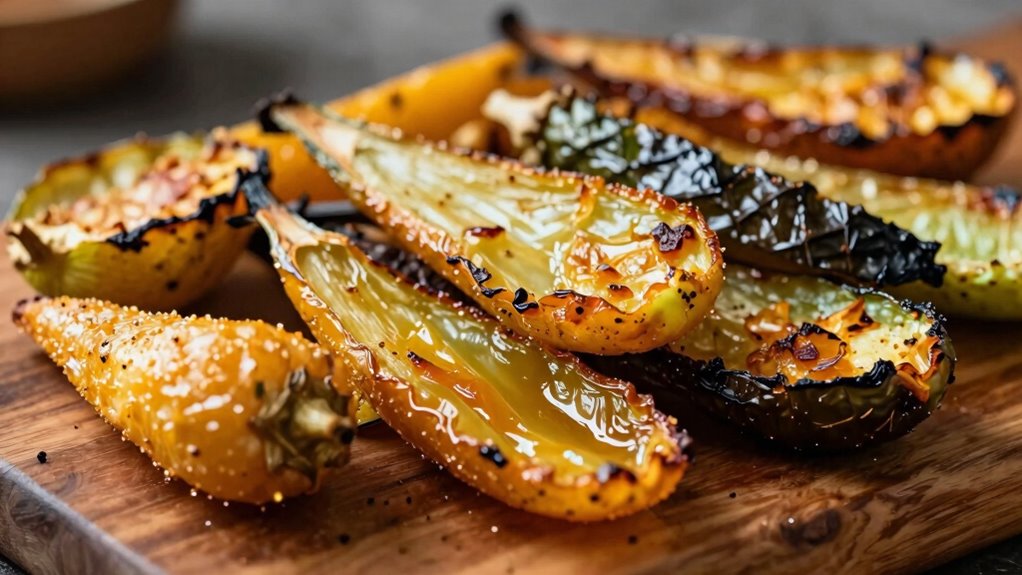
Roasted vegetables can sometimes turn out mushy or unevenly crisp, but with a simple texture hack, you can achieve perfectly crispy and tender results every time. The secret lies in a straightforward cooking technique that enhances both texture and flavor. By adjusting your approach, you can discover a new level of deliciousness that elevates your roasting game.
First, it’s important to understand that moisture is the enemy of crispiness. Before roasting, guarantee your vegetables dry thoroughly. Removing excess water ensures they won’t steam in the oven, which causes sogginess. After drying, toss your vegetables with a small amount of oil—olive oil works well—and season them generously. Proper seasoning isn’t just about taste; it also creates a flavorful crust that adds depth to each bite. This simple step dramatically enhances flavor, making your roasted vegetables taste richer and more satisfying.
Next, one of the most effective cooking techniques for achieving that perfect crisp-tender balance is to spread the vegetables in a single, even layer on your baking sheet. Crowding the pan causes the vegetables to steam rather than roast, which leads to uneven texture. Give each piece room to breathe so the heat can circulate evenly. This promotes better caramelization, which not only improves texture but also enhances flavor through Maillard reactions. Understanding how caramelization works can help you optimize your roasting process for better results. Additionally, knowing the importance of moisture control can prevent sogginess and guarantee a crisp finish. Incorporating proper moisture management strategies ensures that the vegetables retain the ideal texture during roasting. Incorporating temperature control techniques can further help in preventing overcooking or undercooking your vegetables.
Another trick that makes a big difference is to flip or toss the vegetables halfway through roasting. This ensures even exposure to heat, resulting in a uniformly crisp exterior and soft interior. Use high heat—around 425°F (220°C)—to encourage rapid browning without drying out the inside. This high-temperature roasting is a key cooking technique that boosts flavor development and texture simultaneously.
Finally, consider finishing your roasted vegetables with a quick broil for a minute or two. This step adds an extra layer of crispiness, especially on the edges. The intense heat creates a slightly charred, smoky flavor that complements the natural sweetness of the vegetables. With these techniques, you’ll notice a marked improvement in both texture and flavor, transforming simple roasted veggies into a standout side dish. The combination of proper moisture control, even spacing, and high heat ensures you’ll get crispy, flavorful vegetables every single time.
As an affiliate, we earn on qualifying purchases.
Frequently Asked Questions
Can the Texture Hack Be Used for All Types of Vegetables?
Yes, you can use the texture hack for all types of vegetables, but results vary depending on vegetable types and desired texture variations. Denser vegetables like carrots or potatoes benefit from longer roasting, enhancing crispiness, while softer vegetables like zucchini or tomatoes may require less time to avoid mushiness. Adjusting roasting times and techniques helps you achieve the perfect texture, no matter what vegetables you’re working with.
Does the Hack Affect the Nutritional Value of Roasted Vegetables?
They say, “You are what you eat,” and the texture hack doesn’t markedly affect nutritional impact or nutrient retention. You can still enjoy delicious roasted vegetables without concerns about losing essential nutrients. The hack mainly enhances texture and flavor, not the nutritional content. As long as you avoid overcooking, you’ll retain most nutrients, ensuring your vegetables stay both tasty and nutritious.
How Long Should I Apply the Texture Hack Before Roasting?
You should apply the texture hack about 15-20 minutes before roasting to achieve ideal texture enhancement and flavor preservation. This timing allows the treatment to penetrate the vegetables properly, making them crispier and more flavorful. Be sure to evenly coat your vegetables and avoid overdoing it, as too much exposure could impact their natural taste. Adjust the timing based on your vegetable type for best results.
Is There a Specific Temperature Recommended for the Texture Hack?
Like a wise old chef once said, “Temperature is key.” You should aim for around 100°F (38°C) when applying the texture hack. This temp helps achieve a perfect balance, enhancing flavor and ensuring the right texture consistency without overcooking. Keep the veggies at this gentle heat before roasting to release maximum crunch and flavor, making your dish truly stand out.
Can the Hack Be Combined With Other Seasoning Techniques?
Yes, you can definitely combine the texture hack with other seasoning techniques. This creates a seasoning fusion that boosts flavor enhancement while improving texture. For example, sprinkle herbs, spices, or a marinade before roasting, then apply the hack. This layered approach maximizes taste and crunch, giving your vegetables a deliciously complex and satisfying finish. Just be mindful of seasoning amounts to avoid overpowering the natural flavors.
As an affiliate, we earn on qualifying purchases.
Conclusion
By trying this texture hack, you’ll discover how a simple trick can elevate your roasted vegetables to new heights. Remember, “practice makes perfect,” so don’t be discouraged if it takes a few tries. With patience and a little experimentation, you’ll find the perfect crunch and tenderness every time. Keep refining your technique, and soon, roasted vegetables will become your go-to dish for flavor and texture. Happy cooking!
As an affiliate, we earn on qualifying purchases.
high temperature roasting baking sheet
As an affiliate, we earn on qualifying purchases.
As an affiliate, we earn on qualifying purchases.
Halloween Picks
halloween
As an affiliate, we earn on qualifying purchases.