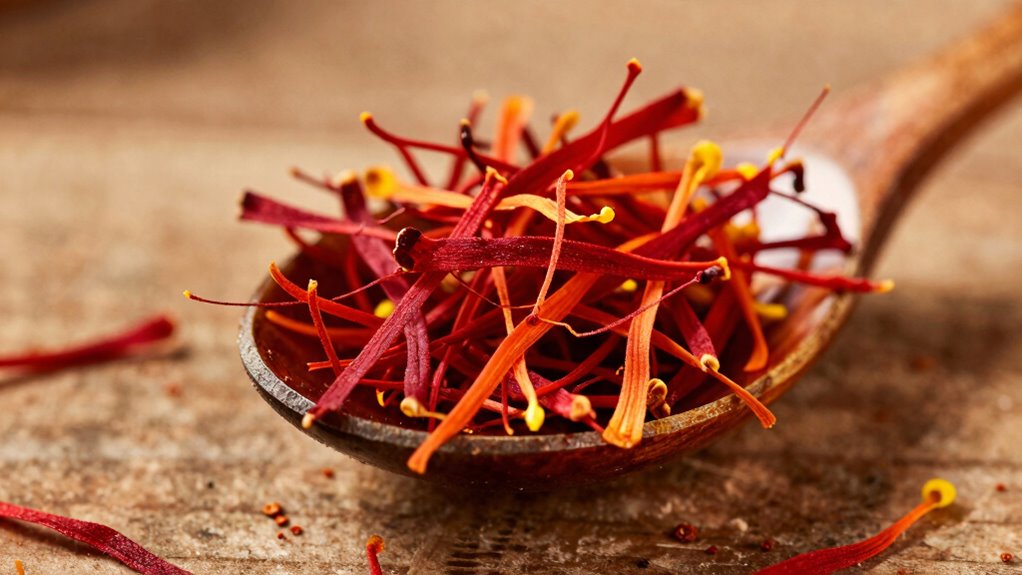

When you add a few saffron strands to your dish, their potent aroma and color can seem to vanish quickly if not prepared properly. Overuse, improper steeping, or using too much heat can cause the flavor to dissipate or become bitter, making the strands seem to disappear rather than enhance your meal. Proper handling helps release their full potential, and if you’re curious, you’ll find more tips on maximizing saffron’s flavor and color.

Get kitchen staples and gadgets delivered free — and shop member deals
- Fast, free delivery on millions of items
- Access to Prime Big Deal Days deals on October 6–7
- Prime Video, Amazon Music and more included
Key Takeaways
- Saffron’s potent aroma means even a small amount can overpower if overused, causing flavor to fade or become bitter.
- Improper steeping or insufficient soaking prevents full flavor and color extraction from saffron strands.
- Using low-quality or artificial saffron fillers dilutes the authentic flavor, making strands seem to disappear in taste.
- Overcooking or prolonged heating can degrade saffron’s volatile compounds, diminishing its flavor contribution.
- Insufficient quantity relative to the dish’s volume results in the saffron’s flavor becoming less noticeable or vanishing.
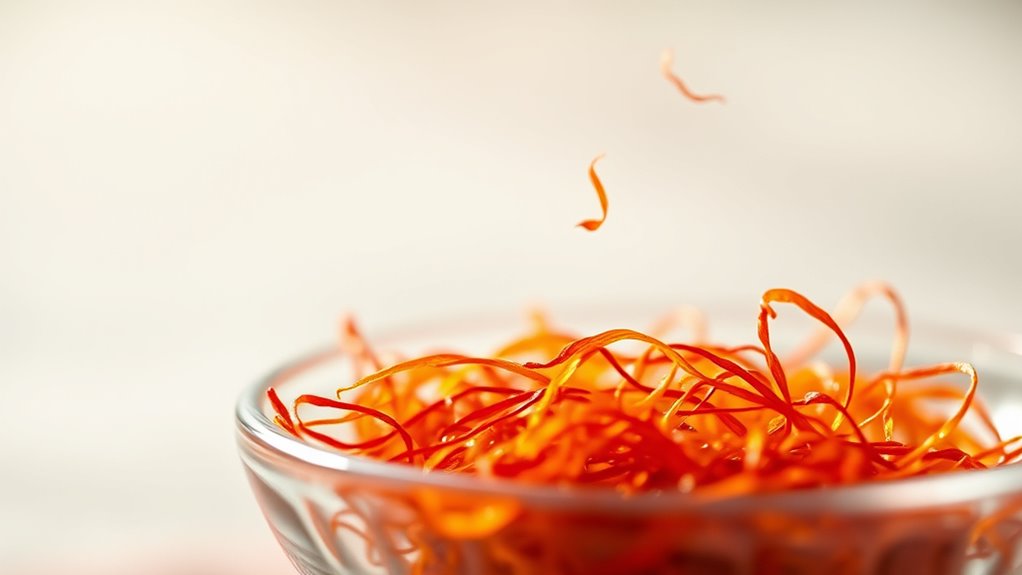
Saffron’s vibrant color and unique flavor often make it seem like a small luxury, but even just a few strands can considerably impact your dish’s taste. When you cook with saffron, you’re not just adding a splash of color—you’re infusing your food with a complex aroma and a subtle earthiness that elevates everything from risottos to desserts. Its culinary uses are diverse, spanning across Mediterranean, Middle Eastern, and Indian cuisines. Whether you’re making a classic paella, a fragrant biryani, or a delicate saffron-infused custard, this spice transforms simple ingredients into something extraordinary. But to harness its full potential, understanding saffron cultivation is essential. Growing saffron requires specific conditions—well-drained soil, plenty of sunlight, and a temperate climate. The crocus flowers bloom once a year, and harvesting occurs during a narrow window, which contributes to its high cost. Knowing how saffron is cultivated helps you appreciate the labor-intensive process behind each tiny strand, often hand-picked and carefully dried to preserve its flavor and color.
When you incorporate saffron into your cooking, it’s best to do so by steeping the threads in warm liquid before adding them to your dish. This step *unlocks* the full spectrum of flavors and releases the vibrant color that makes saffron visually appealing. Remember, because only a small amount is needed—usually a pinch or two—you should handle it with care. A common mistake is using too much, which can overpower the dish and make the flavor bitter. It’s also important to buy high-quality saffron from reputable sources; cheaper options often contain artificial dyes or fillers that dilute the true flavor.
Saffron’s culinary uses go beyond just adding color and aroma. It’s known for its health benefits as well, including antioxidants and potential mood-enhancing properties. However, its potency means that even a tiny amount can influence the overall flavor profile *substantially*. This is why understanding saffron cultivation and selecting the right quality are *vital*. When used properly, saffron turns a simple recipe into an extraordinary experience, giving your dishes a depth and warmth that’s hard to replicate with other spices. Its rarity, combined with the precision needed in its culinary uses, makes saffron not just a luxury but a *testament* to the artistry involved in spice mastery.
As an affiliate, we earn on qualifying purchases.
Frequently Asked Questions
How Can I Tell if Saffron Is Genuine or Fake?
To tell if saffron is genuine, look for vibrant red threads with a slightly bitter aroma, which indicates quality. During saffron harvesting, authentic strands are carefully picked by hand, ensuring purity. Be cautious of saffron adulteration, which often involves adding dyed or inferior materials. Test authenticity by soaking a small amount in water—genuine saffron releases color slowly and leaves a golden-yellow hue, not just dye.
What Is the Best Way to Store Saffron?
You should store saffron in an airtight container away from light, heat, and moisture to preserve its flavor and color. Proper storage methods extend its shelf life, ensuring it stays potent for up to two years. Think of saffron as precious; keep it in a cool, dark place, just like fine wine, to maintain its quality. This way, every strand delivers full aroma and vibrant hue when you need it most.
Can Saffron Be Used in Sweet Dishes?
Yes, you can definitely use saffron in sweet dish recipes. Its unique aroma and vibrant color pair beautifully with desserts like rice pudding, custards, or cakes. When you incorporate saffron, consider its pairing with ingredients like honey, vanilla, or citrus to enhance the flavor. So go ahead, add a few strands to your sweet creations for a luxurious, aromatic touch that elevates your dessert experience.
How Long Does Saffron Last Before Losing Flavor?
Saffron typically lasts about 2 to 3 years before losing its flavor, but proper storage can extend its freshness. During saffron harvesting and cultivation, it is crucial to keep the threads in an airtight container away from light and humidity. Over time, the essential oils degrade, diminishing its potency. So, for the best flavor, use saffron within this period and store it properly to preserve its vibrant aroma and taste.
Are There Health Benefits Associated With Saffron Consumption?
You might be surprised, but saffron offers more than flavor—its antioxidant properties can help protect your cells, and it’s known for mood enhancement. Regular consumption may boost your overall well-being and reduce stress, making it a valuable addition to your diet. Just a few strands can make a difference, so enjoy saffron in moderation to reap its health benefits and uplift your mood naturally.
As an affiliate, we earn on qualifying purchases.
Conclusion
So next time you sprinkle saffron into your dish, remember, those precious strands are more fragile than your patience during a traffic jam. A tiny pinch can vanish faster than your weekend plans. It’s almost poetic—your luxurious spice disappearing just when you think you’ve nailed that perfect flavor. Maybe saffron’s secret isn’t just its rarity but its mischievous ability to remind you that even the most precious things can be gone in a flash, leaving you craving more.
As an affiliate, we earn on qualifying purchases.
As an affiliate, we earn on qualifying purchases.
NFL season / tailgating Picks
team gear
As an affiliate, we earn on qualifying purchases.