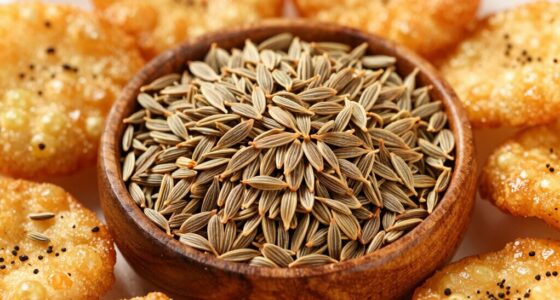
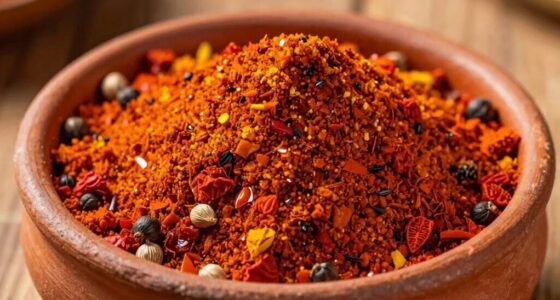
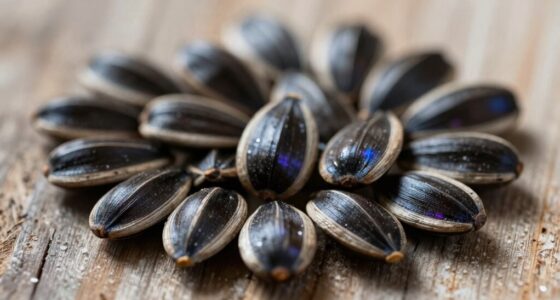
To tell caraway, ajwain, and cumin apart by smell, start by smelling each spice closely. Caraway has a gentle, sweet-earthy aroma with hints of anise, making it ideal for bread. Ajwain has a sharp, pungent scent with medicinal undertones, similar to thyme but more intense. Cumin has a warm, nutty, and smoky aroma that’s robust but not overpowering. Mastering these scent differences helps guarantee you pick the right spice for authentic dishes—continue to learn more about their distinctive aromas.
Key Takeaways
- Caraway has a subtle, sweet-earthy aroma, while ajwain’s scent is sharp and medicinal, aiding in quick identification through smell.
- Cumin offers a warm, nutty fragrance that is distinct from the sharper notes of ajwain and the milder scent of caraway.
- Freshness enhances each spice’s aroma, making smell tests more accurate for distinguishing among them.
- The pungent, thyme-like smell of ajwain contrasts with the gentle, anise-like scent of caraway, guiding proper spice selection.
- Relying on their unique scent profiles ensures authentic flavor in dishes like bread, curries, or pickles.

If you’re trying to identify these common spices—caraway, ajwain, and cumin—the smell test is a quick and effective method. Each spice has a distinctive aroma that can help you distinguish them easily, even if their appearances are similar. When it comes to flavor profiles, understanding their scents is vital because it guides you in using them correctly in cooking. For example, caraway offers a warm, slightly sweet, and earthy aroma with hints of anise. Its scent is subtle yet complex, making it popular in bread like rye and dishes that benefit from its mild, aromatic punch. Recognizing the aroma profiles of each spice can help you anticipate their flavor impact in various dishes. Freshness can significantly influence the strength of these scents, so relying on your nose ensures optimal flavor. Ajwain, on the other hand, has a much sharper and more pungent smell. Its aroma is similar to thyme but with a stronger, more medicinal quality. The scent can be quite intense, which is why it’s usually used in small amounts. Its flavor profile is bold, with a hint of bitterness and a spicy, thyme-like note, making it a staple in Indian and Middle Eastern cuisines. Ajwain’s sharp aroma pairs well with lentils, pickles, and fried snacks, adding a distinctive kick to the dishes. Additionally, the technology used in aroma extraction can influence how we perceive and identify these scents accurately. Cumin offers a warm, earthy, and slightly nutty scent that’s both rich and warm. Its aroma is more robust than caraway’s but less overpowering than ajwain’s. Cumin’s flavor profile is complex, with smoky, spicy, and nutty notes that deepen the taste of stews, curries, and spice blends. Its culinary uses are vast: it’s fundamental in many spice mixes like garam masala, taco seasonings, and chili powders. When you smell cumin, you’ll notice its inviting, warm aroma that instantly evokes hearty, flavorful dishes. Developing a good sense of aroma recognition can help you become more confident in seasoning and blending spices in your cooking. Using the smell test, you can quickly tell these spices apart: caraway’s gentle, sweet-earthy scent; ajwain’s sharp, pungent aroma; and cumin’s warm, nutty fragrance. Recognizing these differences helps guarantee you add the right spice to your recipes, enhancing the intended flavor profile. Whether you’re seasoning bread, curry, or pickles, knowing what each spice smells like guarantees your dishes turn out just right. Keep in mind that the intensity of the smell can vary depending on freshness, so always use your nose as a guide. The key is to develop a familiarity with these scents so that, over time, you can identify them effortlessly, making your cooking more intuitive and precise. Being familiar with the distinctive aromas of these spices also helps prevent seasoning mistakes and ensures authentic flavors in your dishes. The smell test isn’t just about identification; it’s about understanding how these spices contribute to the overall flavor profile and culinary uses, elevating your dishes with confidence.
Top picks for "caraway ajwain cumin"
Open Amazon search results for this keyword.
As an affiliate, we earn on qualifying purchases.
Frequently Asked Questions
Can Smell Tests Distinguish Between Fresh and Stale Spices?
Yes, smell tests can help you distinguish between fresh and stale spices. You’ll notice that fresh spices have a strong, vibrant aroma, indicating good aroma freshness. Over time, the scent diminishes, showing reduced scent longevity, which signals staleness. By paying attention to these differences, you can easily tell if your spices are still potent or need replacing, ensuring your dishes retain their full flavor and aroma.
Are There Health Benefits Linked to the Aroma of These Spices?
Yes, the aroma of caraway, ajwain, and cumin offers health benefits. Their scents are used in aromatherapy to boost mood, reduce stress, and improve olfactory health. You can harness these spices’ aromas to support your well-being, as their fragrant oils may also have antimicrobial and digestive properties. Incorporating these spices into your cooking or inhaling their scent can enhance your overall sensory experience and promote better health.
How Do Storage Conditions Affect the Smell of Caraway, Ajwain, and Cumin?
Coincidentally, your storage conditions greatly influence the smell of caraway, ajwain, and cumin. To keep their aromas strong, store them in airtight containers made of glass or metal, away from direct sunlight and heat. Low humidity prevents moisture from dulling their scent, while high humidity can cause mold or loss of flavor. Proper storage guarantees these spices maintain their distinctive aromas and flavors longer.
Can These Spices Be Identified Solely by Smell in Mixed Dishes?
You can often identify caraway, ajwain, and cumin solely by smell in mixed dishes using sensory memory and aroma techniques. Focus on their distinct aromas: caraway has a sweet, anise-like scent; ajwain offers a pungent, thyme-like aroma; cumin smells earthy and warm. Practice recalling these scents, and you’ll improve your ability to distinguish them even when they’re blended, making your seasoning skills more precise.
Do Different Brands of Spices Have Distinct Scent Profiles?
Yes, different brands of spices often have distinct scent profiles due to variations in sourcing, processing, and storage. These brand variations can affect scent consistency, making some brands more aromatic or fresher than others. As a result, you might notice subtle differences in aroma that influence your cooking. To guarantee uniform flavor, it’s best to stick with trusted brands or buy in bulk to maintain consistent scent profiles over time.
Conclusion
Think of the smell test as your secret compass in a bustling spice market. Like a skilled sailor reads the wind, you can trust your nose to guide you through the subtle differences between caraway, ajwain, and cumin. With each sniff, you reveal a new flavor adventure, turning a simple smell into a flavorful journey. So, trust your senses — they’re your map to discovering the perfect spice for your kitchen voyage.