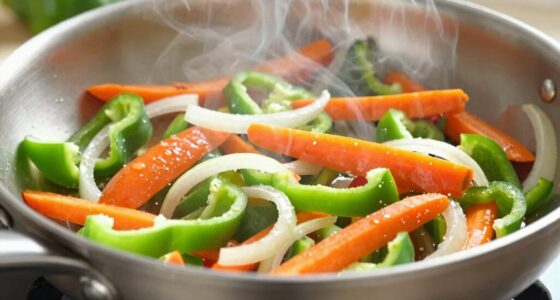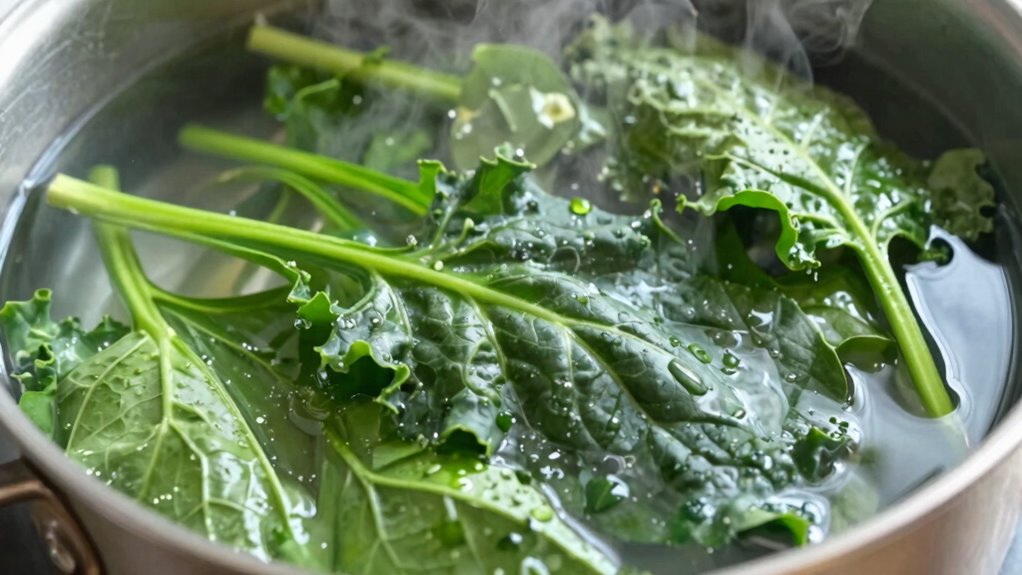

The simple rule for cooking greens without losing color is to blanch them quickly in boiling water for 1-2 minutes, then immediately transfer them to an ice bath to stop the cooking. Use moderate heat if sautéing to keep them tender and vibrant. Adding a splash of acid, like lemon juice or vinegar, after cooking helps stabilize chlorophyll, maintaining their bright green hue. Stick to these tips, and you’ll discover more ways to perfect your greens.

Get kitchen staples and gadgets delivered free — and shop member deals
- Fast, free delivery on millions of items
- Access to Prime Big Deal Days deals on October 6–7
- Prime Video, Amazon Music and more included
Key Takeaways
- Blanch greens briefly in boiling water or steam for 1-2 minutes, then immediately cool in ice water.
- Use quick, gentle cooking methods like sautéing to preserve color and nutrients.
- Incorporate acids, such as lemon juice or vinegar, after cooking to stabilize chlorophyll.
- Avoid overcooking; cook until greens are tender but still have a slight bite.
- Season with salt or acids at the end to enhance color and flavor without causing wilting.
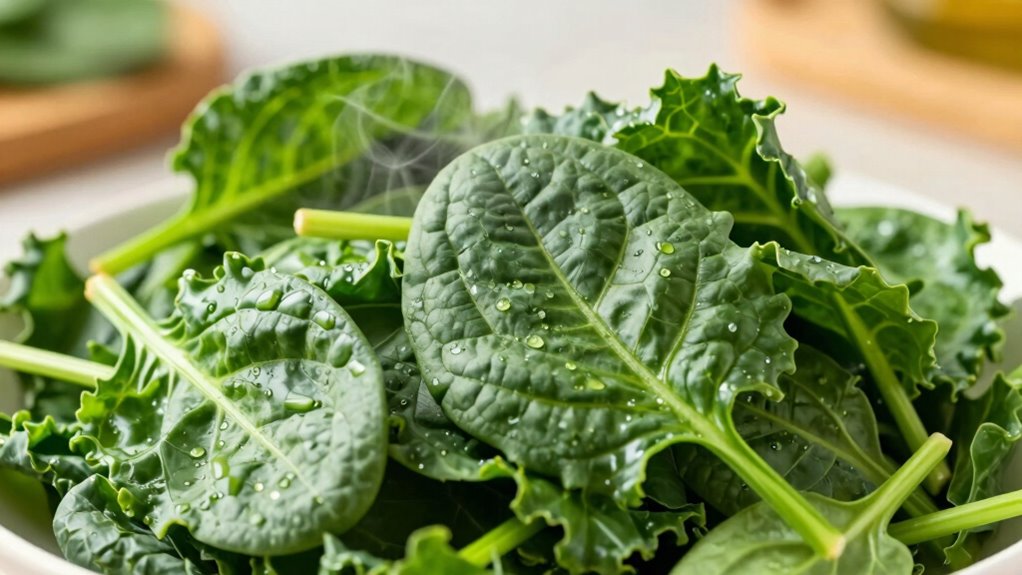
Cooking greens can be tricky because they often lose their vibrant color, but with the right techniques, you can keep them looking fresh and appealing. The key to achieving this is to understand how to cook them properly to maximize flavor preservation and nutrient retention. When you cook greens, the goal isn’t just to make them tender but to do so in a way that maintains their bright hue and nutritional value. The first step is to avoid overcooking, which causes the chlorophyll—the compound responsible for their green color—to break down and turn dull or olive-colored.
Cook greens quickly to preserve their vibrant color and nutrients, avoiding overcooking to keep them fresh and flavorful.
To preserve their color and nutrients, start by preparing a large pot of boiling water or a steaming setup. Quickly blanch the greens in boiling water for just a minute or two, then immediately transfer them to an ice bath. This rapid cooling stops the cooking process instantly, locking in both their vibrant color and nutrients. This technique, known as blanching, ensures that the greens retain their fresh appearance and high vitamin content. It’s a simple but effective rule: don’t cook them too long. Additionally, using proper cooking methods helps preserve their vibrant appearance and nutritional value. Understanding how chlorophyll reacts to heat and acidity can further inform your cooking approach for optimal results.
Furthermore, being mindful of heat and water exposure can help prevent nutrient loss during cooking. When you’re ready to serve, you can sauté the greens briefly in a little olive oil or butter, adding garlic or spices for flavor. Sautéing is preferable to boiling for flavor preservation because it concentrates taste without diluting the greens’ natural flavors or leaching out nutrients. Keep the heat moderate and cook just until the greens are tender but still have a slight bite. This way, you preserve both the texture and the nutrients, which are sensitive to prolonged heat and water exposure. Proper timing and temperature control can make all the difference in maintaining their vibrant color and nutrient profile.
Additionally, incorporating acidic ingredients at the right moment can help stabilize chlorophyll molecules and enhance the greens’ appearance after cooking. Season lightly at the end of cooking to enhance flavor without overwhelming the greens’ natural taste. Avoid excessive salt during cooking, as too much can cause the greens to wilt faster and diminish their color. Instead, add salt or acidic ingredients, like lemon juice or vinegar, after cooking. Acid helps stabilize the chlorophyll molecules, keeping the greens vibrant even after they’ve been cooked.
stainless steel vegetable blanching basket
As an affiliate, we earn on qualifying purchases.
As an affiliate, we earn on qualifying purchases.
Frequently Asked Questions
Can I Reuse Cooking Water for Other Dishes?
Yes, you can reuse cooking water for other dishes, but keep in mind it may affect flavor preservation. When you reuse water from cooking greens, it can carry some nutrients and flavors, adding depth to soups or stews. However, if the water has a strong or bitter taste, it might not suit all recipes. Always taste it first to decide if it’s suitable for reuse, balancing flavor preservation with your dish’s needs.
How Does Acidity Affect Greens’ Color Retention?
Acidity affects greens’ color retention by impacting the pH balance and pigment stability. When the environment is more acidic, the pH drops, which can cause the chlorophyll pigment to break down, turning greens dull or olive-colored. To preserve vibrant color, keep the pH neutral or slightly alkaline during cooking. Adding a pinch of baking soda can help maintain pigment stability, but use it sparingly to avoid altering flavor.
What Type of Salt Is Best for Cooking Greens?
You’ll want to choose kosher or sea salt when cooking greens, as their larger grains dissolve easily and season evenly. These salt types enhance flavor without overpowering the delicate greens or dulling their vibrant color. Avoid table salt, which can be overly salty and less pure, potentially affecting seasoning choices. Using the right salt helps you achieve perfect seasoning, keeping your greens flavorful, colorful, and inviting on the plate.
Does Freezing Greens Impact Their Color During Cooking?
Freezing greens can impact their color during cooking, but proper handling helps preserve it. When you freeze greens, ice crystals can damage cell walls, causing some color loss. To maximize color preservation, blanch the greens briefly before freezing, which stops enzyme actions that degrade color. When you cook frozen greens, do so quickly over high heat to minimize further color fading and enjoy vibrant, nutritious greens every time.
Can Adding Lemon Juice Prevent Color Loss?
Did you know that adding lemon juice can improve color preservation in greens? Lemon acidity helps maintain vibrant greens by preventing chlorophyll breakdown, which often causes dullness. When you add a splash of lemon juice during cooking, it creates an acidic environment that locks in their bright color. So, yes, lemon juice can effectively prevent color loss, keeping your greens fresh and appealing throughout the cooking process.
As an affiliate, we earn on qualifying purchases.
Conclusion
By following this simple rule, you can enjoy vibrant, perfectly cooked greens every time. Did you know that over 90% of their nutrients are retained when cooked properly? So, next time you prepare your greens, remember to use quick cooking methods like steaming or blanching, and avoid overcooking. This way, you’ll not only preserve their beautiful color but also maximize their health benefits, making your meals both attractive and nutritious.
As an affiliate, we earn on qualifying purchases.
As an affiliate, we earn on qualifying purchases.
NFL season / tailgating Picks
team gear
As an affiliate, we earn on qualifying purchases.