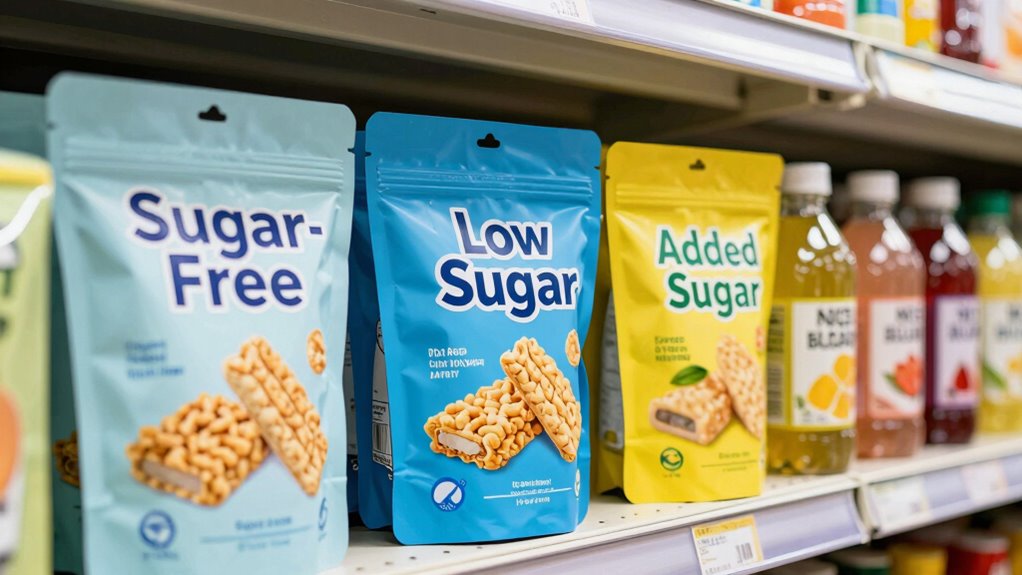

When you see “sugar-free” on a label, remember it only means the product has no added sugars, not that it’s free of all sugars or calories. Many of these products contain artificial sweeteners that may affect your gut health, trigger cravings, or lead to other health issues. It’s a common misconception that “sugar-free” equals healthier. To make smarter choices, consider what’s really in these products and explore natural alternatives—discover more about what labels truly mean.
Key Takeaways
- “Sugar-free” labels only indicate the absence of added sugars, not total sugars, which may still be present naturally.
- Products labeled “sugar-free” often contain artificial sweeteners, whose health effects are still under research.
- Such labels can give a false impression of overall healthfulness, ignoring other ingredients or nutritional quality.
- Artificial sweeteners may influence cravings, appetite, and metabolic health, potentially leading to unintended health issues.
- Understanding food labels and ingredients helps consumers make truly informed, healthier choices beyond just “sugar-free” claims.
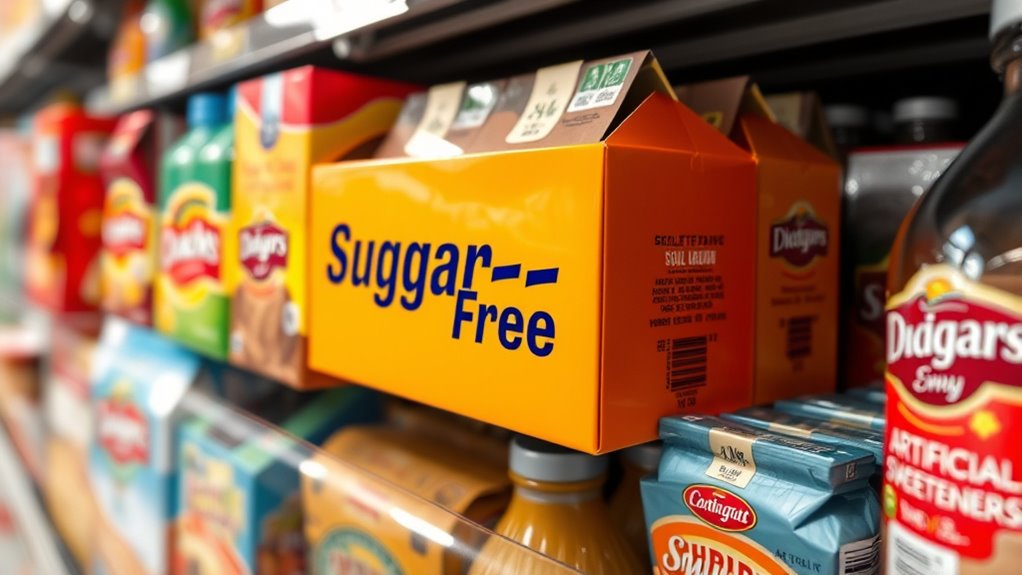
Have you ever assumed that “sugar-free” labels mean a product is healthy? It’s a common misconception. Many people believe that avoiding sugar automatically makes a food or drink better for their health. But the reality is more complicated. When you see “sugar-free,” what you’re really getting is a product that doesn’t contain added sugars, but it might still contain artificial sweeteners. These substances are designed to mimic the sweetness of sugar without the calories, but they come with their own set of concerns. Artificial sweeteners, like aspartame, sucralose, or saccharin, are often used to keep products appealing while reducing calorie content. However, their health impacts aren’t fully understood, and research is ongoing. Some studies suggest that these sweeteners could disrupt your gut bacteria, influence insulin sensitivity, or even trigger cravings for sweeter foods, which could lead you to overconsume later. Others argue that artificial sweeteners are a safe alternative for those managing calorie intake or blood sugar levels, but opinions remain divided within the health community.
What this means for you is that a “sugar-free” label doesn’t necessarily equate to a healthier choice. It’s easy to fall into the trap of thinking that because a product is labeled as such, it’s free from potential negatives. But many sugar-free products are loaded with artificial sweeteners specifically to compensate for the loss of sugar’s flavor and bulk. This can create a paradox where you’re consuming products that are technically low in sugar but may still impact your health negatively. Some research points to potential links between artificial sweeteners and increased appetite, weight gain, or metabolic issues over time, although results vary. Furthermore, these sweeteners can sometimes cause digestive discomfort or allergic reactions in sensitive individuals. Understanding food labels and ingredients can help you better navigate your choices and avoid potential pitfalls associated with “sugar-free” claims. Additionally, natural sweetener alternatives like honey or fruit extracts might provide healthier options for those seeking sweetness without artificial additives. Being aware of artificial sweeteners and their effects allows you to make more informed dietary decisions and consider natural alternatives. Recognizing the regulatory standards for labeling can also aid in understanding what “sugar-free” truly means in different products.

Artificial Sweeteners Explained: A Practical, Evidence-Based Guide to Artificial Sweeteners, Metabolic Effects, Gut Health, and Real-World Use
As an affiliate, we earn on qualifying purchases.
As an affiliate, we earn on qualifying purchases.
Frequently Asked Questions
Can “sugar-Free” Products Still Contain Natural Sugars?
Yes, “sugar-free” products can still contain natural sugars. Food labels often list ingredients like honey, fruit extracts, or lactose, which are natural sugars. Just because a product says “sugar-free,” it doesn’t mean it’s free of all sugars—ingredients labels help you spot natural sugars hidden in the product. Always read the labels carefully to understand what types of sugars are present, even in “sugar-free” foods.
Are “sugar-Free” Foods Suitable for Diabetics?
Yes, sugar-free foods can be suitable for diabetics, but don’t blindly believe label misconceptions. You need to scrutinize nutritional accuracy, as some products contain sugar substitutes that still impact blood sugar levels. Always read labels carefully, understanding ingredients and carb counts. While sugar-free might seem safe, it’s best to consult your healthcare provider to ensure these foods fit within your diabetic diet and don’t trigger unexpected spikes.
How Do Artificial Sweeteners Affect Health Long-Term?
Artificial sweeteners can have mixed effects on your health long-term. They may influence your metabolic impact, potentially disrupting blood sugar regulation, and some studies suggest they alter your gut microbiome, which affects digestion and immunity. While they’re useful for reducing calorie intake, it’s important to be mindful of how they might impact your overall health over time. Moderation and monitoring your body’s responses are key when consuming these sweeteners regularly.
Do “sugar-Free” Labels Mean the Product Is Low Calorie?
Think of a “sugar-free” label as a magic trick—appearing to reduce calories, but not always delivering. While these products often have lower calorie content, it’s not a guarantee. Sometimes, the taste perception remains similar because artificial sweeteners mimic sugar’s sweetness, masking the calorie difference. So, always check the nutrition label; “sugar-free” doesn’t automatically mean low calorie, but it often hints at it.
Are “sugar-Free” Products More Addictive Than Regular Ones?
You might think sugar-free products are less addictive, but they can actually have similar or even higher addiction potential due to craving triggers. Artificial sweeteners can stimulate your taste buds and brain pathways, prompting you to crave more. This means you may find yourself more dependent on sugar-free options over time, as they keep your cravings alive without the calories. Be mindful of how these products impact your desire for sweet flavors.

MADHAVA Organic Coconut Sugar 3 Lb. Bag (Pack of 1), Natural Sweetener, Sugar Alternative, Unrefined, Sugar for Coffee, Tea & Recipes, Vegan, Organic, Non GMO
ORGANIC COCONUT SUGAR—TASTE THE DIFFERENCE: Scoop or sprinkle some of our delicious organic coconut sugar with this pack…
As an affiliate, we earn on qualifying purchases.
As an affiliate, we earn on qualifying purchases.
Conclusion
Next time you see that “sugar-free” label, picture a mountain of hidden sugars lurking behind the promise. Labels can be like mirrors, reflecting only part of the story, not the full landscape of what you’re really consuming. By peeling back the layers, you see the truth beneath—sometimes just a different name for sugar, waiting silently in the shadows. So, stay curious, read closely, and don’t let the labels fool you into a false sense of safety.

Pyure Organic Liquid Stevia Extract Sweetener – Zero Calorie, Sugar Free, Keto Friendly, Plant-Based Sugar Substitute – Non-GMO, Diabetic Friendly, Zero Carb, No Aftertaste – Simply Sweet – 1.8 fl oz
EASY SUBSTITUTE – Cut out sugar without sacrificing sweetness. A guilt-free sugar substitute made for keto diets, diabetics,…
As an affiliate, we earn on qualifying purchases.
As an affiliate, we earn on qualifying purchases.

Scrummy Sugar Free Gummy Bears Pack of 8 Bags – 1.8 Oz Bags – Sugar-Free Gummies, No Sugar Alcohols, No Chemical Sweeteners, No artificial Colors or Flavors, Gluten-Free, Keto-Friendly Candy
Zero Guilt Snack: Zero Sugar and 15g of Soluble Fiber in each serving make this the perfect treat…
As an affiliate, we earn on qualifying purchases.
As an affiliate, we earn on qualifying purchases.