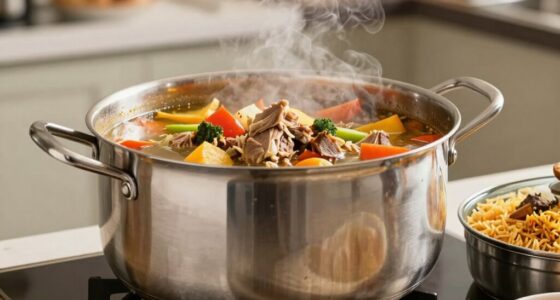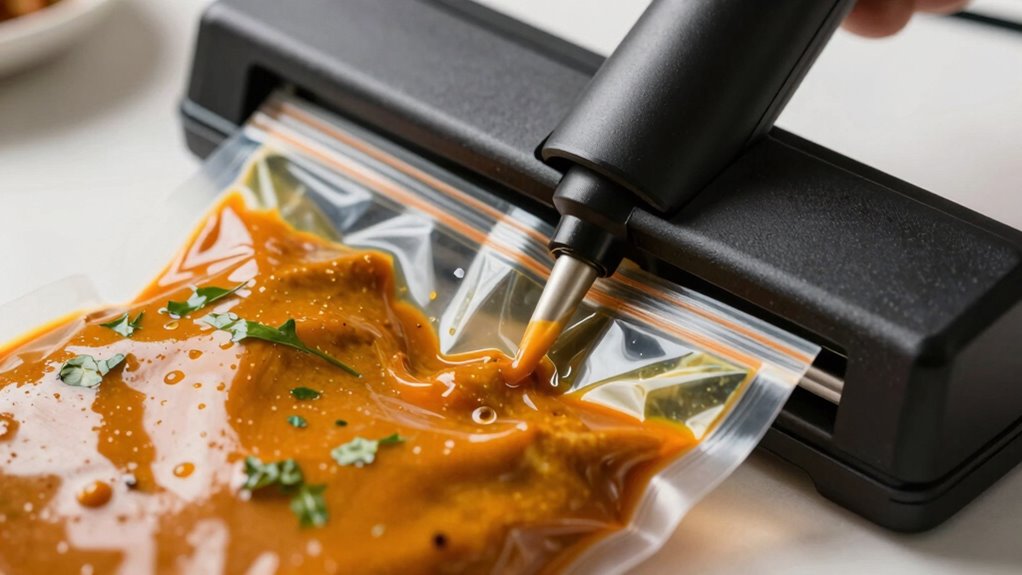

To vacuum seal curries without mess, first let the curry cool completely to prevent hot liquids from escaping. Use sturdy, liquid-safe bags and leave extra space at the top for sealing. Seal slowly and carefully, applying gentle pressure to avoid spillage. Consider chilling the curry with ice packs beforehand to reduce liquid movement. For more tips on keeping your curry fresh and leak-free, discover proven techniques that make the process easier.

Get kitchen staples and gadgets delivered free — and shop member deals
- Fast, free delivery on millions of items
- Access to Prime Big Deal Days deals on October 6–7
- Prime Video, Amazon Music and more included
Key Takeaways
- Let the curry cool completely or slightly before sealing to prevent hot liquid from escaping and causing spills.
- Use wide-mouth, shallow bags or containers designed for liquids to minimize spillage during sealing.
- Seal slowly and carefully, applying gentle pressure and pausing to ensure an airtight, leak-free seal.
- Keep liquids away from the sealing strip and avoid overfilling to prevent leaks and weak seals.
- Place ice packs or pre-frozen containers around the curry to reduce liquid movement and spills during sealing.
As an affiliate, we earn on qualifying purchases.
Why Sealing Curries Liquids Can Be Difficult

Sealing curry liquids can be challenging because liquids tend to be messy and difficult to remove completely from vacuum bags. Liquid spillage often occurs during the sealing process, making it hard to get an airtight seal without mess. When excess liquid seeps into the sealing strip, it can cause sealing challenges, leading to weak seals or bag failures. You might find that even a small amount of liquid can compromise the bag’s integrity, resulting in leaks later. Additionally, liquids can interfere with the vacuum mechanism, making it harder to achieve a proper seal. To prevent this, you need to be mindful of how much liquid you place in the bag and ensure it’s well-distributed, minimizing the risk of spillage during sealing. Ensuring a proper seal quality is essential to prevent leaks and maintain freshness. Using vacuum sealing techniques that involve removing as much air as possible can also help reduce the chances of mess and ensure a secure seal. Properly preparing the contents before sealing, such as freezing the liquid slightly, can make the process cleaner and more effective. Incorporating liquid management strategies can further improve the sealing process and prevent messes. Additionally, understanding vacuum sealing equipment features can help you choose the right tools for handling liquids more efficiently.
As an affiliate, we earn on qualifying purchases.
How to Choose the Best Vacuum Sealer and Bags for Liquids
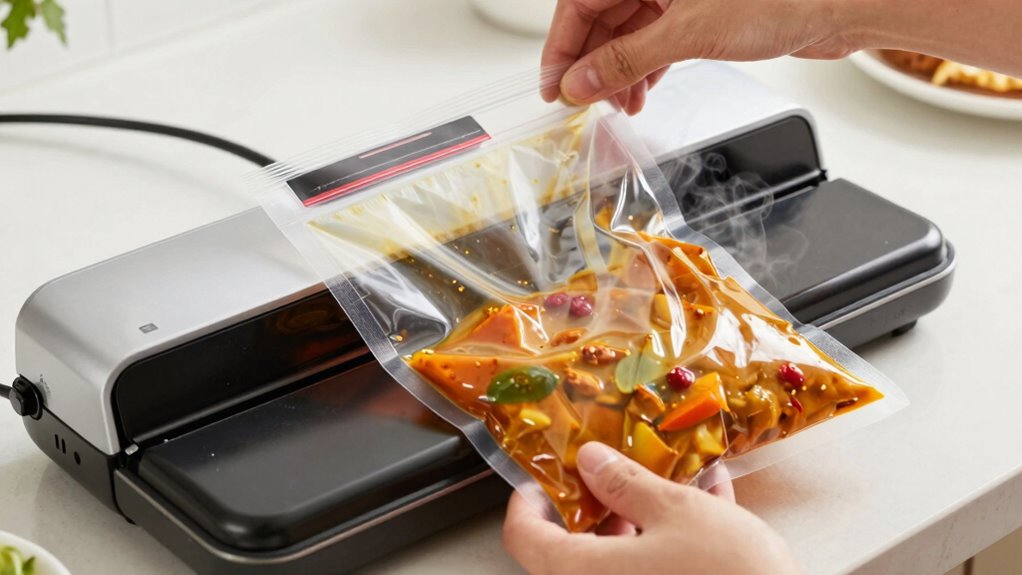
Choosing the right vacuum sealer and bags is essential when working with liquids like curries, as not all models and materials handle moisture effectively. Look for vacuum sealers with features like adjustable sealing strength and liquid detection, which help prevent messes. A sealer with a double-seal or pulse function offers better control when working with liquids. When selecting bags, consider material options such as heavy-duty, BPA-free, and puncture-resistant options, which help contain liquids without leaks. Some bags are specifically designed for liquids, with textured surfaces or channels that distribute pressure evenly. Additionally, selecting energy-efficient equipment can reduce power consumption during sealing, aligning with sustainable practices. Using the appropriate vacuum-sealing system ensures your process is both effective and environmentally friendly. It’s also helpful to choose bags with liquid barrier properties, which provide extra protection against leaks and spills. Incorporating advanced sealing technology further minimizes the risk of leaks and ensures a secure seal. Choosing the right equipment also involves considering cost and durability, ensuring your investment lasts over time. Investing in the right equipment guarantees your sealing process is efficient, mess-free, and reliable, making it easier to store curries without spills or spoilage.
vacuum sealer with adjustable sealing strength
As an affiliate, we earn on qualifying purchases.
As an affiliate, we earn on qualifying purchases.
Preparing Your Curry to Prevent Spills During Sealing
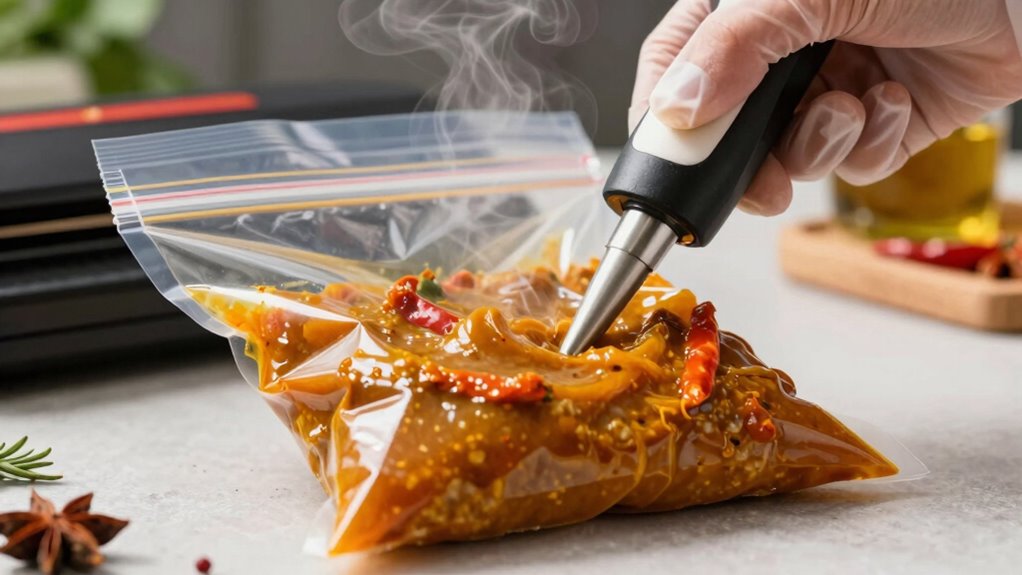
Before sealing your curry, make sure it’s completely cooled to avoid excess steam. Use proper containers that are designed for liquids, and seal them carefully to prevent leaks. Seal slowly to give yourself more control and reduce the risk of spills during the process. Additionally, ensure the container has proper airflow around it to prevent pressure buildup during sealing. Allowing space for gas expansion can help prevent the container from bursting or leaking during the process. Incorporating pressure regulation techniques can further improve safety and effectiveness during vacuum sealing.
Cool Curry Completely
Cooling your curry completely is essential to prevent spills and messes during the sealing process. Hot curry can create steam, which may cause the vacuum to malfunction or lead to leaks. Let it sit until it reaches room temperature, ensuring the flavors settle for better spice combinations and authentic taste. Proper cooling also helps maintain the integrity of your container and prevents warping. To emphasize, consider this table:
| Hot Curry Risks | Benefits of Cooling |
|---|---|
| Steam buildup can cause leaks | No spills during sealing |
| Warping containers | Preserves curry texture |
| Loss of flavor from rapid cooling | Maintains curry authenticity |
| Potential for bacterial growth if left out too long | Ensures safety and quality |
Additionally, allowing the curry to cool gradually can help prevent bacterial growth and ensure your food stays fresh and safe for storage.
Use Proper Containers
Using the right containers is vital to prevent spills and guarantee a successful vacuum seal. Opt for container types designed specifically for vacuum sealing, such as vacuum-safe bags or jars with wide mouths. These containers create airtight seals that keep your curry secure during the process. Make sure the containers are clean and dry before filling them, and leave enough space at the top to accommodate the sealing process. Using improper containers like regular zip-top bags or flimsy plastic containers can cause leaks or spills, ruining your efforts. Additionally, selecting containers made from food-safe materials ensures your curry remains free from contaminants and safe for storage. It’s also beneficial to choose vacuum-sealing compatible containers to ensure a reliable seal and prevent air leaks. Properly storing your curry in containers with airtight seals helps preserve flavor and prevents freezer burn. When selecting containers, consider container design features that facilitate a secure vacuum process and easy handling. Incorporating containers with durable construction can further enhance reliability during sealing and storage. By choosing appropriate container types with reliable airtight seals, you ensure your curry remains fresh, mess-free, and properly sealed for storage or freezing. This step is essential for maintaining quality and avoiding cleanup headaches.
Seal Carefully, Slowly
To prevent spills and guarantee a secure seal, you should seal your curry slowly and carefully. Rushing the process can lead to leaks or compromised vacuum quality. Use gentle, consistent pressure during sealing to avoid disturbing the curry’s surface. Applying proper sealing techniques ensures the bag is airtight without messes. Here’s a quick guide:
| Step | Tip | Result |
|---|---|---|
| Slow sealing | Pause briefly before completing | Better vacuum, fewer spills |
| Gentle pressure | Keep pressure steady | Prevents leaks |
| Check seal | Inspect for gaps or wrinkles | Ensures vacuum integrity |
Being mindful of vacuum sealing techniques helps maintain the integrity of your seal and prevents messes during the process. Properly maintaining vacuum quality ensures your curry stays fresh and leak-free. Focusing on sealing technique and vacuum quality guarantees a mess-free, airtight seal that preserves your curry’s flavor.
As an affiliate, we earn on qualifying purchases.
Techniques for Sealing Curries Without Making a Mess

Sealing curries without making a mess can be challenging, but the key is to use the right techniques and tools. Before sealing, let the curry cool slightly to prevent hot liquid from escaping. Use a wide, flat zip-top bag, and place the curry in a shallow layer to avoid spills. To preserve marinade flavors and spice levels, leave a small margin at the top of the bag for sealing. When vacuum sealing, slowly lower the bag into the machine, ensuring no liquid gets sucked into the vacuum channel. Use the manual mode if available, so you can control the process and stop before the bag gets overly compressed. This careful approach keeps your curry contained, maintains its flavor integrity, and prevents messes during sealing. Additionally, ensuring proper ventilation considerations can help prevent pressure buildup and spills during the process. Incorporating connected equipment like specialized vacuum sealers designed for liquids can further improve results and reduce messes. It’s also helpful to use appropriate containers for storing sealed curries, especially if you plan to reheat or freeze them later.
Using Freezing or Ice Packs to Keep Spills at Bay

Placing ice packs or pre-frozen containers around your curry bag can considerably reduce spills during the sealing process. The cold action constricts the liquid, making it less likely to leak. This simple step enhances spill prevention and keeps your workspace cleaner. Use sturdy ice packs, not melts, for best results. Remember, the goal is to contain any mess before it occurs. Consider the table below to understand how temperature and containment work together:
| Temperature Effect | Spill Prevention Benefit |
|---|---|
| Cold (Ice Packs) | Reduces liquid flow |
| Room Temperature | Increases spill risk |
| Frozen Containers | Contain leaks effectively |
| Warm Containers | Promote spills |
How to Position Curries in the Bag for a Clean Seal
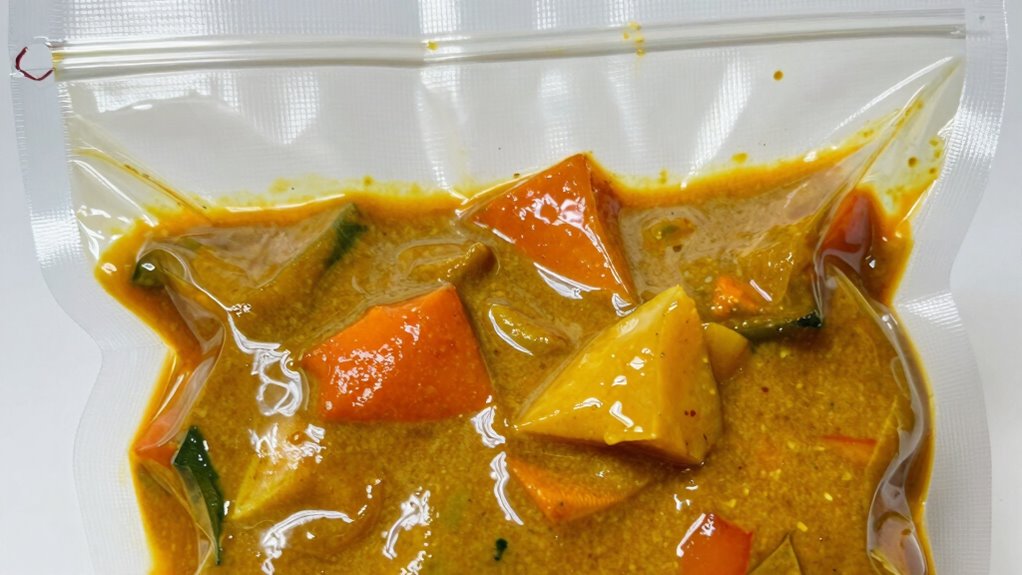
Properly positioning your curry in the bag makes a clean, secure seal and prevents leaks. Start by placing the curry flat in the bag, ensuring it’s centered and not crowded near the edges. Keep the sealing position at the top, leaving enough space for the vacuum seal to form without trapping excess liquid. Make sure the bag placement avoids any folds or wrinkles that could interfere with sealing. Align the curry so that the liquid stays away from the sealing line, reducing the risk of leaks. Use a gentle, even pressure when arranging the contents, ensuring nothing shifts during sealing. A well-considered sealing position helps maintain the bag’s integrity, ensuring a mess-free vacuum process and preserving your curry’s freshness.
Step-by-Step: Vacuum Sealing Curries Without Spills

To prevent spills, start by choosing the right containers designed for vacuum sealing. Take your time sealing slowly and carefully to make certain a secure, leak-proof closure. Paying attention to these steps keeps your curries fresh and mess-free.
Use Proper Containers
Choosing the right container is essential for sealing curries without spills. Focus on container selection that can withstand vacuum pressure without collapsing or leaking. Opt for sturdy, BPA-free plastic or glass containers with airtight, leak-proof sealing material. These materials guarantee a secure seal, preventing leaks during the vacuum process. Avoid containers that are too thin or have weak seals, as they can rupture or allow air to seep in. Ensure the container’s opening is wide enough for easy filling and sealing, reducing the chance of spills. Properly selecting containers that fit your vacuum sealer’s specifications will help you maintain a mess-free process. Using durable, compatible containers guarantees that your curry stays fresh and securely sealed throughout storage.
Seal Carefully and Slow
Since rushing the sealing process can easily cause spills or incomplete seals, it’s important to proceed slowly and carefully. Before sealing, make sure your ingredient preparation is solid—remove excess liquid and avoid overfilling containers. When using sealing techniques, go at a steady pace, paying close attention to the bag’s edge and ensuring no sauce or curry leaks into the seal area. Keep the opening flat and free of any debris or residue. Slowly lower the bag into the vacuum sealer, maintaining even pressure to prevent spills. Take your time with each step, double-checking the seal before removing the bag. This careful approach minimizes messes and guarantees a secure, airtight seal, preserving your curry’s freshness and flavor.
Troubleshooting Common Vacuum Sealing Problems

Even the most experienced home cooks can encounter issues when vacuum sealing curries, but many problems have straightforward solutions. Common sealing issues often stem from improper bag placement or moisture. To troubleshoot, check your vacuum sealer’s seals and make sure they’re clean and dry. Adjust the bag placement to avoid fold lines or wrinkles that can prevent a proper seal. Using the right vacuum sealing tips, like leaving enough headspace and removing excess air, helps prevent leaks. Here are some tips to avoid common sealing issues:
- Ensure the bag is flat and free of wrinkles
- Keep the sealing edge clean and dry
- Avoid overfilling the bag
- Use a moist towel to dry the sealing strip if needed
- Test the seal before storing the curry long-term
Storing and Reheating Vacuum Sealed Curries Safely
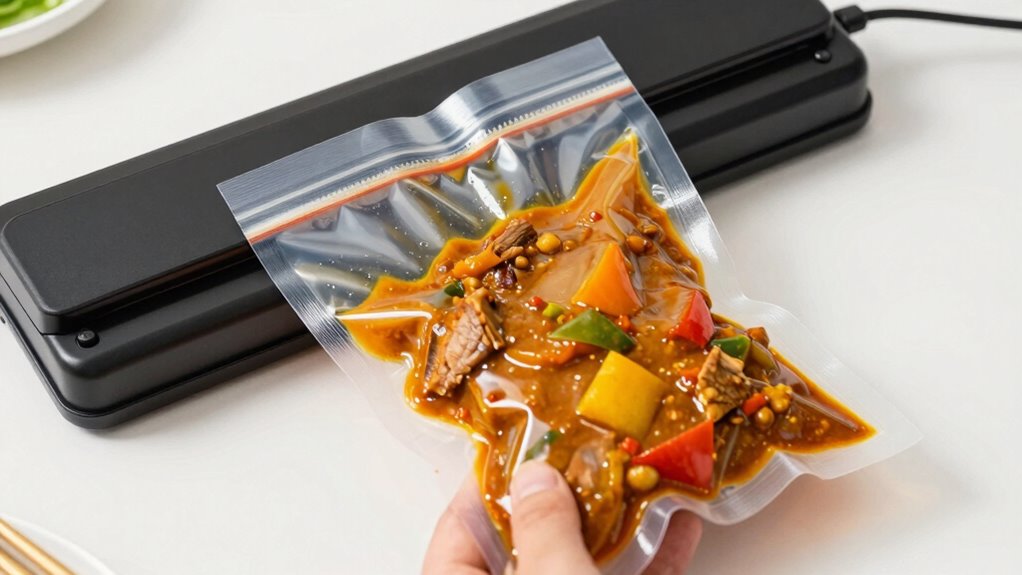
To keep your vacuum sealed curries fresh and safe, you need to follow proper storage techniques, like labeling and organizing them in your freezer. When reheating, use safe methods such as stovetop or microwave, ensuring the curry heats evenly. Freezing your curries in airtight bags extends their shelf life while maintaining flavor and safety.
Proper Storage Techniques
Proper storage is essential to keep vacuum-sealed curries fresh and safe to eat. To maximize flavor and maintain spice preservation, store your curries in airtight containers or freezer bags, removing excess air. Label each package with the date to track freshness. When storing, keep curries in the coldest part of your fridge or freezer to prevent spoilage. For marinade techniques, guarantee the curry is fully cooled before sealing to avoid bacteria growth. Avoid overfilling bags to prevent spills. Use small portions to make reheating easier and prevent waste. Keep spices evenly distributed to preserve their potency. Properly stored, vacuum-sealed curries can last several months while retaining their flavor, aroma, and consistency. This method ensures your curry stays delicious and safe to enjoy later.
Safe Reheating Methods
When reheating vacuum-sealed curries, it’s important to do so safely to preserve their flavor and prevent foodborne illnesses. The best method is to thaw the curry in the refrigerator overnight, maintaining ingredient freshness. Reheat gently on the stove over medium heat, stirring occasionally to ensure even heat distribution. This helps preserve the spice blending and prevents scorching. Avoid microwave reheating directly from frozen, as uneven heating can compromise flavor and safety. Always check that the curry reaches an internal temperature of 165°F (74°C). Proper reheating maintains the curry’s original spice profile and ingredient integrity. By handling vacuum-sealed curries with care and reheating mindfully, you ensure a delicious, safe meal every time.
Freezing for Longevity
Freezing vacuum-sealed curries is an effective way to extend their shelf life while maintaining flavor and quality. Proper storage prevents freezer burn and preserves the curry’s rich taste. Use container options such as airtight vacuum bags or freezer-safe containers to guarantee freshness. When freezing, label your packages with the date to track storage time. For maximum flavor preservation, remove as much air as possible before sealing. Consider portioning curries into smaller containers for easy reheating. Keep the curry flat in the freezer to maximize space and promote even freezing. Remember, the better you seal and store, the longer your curry retains its original flavor and texture. Proper freezing methods help you enjoy delicious, homemade curries anytime without sacrificing quality.
Extra Tips to Keep Your Curries Fresh and Flavorful
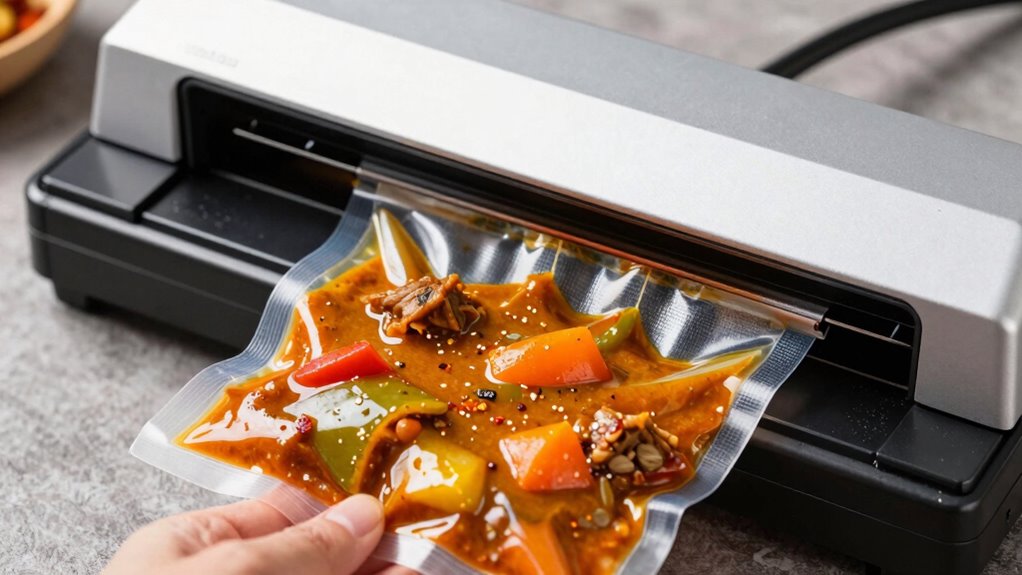
To keep your curries tasting fresh and full of flavor, consider adding a thin layer of plastic wrap directly on the surface before sealing. This extra step helps preserve spices by preventing them from escaping and losing aroma. It also minimizes air exposure, which can cause flavor degradation. For ideal spice preservation, guarantee the wrap touches the curry’s surface, creating a barrier against freezer burn and moisture loss. Additionally, this method enhances texture by reducing ice crystal formation. When you vacuum seal over the plastic wrap, it creates a tight seal that maintains the curry’s original consistency. Using this technique, your curries will retain their vibrant flavors and smooth textures longer, making each reheat just as delicious as when freshly cooked.
Frequently Asked Questions
Can I Vacuum Seal Curries With Thick or Chunky Textures?
Yes, you can vacuum seal curries with thick or chunky textures. To preserve the texture and prevent messes, use the right sealing techniques like portioning the curry into smaller, flat bags and removing excess air carefully. Consider pre-freezing the curry slightly to keep chunks intact, then vacuum seal. This method guarantees the curry stays fresh without squishing or leaking, maintaining its quality during storage.
Is It Safe to Vacuum Seal Hot or Freshly Cooked Curries?
Vacuum sealing hot or freshly cooked curries is like trying to catch lightning in a bottle—risky. It’s not safe because heat can cause the bag to weaken or burst, risking food safety. Always cool your curries first before sealing. Use proper sealing techniques, like leaving enough headspace and ensuring the food is at room temperature, to prevent spoilage and maintain freshness. Never compromise safety for convenience.
How Long Can Sealed Curries Be Stored in the Freezer?
Sealed curries can typically be stored in the freezer for up to 3 to 4 months, following proper freezing guidelines. To guarantee the best quality, label your vacuum-sealed packages with the date, so you know when to use them. Always check for any signs of freezer burn or spoilage before reheating. Proper sealing and quick freezing help preserve flavor, texture, and safety during storage.
What Types of Vacuum Sealer Bags Are Best for Liquids?
Think of vacuum sealer bags as your trusty steed in the battle against messes. For liquids, opt for heavy-duty, BPA-free bags designed specifically for liquid retention. These bags feature thicker material and secure seals that prevent leaks. Look for bags with reinforced edges or channels to handle the pressure of liquids, ensuring your curries stay contained and fresh without spills. Trust the right bags to keep your kitchen tidy and your food preserved.
Can Vacuum Sealing Affect the Taste or Quality of the Curry?
Vacuum sealing can preserve your curry’s flavor and extend its freshness, but it might slightly impact texture over time. Properly sealing quickly locks in aroma and taste, preventing freezer burn and flavor loss. However, delicate ingredients or sauces with high moisture might experience minor texture changes. To minimize this, use appropriate bags and avoid over-compressing. Overall, with careful sealing, your curry stays tasty and fresh long-term.
Conclusion
Now that you know how to vacuum seal your curries without a hitch, you’ll be able to keep them fresh and flavorful for longer. Just remember, patience is key—don’t rush the process or you’ll end up in a pickle. With the right tools and techniques, sealing your curries becomes a breeze, so you can enjoy homemade goodness anytime. Keep these tips in mind, and you’ll never have to cry over spilled curry again!
Fall Picks
fall essentials
As an affiliate, we earn on qualifying purchases.