
Paneer behaves very differently from regular cheese because it’s made simply by curdling heated milk with an acid, without fermentation or aging. This process creates a fresh, firm, crumbly texture that doesn’t melt or stretch like traditional cheese. Its high water content and tight protein bonds give it stability during cooking. If you want to understand the science behind paneer’s unique qualities and how to work with it, keep exploring the details.

Get kitchen staples and gadgets delivered free — and shop member deals
- Fast, free delivery on millions of items
- Access to Prime Big Deal Days deals on October 6–7
- Prime Video, Amazon Music and more included
Key Takeaways
- Paneer is made by heating milk and adding acid, without fermentation or aging, resulting in a fresh, mild taste unlike aged cheese.
- It lacks the complex flavor development from fermentation and maturation processes typical of regular cheese.
- Paneer’s proteins are tightly bonded, preventing melting or stretching, unlike many traditional cheeses with flexible protein structures.
- Its high water content and dense protein matrix give it a crumbly, firm texture, differing from the smooth, melted consistency of cheese.
- Paneer does not undergo aging, which is essential for developing the flavors and textures associated with traditional cheese varieties.
As an affiliate, we earn on qualifying purchases.
What Makes Paneer Different From Regular Cheese?
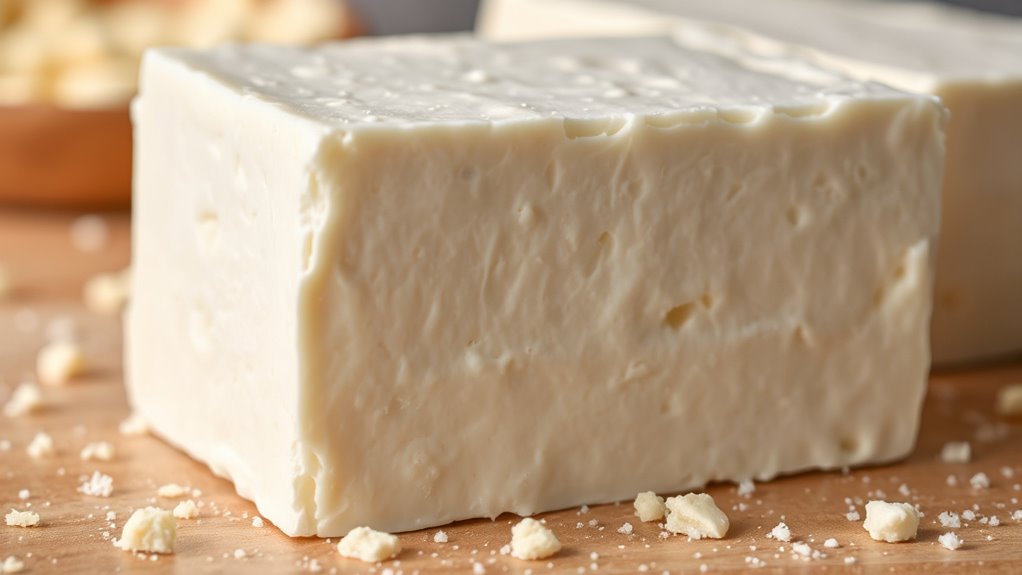
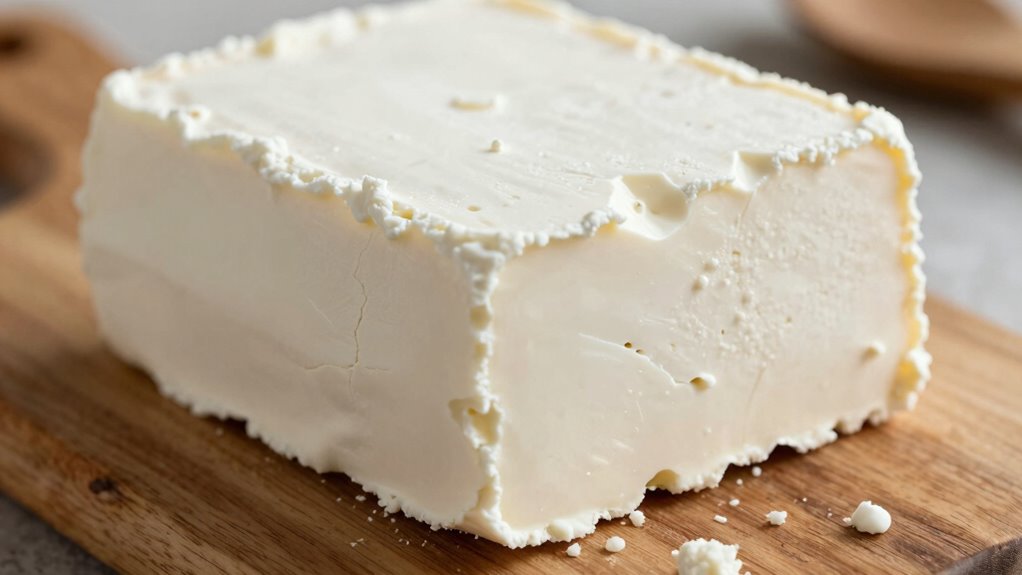
While both paneer and regular cheese are dairy products, they differ markedly in their preparation and texture. Regular cheese undergoes cheese aging, which involves fermentation and maturation, allowing complex flavors to develop over time. This aging process enhances flavor development, often resulting in sharp, tangy, or nutty notes. In contrast, paneer isn’t aged; it’s made fresh and doesn’t go through fermentation. This means it retains a mild, milky taste with a soft, crumbly texture. The absence of aging prevents paneer from developing the layered flavors typical of aged cheeses. Instead, paneer’s flavor remains light and subtle, making it versatile for various dishes. Its fresh qualities set it apart, highlighting its unique role in cuisine without the complexities of flavor development that aging imparts. Additionally, the processing methods used in paneer production contribute to its distinct texture and taste, differentiating it further from traditional aged cheeses. The freshness of paneer is a key factor in its mild flavor profile, and preserving this quality is essential for its culinary versatility. Moreover, storage conditions can significantly influence paneer’s texture and flavor over time, emphasizing the importance of proper handling.
As an affiliate, we earn on qualifying purchases.
How Is Paneer Made?
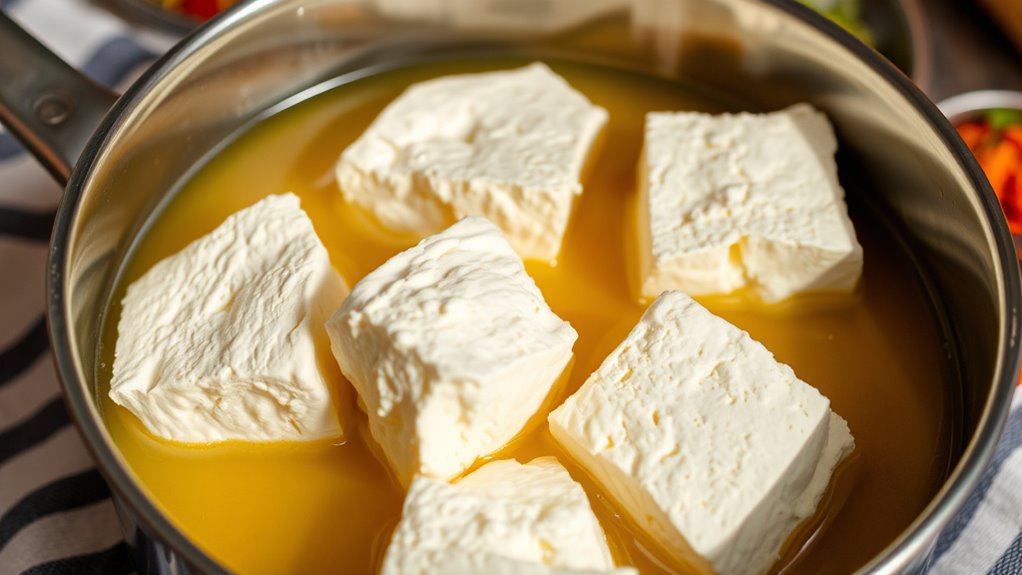
Ever wondered how fresh paneer comes together in the kitchen? The process starts with milk, which undergoes milk coagulation, where acids or enzymes curdle the milk proteins. Unlike cheese, paneer doesn’t involve dairy fermentation, so it skips aging or fermentation steps. You simply heat the milk, add an acid like lemon juice or vinegar, and stir until curds form. These curds are then drained and pressed to remove excess water, shaping your paneer. The table below highlights key differences:
| Step | Cheese | Paneer | Key Difference |
|---|---|---|---|
| Dairy fermentation | Often involved, ages over time | Not involved, fresh formation | No fermentation in paneer |
| Milk coagulation | Uses rennet or bacteria | Uses acid directly | Direct acid addition |
| Maturation | Aged for flavor development | Consumed immediately | No aging process |
Paneer is a versatile ingredient that can be used in a variety of dishes, making its simple preparation method even more valuable for home cooks. Understanding the cheese-making process can help improve your homemade paneer and customize it to your taste.
paneer press for homemade cheese
As an affiliate, we earn on qualifying purchases.
As an affiliate, we earn on qualifying purchases.
Why Doesn’t Paneer Melt Or Stretch?
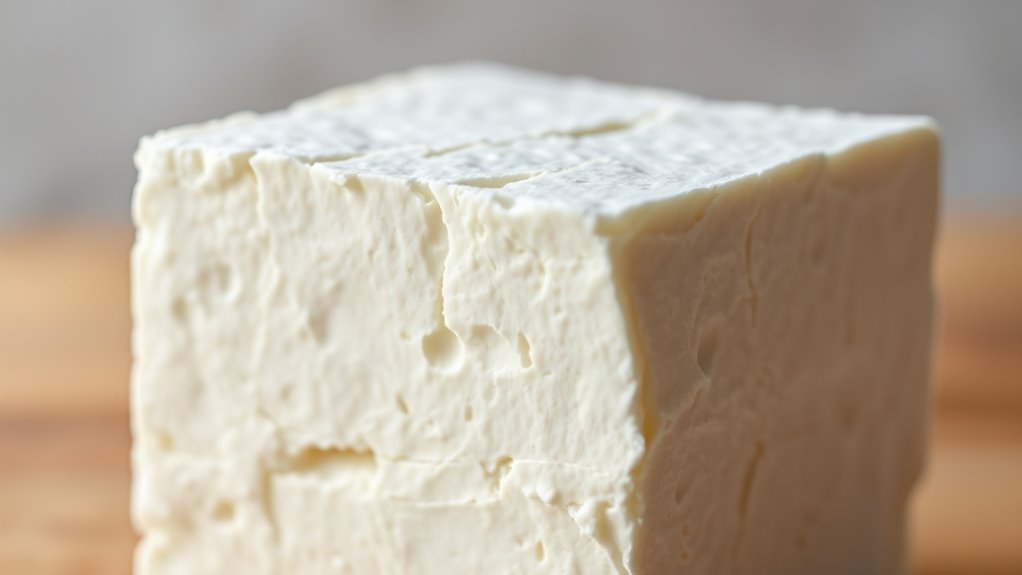
You might notice that paneer doesn’t melt or stretch like other cheeses, and that’s mainly due to its protein structure. Unlike melted cheeses, paneer’s proteins are tightly bonded, preventing it from becoming gooey. Additionally, its high water content helps it hold its shape, making it firm and non-stretchy. The protein bonds in paneer are responsible for its unique texture and behavior during cooking. Moreover, the chemical composition of paneer contributes to its stability under heat, unlike other cheeses that break down and melt. This structure also means that paneer maintains its integrity even when cooked at high temperatures, making it ideal for various culinary applications.
Protein Structure Differences
Paneer’s unique ability to resist melting or stretching stems from its protein structure. Unlike traditional cheese, paneer contains a different arrangement of casein proteins, which form a tight, curd-like network when coagulated. This dense protein matrix traps milk solids but lacks the flexible protein chains found in aged cheeses. Additionally, milk fat in paneer is minimal and remains largely intact during the curdling process, contributing little to melting or stretching. This contrast with cheeses that have undergone aging or processing, where the protein structure becomes more elastic. As a result, paneer holds its shape firmly when cooked, without melting or stretching, making it ideal for grilling or frying without losing form. The absence of wave and wind effects in paneer further ensures it retains its shape under heat. Moreover, the protein network in paneer is resistant to heat-induced changes, which helps it maintain its texture during cooking. This stability is partly due to the coagulation process, which creates a firm, stable curd.
Water Content Impact
The low water content in paneer plays a significant role in preventing it from melting or stretching when heated. Its moisture content is minimal compared to traditional cheese, which means there’s less water to turn into steam or cause melting. This limited water retention keeps the proteins tightly bound, maintaining the paneer’s firm structure even at high temperatures. Unlike cheese with higher moisture levels, paneer doesn’t soften or become gooey because its water isn’t released easily. Instead, it holds onto its shape, making it ideal for grilling or frying. The reduced water content ensures that paneer remains solid and doesn’t melt, giving it a unique texture that’s distinct from other cheeses. Additionally, the moisture control in paneer is a key factor that contributes to its culinary versatility.
As an affiliate, we earn on qualifying purchases.
The Science Of Paneer’s Firm And Crumbly Texture

The firmness and crumbly texture of paneer primarily depend on the protein structure and water content. When you understand how acid-base interactions influence these factors, you’ll see why paneer holds together or breaks apart. These science basics help explain what makes paneer firm or crumbly in your dishes. For example, the type of acid used during preparation can affect the protein structure, resulting in different textures.
Protein Structure’s Role
Understanding how protein structure influences paneer’s texture is key to mastering its firmness or crumbly nature. Protein folding determines how amino acids interact, shaping the overall structure of the protein network. When heating milk and adding acid, these interactions cause the proteins, mainly casein, to unfold and then reassemble into a solid matrix. The way amino acids bond during this process affects whether the paneer becomes dense and firm or crumbly and fragile. Strong, tight interactions result in a cohesive, resilient texture, while weaker bonds produce a crumbly feel. By controlling factors that influence protein folding and amino acid interactions—like temperature and acidity—you can manipulate paneer’s firmness to suit your preferences. Additionally, residue interactions play a crucial role in determining the final texture of homemade paneer.
Water Content Impact
Water content plays a significant role in shaping paneer’s texture by affecting the protein network’s structure. When moisture content is high, water retention keeps the paneer soft and tender, making it crumbly and delicate. Conversely, reducing water content results in a firmer, denser texture, as less moisture allows the protein matrix to bind tightly. The amount of water retained during processing influences whether your paneer feels smooth or crumbly. Too much water makes it fragile and prone to breaking apart, while too little can lead to a tough, rubbery consistency. Controlling moisture content is vital for achieving the desired texture, as it directly impacts how tightly the proteins hold together and how the water interacts within the matrix. Proper water content management is essential for consistency in texture and quality. Additionally, employing Free Floating techniques can also be employed to optimize water retention and achieve the perfect paneer texture. Understanding the vulnerability of water content in the protein structure allows for better control during cheese-making processes to tailor the texture to preference, especially considering the differences in protein interactions compared to traditional cheese.
Acid-Base Interactions
Acid-base interactions are fundamental in determining whether paneer turns out firm or crumbly. When you add an acid like lemon juice or vinegar to hot milk, it triggers protein denaturation, causing the milk proteins to coagulate and form curds. The pH level influences the texture: a lower pH (more acidic) leads to a firmer, more cohesive paneer, while less acid results in crumbly cheese.
- Understand how acid strength affects protein structure
- Recognize how pH controls protein denaturation and texture
- Experiment with different acids for desired firmness
How To Use Paneer In Cooking
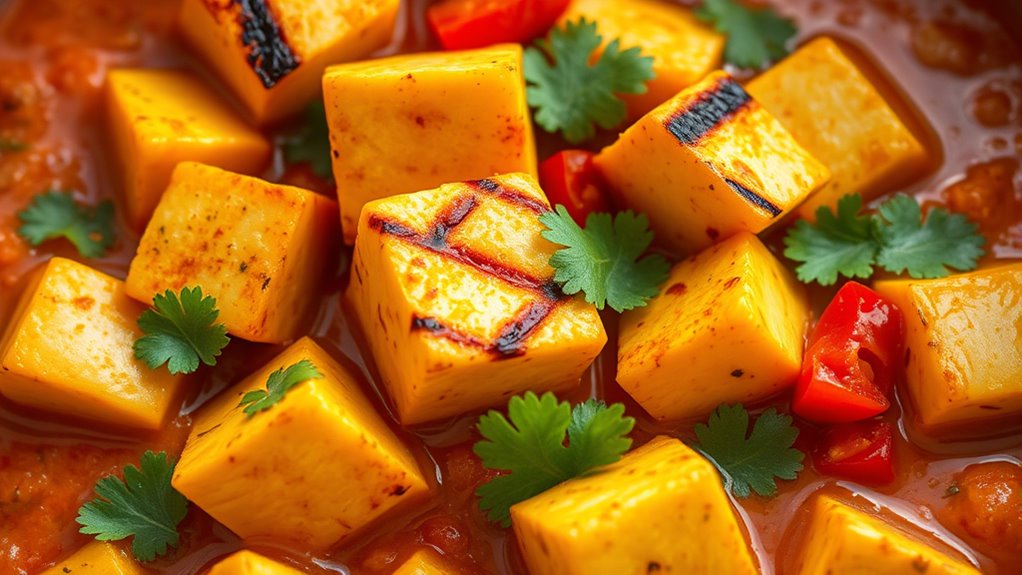
Paneer is incredibly versatile and easy to incorporate into a variety of dishes. You can use it as a cheese substitute in recipes like salads, sandwiches, and wraps, adding a creamy texture without melting away. Its firm, crumbly nature makes it perfect for stir-fries, curries, and grilled dishes, giving you a hearty, protein-rich vegetarian option. You can cube or slice paneer and fry or grill it to add crunch and flavor. It also works well in baked dishes or as a topping for pasta and rice bowls. Since paneer holds its shape well, it’s ideal for skewers or kabobs. Experiment with marinades and spices to enhance its flavor, making it a flexible ingredient for many cuisines. Incorporating home decor inspiration into your kitchen or dining space can create an inviting environment for preparing and enjoying these flavorful dishes. Additionally, understanding the large number conversions can help you better plan recipes and servings when dealing with ingredients listed in different units. Moreover, mastering culinary techniques related to paneer can elevate your cooking skills and add variety to your meals. Utilizing proper handling and storage practices ensures your paneer remains fresh, flavorful, and safe to consume.
Can You Make Paneer Melt? Tips And Alternatives
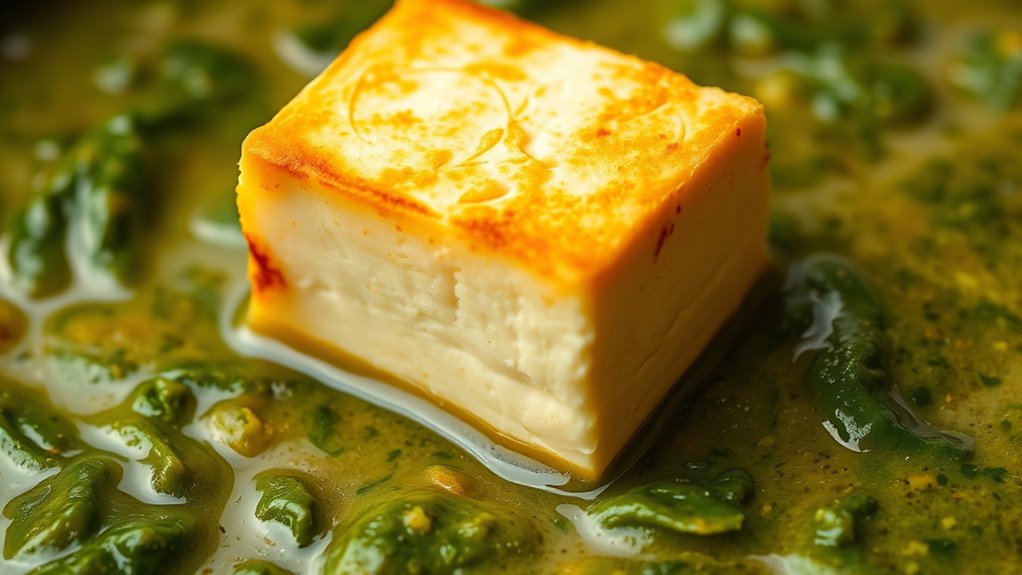
Can paneer truly melt like cheese? Not exactly. Unlike traditional cheese, paneer doesn’t melt smoothly because of its high curdling point and low fat content. However, you can achieve a soft, creamy texture with some tricks.
- Use softer or fresher paneer for better chances of melting or blending into sauces.
- Heat gently and slowly when cooking, avoiding high temperatures that cause it to toughen.
- Consider dairy alternatives like processed cheese or vegan cheese, which melt more like traditional cheese.
- For a cheesy texture in recipes, try adding a splash of milk or cream to help mimic cheese melting.
- Understanding the melting properties of paneer can help you better control its texture during cooking.
While paneer won’t melt like cheese, these tips help incorporate a melty feel or rich creaminess into your dishes.
Troubleshooting Your Paneer: Tips For Perfect Results
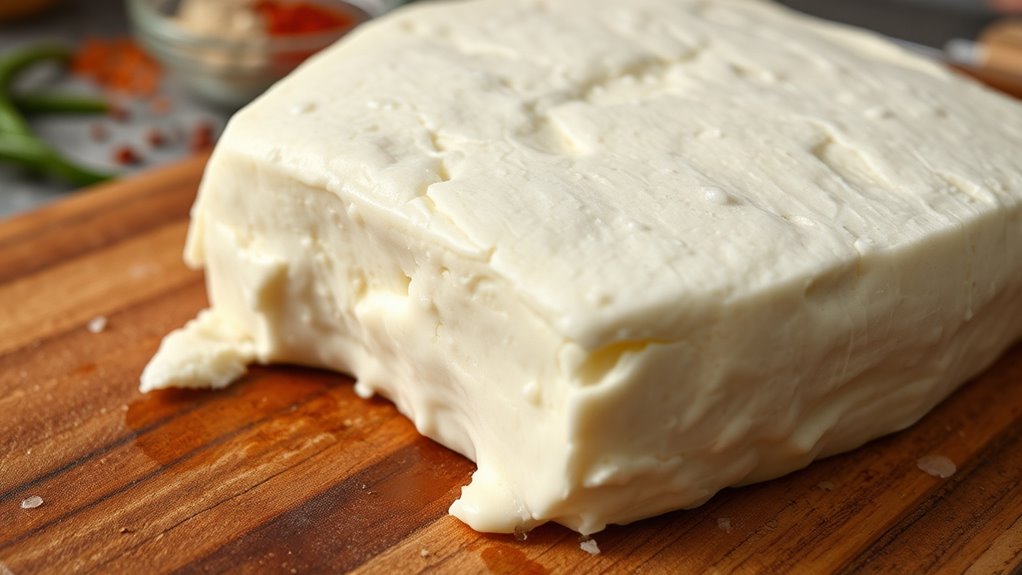
Even seasoned cooks can encounter issues with paneer, but understanding common problems and how to fix them makes a big difference. If your paneer turns out too crumbly, it may be due to improper curdling or over-pressing, which affects cheese aging and texture. To improve consistency, guarantee your milk undergoes proper dairy fermentation—using fresh, high-quality milk helps achieve the right curd formation. If your paneer is too soft or doesn’t hold shape, try adjusting the acidity level by adding lemon juice or vinegar gradually. Over-pressing can also squeeze out excess moisture, leading to a dry result. Remember, paneer’s unique behavior stems from its lack of traditional cheese aging, so mastering these quick fixes can help you create perfect, firm paneer every time.
Frequently Asked Questions
Can Paneer Be Made Vegan or Dairy-Free?
Yes, you can make paneer vegan or dairy-free by using vegan cheese alternatives or dairy-free substitutes like tofu or cashew cheese. These options mimic the texture and mild flavor of traditional paneer, making them perfect for your recipes. Simply press and season the vegan cheese or tofu to resemble paneer, and you’re all set. This way, you enjoy similar dishes without any dairy, catering to vegan or dairy-free diets.
How Long Does Homemade Paneer Last?
A stitch in time saves nine, so you’ll want to use your homemade paneer quickly. Typically, it lasts about 2 to 3 days in the refrigerator if stored properly in an airtight container. For the best shelf life, keep it chilled and avoid exposure to moisture. Follow these storage tips, and you’ll enjoy fresh, tasty paneer while it’s at its best. When in doubt, smell and check for spoilage before using.
Is Paneer Suitable for People With Lactose Intolerance?
If you’re lactose intolerant, paneer might be suitable since it’s lower in lactose due to the way it’s made, which helps with lactose digestion. However, some people still experience discomfort. If you want dairy alternatives, try plant-based options like tofu or cashew cheese. Always check labels and consult your healthcare provider to confirm these alternatives work for your digestion needs.
What Are Common Regional Variations of Paneer?
You’ll find regional variations of paneer as diverse as the colors of a rainbow! In India, northern styles often add spices and herbs, while southern recipes might incorporate coconut or curry leaves. In Pakistan, paneer is used in rich, traditional recipes like saag paneer, and in Bangladesh, it’s sometimes flavored with local spices. These regional flavors make paneer a versatile ingredient that adapts beautifully to local culinary traditions.
Can Paneer Be Flavored or Infused With Herbs?
Yes, you can definitely flavor or infuse paneer with herbs for delicious flavor enhancements. To do this, add chopped herbs like cilantro, mint, or basil into the milk before curdling, or mix them into the paneer after pressing. Herb infusions add vibrant taste and aroma, making your paneer more versatile in dishes. Experiment with different herbs to create customized flavors that complement your favorite recipes.
Conclusion
Now that you understand why paneer behaves like a stubborn mule rather than a melting snowman, you’re ready to confidently cook with it. Remember, its unique texture is like a blank canvas—firm, crumbly, and perfect for soaking up flavors. With a little practice, you’ll master its quirks and turn it into delicious dishes. Embrace its personality, and you’ll find paneer becomes your secret ingredient, adding a delightful bite that’s truly one of a kind.
Fall Picks
fall essentials
As an affiliate, we earn on qualifying purchases.