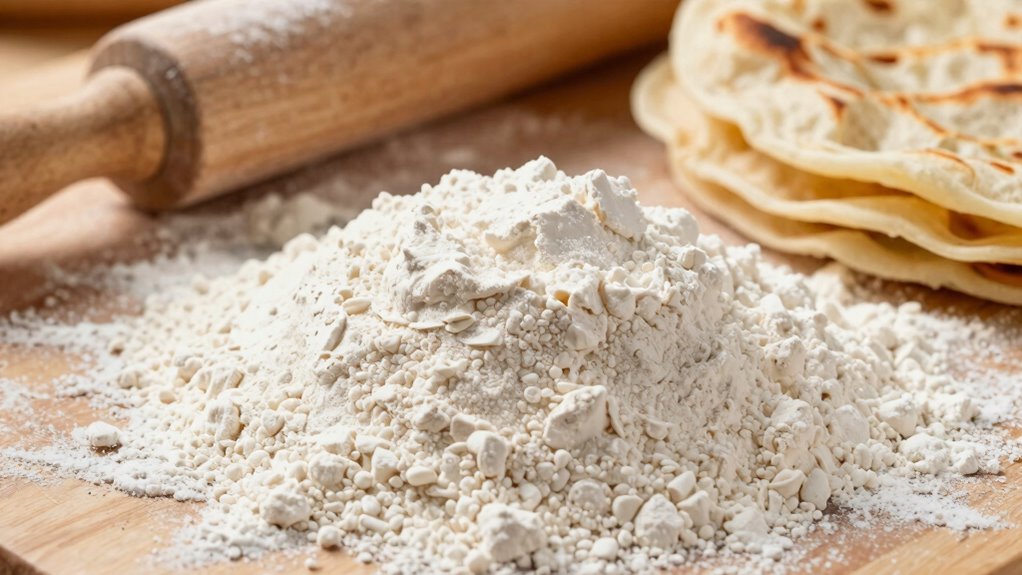
Maida makes bread soft and parathas flaky because of its high gluten content, which helps develop a strong, elastic dough that traps air and moisture. Its fine refinement creates a smooth texture, improving elasticity and layer formation. This results in tender bread with a soft crumb and flaky, layered parathas. If you’re curious about how this process works in detail, you’ll find the key factors behind maida’s unique properties explained further.

Get kitchen staples and gadgets delivered free — and shop member deals
- Fast, free delivery on millions of items
- Access to Prime Big Deal Days deals on October 6–7
- Prime Video, Amazon Music and more included
Key Takeaways
- Maida’s high gluten content creates a strong, elastic network that makes bread soft and helps parathas layer into flaky layers.
- Its fine, refined texture results in a smooth dough, contributing to tender bread crumb and delicate paratha crust.
- Maida’s excellent water absorption forms a cohesive, elastic dough, retaining moisture and enhancing softness and flakiness.
- The removal of coarse bran and germ yields a uniform texture, supporting consistent gluten development and light baked goods.
- Its refined nature minimizes interference with gluten formation, producing the desired soft, tender bread and flaky parathas.

Maida, a finely milled refined wheat flour, plays a key role in achieving soft bread and flaky parathas because of its unique properties. One of the most important aspects of maida is its ability to promote gluten development. Gluten is a protein network that forms when you knead wheat flour with water. This network gives bread its elasticity and structure, helping it rise and hold its shape. When you use maida, which has a high gluten content due to its refined nature, you enable the dough to develop a strong yet flexible gluten network. This results in a softer, more pliable bread that retains moisture and stays tender longer. For parathas, the same gluten development contributes to a flaky texture. As you roll and fold the dough, the gluten creates layers that puff up and separate when cooked, giving the paratha its characteristic flakiness.
Texture enhancement is another key benefit of using maida. Because it’s finely milled and refined, it produces a smooth, consistent dough that’s easier to work with. This smoothness allows you to achieve a uniform thickness in your bread or paratha, which is essential for even cooking. Additionally, maida’s fine particles create a softer crumb in bread and a more delicate, flaky crust in parathas. When you incorporate maida into your recipes, it tends to absorb water efficiently, forming a cohesive dough that’s less crumbly and more elastic. This elasticity helps in shaping the dough without tearing, ensuring your bread is soft and your parathas are layered and flaky.
Moreover, the texture enhancement from maida isn’t just about softness. It improves the overall mouthfeel, making your baked goods feel lighter and more tender with each bite. When you use maida, the resulting bread stays moist longer, and the layers in your paratha stay distinct and flaky after cooking. This is because the refined flour minimizes the presence of bran and germ, which can create a coarse texture and interfere with gluten formation. As a result, maida delivers a smooth, uniform texture that’s ideal for achieving the perfect softness and flakiness.
maida flour for bread and parathas
As an affiliate, we earn on qualifying purchases.
As an affiliate, we earn on qualifying purchases.
Frequently Asked Questions
Is Maida Healthier Than Whole Wheat Flour?
No, maida isn’t healthier than whole wheat flour because it has a higher gluten content and lower nutritional value. You might prefer whole wheat flour for its fiber, vitamins, and minerals, which support digestion and overall health. Maida, on the other hand, is refined and lacks these nutrients, making it less nutritious. For a healthier choice, opt for whole wheat flour to benefit from its natural nutrients and fiber.
Can Maida Be Used in Gluten-Free Recipes?
Can maida be used in gluten-free recipes? Not really, since maida contains gluten, which isn’t suitable for gluten-free baking. Instead, you should look for alternative flours like rice, almond, or coconut flour. These flours mimic maida’s texture without gluten, making your baked goods light and flaky. So, if you’re aiming for gluten-free treats, stick to these alternative flours—they’re your best bet for delicious, safe baking.
How Should Maida Be Stored to Maintain Freshness?
To keep your maida fresh, store it in an airtight container in a cool, dry place away from sunlight. Proper storage tips help preserve its freshness and prevent moisture or pests from affecting it. Make sure to seal the container tightly after each use, and avoid exposing it to humidity. Regularly check for any signs of spoilage, so your maida stays fresh and ready for baking or cooking whenever you need it.
Does Maida Affect Blood Sugar Levels Differently?
Yes, maida can affect your blood sugar levels differently because of its high glycemic impact. When you eat foods made from refined flour, your blood sugar response rises quickly, leading to spikes. This happens because maida is low in fiber, which helps slow down sugar absorption. To manage this, consider balancing maida-based dishes with fiber-rich ingredients or opting for whole wheat alternatives to reduce the glycemic impact on your blood sugar.
Are There Alternatives to Maida for Soft Bread?
You can try alternatives like whole wheat flour for soft bread, which has a higher gluten content and better nutritional value. For example, a baker shifted to spelt flour and achieved soft, flaky bread similar to maida-based ones. These options offer added fiber and nutrients, making your bread healthier. While they may alter texture slightly, experimenting with different flours can give you soft, flavorful bread without relying on maida.
As an affiliate, we earn on qualifying purchases.
Conclusion
So, next time you make bread or parathas, remember that maida’s gluten content helps create that soft, flaky texture you love. For example, a home baker used maida in her recipe, and her bread turned out melt-in-your-mouth soft, impressing everyone. It’s all about understanding how this refined flour works its magic. With a little practice, you’ll master perfect, bakery-style treats right in your own kitchen.
As an affiliate, we earn on qualifying purchases.
As an affiliate, we earn on qualifying purchases.
NFL season / tailgating Picks
team gear
As an affiliate, we earn on qualifying purchases.