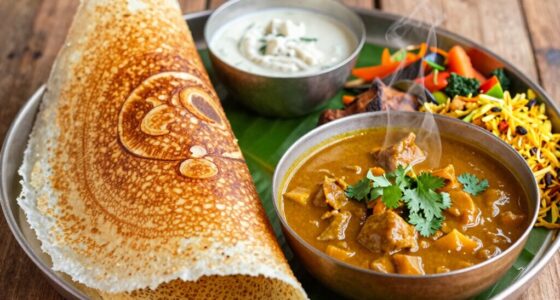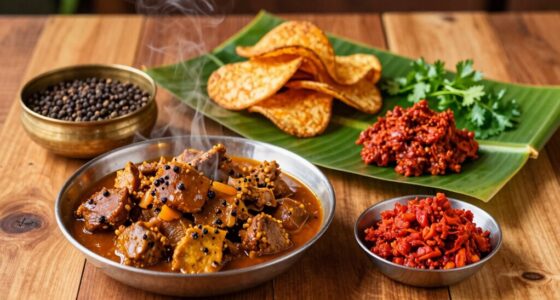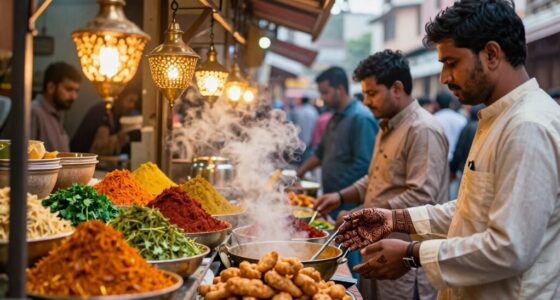
Rajasthani desert cuisine builds big flavor through bold spices like cumin, coriander, and chili, combined with inventive use of local ingredients such as millet, dried beans, and preserved vegetables. Traditional techniques like slow cooking, tempering, and roasting deepen the taste, while resourcefulness turns limited ingredients into hearty dishes like Dal Baati Churma and Ker Sangri. Discover how these unique methods and flavors develop resilience and richness—there’s much more to explore below.
Key Takeaways
- Bold spices like cumin, coriander, and chili create layered, intense flavors in Rajasthani desert dishes.
- Use of traditional slow cooking methods, open fires, and earthen pots enhances deep, smoky flavors.
- Incorporation of local ingredients such as millet, dried lentils, and preserved vegetables boosts flavor and sustains the arid climate.
- Innovative preservation techniques like drying and fermentation concentrate flavors and extend shelf life.
- Desert plants and leftover grains are creatively utilized, adding distinctive tastes and resourcefulness to cuisine.

Authentic Indian Spice 12 Spice Set: Assorted Spices, Herbs, and Seasonings
Versatile Set: Includes a variety of spices, herbs, and seasonings for flavoring dishes.
As an affiliate, we earn on qualifying purchases.
As an affiliate, we earn on qualifying purchases.
What Makes Rajasthani Cuisine Unique and Flavorful?
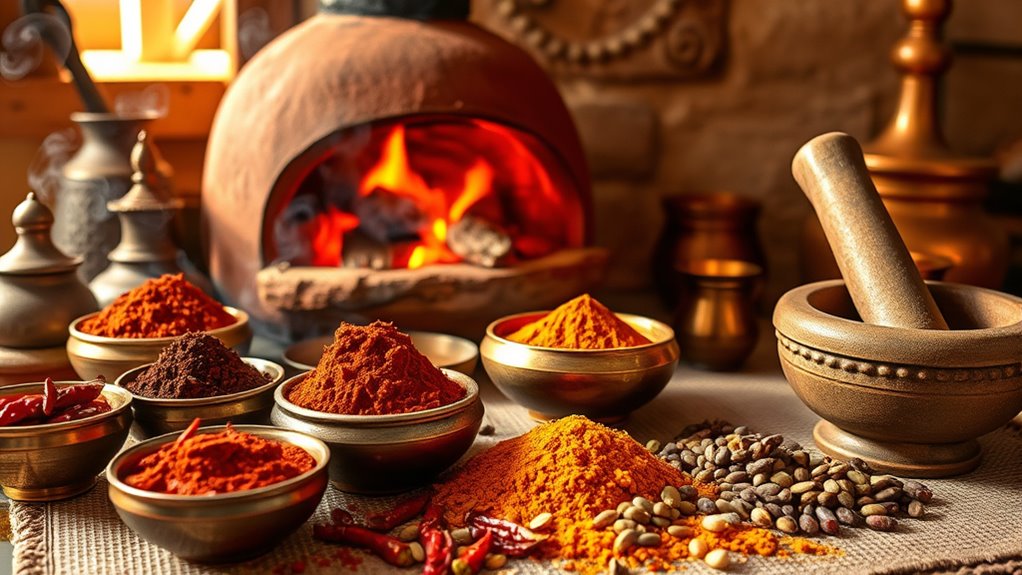
Rajasthani cuisine stands out for its bold flavors and inventive use of local ingredients, shaped by the region’s arid climate and desert landscape. This culinary style reflects the vibrant culture of Rajasthan, where traditional music and desert festivals play a crucial role. During these festivals, you’ll experience lively folk tunes and energetic dances that mirror the region’s spirited food. The flavors are often intense, with spices like cumin, coriander, and chili intensifying dishes. You’ll notice the reliance on ingredients like millet, dried beans, and preserved vegetables, which suit the tough environment. The connection to cultural traditions, especially the lively performances and celebrations, adds a unique richness, making Rajasthani cuisine truly one-of-a-kind and deeply rooted in its cultural heritage. Additionally, the use of energy-efficient cooking methods demonstrates how the cuisine adapts sustainably to its environment while preserving its rich flavors. Incorporating traditional preservation techniques also ensures the ingredients retain their flavor and nutrition despite the harsh climate. To further adapt to their environment, local cooks often employ climate-conscious cooking practices, which help conserve resources and enhance flavor. Furthermore, understanding the importance of cultural adaptation highlights how these culinary techniques have evolved to meet the needs of the region’s challenging environment. Recognizing the role of local ingredients further underscores the resourcefulness inherent in Rajasthani cooking.

Hakan Suphan Handmade 7.6-Quart Large Clay Cooking Pot with Lid, Natural Unglazed Cookware, Terracotta Cazuela, Casserole Dish, Rice Cooking, Stewpot, Korean, Indian, Mexican Dish 7.2 L
🥖🥖 Natural & Unglazed: Hakan Suphan Clay Pot with lid is made of whole natural UNGLAZED terracotta. The…
As an affiliate, we earn on qualifying purchases.
As an affiliate, we earn on qualifying purchases.
How Does Rajasthani Desert Geography Shape Its Food?
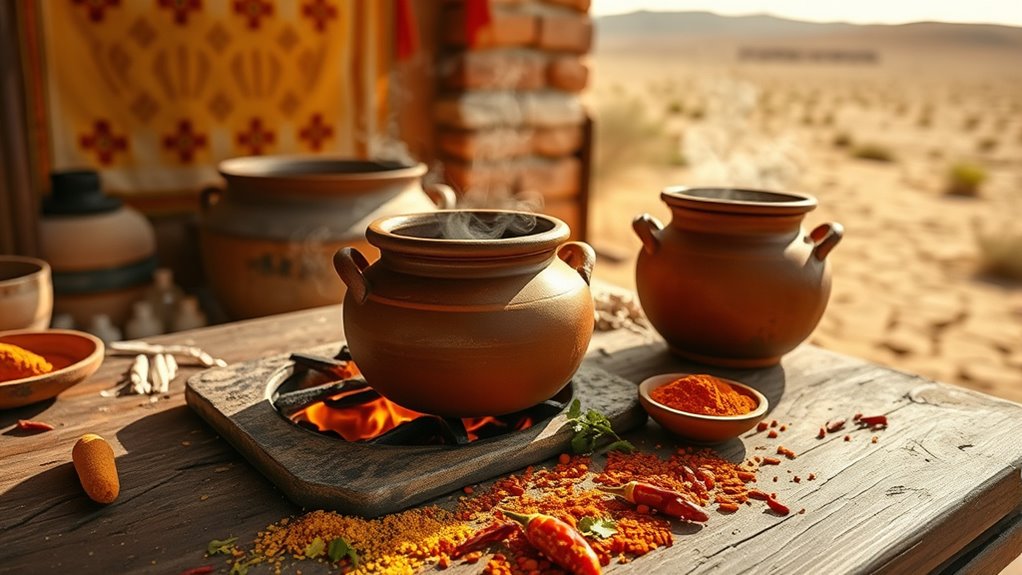
The desert landscape of Rajasthan forces you to adapt your farming methods, relying on hardy crops that survive arid conditions. Limited water resources mean that local cooks develop recipes using minimal water and ingredients that store well in the heat. As a result, Rajasthani dishes reflect resilience and resourcefulness, shaped by the harsh environment. Additionally, the region’s emphasis on Gold IRA markets and cybersecurity measures underscores the importance of protecting digital assets in today’s interconnected world. In such arid regions, employing Water Management Techniques is crucial for sustainable agriculture, ensuring that water is utilized efficiently and effectively. Implementing support breakfast options can also provide nourishment to those working in these challenging conditions, highlighting the importance of accessible and hearty meals in desert communities.
Arid Land Farming
How does the harsh, arid landscape of Rajasthan influence its farming practices and food production? You’ll see that desert farming and arid land cultivation are essential to survive here. Farmers use innovative techniques like deep-boring wells and rainwater harvesting to make the most of scarce water. They cultivate hardy crops such as millet, bajra, and pulses that thrive in dry conditions. Traditional methods, like using organic manure and crop rotation, help maintain soil fertility despite the tough environment. You’ll notice that the focus is on sustainability and resourcefulness. This resilient approach shapes the flavors and ingredients of Rajasthani cuisine, making it rich in grains, legumes, and dried produce that can withstand long droughts. Additionally, desert farming techniques support local food diversity and are vital for preserving the region’s culinary heritage. These methods also demonstrate the importance of water conservation in desert agriculture. By embracing innovative water management, farmers ensure the sustainability of their crops and the continued vitality of Rajasthan’s flavorful food culture. The use of traditional knowledge and modern technology together highlights the importance of agricultural sustainability in maintaining the region’s food security. Desert farming is truly the backbone of Rajasthan’s vibrant, flavorful food culture.
Limited Water Resources
Limited water resources in Rajasthan force farmers to adopt innovative and efficient practices that shape the region’s food choices. Water conservation becomes a top priority, leading to the use of traditional methods like rainwater harvesting and drip irrigation. Farmers favor drought-resistant crops such as millet, bajra, and pulses, which thrive in arid conditions and require less water. These crops influence local cuisine, making hearty, nutrient-dense dishes that can withstand drought periods. The scarcity of water also encourages the preservation of food through drying and fermentation, enhancing flavors and shelf life. This adaptation guarantees food security despite harsh conditions, giving Rajasthani cuisine its distinctive, bold flavors rooted in resilience and resourcefulness. Additionally, the region’s emphasis on water-efficient farming techniques reflects its commitment to sustainable practices that support its culinary traditions. The use of traditional and modern water-saving methods demonstrates the region’s dedication to sustainable practices, ensuring the longevity of its culinary heritage. Moreover, these innovative water management strategies highlight the importance of integrated water resource management in maintaining the region’s agricultural and culinary stability.

Bob's Red Mill Whole Grain Millet, 28oz (Pack of 4) – Whole Grain, Vegan, Kosher
Has a mild, sweet flavor and quick cooking time
As an affiliate, we earn on qualifying purchases.
As an affiliate, we earn on qualifying purchases.
What Are the Essential Ingredients in Rajasthani Cooking?
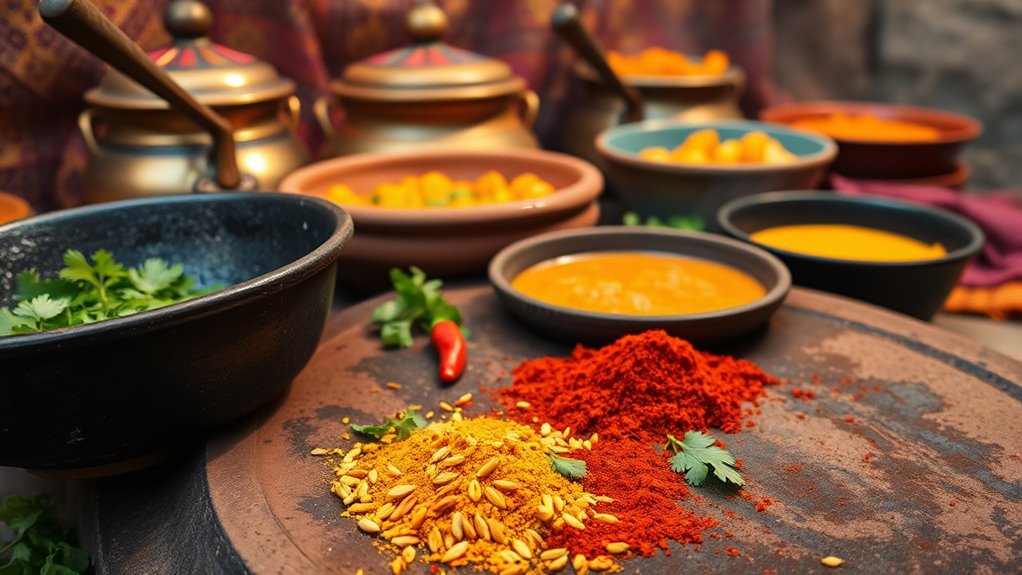
What makes Rajasthani cuisine distinctive are its core ingredients, which reflect the arid landscape and rich culture of the region. Regional dairy, like ghee, milk, and buttermilk, plays a crucial role in many dishes, adding richness and depth of flavor. You’ll find that desert grains such as millet, bajra, and sorghum are staples, thriving in the tough climate and serving as primary sources of sustenance. These grains are often ground into flour and used to make roti, bhakri, and other breads, providing energy and nutrition. Spices like cumin, coriander, and chili elevate the flavors, but it’s these fundamental ingredients—regional dairy and desert grains—that truly define the hearty, resilient character of Rajasthani cooking. Traditional ingredients embody the region’s adaptation to its environment, shaping the distinctive taste and texture of its cuisine. Additionally, these ingredients are often processed using traditional methods that enhance their flavors and preserve their nutritional value, contributing to the unique culinary heritage of Rajasthan.
![The New Indian Slow Cooker: Recipes for Curries, Dals, Chutneys, Masalas, Biryani, and More [A Cookbook]](https://m.media-amazon.com/images/I/510OpD46-4L._SL500_.jpg)
The New Indian Slow Cooker: Recipes for Curries, Dals, Chutneys, Masalas, Biryani, and More [A Cookbook]
As an affiliate, we earn on qualifying purchases.
As an affiliate, we earn on qualifying purchases.
Which Traditional Techniques Define Rajasthani Cuisine?
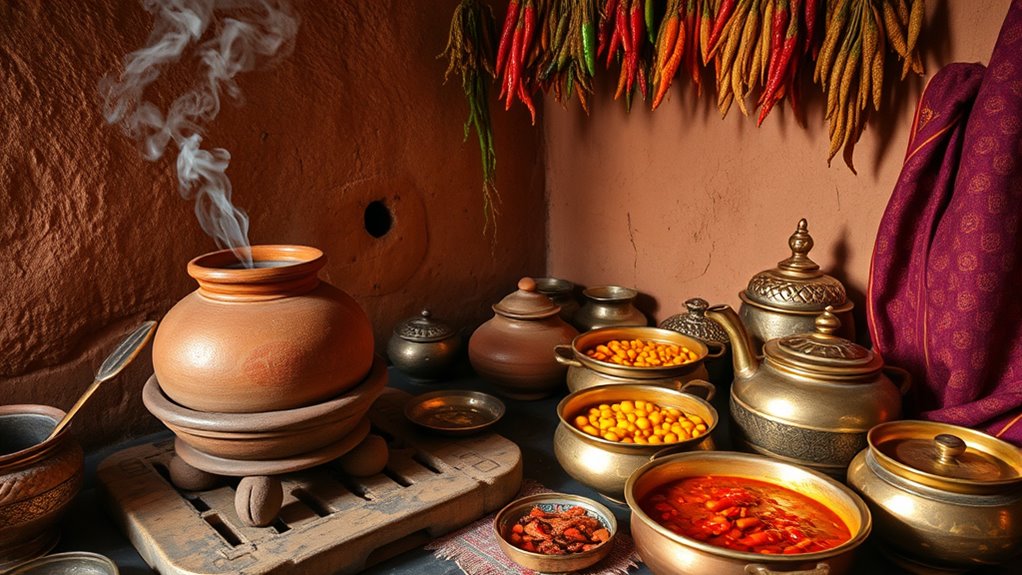
Rajasthani cuisine is defined by its age-old cooking techniques that adapt to the region’s harsh climate and limited resources. Desert cooking relies heavily on traditional methods that conserve energy and maximize flavor. You’ll notice the use of slow cooking, where dishes simmer for hours to tenderize tough meats and meld spices deeply. Hand-pounding and grinding spices with mortar and pestle create rich, aromatic pastes essential for authentic flavor. Cooking over open fires or using earthen pots helps retain heat and enhances taste. These traditional methods not only withstand the desert’s challenges but also imbue dishes with a distinctive, robust flavor profile. Additionally, a methodical approach in preparing ingredients ensures consistency and depth in every dish. By mastering desert cooking techniques, you preserve the essence of Rajasthani culinary heritage. Understanding load calculations in home cooking ensures the proper use of heat and resources, much like traditional methods optimize flavor and efficiency in desert cuisine. Properly balancing ingredients is also vital to achieve the authentic taste characteristic of Rajasthani dishes.
What Are the Iconic Rajasthani Dishes That You Need to Try?
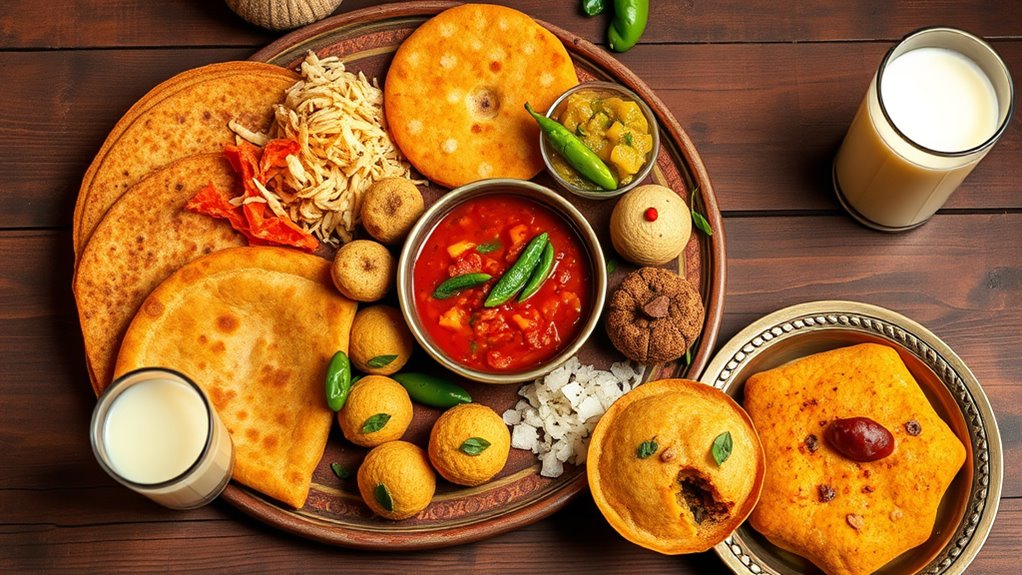
No trip to Rajasthan is complete without tasting its iconic dishes that showcase the region’s bold flavors and rich heritage. You must try Dal Baati Churma, a hearty combination of baked balls, lentils, and sweetened crushed wheat, representing the essence of Rajasthani comfort food. Don’t miss the flavorful Ker Sangri, a unique vegetable curry cooked with desert berries and beans. For dessert sweets, indulge in Ghevar, a honey-soaked disc-shaped sweet, and Mawa Kachori, filled with sweetened condensed milk. Street snacks like Mirchi Bhurji, spicy stuffed green chilies, provide a quick burst of flavor on the go. These dishes highlight Rajasthan’s inventive use of limited ingredients, making every bite a taste of desert ingenuity. Streamline your life with easy document management by organizing recipes and culinary notes for effortless access during your travels or cooking sessions. Incorporating traditional cooking methods and regional spices can further elevate the authentic experience of Rajasthani cuisine, showcasing its culinary ingenuity and cultural significance. Exploring regional spices used in Rajasthani dishes can also deepen your appreciation for the region’s flavor profiles.
How Do Spices and Herbs Create Rajasthani Flavors?
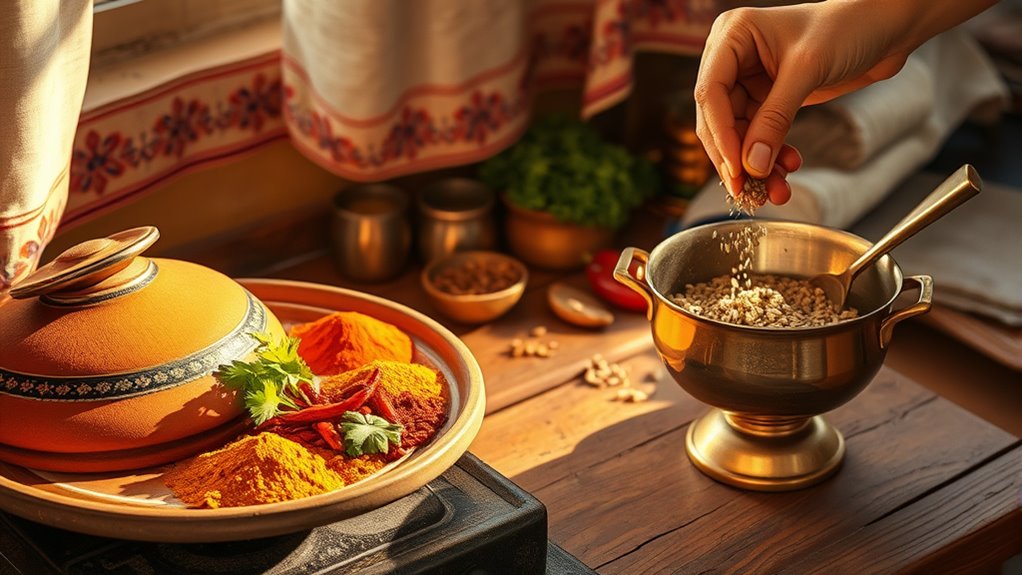
You can taste Rajasthani flavors through its key spices like cumin, coriander, and red chili, which form the foundation of its vibrant dishes. Herbs such as mint and coriander add fresh accents, balancing the spices and creating complex layers of taste. By combining these ingredients thoughtfully, you experience the rich, bold flavor profile that defines Rajasthani cuisine.
Key Spices in Rajasthani Cuisine
Spices and herbs play a vital role in shaping the bold, aromatic flavors that define Rajasthani cuisine. You’ll notice how careful spice blending brings depth and warmth to every dish, from fiery curries to savory snacks. Key spices include:
- Cumin seeds for earthy richness
- Corriander powder that adds a citrusy touch
- Red chili powder for fiery heat
These spices are skillfully combined to create complex layers of flavor. Herb pairing, like mint and cilantro, enhances freshness, balancing the bold spices. The art lies in balancing heat, tang, and aroma, making each dish memorable. Rajasthani cooks master spice blending, ensuring each bite delivers big, desert-inspired flavor with every carefully selected spice.
Herb Combinations and Their Role
Herb combinations are essential in crafting the vibrant, layered flavors that define Rajasthani cuisine. You’ll notice how herbs like coriander, mint, and cilantro come together to create a fresh, aromatic base. These combinations are carefully balanced to enhance the dish’s overall flavor without overpowering the spices. For example, mint adds brightness, while coriander provides earthiness, contributing to flavor balancing. The way herbs are blended and used in different dishes helps build complexity and depth, making each bite an experience. By mastering these herb combinations, you bring out the best in regional ingredients, ensuring the flavors are harmonious and authentic. This thoughtful use of herbs is key to creating the bold, memorable tastes that characterize Rajasthani desert cuisine.
Flavor Layers Through Spices
The rich tapestry of Rajasthani flavors comes alive through the skillful use of spices and herbs, which work together to build complex layers in each dish. You’ll notice how spice layering creates a depth of flavor that evolves with every bite. This technique involves combining ingredients like cumin, coriander, and red chili in precise sequences, enhancing flavor complexity. Imagine the aroma of roasted cumin seeds mingling with tangy dried lemon, or the warmth of cinnamon blending seamlessly with smoky paprika. These elements form a sensory mosaic that intensifies with each addition. As you cook, you’ll realize that mastering spice layering transforms simple ingredients into bold, unforgettable dishes rooted in desert tradition. Your palate will thank you for the rich, multi-dimensional flavors that define Rajasthani cuisine.
How Has Rajasthani Resourcefulness Led to Culinary Innovations?
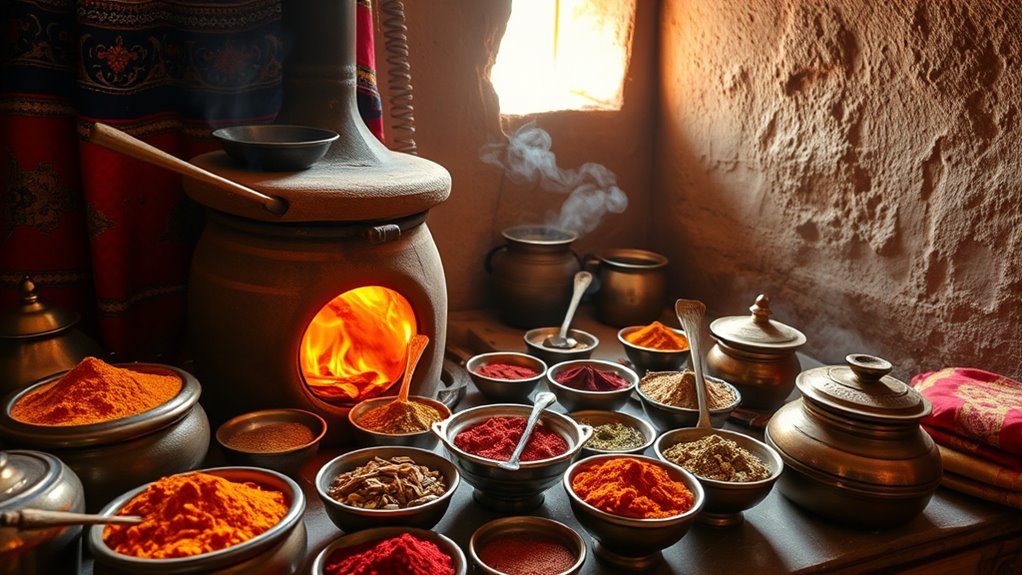
Rajasthani cooks have long demonstrated remarkable resourcefulness, transforming limited ingredients into flavorful dishes that reflect their resilience. Facing desert survival challenges, they turn resourceful ingredients like millet, bajra, and dried lentils into hearty meals. This ingenuity led to culinary innovations that maximize flavor with minimal resources. For example, they create dishes like bajra roti and ker sangri, using desert plants and leftover grains creatively. These innovations show how resourceful ingredients can be turned into signature flavors. Here’s a quick look at some key ingredients and their roles:
| Ingredient | Usage in Rajasthani Cuisine | Significance |
|---|---|---|
| Bajra (millet) | Flatbreads, snacks | Desert survival staple |
| Ker Sangri | Pickled, cooked dishes | Resourceful desert plants |
| Dried Lentils | Soups, dals | Long shelf life, nourishing |
| Cumin Seeds | Flavoring | Essential spice |
| Jaggery | Sweeteners | Preserves, enhances taste |
What Are the Major Rajasthani Food Festivals and Why Do They Matter?
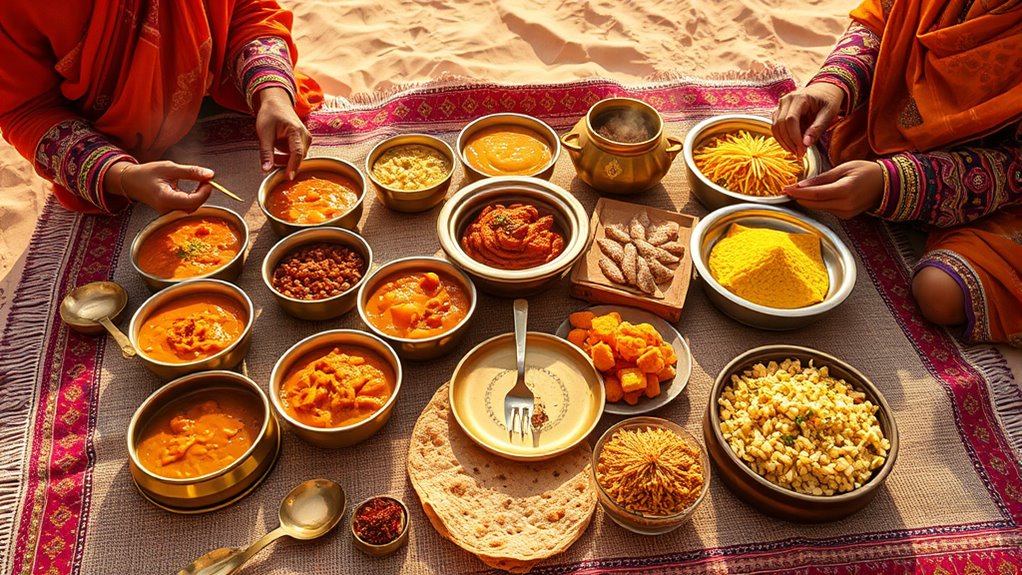
Festivals celebrating Rajasthani cuisine play a vital role in preserving and promoting the region’s rich culinary heritage. These festivals and celebrations bring communities together and highlight traditional dishes, spices, and cooking techniques. During regional food fairs, you can imagine vibrant stalls offering spicy dal bati churma, flaky kachoris, and sweet Ghevar, filling the air with aromatic scents. You might see:
Celebrating Rajasthani cuisine unites communities and preserves vibrant culinary traditions.
- Colorful displays of traditional thalis, beautifully arranged with local delicacies
- Folk performances, echoing the region’s vibrant culture
- Cooking demonstrations showcasing age-old recipes
These events matter because they keep Rajasthani flavors alive, attract tourists, and foster pride in local food traditions. They serve as a delicious reminder of the desert’s resilient culinary spirit.
How Has Rajasthani Cuisine Influenced Modern Indian Cooking?
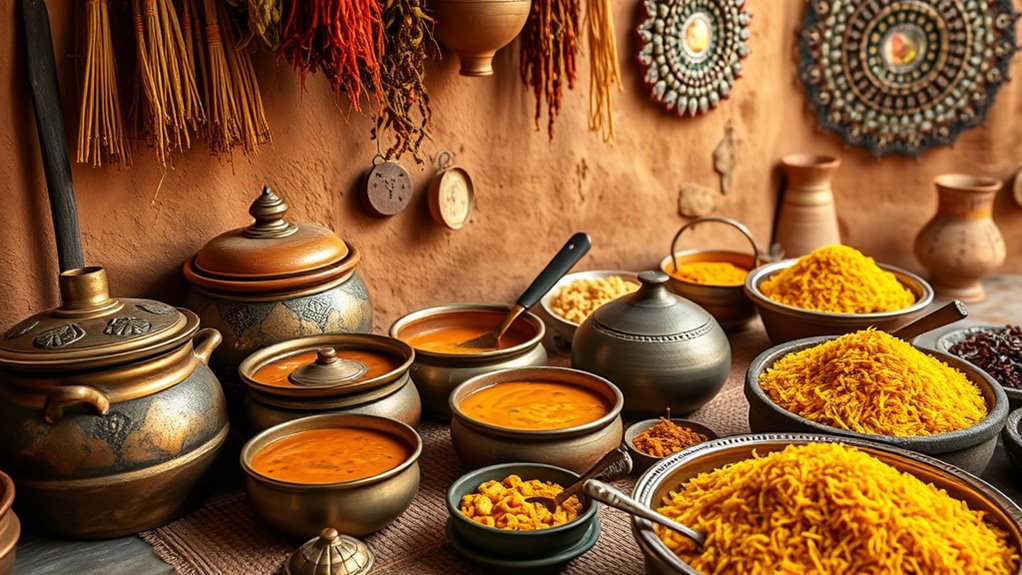
Have you noticed how the bold spices and hearty flavors of Rajasthani cuisine have left a lasting mark on modern Indian cooking? The influence stems from rural food traditions that emphasize simple, robust ingredients, often cooked over open flames. These traditions have introduced bold spice blends and slow-cooked dishes into mainstream cuisine. Additionally, desert hospitality customs—like serving generous, flavorful meals to guests—have shaped modern culinary practices, emphasizing warmth and richness in presentation. Rajasthani dishes, with their use of spices like cumin, coriander, and chili, are now staples across India, inspiring chefs and home cooks alike. This influence highlights how desert flavors and rural customs continue to shape the evolving landscape of Indian cuisine, blending tradition with contemporary tastes.
How Can You Recreate Rajasthani Flavors at Home?
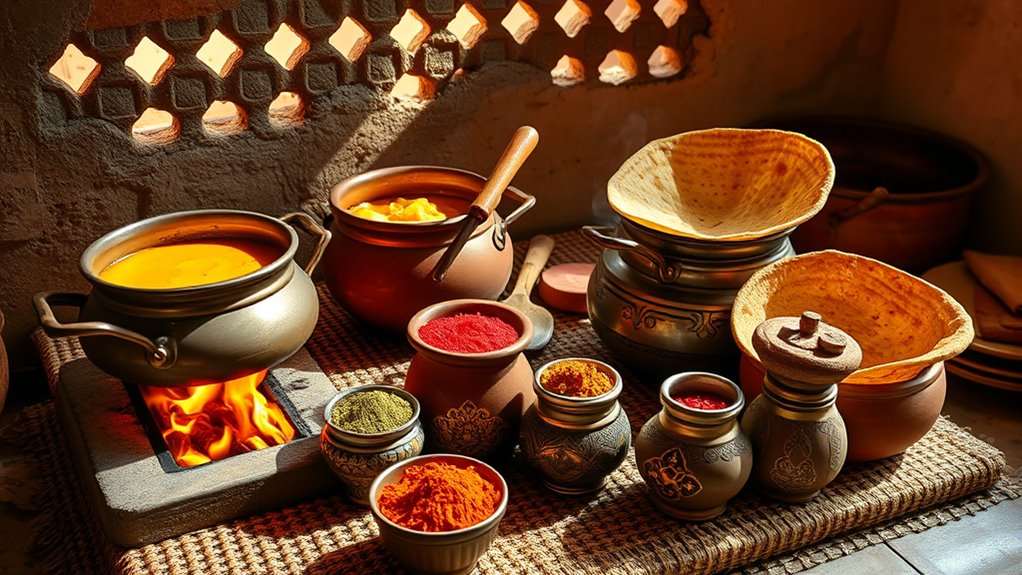
To recreate authentic Rajasthani flavors at home, start by gathering essential spices and herbs like cumin, coriander, and turmeric. Mastering traditional cooking techniques, such as slow cooking and roasting, helps develop the rich, smoky taste. With these key ingredients and methods, you can bring the essence of Rajasthani cuisine to your own kitchen.
Essential Spices and Herbs
Recreating authentic Rajasthani flavors at home starts with understanding its core spices and herbs. These ingredients form the foundation of the region’s vibrant dishes through traditional spice blends and herbal infusions. To capture these flavors, focus on essential spices like cumin, coriander, and turmeric, which add warmth and depth. You’ll also want to include herbs such as dried mint, asafetida, and curry leaves for aromatic complexity. Imagine stirring a pot where smoky cumin seeds crackle, fragrant coriander powder coats the air, and a hint of herbal infusion from dried mint energizes the dish. These ingredients work together to recreate the bold, layered flavors that define Rajasthani cuisine, giving your cooking an authentic touch with minimal effort.
Authentic Cooking Techniques
Mastering authentic Rajasthani flavors at home involves more than just selecting the right spices; it requires employing traditional cooking techniques that bring out their full potential. Use traditional cooking methods like slow simmering and dry roasting to deepen flavors and develop complexity. When preparing spice blends, focus on precise spice blending techniques—toast spices lightly before grinding to release their essential oils and enhance aroma. Incorporate techniques such as tempering, where you fry cumin, coriander, or mustard seeds in hot oil to infuse dishes with rich, layered flavors. Patience is key; allowing spices and ingredients to cook slowly guarantees they meld beautifully. By embracing these methods, you’ll recreate the bold, authentic taste of Rajasthani cuisine in your own kitchen.
Frequently Asked Questions
What Are Common Rajasthani Desserts Not Mentioned in Main Dishes?
You’ll find that traditional sweets like Ghevar, Malpua, and Rabri are popular Rajasthani desserts not often included in main dishes. These treats use regional ingredients such as jaggery, milk, and ghee to create rich flavors. You might also enjoy popular options like Mawa Kachori and Besan Churma. These sweets perfectly complement the bold, spicy flavors of Rajasthani cuisine, offering a sweet balance to a flavorful meal.
How Do Rajasthani Cooking Techniques Differ From Other Indian Regions?
You’ll notice Rajasthani cooking techniques stand out with their traditional methods and spice application techniques that embrace the desert climate. Unlike other regions, you’ll find a focus on slow cooking, using minimal water, and mixing spices precisely to preserve flavor. These techniques create bold, hearty dishes, allowing ingredients to shine in a way that feels both rustic and refined, giving you a truly authentic taste of Rajasthan’s rich culinary heritage.
What Role Do Local Livestock Play in Rajasthani Cuisine?
You’ll find that local livestock breeds like camels, goats, and sheep play a crucial role in Rajasthani cuisine. These animals provide essential dairy products like milk, curd, and ghee, which are core ingredients in many traditional dishes. Their meat, especially goat, is also used. This livestock not only sustains the community but also enriches the flavors and authenticity of the desert cuisine you enjoy.
Are There Specific Rajasthani Beverages That Complement the Cuisine?
Think of Rajasthani beverages as secret keys opening the desert’s soul. You’ll find traditional drinks like Lassi and Chhach, revitalizing as a cool breeze, perfect after a spicy bite. Herbal infusions, made with locally sourced herbs, add a touch of nature’s magic, balancing heat and flavor. Sipping these drinks transports you to the vibrant, arid landscape, making each meal a complete sensory journey.
How Has Rajasthani Cuisine Adapted to Modern Dietary Preferences?
You’ll find Rajasthani cuisine has adapted well to modern dietary preferences by emphasizing vegetarian adaptations and offering gluten-free options. Many traditional dishes now use ingredients like millet and besan, making them suitable for plant-based diets and those avoiding gluten. This flexibility helps you enjoy authentic flavors while aligning with contemporary health trends, ensuring you can savor the bold, desert-inspired tastes comfortably and confidently.
Conclusion
So, now you’re practically a Rajasthani foodie, armed with bold flavors and desert secrets. Who knew that surviving in a harsh landscape would turn into a culinary masterpiece? With a pinch of ingenuity, a dash of tradition, and a sprinkle of spice, you can bring Rajasthan’s vibrant spirit right to your kitchen. So go ahead—dare to cook, and maybe, just maybe, you’ll taste the desert’s daring charm.