In different cuisines, umami shows up through ingredients like mushrooms, fermented pastes, and cured meats, which develop deep, savory flavors. Asian dishes often highlight mushrooms and fermentation techniques, while Western and Italian cuisines rely on aged cheeses and cured meats to boost flavor. Southeast Asian foods use fish sauces and shrimp pastes for complexity. If you keep exploring, you’ll discover how these methods create mouthwatering, umami-rich dishes across cultures.

Get kitchen staples and gadgets delivered free — and shop member deals
- Fast, free delivery on millions of items
- Access to Prime Big Deal Days deals on October 6–7
- Prime Video, Amazon Music and more included
Key Takeaways
- In Asian cuisines, fresh and rehydrated mushrooms are used to create umami-rich broths, stir-fries, and soups.
- Fermented products like miso, soy sauce, and doenjang develop intense umami through microbial breakdown of proteins.
- Western cuisines enhance umami with aged cheeses and cured meats, where fermentation and aging deepen savory flavors.
- Southeast Asian dishes feature fish sauces and shrimp pastes, adding complex umami notes to various recipes.
- Techniques such as slow simmering, fermentation, and aging are key methods to access and highlight umami in different cuisines.
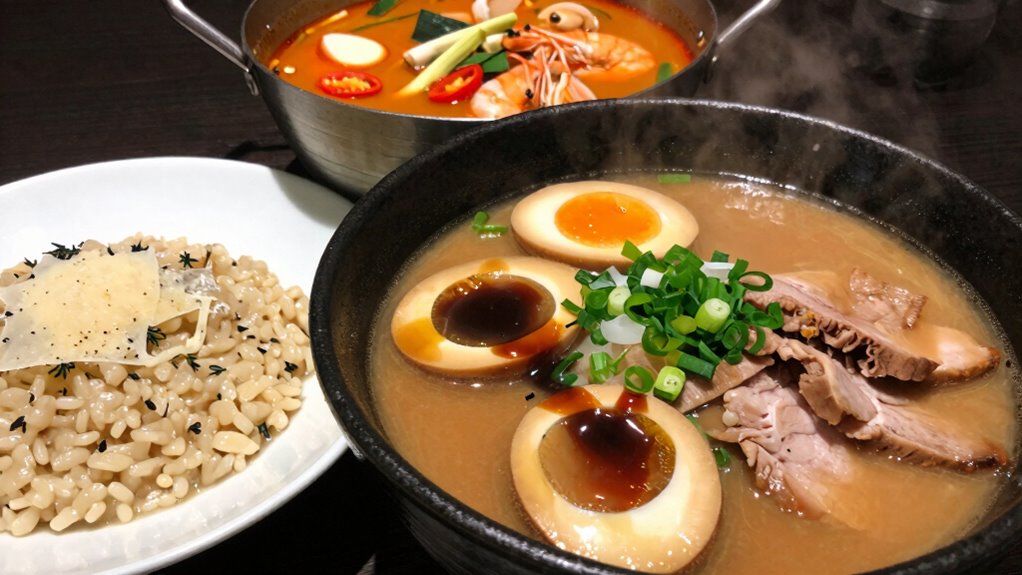
Have you ever wondered what makes certain dishes irresistibly savory? It’s all about that elusive flavor called umami, a taste that heightens the depth and richness of many cuisines worldwide. Different cultures capture umami through a variety of ingredients and preparation methods, making each culinary tradition uniquely flavorful. For example, you’ll notice that in many Asian cuisines, mushroom varieties play a pivotal role. Shiitake, dried porcini, and enoki mushrooms are packed with natural glutamates, which amplify the savory taste in broths, stir-fries, and soups. These mushrooms are often used fresh or rehydrated, releasing their umami essence into the dishes. But it’s not just about the mushrooms themselves; how they’re prepared can also influence their impact. Slow simmering or dry aging enhances their flavor, making the dishes even more satisfying.
In addition to fresh ingredients, fermentation techniques are fundamental in creating umami-rich foods across various cuisines. In Japanese cooking, miso and soy sauce are prime examples. These products undergo fermentation, a process that breaks down proteins into amino acids, particularly glutamates, which intensify the savory notes. You’ll find that in Korean cuisine, fermented pastes like doenjang or gochujang add depth and complexity to stews and marinades, thanks to their rich umami profiles. Similarly, in Western cuisines, aged cheeses such as Parmesan or aged cheddar develop their intense flavor through fermentation, where microbes transform the proteins and fats, resulting in a deeply savory taste. The longer these foods ferment, the more pronounced their umami becomes, providing a savory backbone that balances and enhances other flavors.
Across different cuisines, umami isn’t just about specific ingredients but also about the techniques used to *access* its full potential. Whether it’s through carefully selecting mushroom varieties to add earthy depth or employing fermentation techniques to develop complex flavors, each culture has developed its own way of harnessing this fifth taste. You’ll notice that in Italian cooking, the aging of cured meats and cheeses creates a rich umami, while in Southeast Asia, fish sauces and fermented shrimp pastes serve as essential flavor pillars. The common thread is that these methods and ingredients work together to create dishes that are not only savory but also deeply satisfying, making every bite a rich experience. Ultimately, understanding how different cuisines cultivate umami allows you to appreciate the artistry behind their flavors and perhaps even incorporate these techniques into your own cooking.
As an affiliate, we earn on qualifying purchases.
Frequently Asked Questions
How Is Umami Scientifically Defined?
You might wonder how umami is scientifically defined, and it’s all about perception. Umami perception occurs when your taste receptors detect amino acids like glutamate binding to umami receptors on your tongue. These receptors then send signals to your brain, creating the savory, rich sensation associated with umami. This process explains why foods rich in glutamate, like aged cheese or mushrooms, evoke a strong umami flavor.
Are There Health Benefits Linked to Umami-Rich Foods?
Eating umami-rich foods can offer health benefits, like aiding in food preservation by enhancing flavor, which may reduce the need for excess salt or preservatives. Additionally, umami impacts appetite regulation by increasing satiety, helping you feel full longer and potentially supporting weight management. Incorporating these foods into your diet might improve overall nutritional intake while naturally boosting flavor, making healthy eating more satisfying and sustainable.
Can Umami Be Artificially Created in Dishes?
Yes, you can artificially create umami in dishes using artificial flavor technology. Some might think natural ingredients are the only way, but umami flavor enhancement through additives like monosodium glutamate (MSG) or other flavor compounds can mimic the savory depth of natural umami. This allows you to boost flavor richness without relying solely on natural ingredients, giving you versatile options to enhance dishes creatively and efficiently.
What Are Common Umami Ingredients Across All Cuisines?
You’ll find common umami ingredients across all cuisines like soy sauce, mushrooms, aged cheeses, and fermented foods. These ingredients contribute rich, savory umami flavor profiles, enhancing dishes’ depth. For umami in vegetarian dishes, mushrooms, tomatoes, and seaweed are especially popular, providing natural sources of this savory taste. Incorporating these ingredients elevates your cooking, making even simple vegetarian meals satisfyingly rich and complex with umami’s signature depth.
How Does Umami Influence Flavor Pairing and Culinary Balance?
Umami influences flavor pairing and culinary balance by enhancing taste and creating depth in dishes. You’ll notice it brings a savory richness that ties ingredients together, making flavors more harmonious. When you incorporate umami-rich ingredients, you achieve better flavor enhancement and overall culinary harmony. This balance helps prevent dishes from tasting flat, allowing each component to stand out while contributing to a well-rounded, satisfying experience.
As an affiliate, we earn on qualifying purchases.
Conclusion
Exploring umami across cuisines reveals a flavor that’s truly a global superstar, transforming simple ingredients into culinary masterpieces. As you taste the savory depths of miso, soy, or aged cheese, you realize that umami isn’t just a flavor—it’s the heart and soul of dishes that leave an unforgettable mark on your palate. Embrace this umami journey, and you’ll understand why it’s often called the fifth taste, a flavor so profound it can elevate any meal to legendary status.
As an affiliate, we earn on qualifying purchases.
As an affiliate, we earn on qualifying purchases.
NFL season / tailgating Picks
team gear
As an affiliate, we earn on qualifying purchases.